

A protruding or loose abdomen does not always result from excess fat.
Pregnancy, significant weight changes, ageing and previous abdominal surgery can alter the skin, fatty tissue and abdominal wall.
Some patients develop loose skin that cannot contract adequately. Others have separation of the abdominal muscles, resulting in a persistent abdominal bulge despite exercise and weight management.
I am Dr Gökhan Özerdem, Specialist in Aesthetic, Plastic and Reconstructive Surgery in Antalya, Turkey. With more than 25 years of surgical experience, I perform tummy tuck surgery for patients who want to improve abdominal shape and contour.
In suitable patients, I frequently prefer lipoabdominoplasty, combining carefully planned liposuction with abdominal skin removal and abdominal wall repair when necessary.
My approach focuses on the relationship between skin, fat and the underlying abdominal structures.
A successful tummy tuck does not simply tighten the skin. It addresses the anatomical changes responsible for the abdominal contour.
What Is a Tummy Tuck?
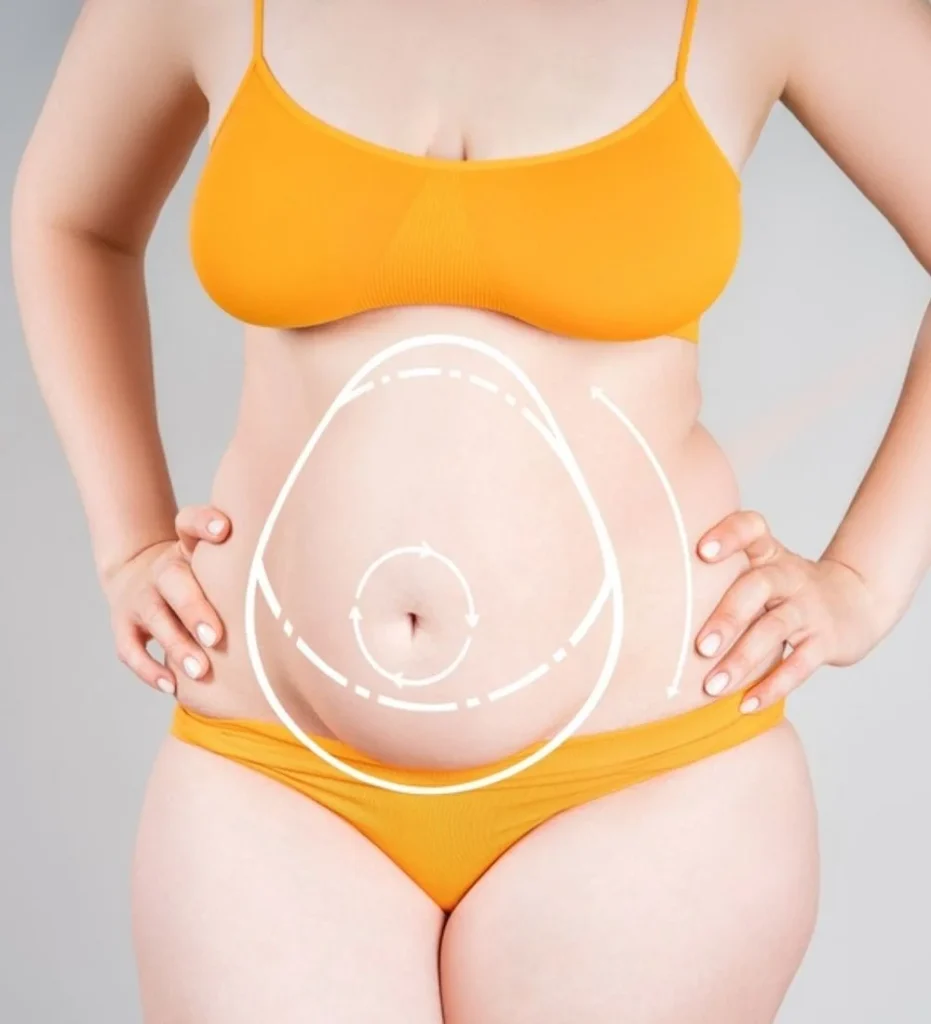
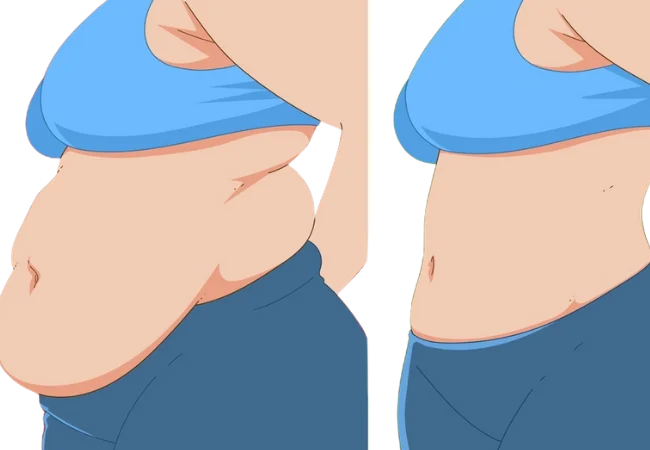
A tummy tuck, medically known as abdominoplasty, is an operation designed to improve abdominal contour by removing excess skin and, when indicated, tightening the abdominal wall.
Depending on the patient’s anatomy, the operation may involve:
- Removal of excess abdominal skin
- Reduction of selected fatty deposits
- Repair of rectus muscle separation
- Reshaping of the waist
- Repositioning of the umbilicus
- Improvement of the lower abdominal contour
The extent of surgery varies considerably between patients.
Some require a limited lower abdominal correction.
Others have substantial skin excess extending above and below the umbilicus.
For this reason, the appropriate operation must be selected after physical examination.
About Dr. Gökhan Özerdem
Specialist Plastic Surgeon in Antalya, Turkey
I am Dr Gökhan Özerdem, Specialist in Aesthetic, Plastic and Reconstructive Surgery, practising in Antalya, Turkey.
My professional background includes:
- More than 25 years of surgical experience
- Thousands of aesthetic and reconstructive surgical procedures
- Member of the International Society of Aesthetic Plastic Surgery (ISAPS)
- Member of the American Society of Plastic Surgeons (ASPS)
- Member of the Turkish Society of Plastic, Reconstructive and Aesthetic Surgeons
- Member of the Turkish Society of Aesthetic Plastic Surgery
- Professional medical experience and licensing in Dubai
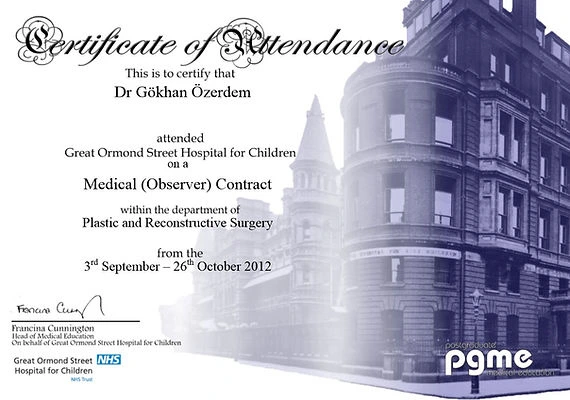
- Observer experience at Great Ormond Street Hospital for Children, London, UK
- Gamma Probe Course at Castle Hill Hospital, Hull, UK
- Oral and poster presentations at national and international scientific congresses
- Session chairmanship at the Turkish National Plastic Surgery Congress
- International scientific publications and academic work
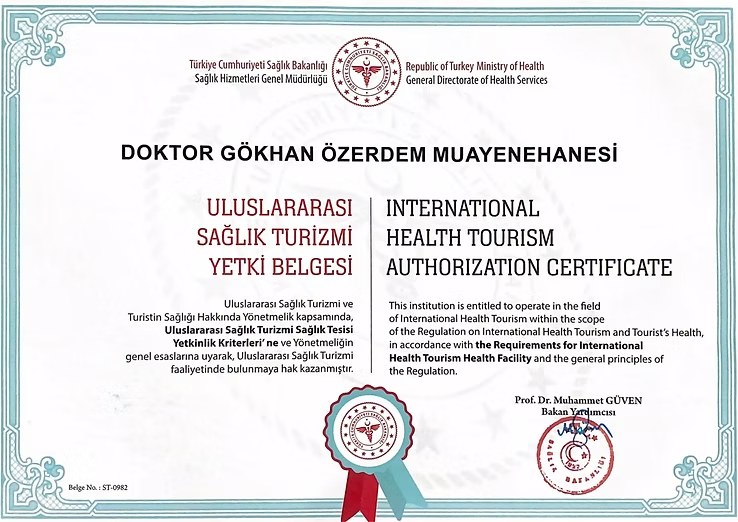
- Authorised to provide services to international patients under the relevant Turkish Ministry of Health International Health Tourism framework
Major surgical procedures are performed in fully equipped hospital facilities in Antalya with appropriate anaesthesia and medical support.

Who Is a Good Candidate for Abdominoplasty?
Tummy tuck surgery may be appropriate for patients who have:
- Loose abdominal skin after pregnancy
- Significant skin excess following weight loss
- Persistent lower abdominal skin folds
- Abdominal muscle separation
- Abdominal contour changes after multiple pregnancies
- Skin laxity that cannot be corrected by liposuction alone
- A combination of excess skin and localised fat deposits
Suitable candidates should also have appropriate general health and realistic expectations.
Patients planning substantial future weight loss may benefit from reaching a more stable weight before surgery.
Women planning pregnancy in the near future should discuss this before undergoing abdominal wall repair.
My Approach to Tummy Tuck Surgery
Before recommending abdominoplasty, I assess:
- Amount of excess skin
- Skin elasticity
- Distribution of abdominal fat
- Waist and flank contours
- Abdominal wall laxity
- Rectus muscle separation
- Position of the umbilicus
- Previous abdominal scars
- Body proportions
- Weight stability
- Patient expectations
I also distinguish between subcutaneous and visceral fat.
Subcutaneous fat lies beneath the skin and can sometimes be reduced through liposuction.
Visceral fat lies deeper within the abdominal cavity and cannot be removed through aesthetic liposuction.
This distinction is important because not every protruding abdomen can be corrected through tummy tuck surgery.
The correct operation depends on what is causing the abdominal enlargement.
What Is Lipoabdominoplasty?
Combining Liposuction with Tummy Tuck Surgery
Lipoabdominoplasty combines abdominal skin removal with carefully planned liposuction.
In my practice, I frequently prefer this approach when the patient’s anatomy is suitable.
Traditional abdominoplasty primarily addresses excess skin and abdominal wall laxity.
Lipoabdominoplasty allows selected fatty deposits to be treated during the same operation.
This can help improve the relationship between the abdomen, waist and flanks.
However, the extent of liposuction must be planned carefully because abdominal tissue blood supply and wound healing remain important considerations.
I do not believe that more aggressive liposuction automatically produces a better result.
The operation must balance contour improvement with tissue safety.
Why I Frequently Prefer Lipoabdominoplasty
Many patients have more than one anatomical problem.
For example, a woman after pregnancy may have:
- Loose abdominal skin
- Rectus muscle separation
- Localised waist fat
- Lower abdominal fullness
- Stretch marks
Removing skin alone may not address the waist and flank contours.
Similarly, performing liposuction alone cannot remove significant loose skin or repair muscle separation.
In suitable patients, combining the procedures allows several anatomical concerns to be addressed during one operation.
However, not every patient requires liposuction.
I select the technique according to the individual abdomen.
Rectus Diastasis: Separation of the Abdominal Muscles
Why the Abdomen Can Remain Protruding After Pregnancy
During pregnancy, the abdominal wall stretches to accommodate the growing uterus.
In some women, the two rectus abdominis muscles become separated along the midline.
This condition is called rectus diastasis.
The separation can persist after childbirth.
Patients may notice:
- Persistent abdominal bulging
- Reduced abdominal wall firmness
- Changes in abdominal contour
- A prominent abdomen despite normal body weight
Rectus diastasis is not the same as excess abdominal fat.
It also differs from an abdominal hernia, although both conditions can occasionally coexist.
Your Tummy Tuck Journey in Antalya
1. Preliminary Assessment
You provide medical information, photographs and details of your abdominal concerns.
2. Consultation in Antalya
I examine abdominal skin, fat distribution, muscle separation, previous scars and overall body proportions.
3. Surgical Planning
We discuss whether a full tummy tuck, mini tummy tuck or lipoabdominoplasty is appropriate.
We also review scars, recovery, risks and realistic expectations.
4. Surgery
Your procedure is performed under general anaesthesia in a fully equipped hospital.
5. Early Recovery
My team and I monitor wound healing, mobility and general recovery during your stay in Antalya.
6. Returning Home
You return home once your postoperative condition allows safe travel.
7. Long-Term Follow-Up
Abdominal contours and scars continue to change during healing.
Follow-up communication can continue after you return to your home country.
Who Is a Good Candidate for Abdominoplasty?
Tummy tuck surgery may be appropriate for patients who have:
- Loose abdominal skin after pregnancy
- Significant skin excess following weight loss
- Persistent lower abdominal skin folds
- Abdominal muscle separation
- Abdominal contour changes after multiple pregnancies
- Skin laxity that cannot be corrected by liposuction alone
- A combination of excess skin and localised fat deposits
Suitable candidates should also have appropriate general health and realistic expectations.
Patients planning substantial future weight loss may benefit from reaching a more stable weight before surgery.
Women planning pregnancy in the near future should discuss this before undergoing abdominal wall repair.
My Approach to Tummy Tuck Surgery
Before recommending abdominoplasty, I assess:
- Amount of excess skin
- Skin elasticity
- Distribution of abdominal fat
- Waist and flank contours
- Abdominal wall laxity
- Rectus muscle separation
- Position of the umbilicus
- Previous abdominal scars
- Body proportions
- Weight stability
- Patient expectations
I also distinguish between subcutaneous and visceral fat.
Subcutaneous fat lies beneath the skin and can sometimes be reduced through liposuction.
Visceral fat lies deeper within the abdominal cavity and cannot be removed through aesthetic liposuction.
This distinction is important because not every protruding abdomen can be corrected through tummy tuck surgery.
The correct operation depends on what is causing the abdominal enlargement.
What Is Lipoabdominoplasty?
Combining Liposuction with Tummy Tuck Surgery
Lipoabdominoplasty combines abdominal skin removal with carefully planned liposuction.
In my practice, I frequently prefer this approach when the patient’s anatomy is suitable.
Traditional abdominoplasty primarily addresses excess skin and abdominal wall laxity.
Lipoabdominoplasty allows selected fatty deposits to be treated during the same operation.
This can help improve the relationship between the abdomen, waist and flanks.
However, the extent of liposuction must be planned carefully because abdominal tissue blood supply and wound healing remain important considerations.
I do not believe that more aggressive liposuction automatically produces a better result.
The operation must balance contour improvement with tissue safety.
Why I Frequently Prefer Lipoabdominoplasty
Many patients have more than one anatomical problem.
For example, a woman after pregnancy may have:
- Loose abdominal skin
- Rectus muscle separation
- Localised waist fat
- Lower abdominal fullness
- Stretch marks
Removing skin alone may not address the waist and flank contours.
Similarly, performing liposuction alone cannot remove significant loose skin or repair muscle separation.
In suitable patients, combining the procedures allows several anatomical concerns to be addressed during one operation.
However, not every patient requires liposuction.
I select the technique according to the individual abdomen.
Rectus Diastasis: Separation of the Abdominal Muscles
Why the Abdomen Can Remain Protruding After Pregnancy
During pregnancy, the abdominal wall stretches to accommodate the growing uterus.
In some women, the two rectus abdominis muscles become separated along the midline.
This condition is called rectus diastasis.
The separation can persist after childbirth.
Patients may notice:
- Persistent abdominal bulging
- Reduced abdominal wall firmness
- Changes in abdominal contour
- A prominent abdomen despite normal body weight
Rectus diastasis is not the same as excess abdominal fat.
It also differs from an abdominal hernia, although both conditions can occasionally coexist.
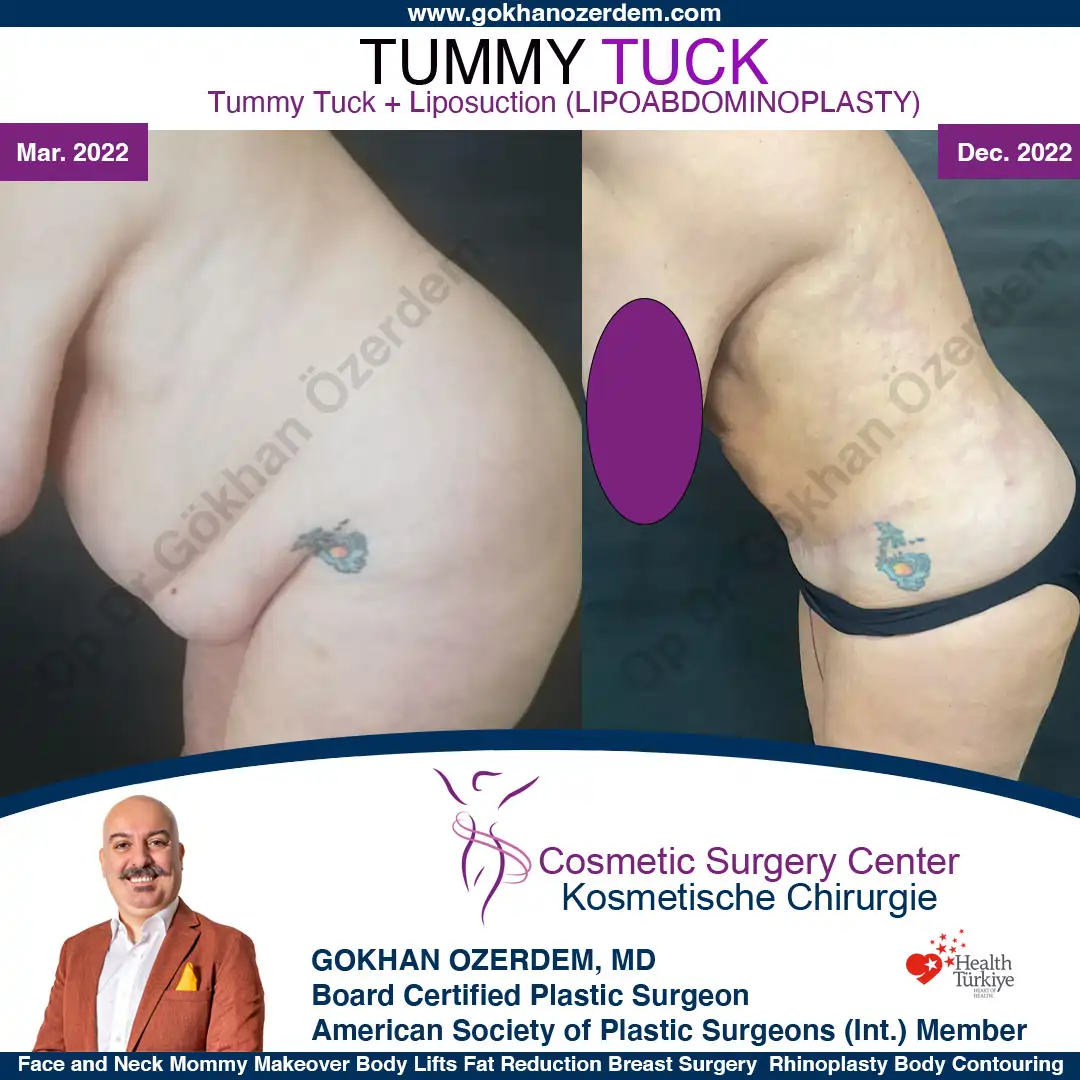
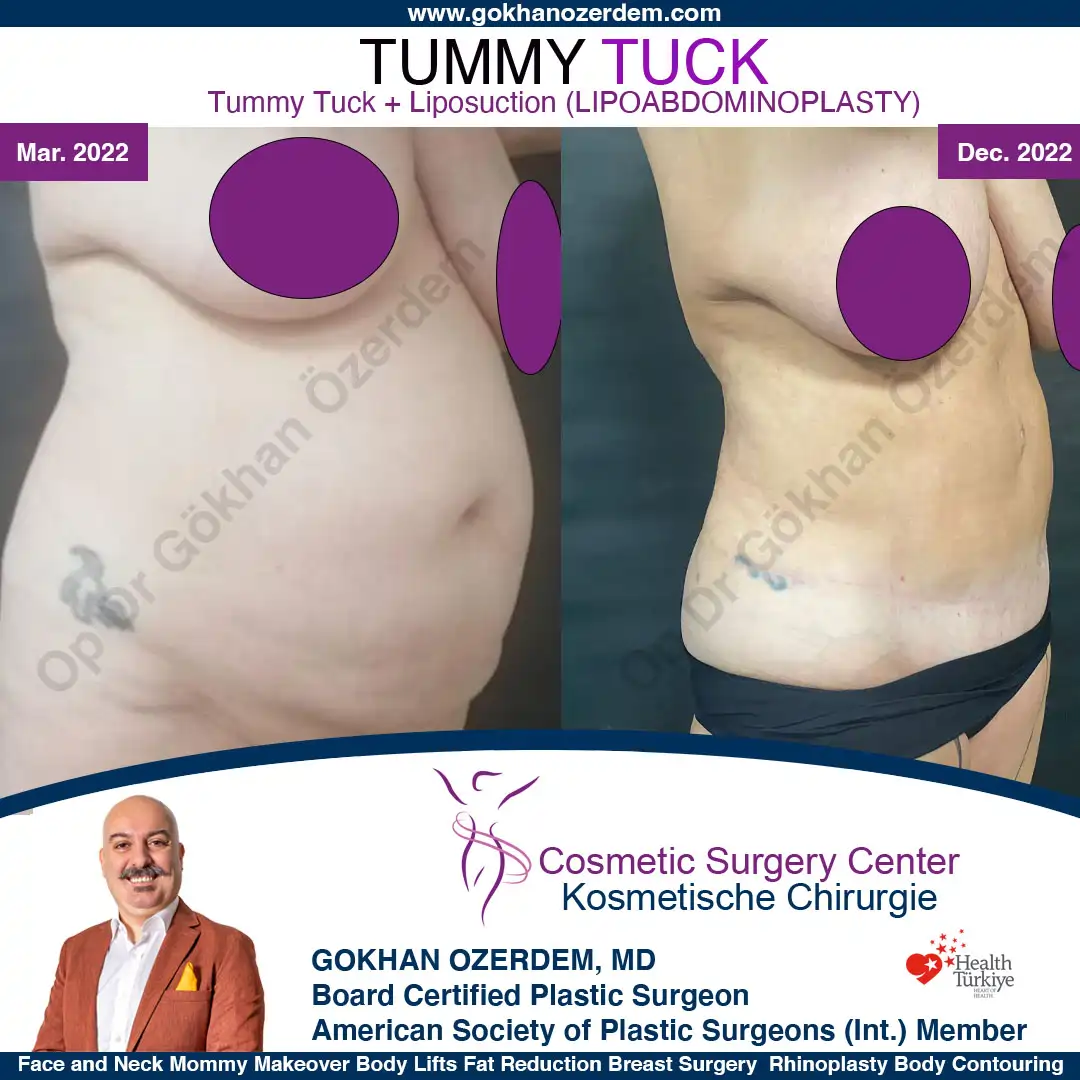
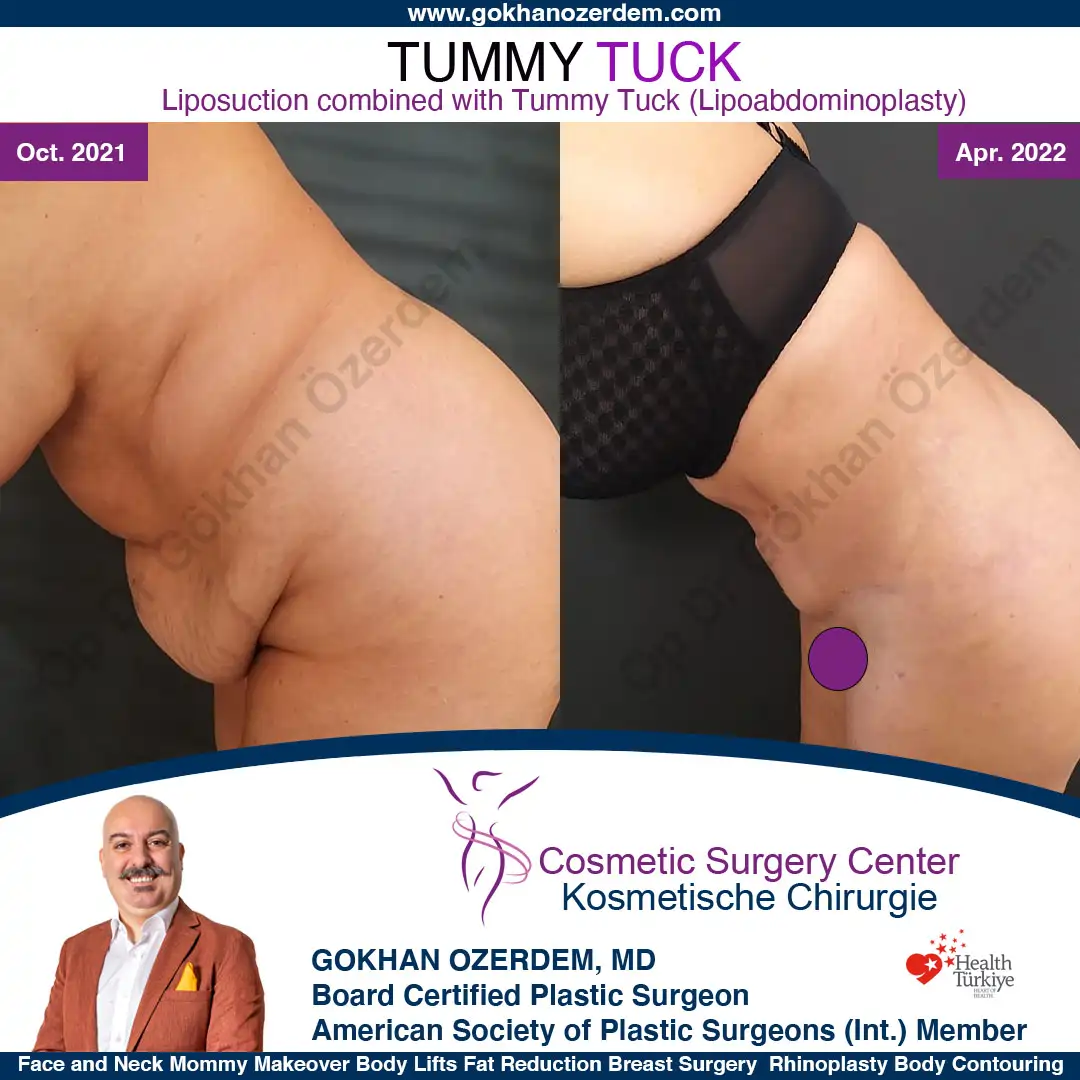
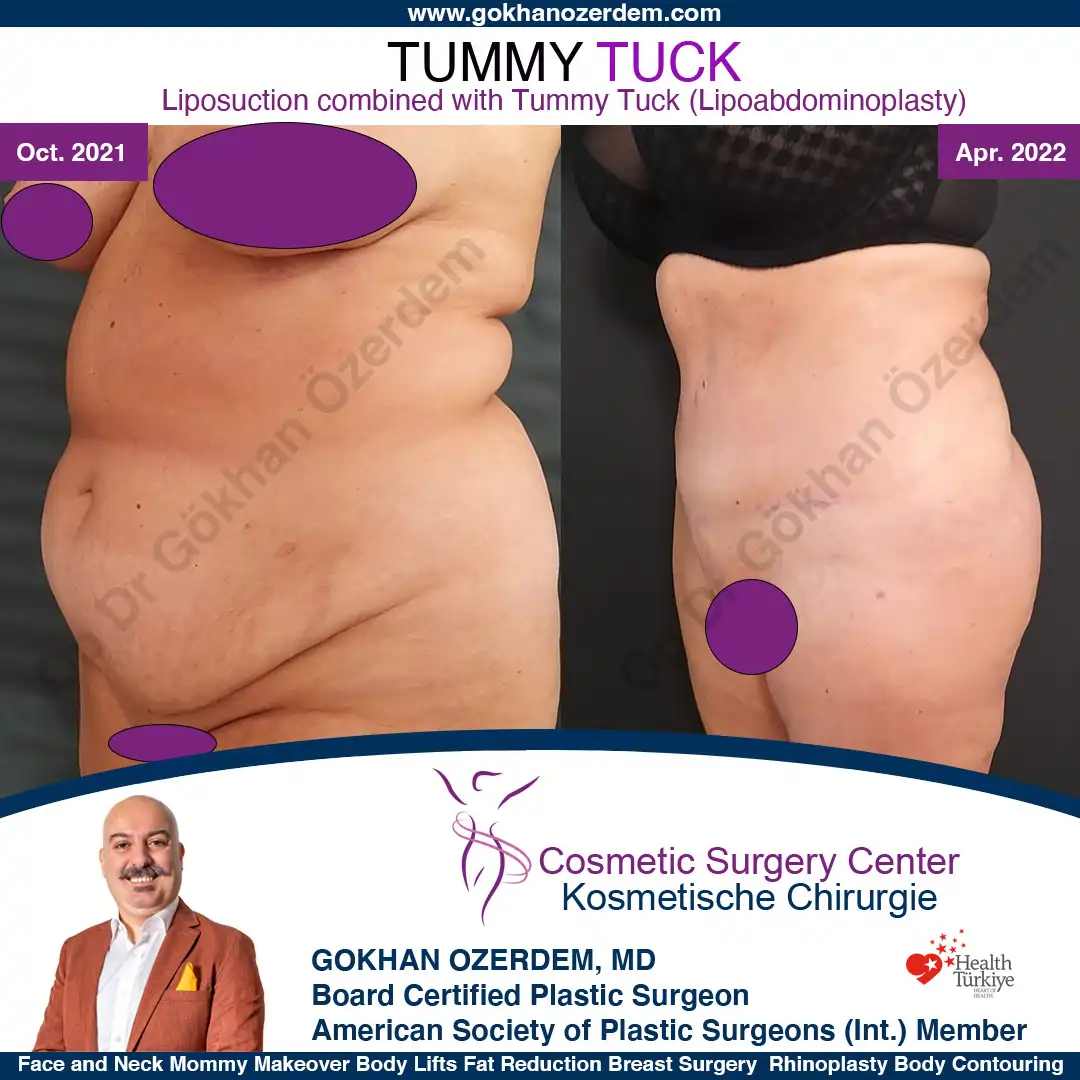
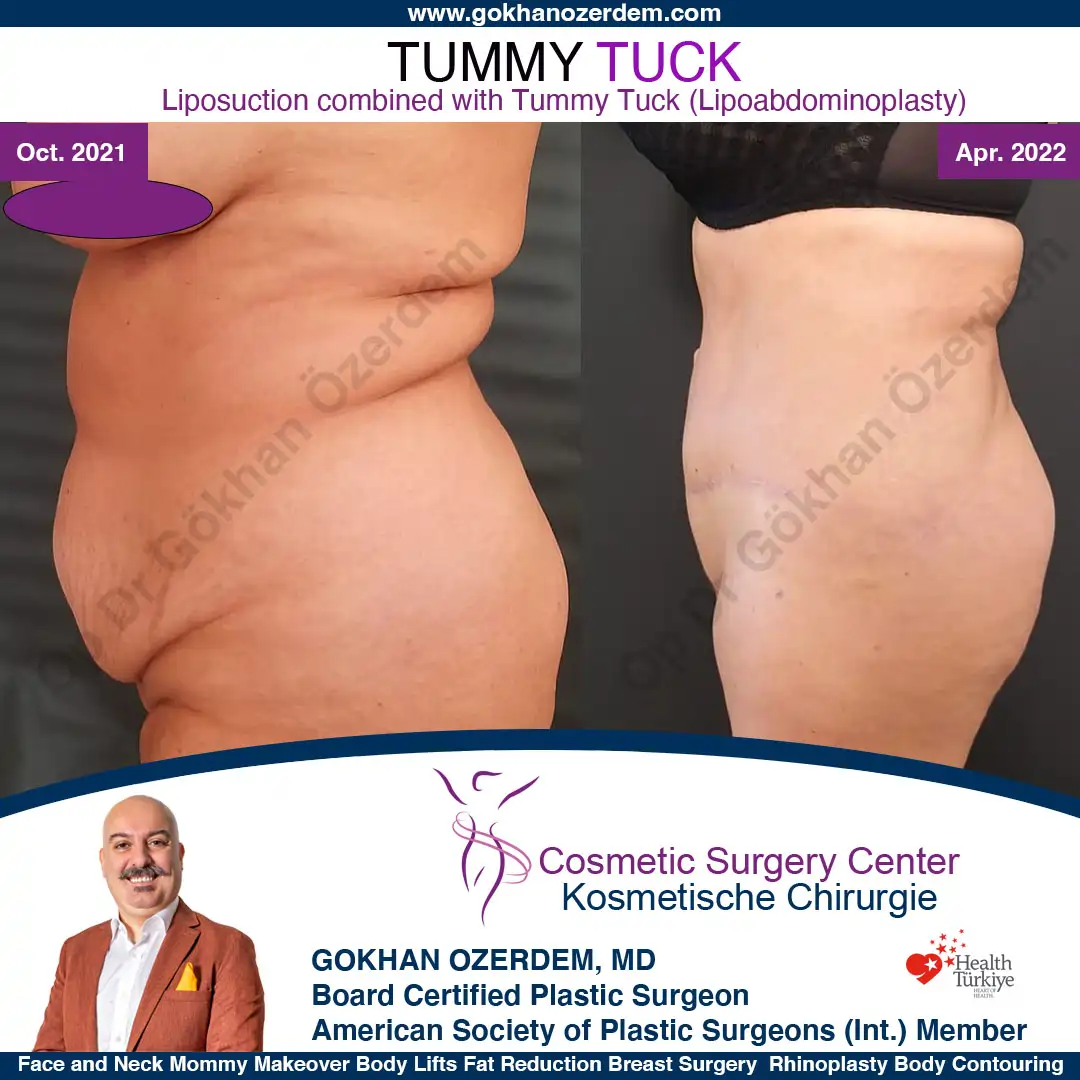
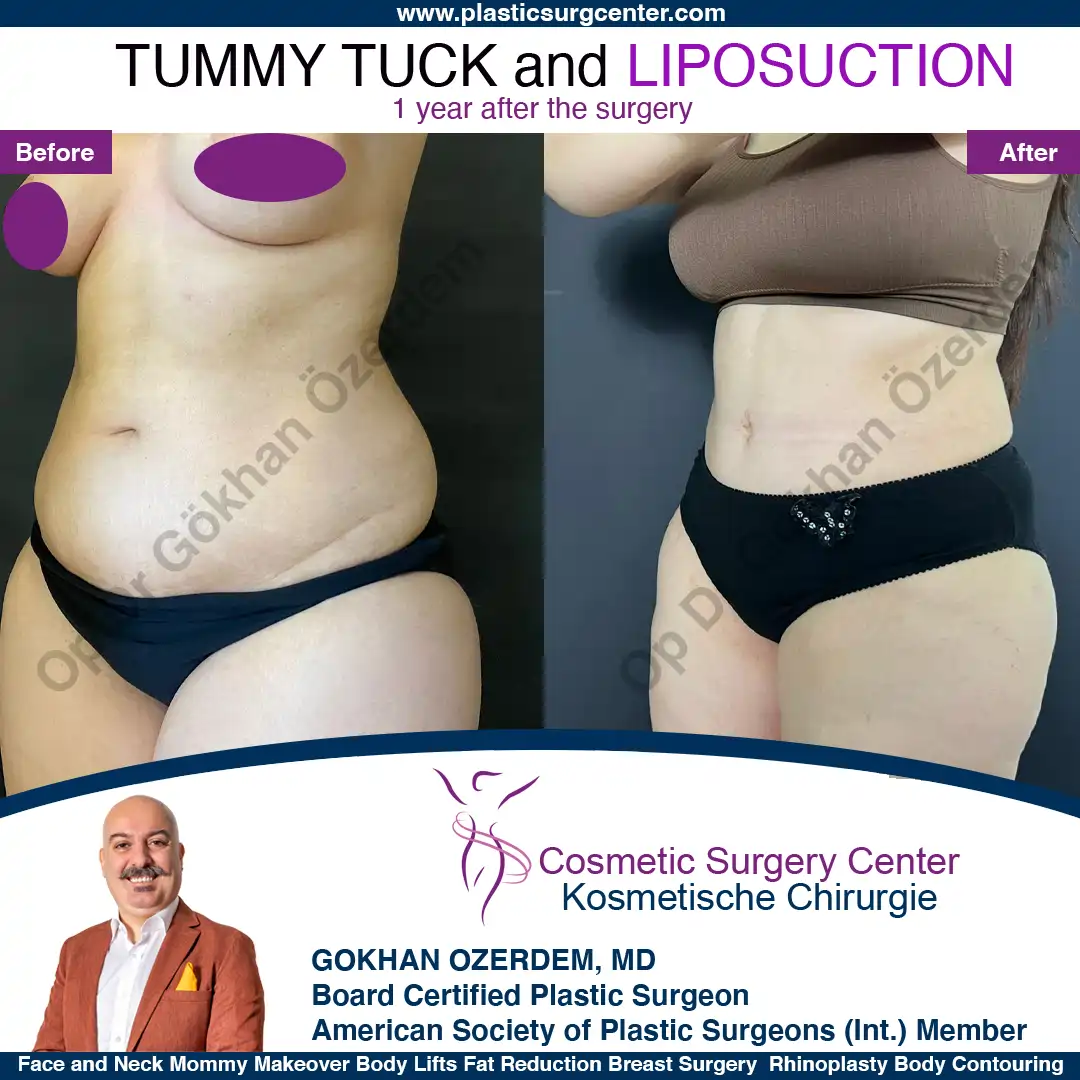
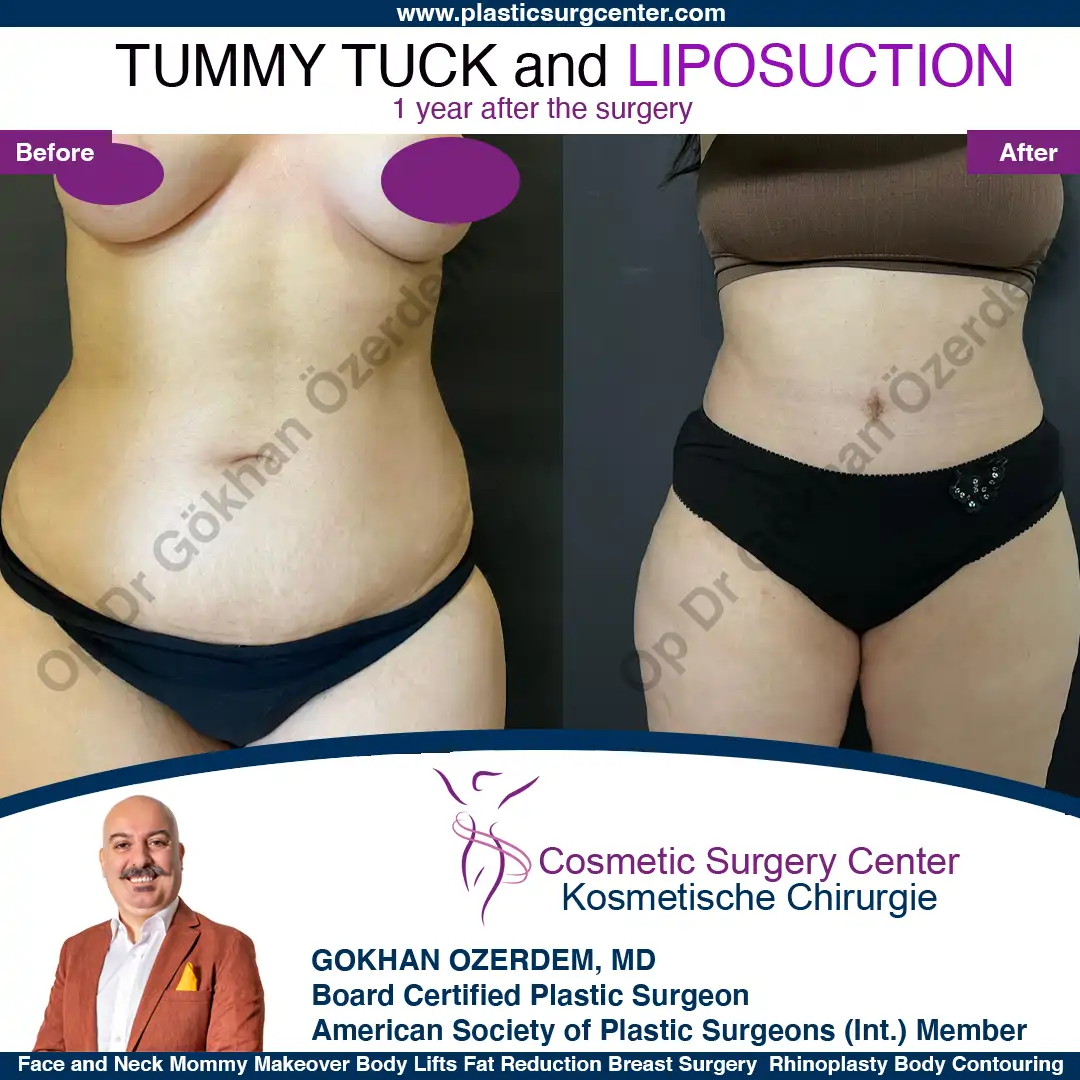
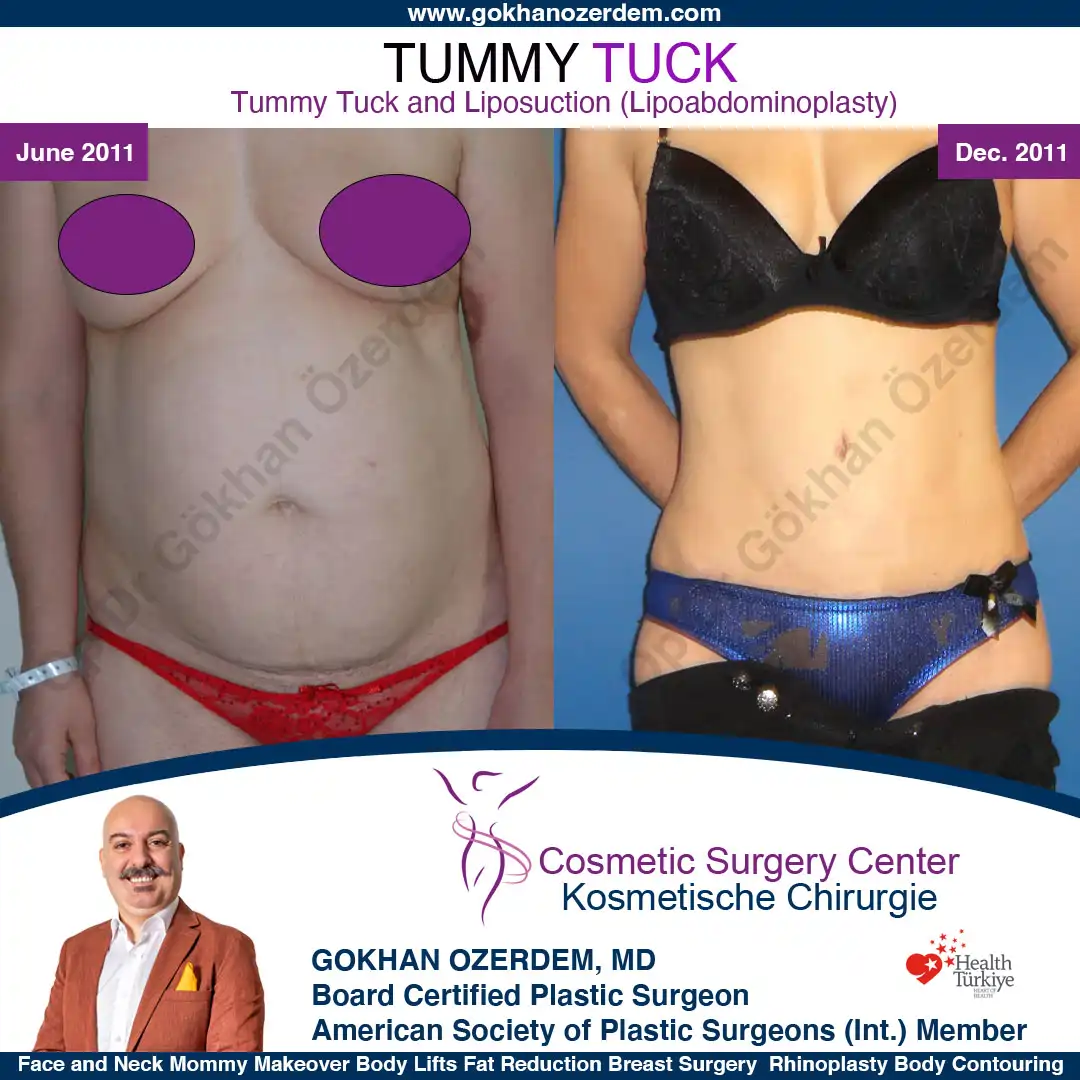
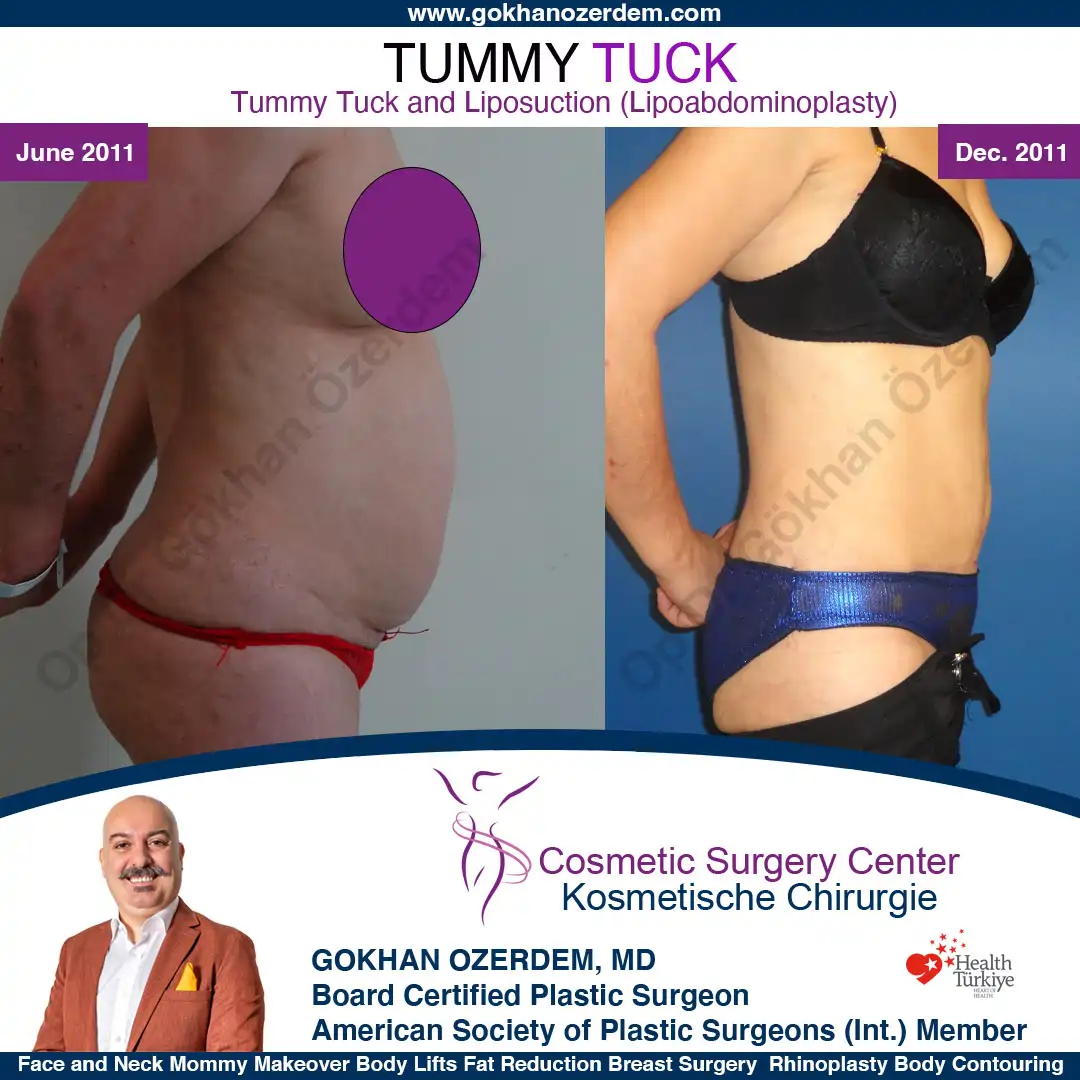
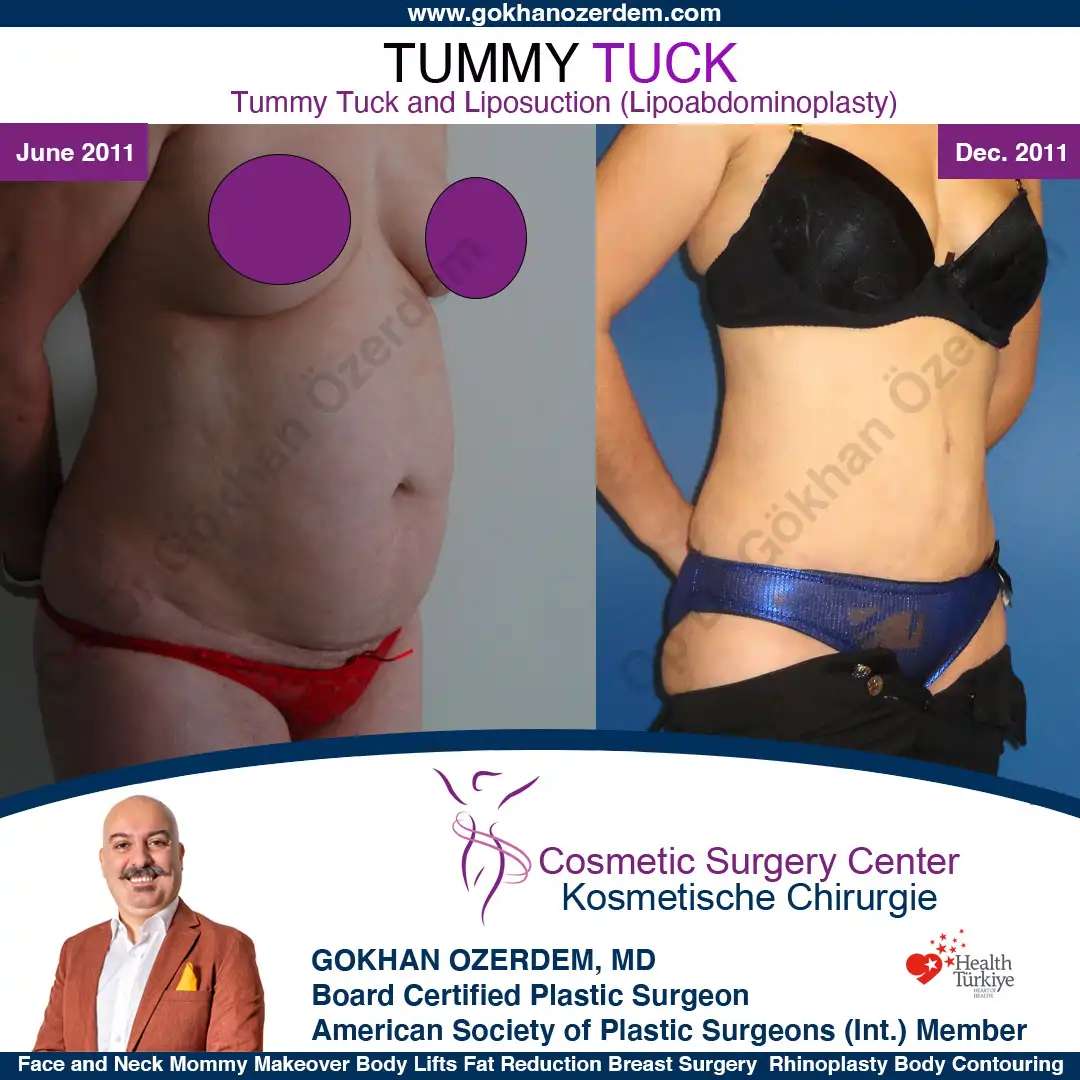
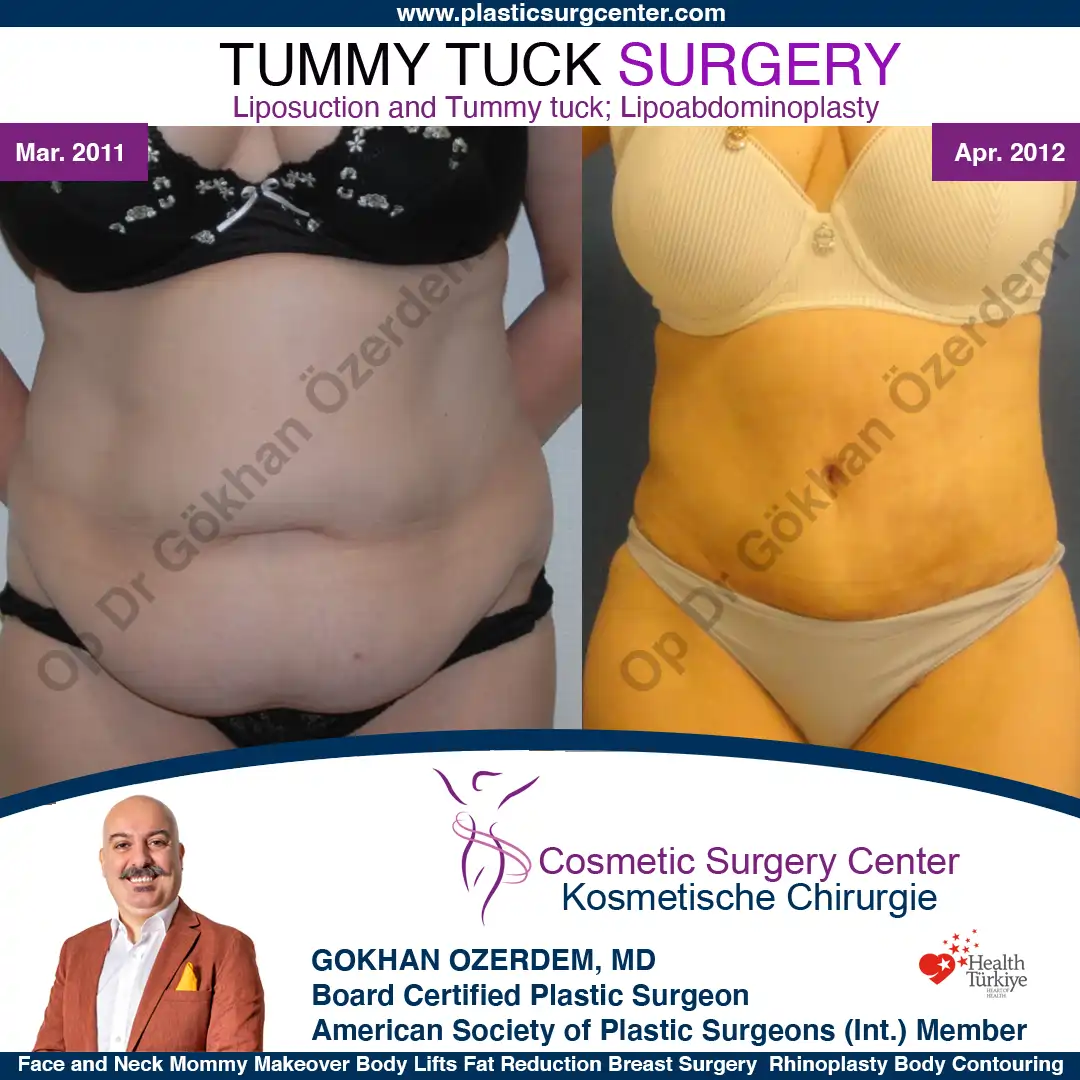
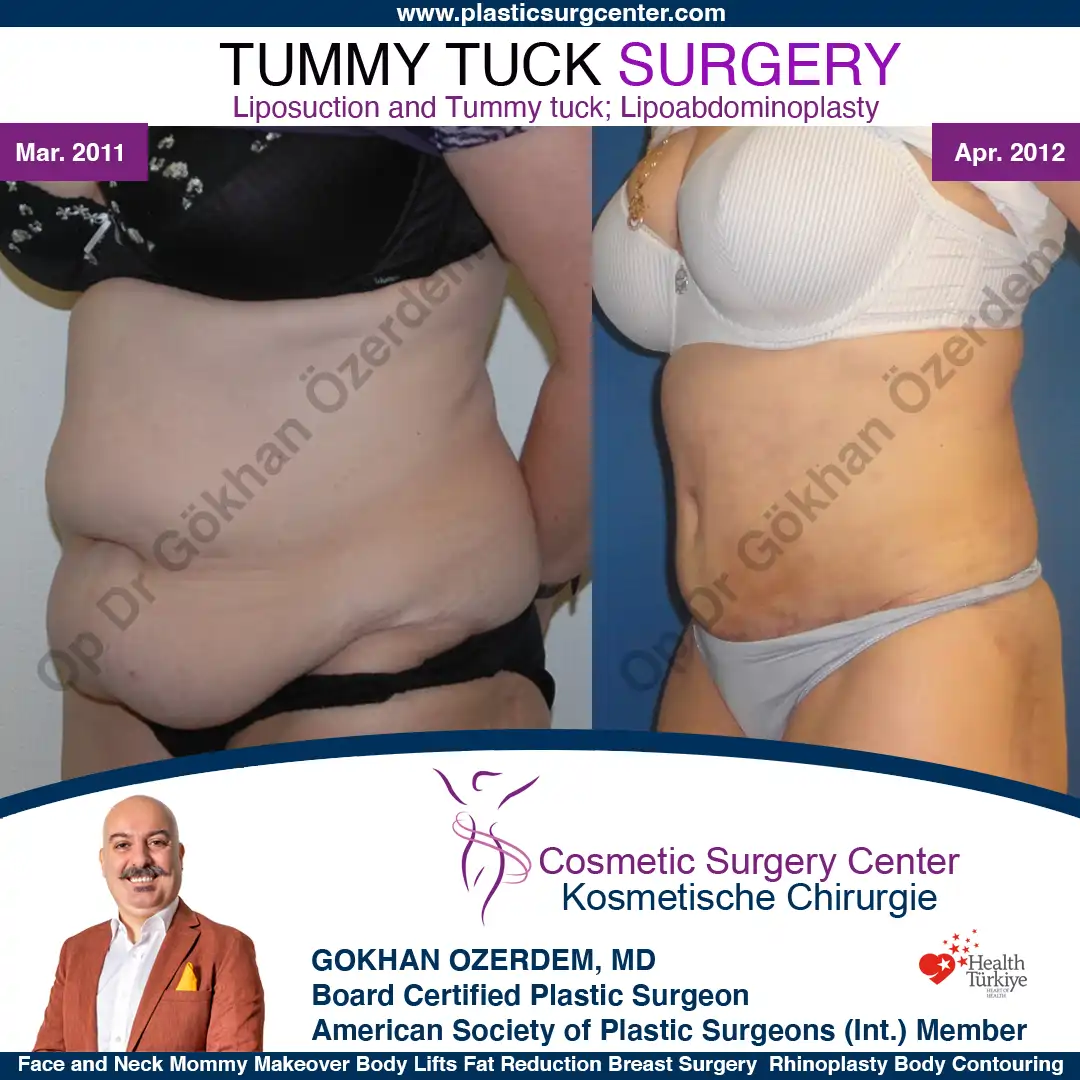
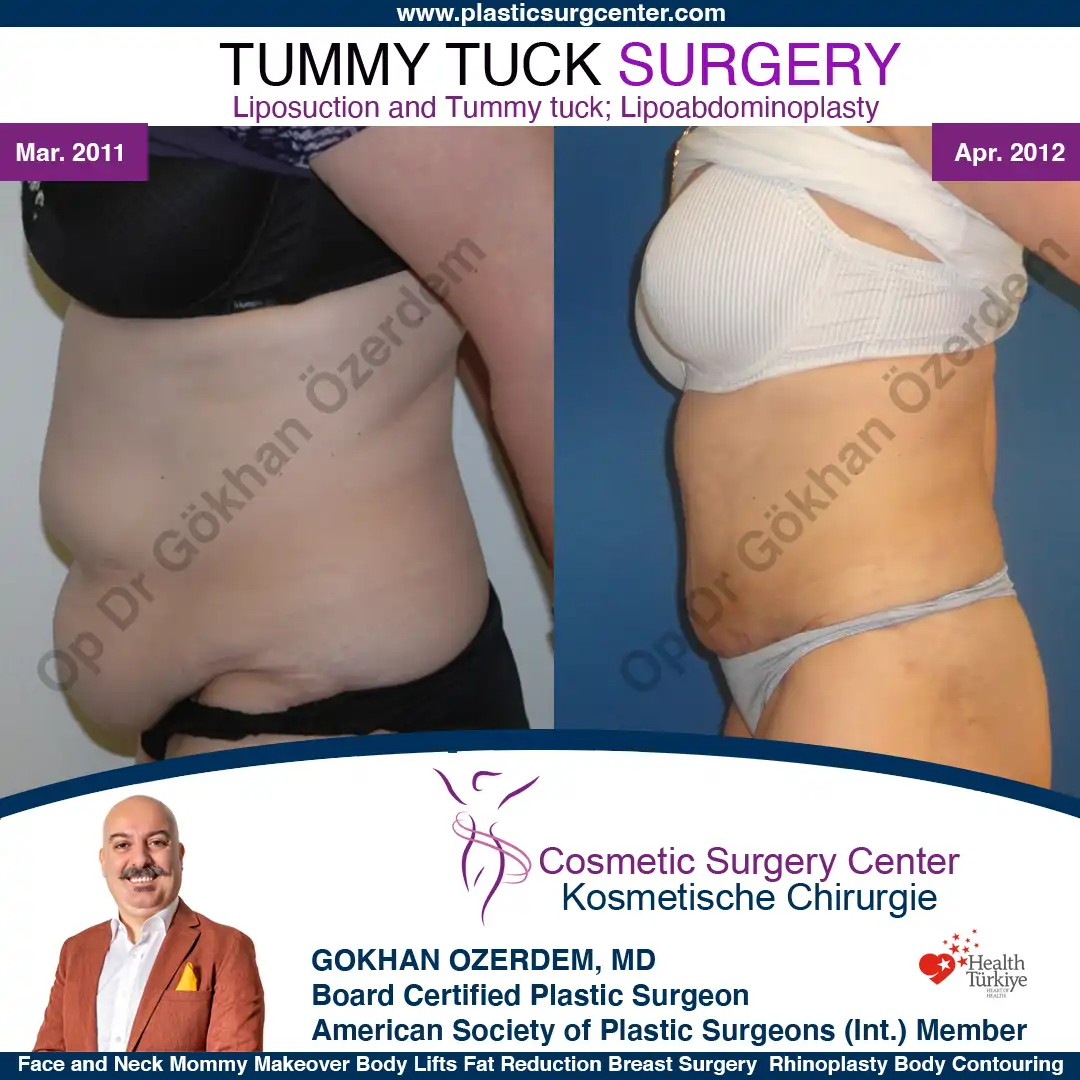
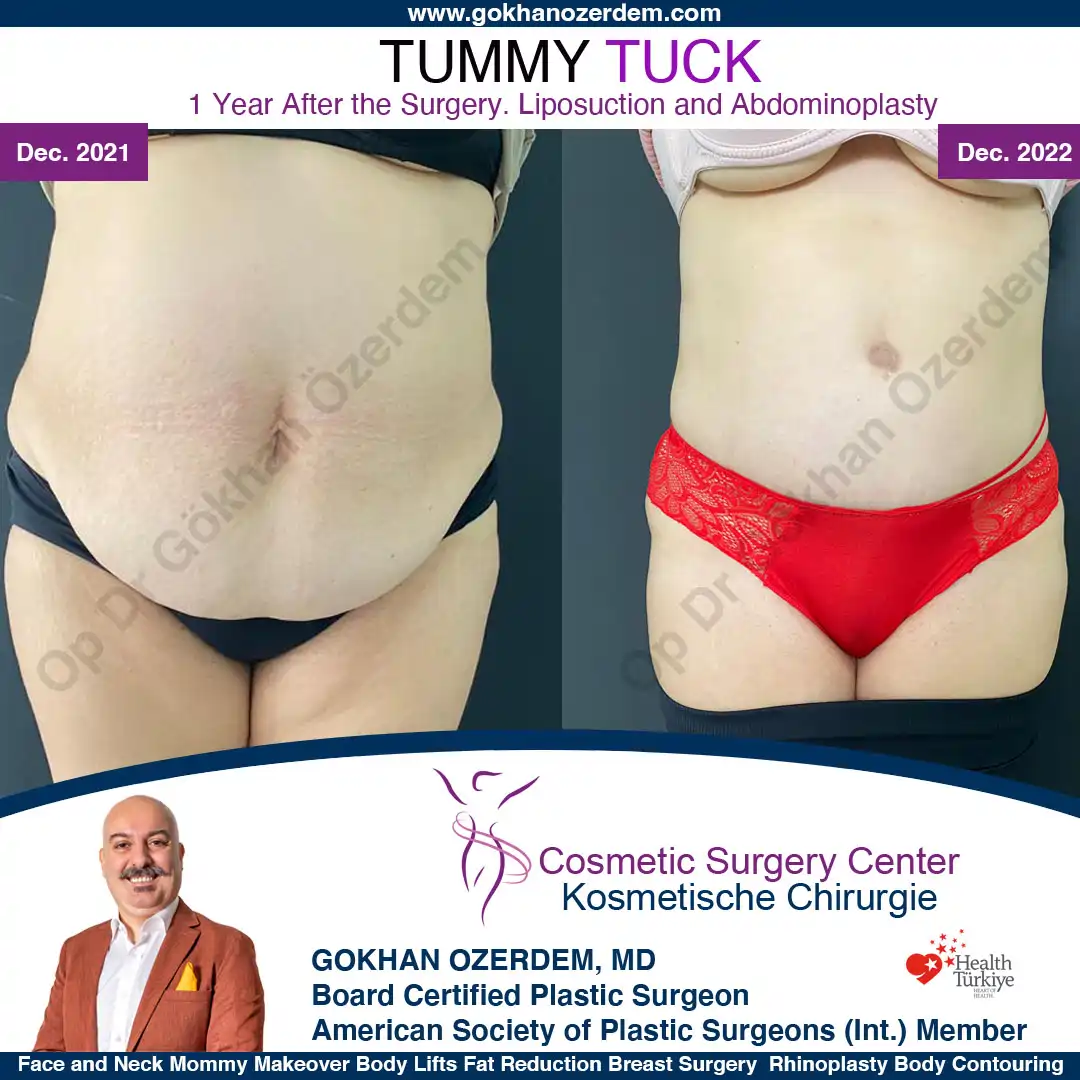
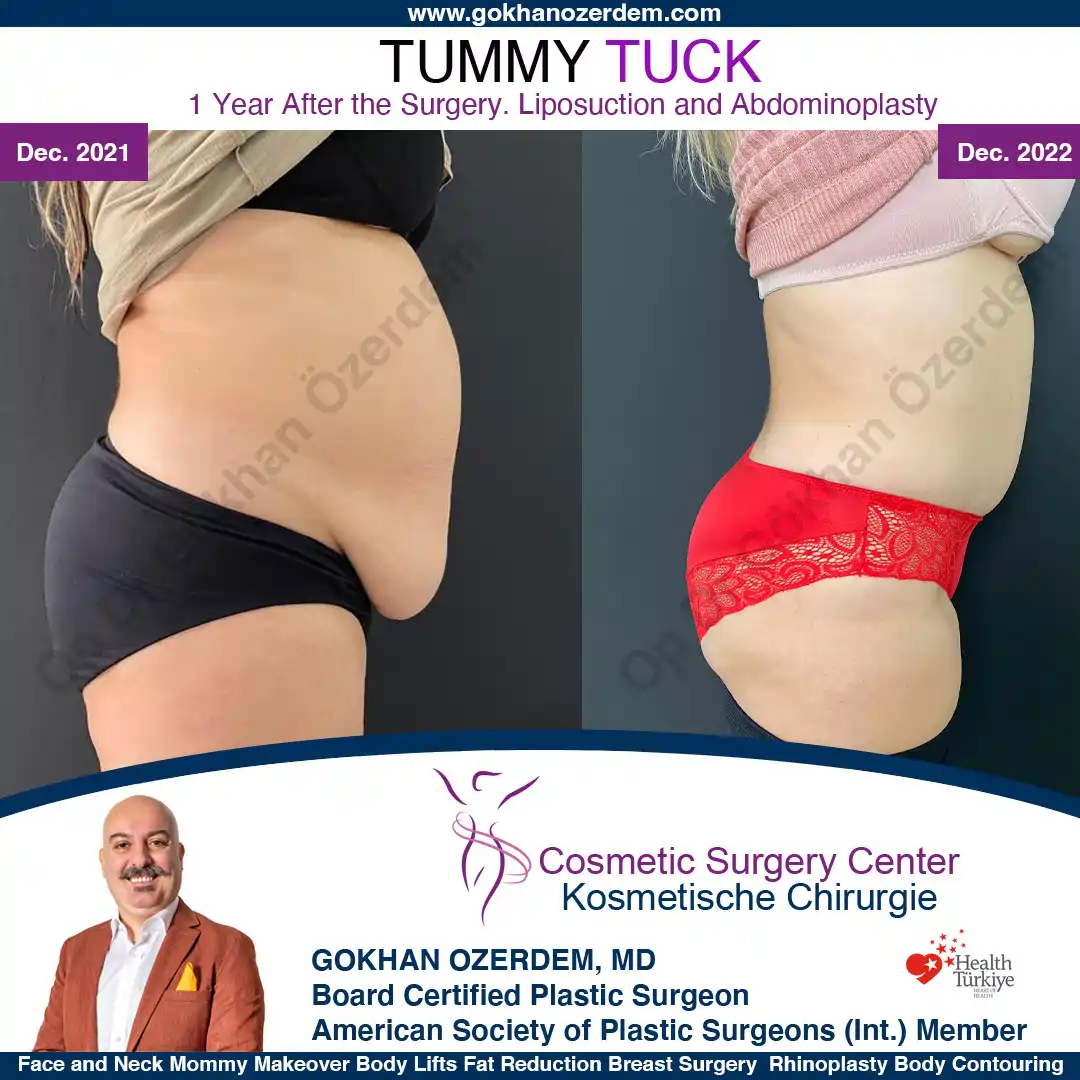
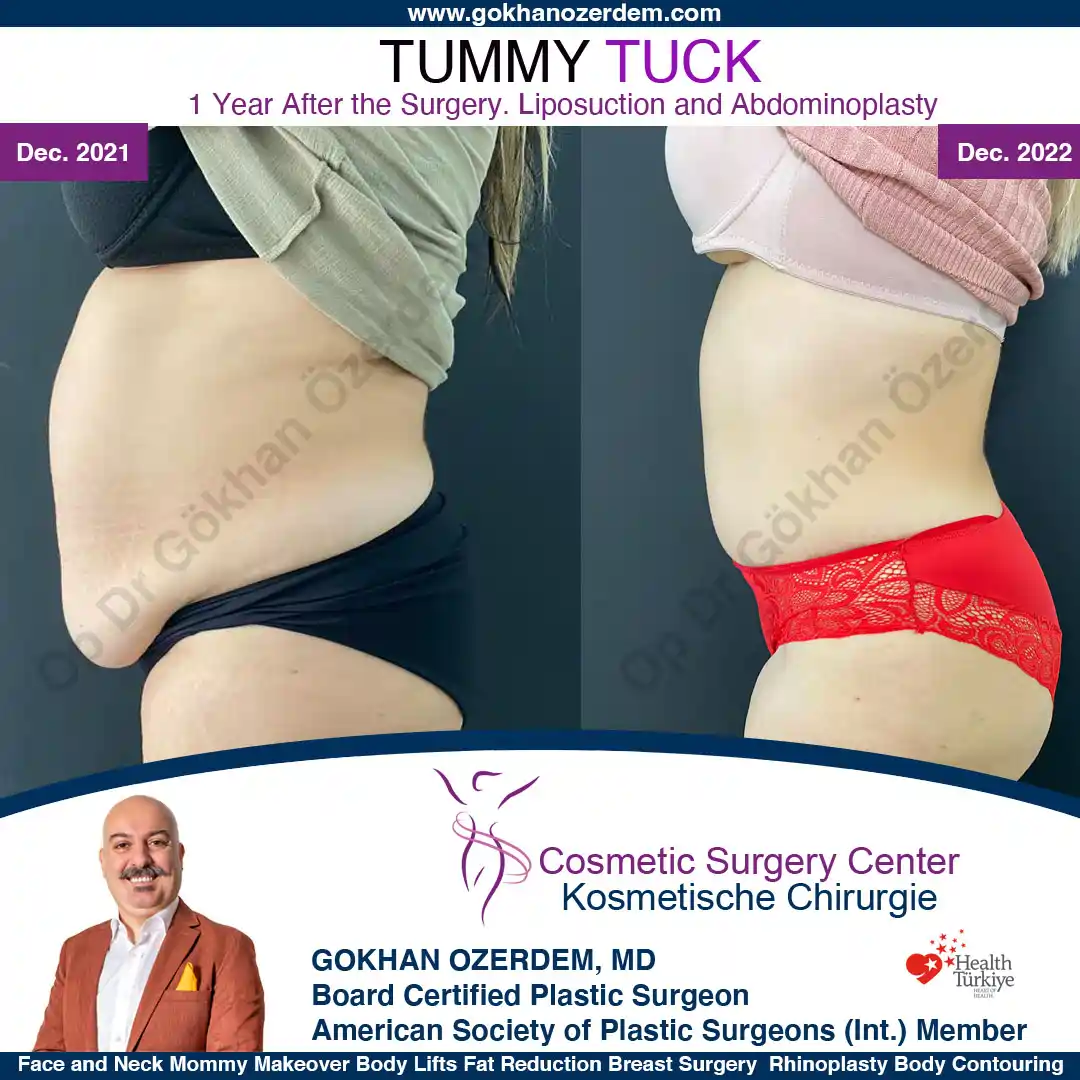
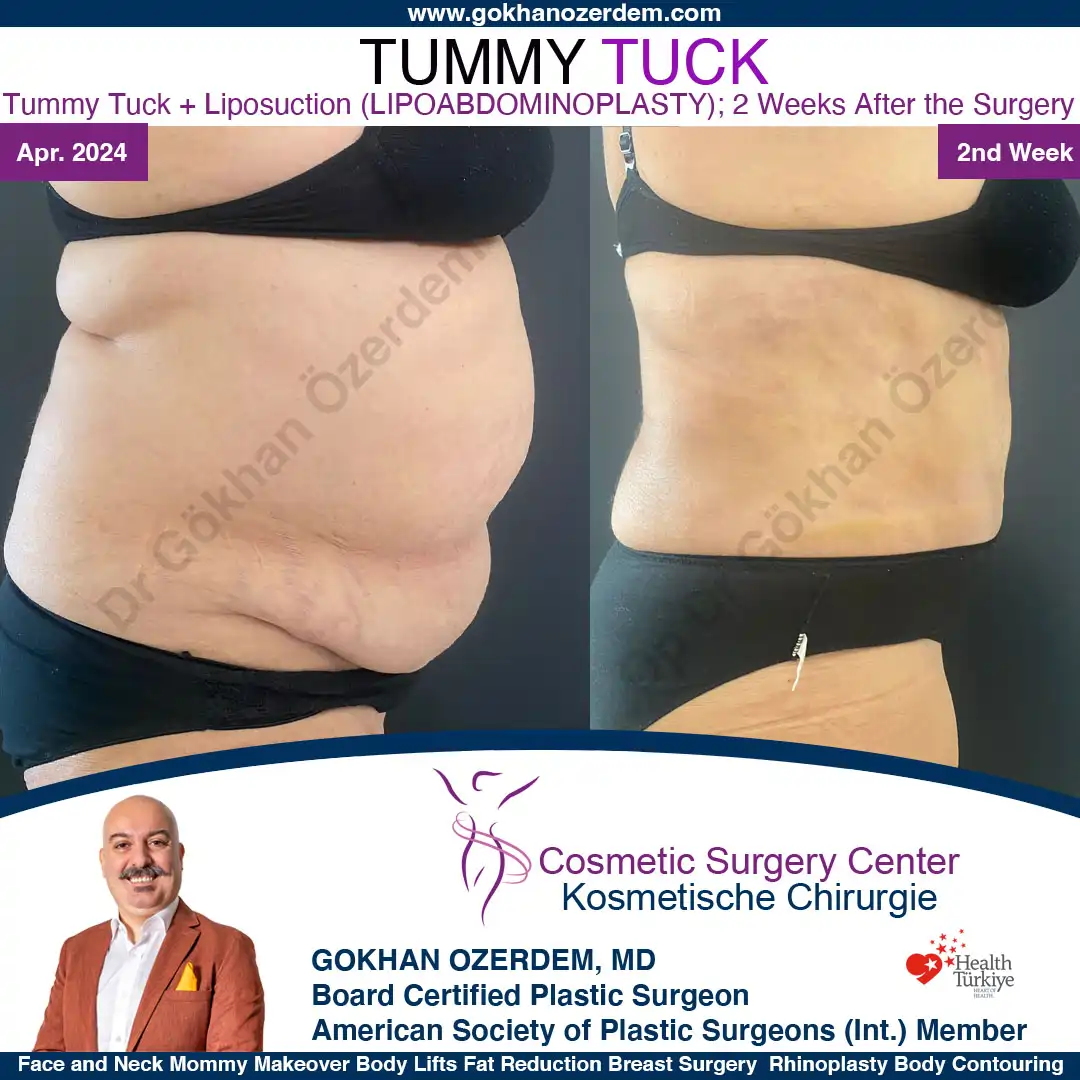
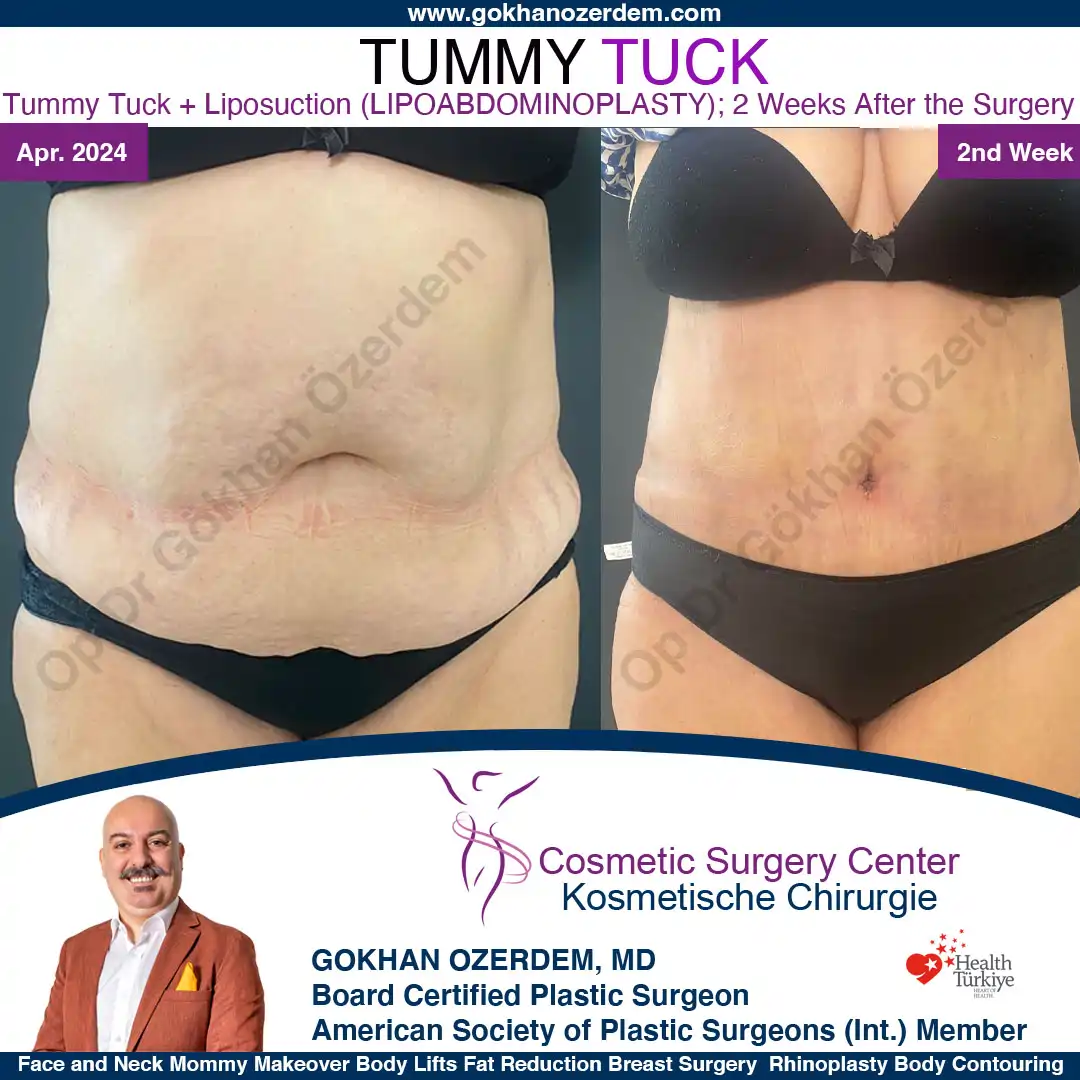
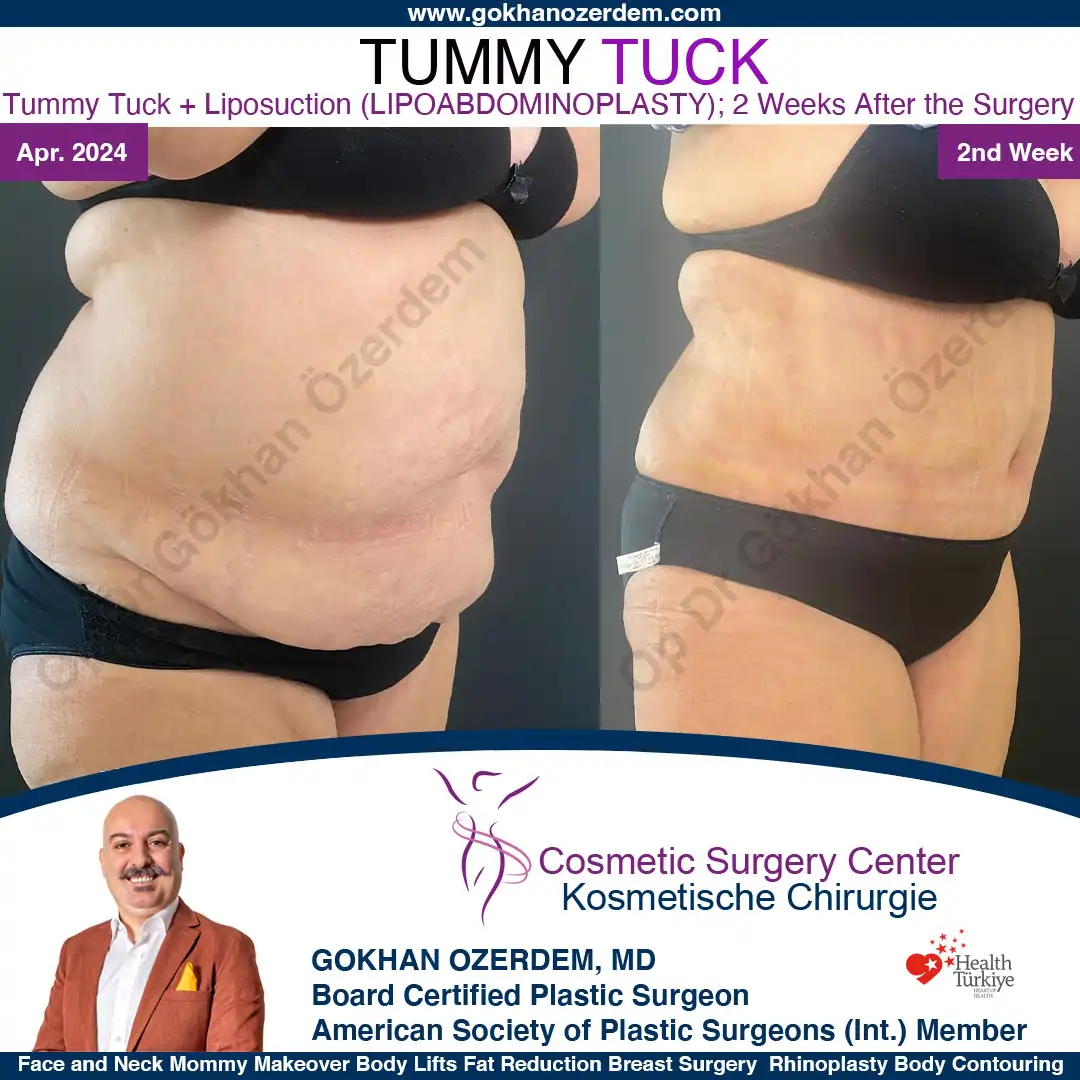
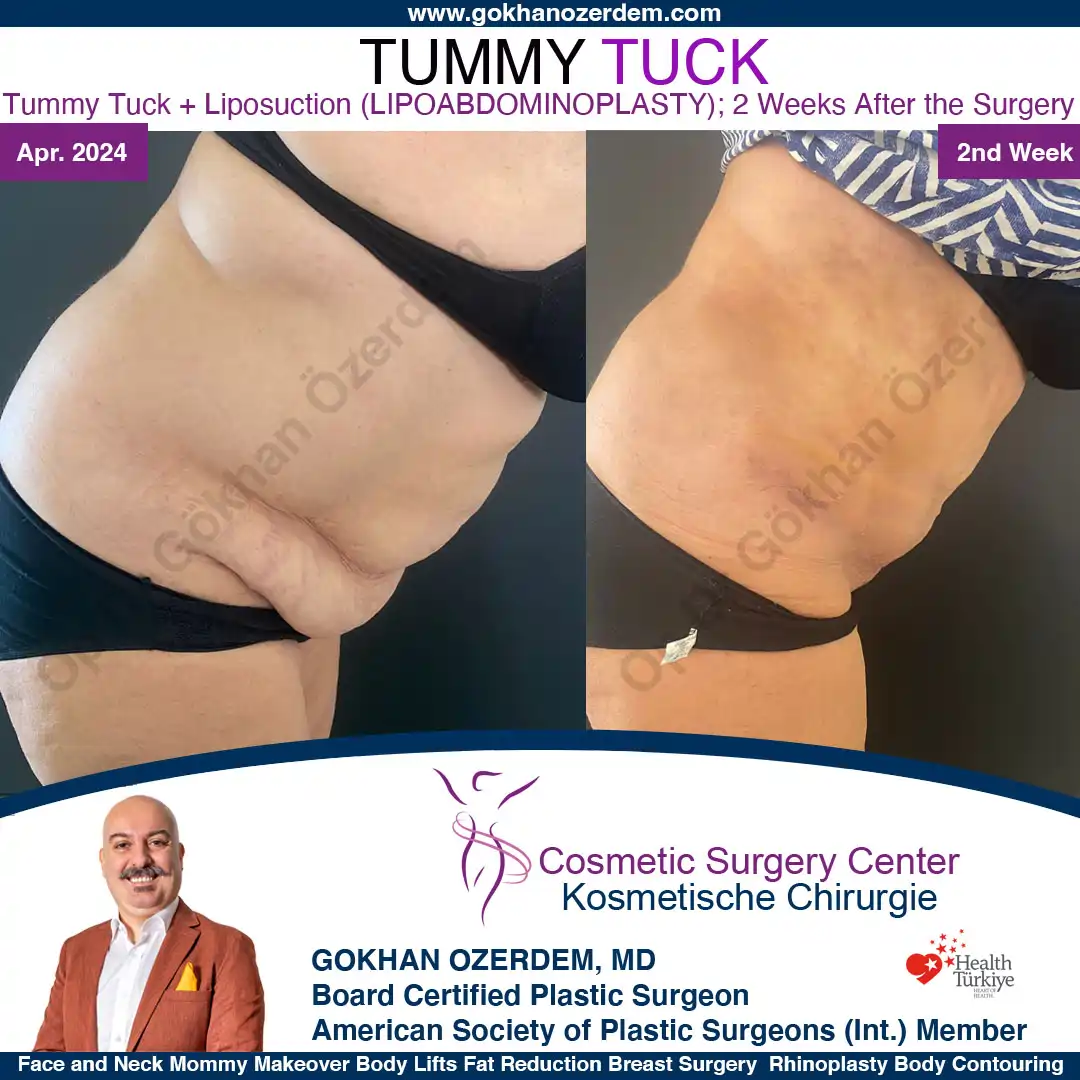
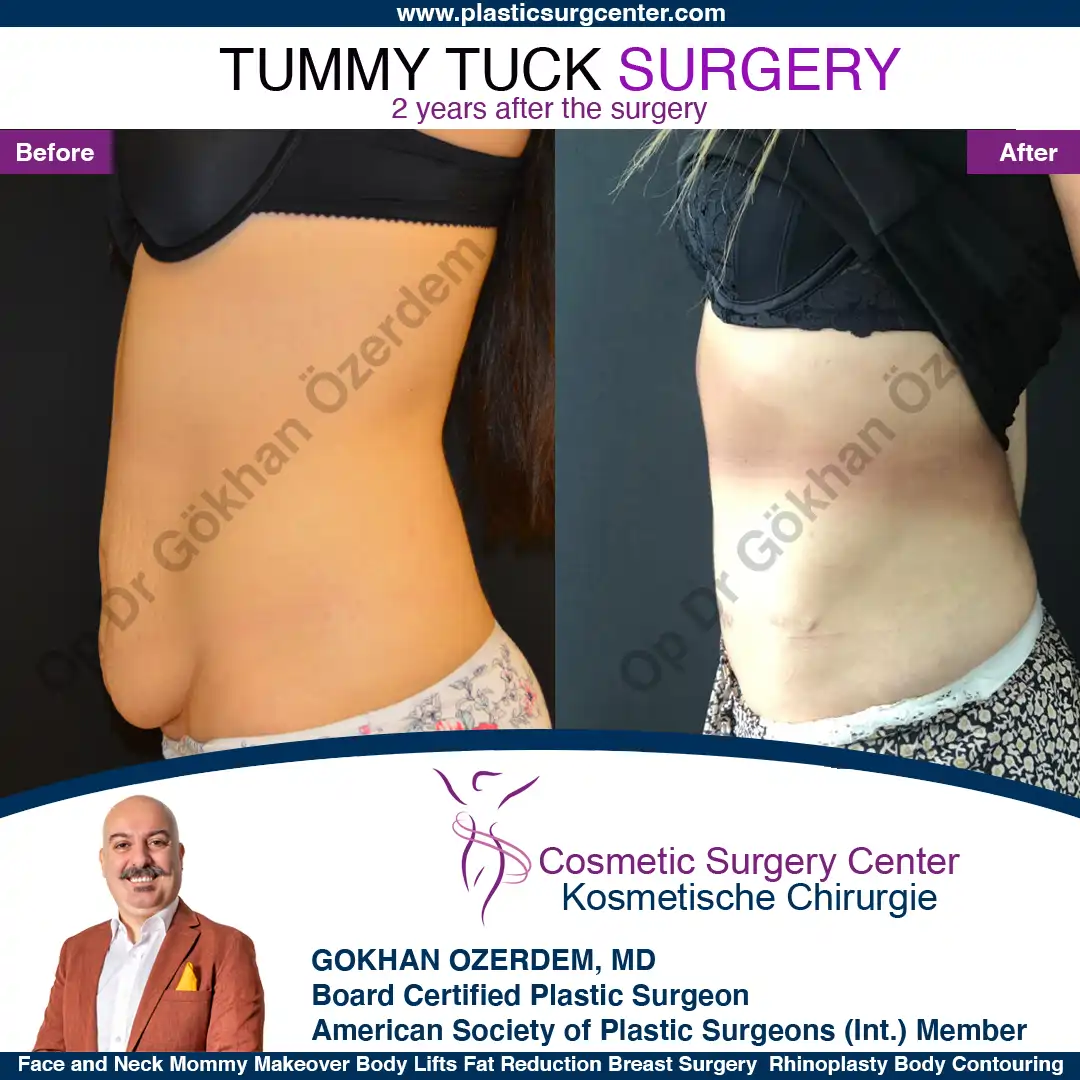
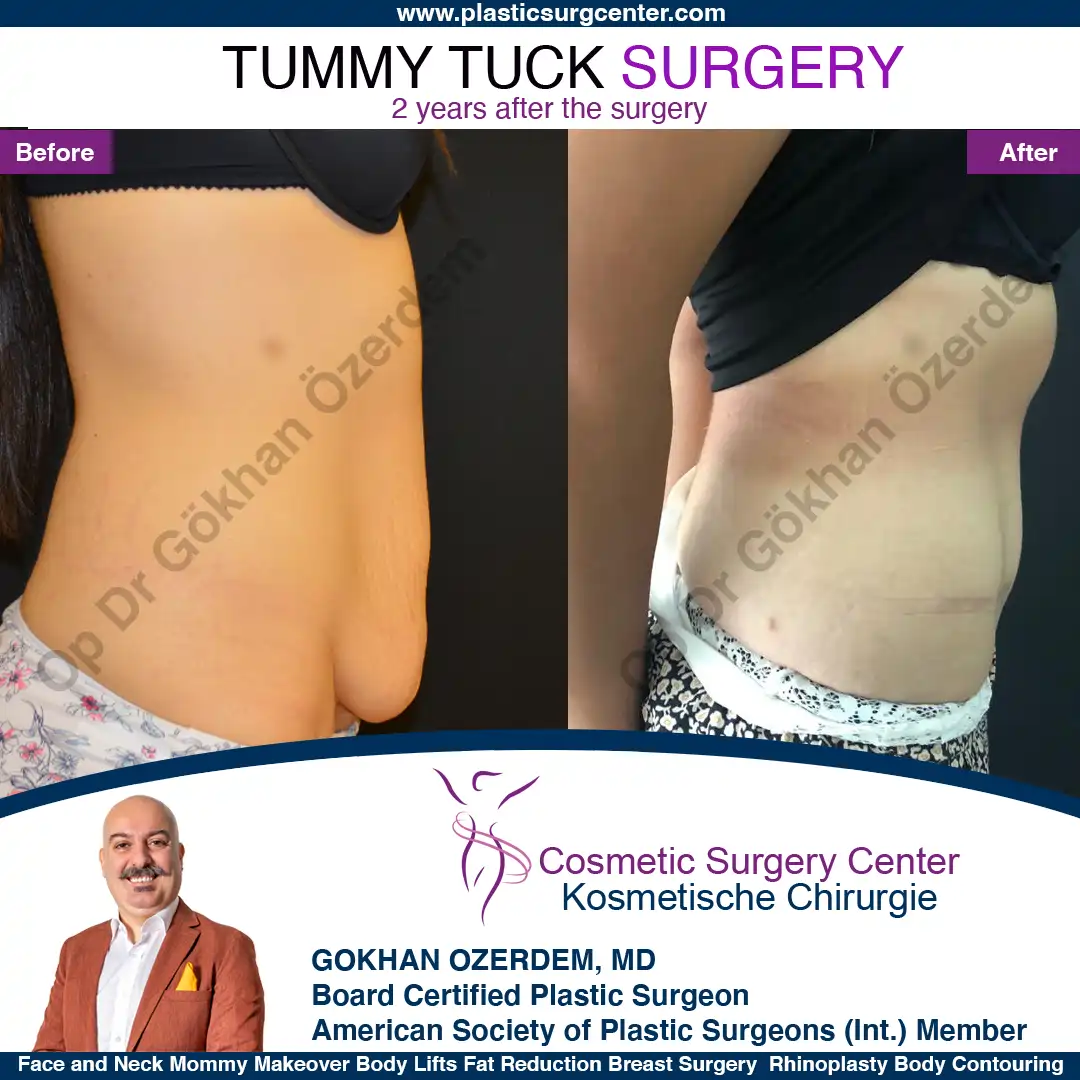
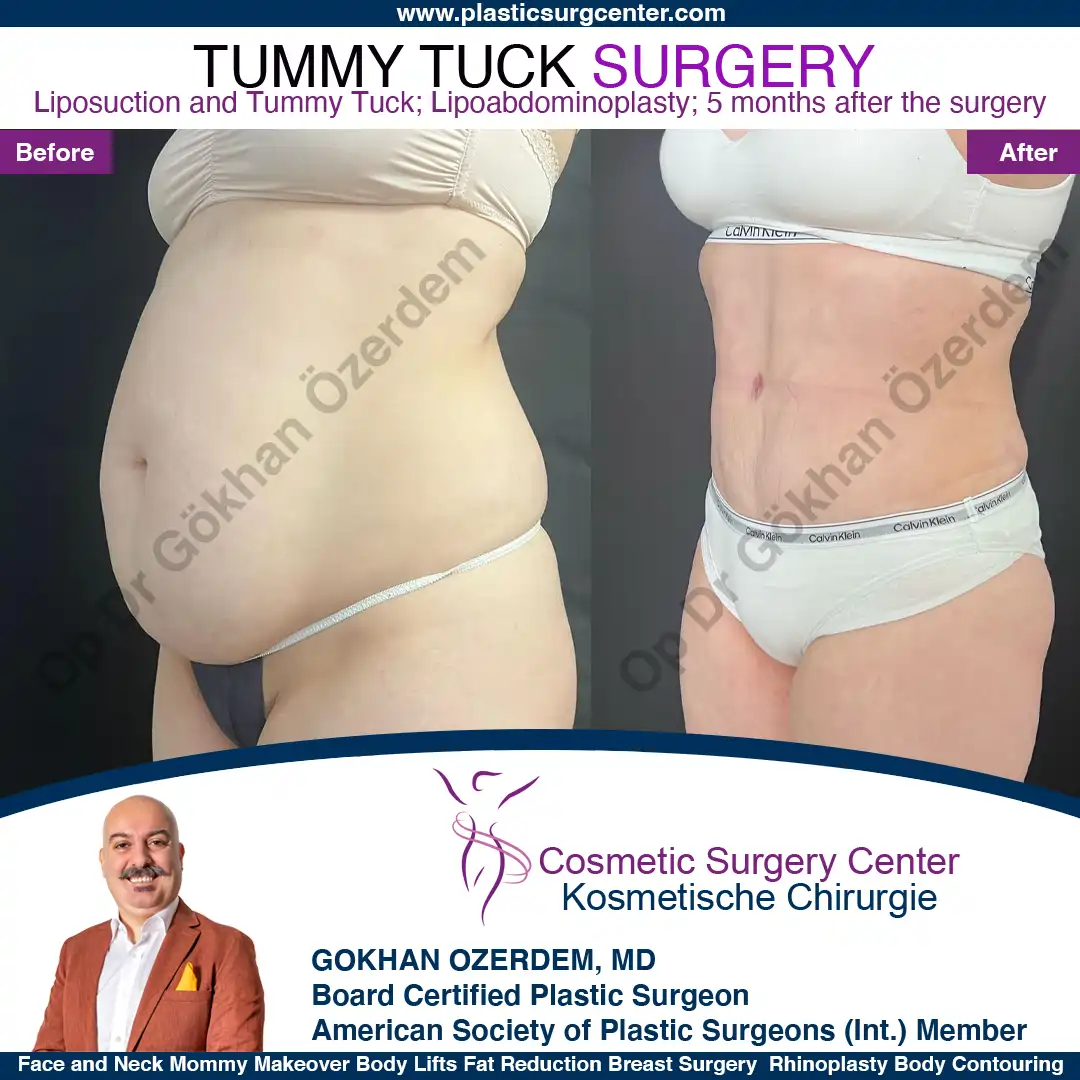
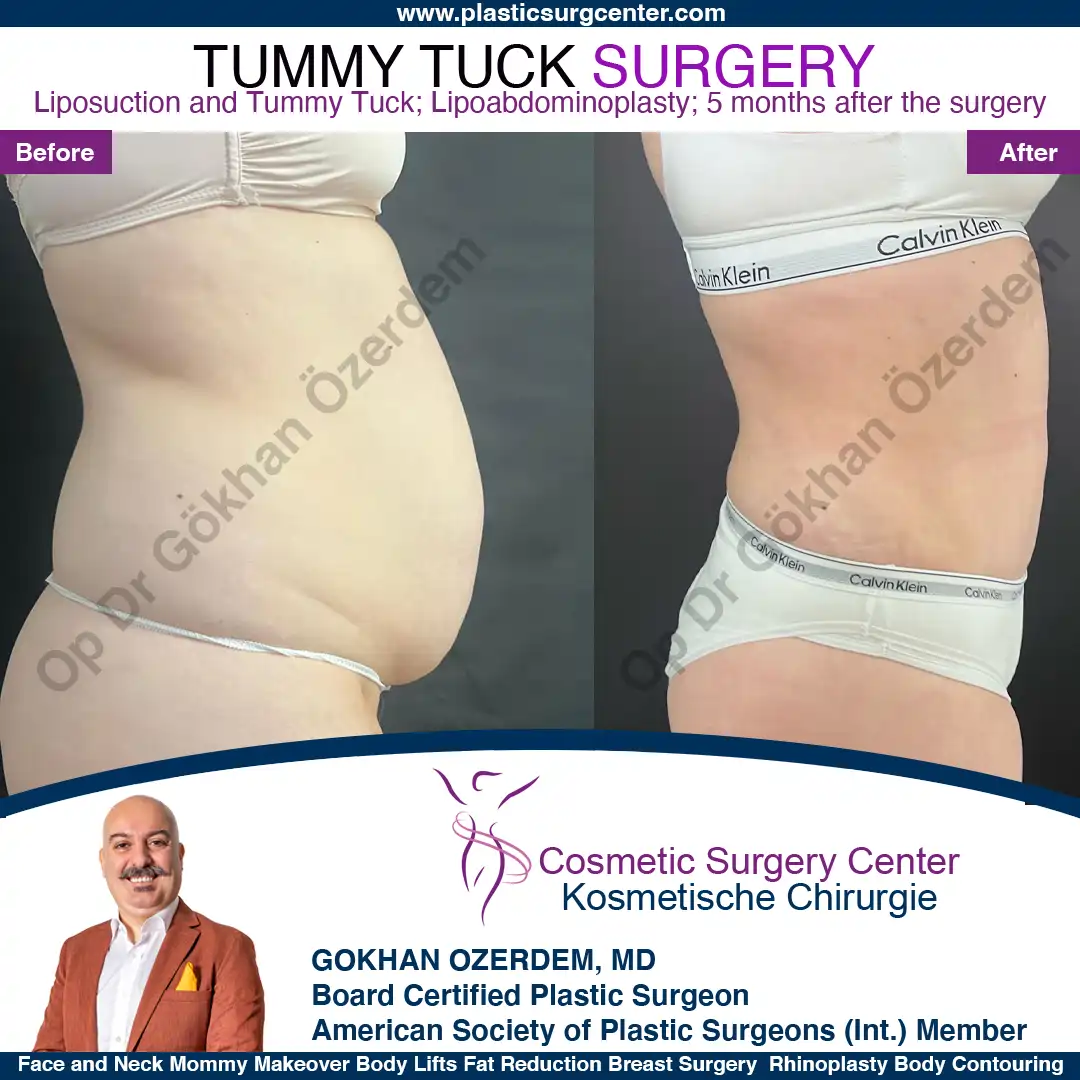
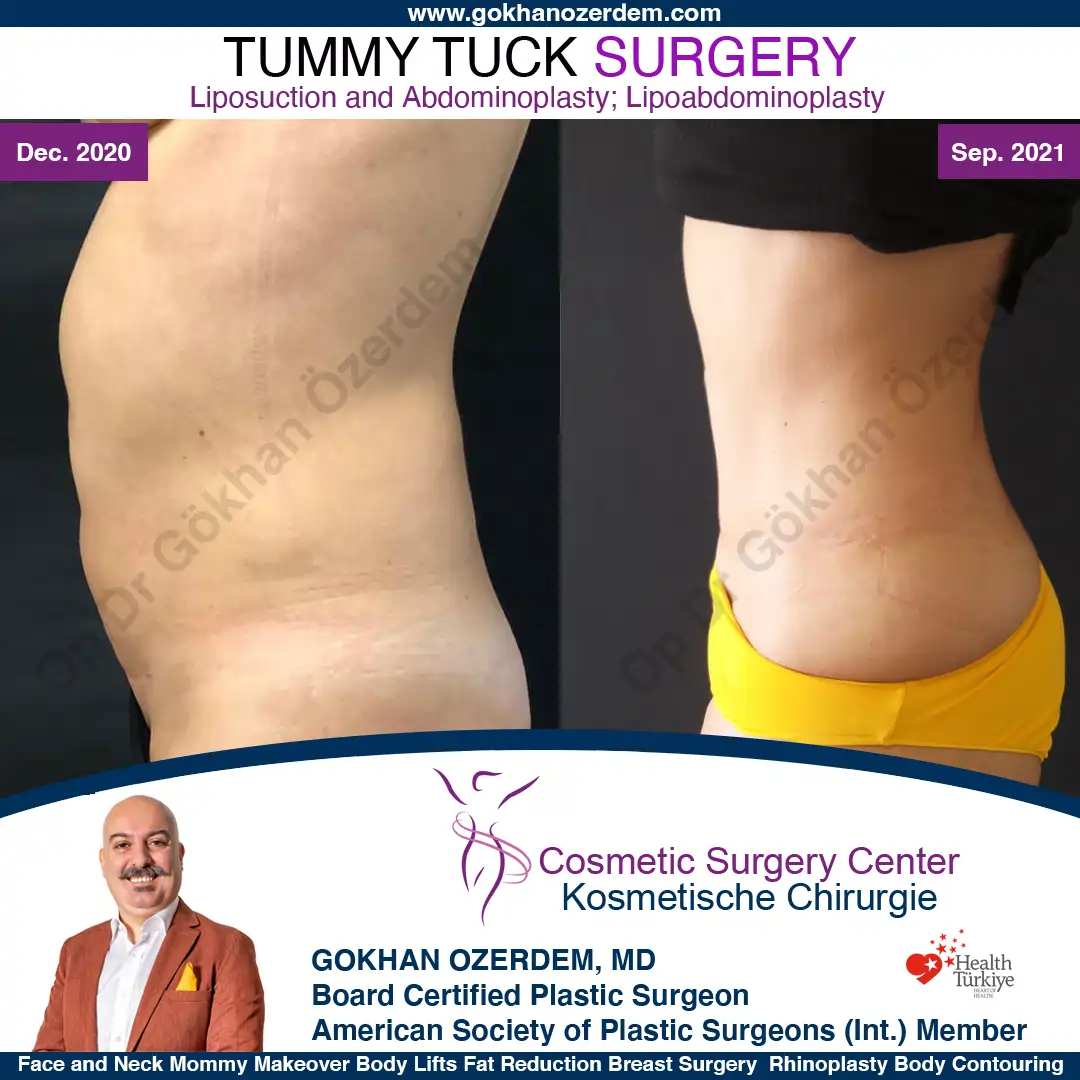
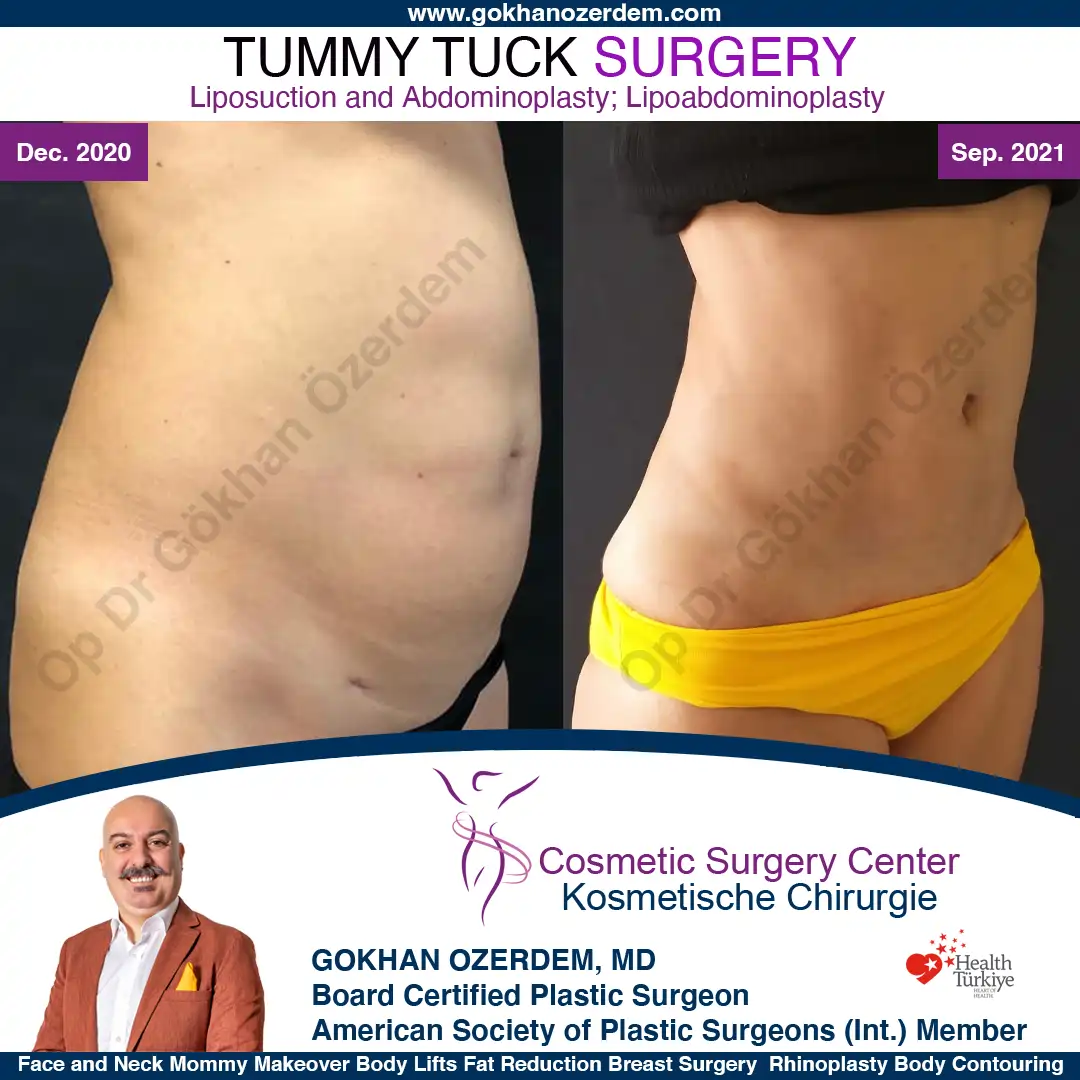
Tummy Tuck Before and After
Abdominoplasty Results
[TUMMY TUCK BEFORE & AFTER GALLERY]
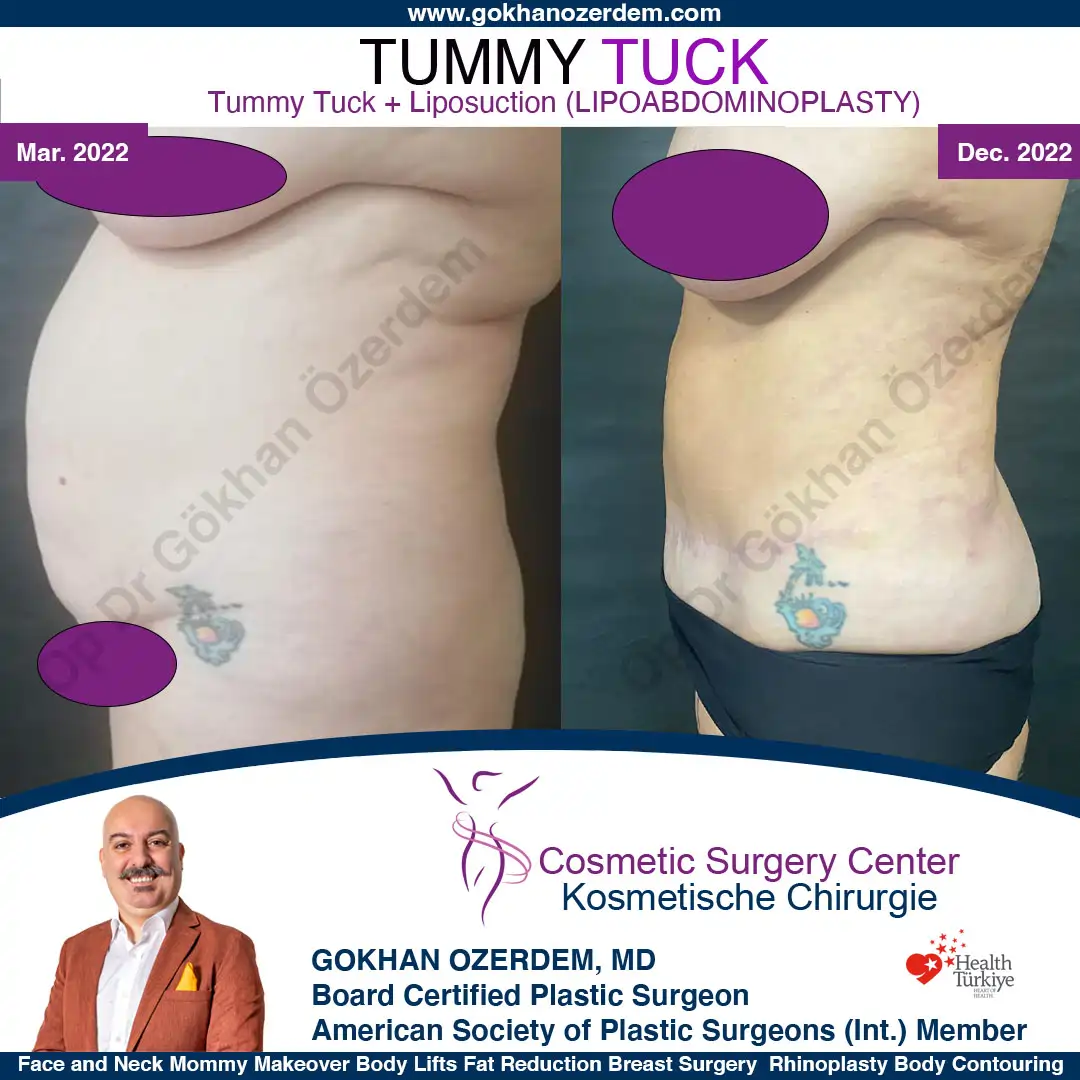
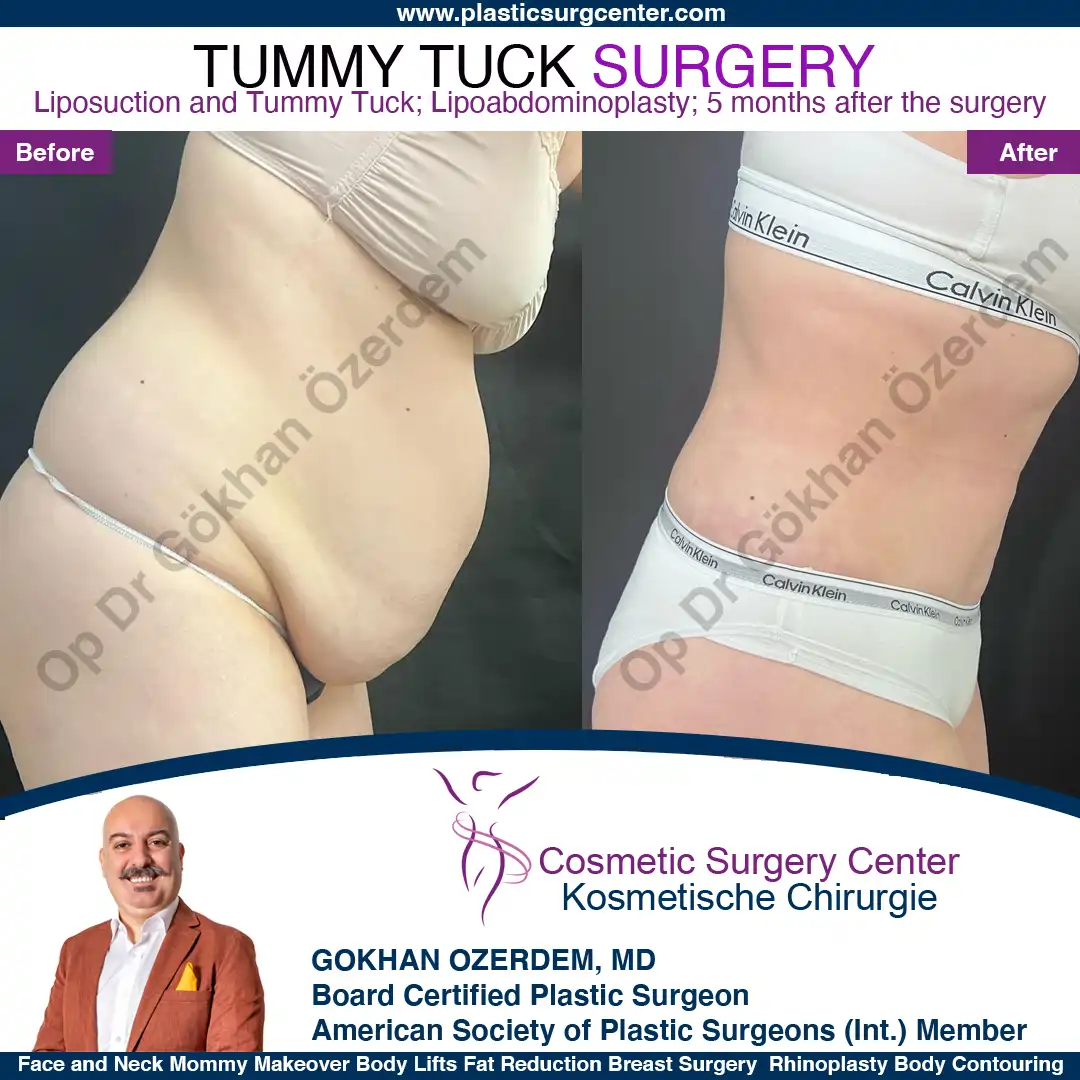
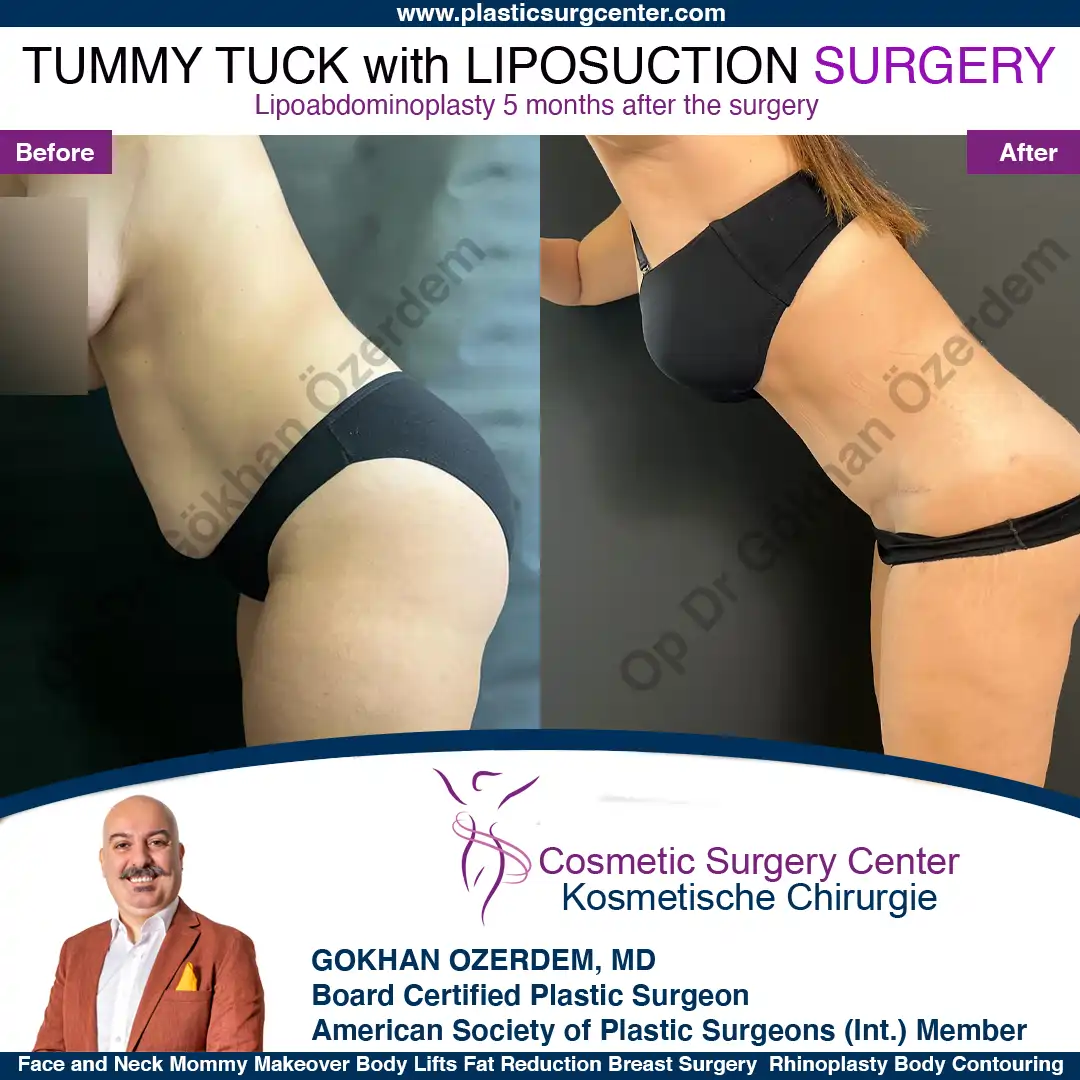
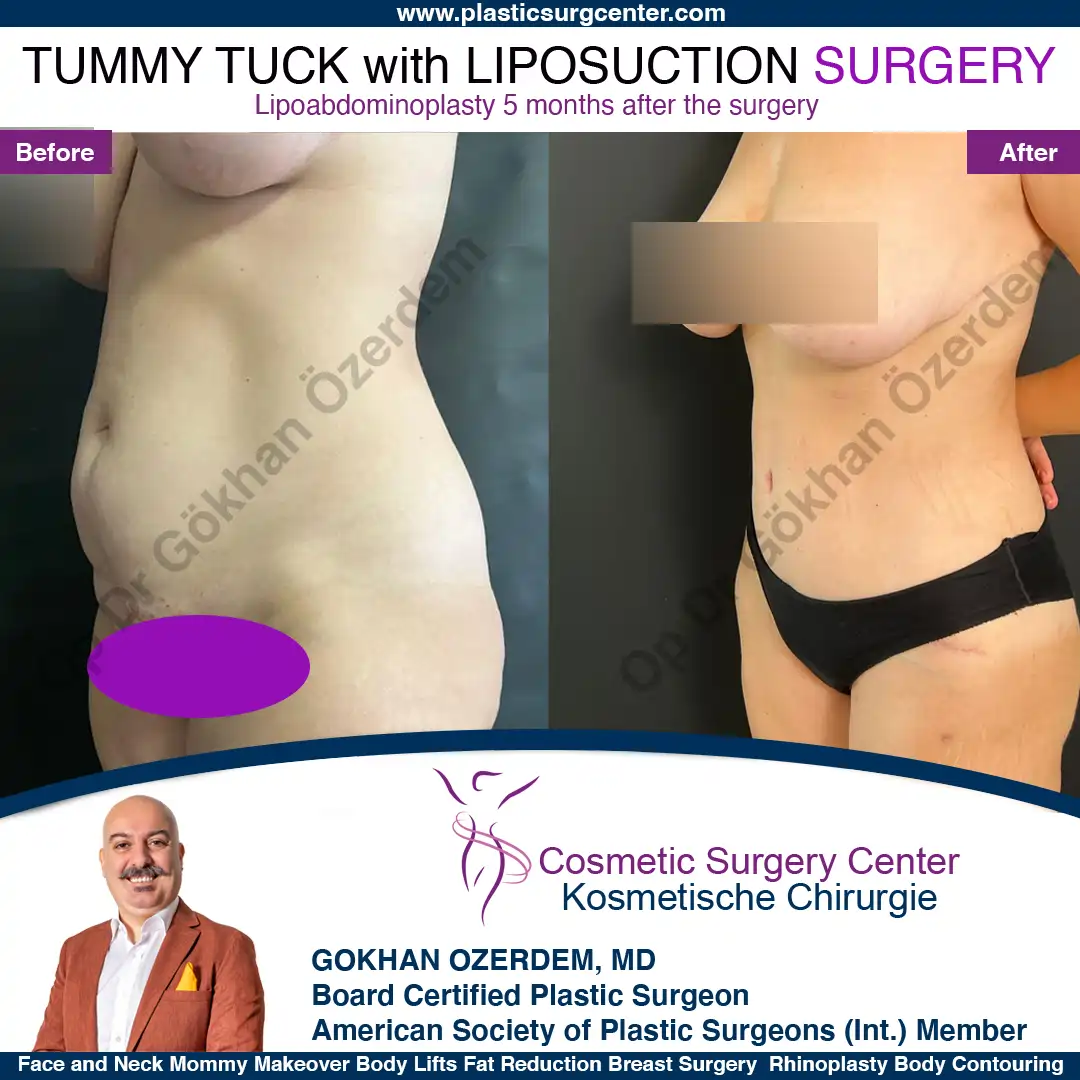
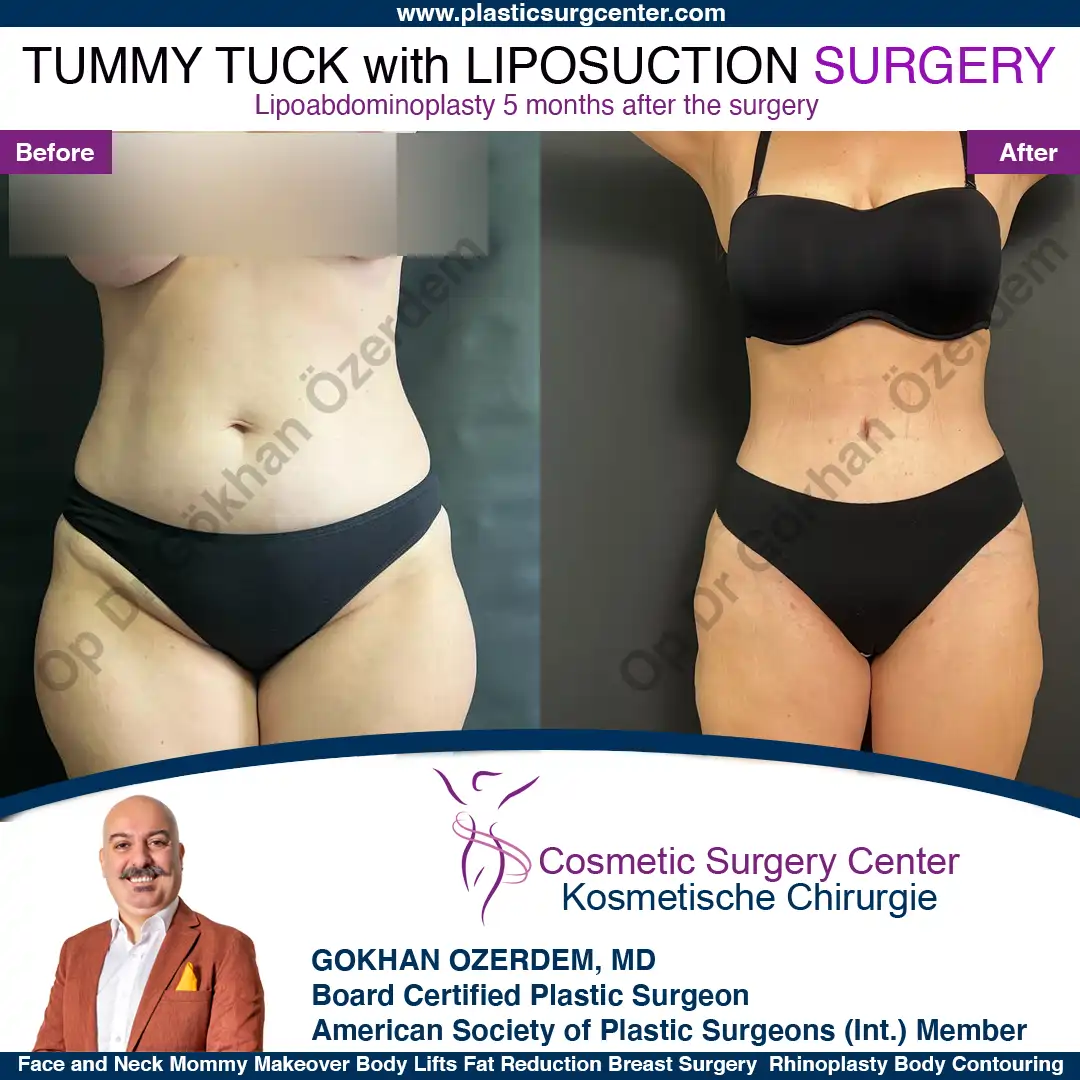
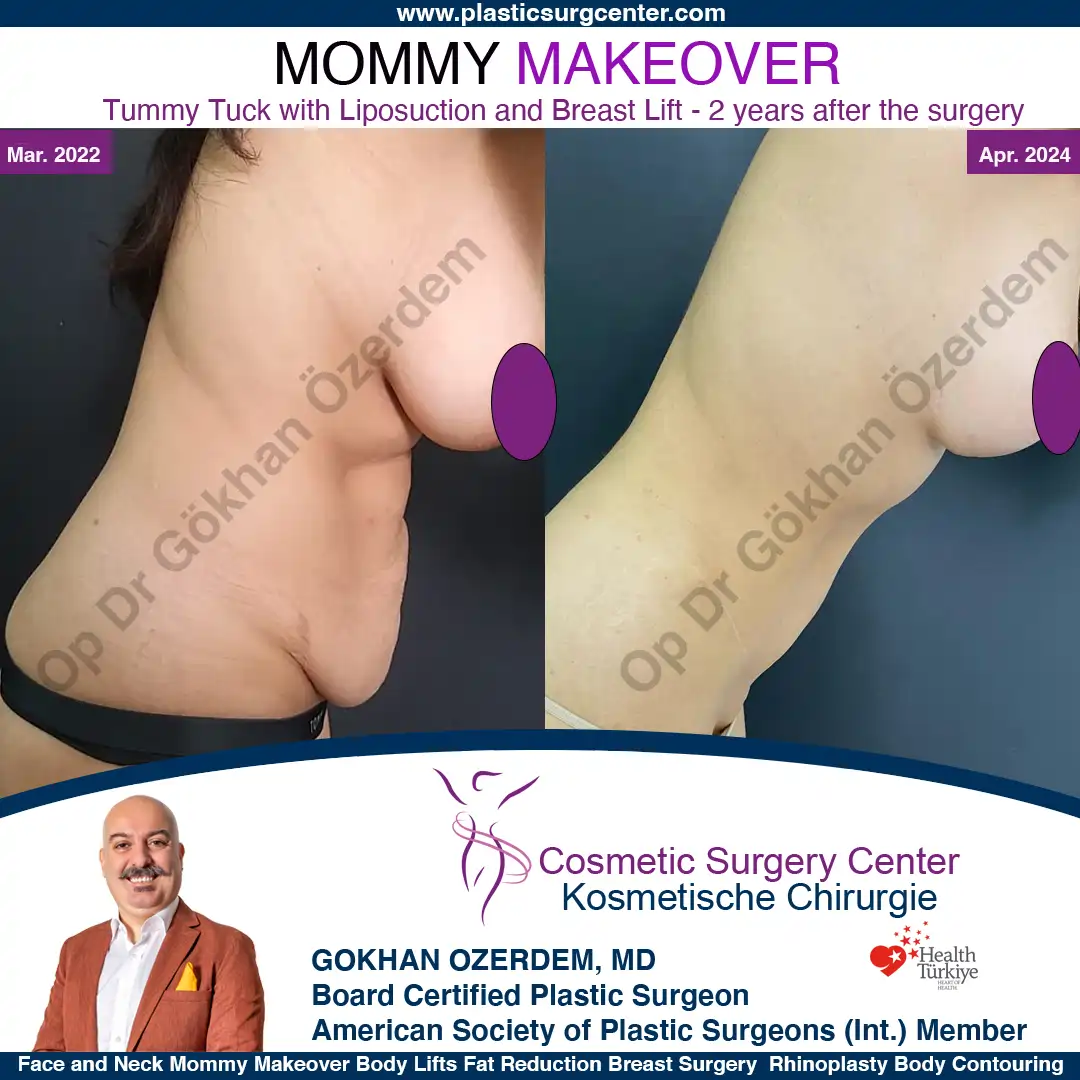
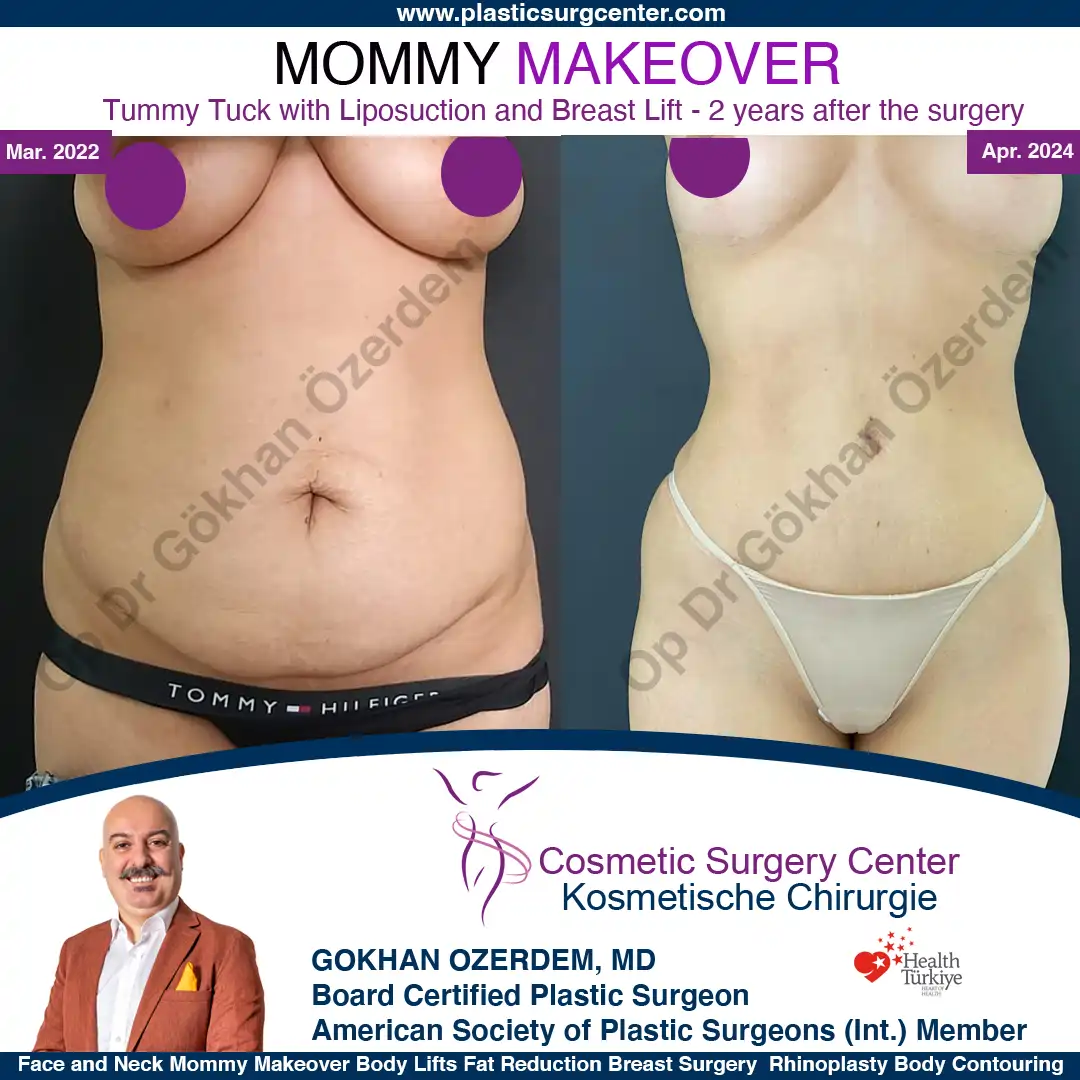
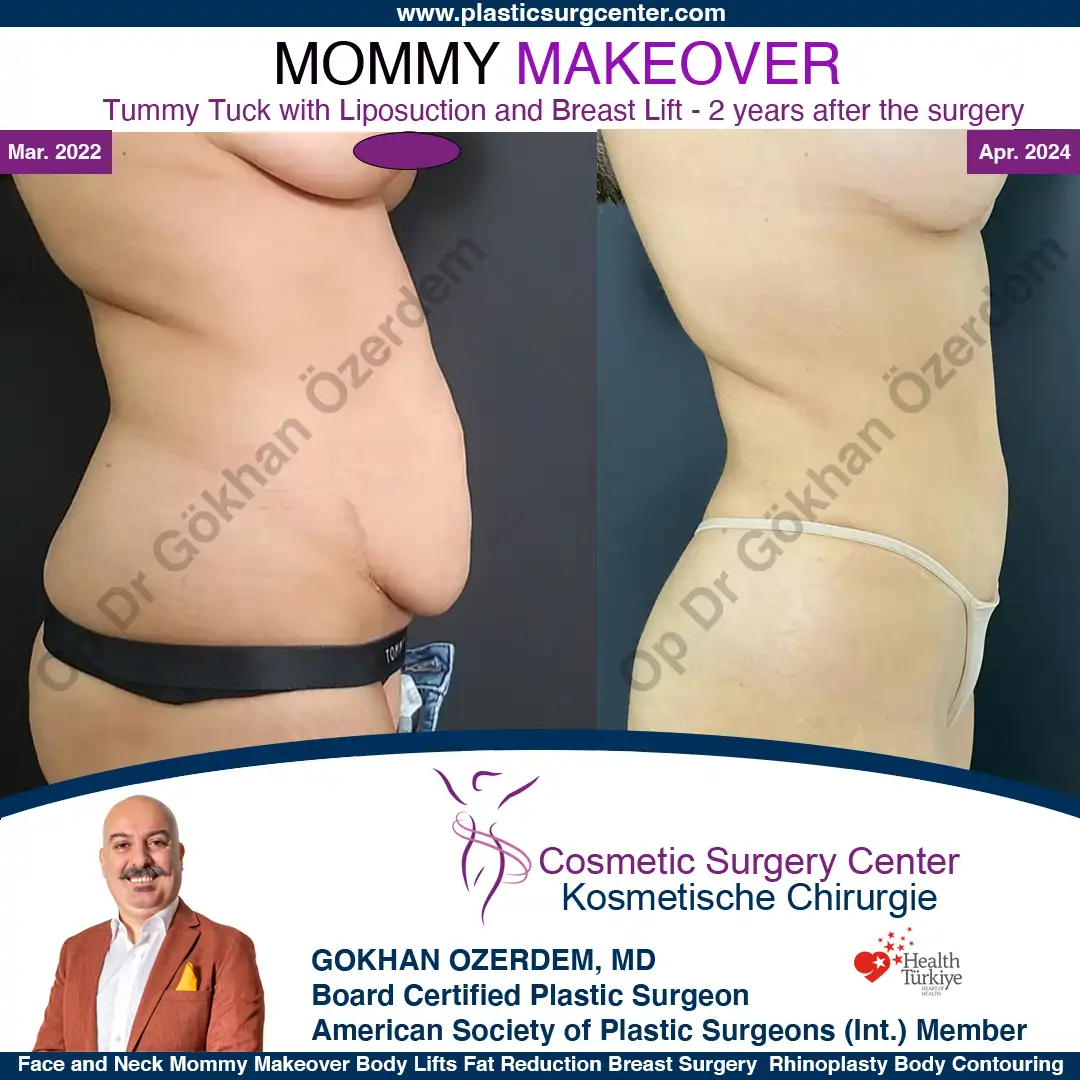
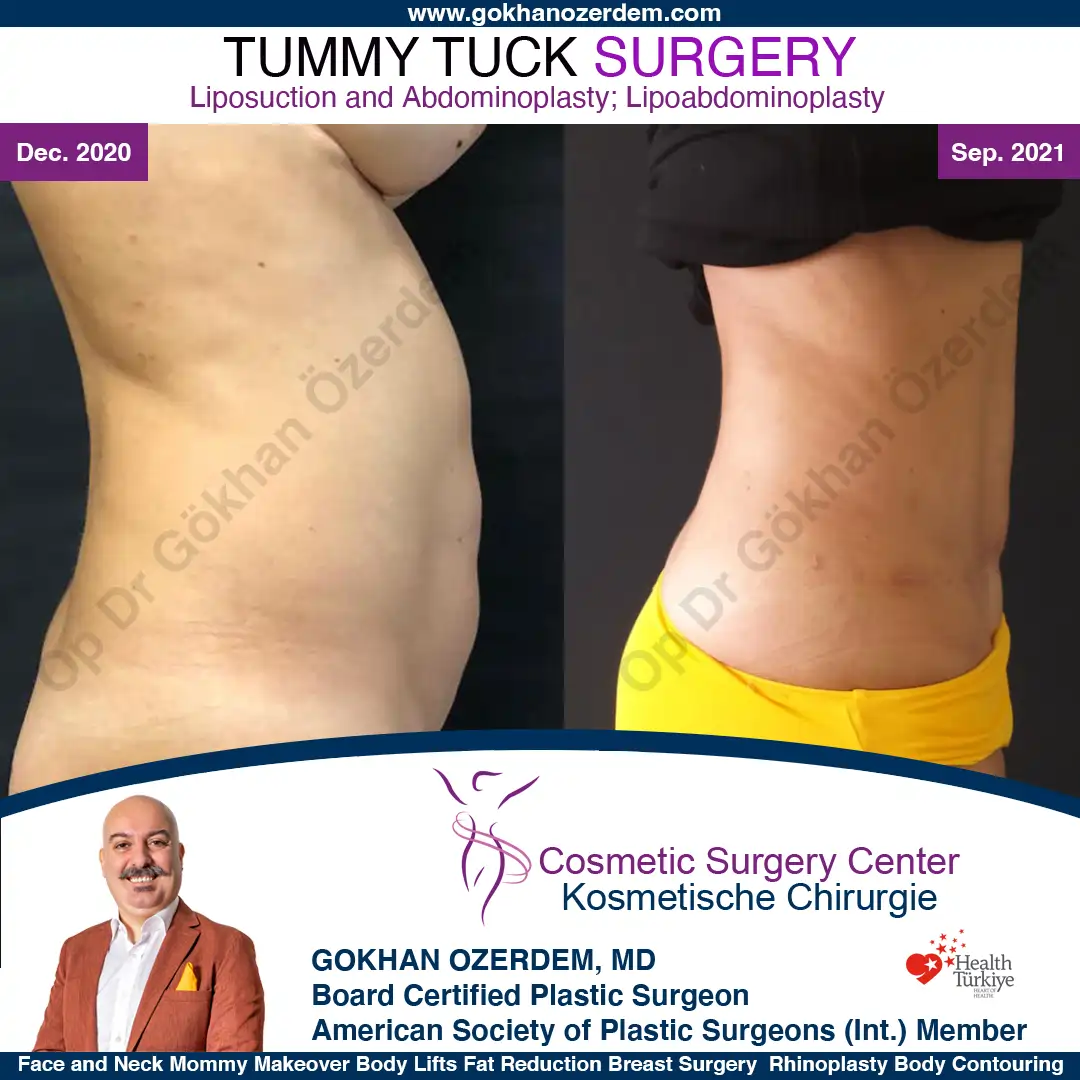
Before and after photographs can demonstrate changes in:
- Abdominal skin excess
- Lower abdominal contour
- Waist definition
- Abdominal wall shape
- Umbilical position
- Overall body proportions
However, results vary according to skin quality, fat distribution, muscle separation and previous surgery.
Patients should not assume that another person’s result can be reproduced exactly.
Previous patient photographs should be viewed as examples rather than guarantees.
How Do Tummy Tuck Scars Heal?
During early healing, scars may appear:
- Pink or red
- Firm
- Raised
- More noticeable than expected
They generally become softer and less conspicuous over time.
Scar maturation often continues for 12–18 months or longer.
The final appearance depends on individual healing, genetics, skin characteristics and postoperative care.
Hypertrophic scarring is possible.
Smoking, wound tension and healing complications may adversely affect scar quality.
No surgeon can guarantee that a tummy tuck scar will disappear completely.
Mini Tummy Tuck or Full Tummy Tuck?
These procedures address different degrees of abdominal skin excess.
| Mini Tummy Tuck | Full Tummy Tuck |
| Primarily treats limited lower abdominal skin excess | Treats more extensive abdominal skin laxity |
| Usually involves a shorter incision | Usually requires a longer incision |
| Often does not require umbilical repositioning | Commonly involves repositioning the umbilicus |
| Suitable for selected patients | Appropriate for more extensive abdominal changes |
| Limited ability to correct upper abdominal skin excess | Can address skin excess above and below the umbilicus |
A mini tummy tuck is not automatically better because the incision is shorter.
If significant skin excess extends above the umbilicus, a full abdominoplasty may provide a more appropriate correction.
Can a Mini Tummy Tuck Repair Abdominal Muscles?
In selected patients, limited abdominal wall repair may be possible during a mini tummy tuck.
However, the ability to correct extensive rectus diastasis is more limited than during a full abdominoplasty.
The appropriate technique depends on the location and extent of muscle separation.
I do not recommend a mini tummy tuck solely to avoid a longer scar when the patient requires a more extensive correction.
Tummy Tuck After Pregnancy
Pregnancy is one of the most common reasons women consider abdominoplasty.
After childbirth, some women develop:
- Loose abdominal skin
- Rectus diastasis
- Lower abdominal folds
- Stretch marks
- Changes in waist contour
- Persistent abdominal protrusion
These changes may remain despite exercise and weight management.
A tummy tuck can address selected anatomical changes that cannot be corrected through exercise alone.
However, the operation should generally be considered after the body has recovered from pregnancy and weight has become relatively stable.
Tummy Tuck After a Caesarean Section
Women who have undergone a Caesarean section may be suitable for abdominoplasty.
In some patients, the existing Caesarean scar can be incorporated into the planned lower abdominal incision.
However, this depends on scar position, skin excess and abdominal anatomy.
Previous abdominal surgery may also influence tissue planes and surgical planning.
I examine existing scars carefully before recommending the operation.
Tummy Tuck After Major Weight Loss
Significant weight loss can leave substantial abdominal skin excess.
Some patients develop a hanging abdominal fold, sometimes called a pannus.
This may cause:
- Difficulty with clothing
- Skin irritation
- Hygiene problems
- Discomfort during activity
- Persistent contour concerns
In patients with extensive skin excess, standard abdominoplasty may not be sufficient.
A more extensive operation may be required.
The appropriate procedure depends on the distribution of loose skin and the patient’s general health.
Fleur-de-Lis Abdominoplasty
When a Standard Horizontal Tummy Tuck Is Not Enough
Some patients, particularly after major weight loss, have significant skin excess in both vertical and horizontal directions.
In these cases, a Fleur-de-Lis abdominoplasty may be considered.
This technique involves an additional vertical abdominal incision, allowing removal of excess skin across the width of the abdomen.
The trade-off is a longer and more visible scar pattern.
I consider this approach when the additional contour improvement justifies the vertical scar.
It is not necessary for routine tummy tuck patients.
Liposuction or Tummy Tuck?
Patients often ask whether they can avoid a tummy tuck by undergoing liposuction instead.
The answer depends on the anatomy.
Liposuction removes selected subcutaneous fat.
A tummy tuck removes excess skin and may also repair abdominal wall separation.
If the patient has good skin elasticity and localised fat deposits, liposuction may be sufficient.
If substantial loose skin or rectus diastasis is present, liposuction alone may not provide the desired result.
In some cases, combining both procedures is appropriate.
Can a Tummy Tuck Remove Stretch Marks?
A tummy tuck can remove stretch marks located within the skin that is excised during surgery.
This often includes some stretch marks in the lower abdomen.
However, stretch marks located above the area of skin removal generally remain.
Their position may change as the abdominal skin is repositioned.
Therefore, abdominoplasty should not be described as a procedure that removes all abdominal stretch marks.
Can a Tummy Tuck Remove Visceral Fat?
No.
Visceral fat is located inside the abdominal cavity, around the internal organs.
It cannot be removed through standard aesthetic liposuction or abdominoplasty.
A patient with substantial visceral fat may continue to have abdominal prominence after surgery.
For this reason, I assess the likely contribution of visceral fat before recommending an operation.
Does a Tummy Tuck Help with Weight Loss?
Abdominoplasty is not a weight-loss operation.
The procedure removes skin and may remove some fatty tissue, but the main objective is to improve abdominal contour.
The amount of tissue removed varies considerably.
Patients should not use the weight of removed tissue as the primary measure of success.
For patients with significant obesity, weight management may be more appropriate before considering aesthetic abdominal surgery.
Can I Have a Tummy Tuck Before Pregnancy?
Pregnancy after abdominoplasty is possible.
However, pregnancy can stretch the abdominal skin and supporting tissues again.
This may affect the surgical result, particularly if rectus diastasis was repaired.
For women planning pregnancy in the near future, postponing surgery may be reasonable.
The decision depends on individual circumstances.
Can Tummy Tuck Surgery Be Combined with Breast Surgery?
Yes, in selected patients.
Abdominoplasty may be combined with procedures such as:
- Breast augmentation
- Breast lift
- Breast reduction
- Selected liposuction procedures
Such combinations are sometimes described as a Mommy Makeover.
However, combined surgery increases operative duration and may increase risk.
I do not automatically recommend performing every requested procedure during one anaesthetic.
In extensive cases, staging surgery may be safer.
Anaesthesia and Hospital
I perform tummy tuck surgery under general anaesthesia in a fully equipped hospital in Antalya, Turkey.
Abdominoplasty is a significant operation.
Before surgery, appropriate medical assessment is completed.
The surgical plan takes into consideration:
- General health
- Body weight
- Previous surgery
- Smoking history
- Thromboembolic risk
- Expected operative duration
- Extent of skin removal
- Need for muscle repair
- Associated procedures
Patient safety determines the extent of surgery.
Recovery After Tummy Tuck Surgery
Abdominoplasty requires a meaningful recovery period.
Swelling, bruising, tightness and discomfort are expected during the early postoperative phase.
Patients may initially find it more comfortable to walk with a slightly flexed posture because of abdominal tightness.
This usually improves as healing progresses.
During recovery, patients should follow instructions regarding:
- Abdominal support garment
- Wound care
- Drain care if drains are used
- Sleeping position
- Walking
- Medication
- Showering
- Lifting
- Exercise
- Smoking
- Scar care
Recovery varies according to the extent of surgery and individual healing.
Why Is Walking Important After a Tummy Tuck?
Early, gentle mobilisation is an important part of postoperative recovery.
Walking helps reduce the effects of prolonged immobility and forms part of measures used to reduce blood-clot risk.
However, activity should be gradual and appropriate for the patient’s condition.
Patients should follow their individual postoperative instructions rather than attempt strenuous exercise too early.
Will I Need Drains After Abdominoplasty?
Some tummy tuck procedures involve the use of surgical drains to help manage postoperative fluid.
Other techniques may reduce or avoid the need for drains in selected patients.
The decision depends on the surgical approach and intraoperative findings.
I explain the postoperative plan before surgery.
If drains are used, my team provides instructions regarding their care and removal.
Compression Garments After Tummy Tuck Surgery
An abdominal support garment is commonly recommended after abdominoplasty.
It can help support the operated area and manage swelling.
However, the garment must fit appropriately.
Excessive pressure can cause discomfort or interfere with tissue circulation.
The type and duration of use depend on the procedure and recovery.
I provide individual instructions.
When Can I Return to Work?
Return to work depends on the extent of surgery and the physical demands of the patient’s occupation.
Abdominoplasty generally requires more recovery time than limited liposuction.
Patients with desk-based jobs may return earlier than those who perform heavy lifting or strenuous physical work.
When rectus plication has been performed, additional restrictions may be necessary.
I provide a recovery timetable based on the operation and postoperative progress.
When Can I Exercise After a Tummy Tuck?
Walking begins during early recovery, provided the patient is medically stable.
Strenuous exercise and heavy lifting require a longer restriction.
Activities that place significant pressure on the abdominal wall should be resumed only when healing allows.
This is particularly important after rectus muscle repair.
The appropriate timetable varies between patients.
When Will I See the Final Result?
The change in abdominal contour is visible relatively early.
However, swelling and tissue tightness affect the initial appearance.
During the following months:
- Swelling decreases
- Abdominal tissues soften
- Waist and abdominal contours become more defined
- The lower abdominal area settles
- Scars begin to mature
Some swelling may persist for several months.
The final result should not be judged during the first weeks after surgery.
How Long Do Tummy Tuck Results Last?
Abdominoplasty can provide a long-lasting improvement in abdominal contour.
However, the body continues to change.
Factors that may affect the result include:
- Significant weight gain
- Major weight loss
- Pregnancy
- Ageing
- Changes in skin elasticity
- Changes in abdominal fat distribution
Maintaining a relatively stable weight can help preserve the result.
The operation does not prevent future abdominal changes.
Risks and Limitations of Abdominoplasty
Tummy tuck surgery is a major operation and carries recognised risks.
Potential complications include:
- Bleeding
- Infection
- Haematoma
- Seroma
- Delayed wound healing
- Wound separation
- Skin or fat necrosis
- Unfavourable scarring
- Hypertrophic or keloid scars
- Changes in abdominal skin sensation
- Abdominal asymmetry
- Contour irregularities
- Umbilical healing problems
- Persistent swelling
- Recurrent abdominal wall laxity
- Need for revision surgery
- Anaesthetic complications
- Deep vein thrombosis
- Pulmonary embolism
Some complications can be serious or life-threatening.
Risk varies according to the patient’s health, body weight, smoking status, extent of surgery and other factors.
I discuss the relevant risks and limitations before surgery.
Tummy Tuck in Turkey for International Patients
Travelling to Antalya for Abdominoplasty
International patients considering tummy tuck surgery can begin with a preliminary assessment before travelling to Turkey.
My team may request:
- Medical history
- Current medication
- Height and weight
- Weight stability
- Previous pregnancies
- Previous abdominal surgery
- Smoking history
- Relevant medical conditions
- Photographs of the abdomen
This information helps with preliminary planning.
However, photographs cannot reliably determine the extent of rectus diastasis, skin elasticity or the contribution of visceral fat.
The final surgical plan is confirmed after I examine you personally in Antalya.
How Long Should I Stay in Antalya After a Tummy Tuck?
Abdominoplasty is more extensive than many minor aesthetic procedures.
For international patients, I generally recommend planning approximately 7–10 days in Antalya, although some patients may require a longer stay depending on the operation and recovery.
The final travel schedule depends on:
- Wound healing
- Mobility
- Postoperative swelling
- Drain management if applicable
- General recovery
- Risk factors for blood clots
- Need for additional follow-up
Long-distance travel should be planned carefully after major abdominal surgery.
I prefer patients to travel home after appropriate postoperative assessment rather than choosing the earliest available flight.
Why Choose Dr Gökhan Özerdem for Tummy Tuck Surgery?
Abdominoplasty requires careful assessment of several anatomical structures.
The surgeon must decide:
- How much skin should be removed
- Whether liposuction should be added
- Whether rectus diastasis requires repair
- How the abdominal wall should be tightened
- How the umbilicus should be positioned
- Where the scar should be placed
- Whether a mini or full tummy tuck is appropriate
- How to manage tissue blood supply
- Whether combined surgery is safe
With more than 25 years of surgical experience, I frequently prefer lipoabdominoplasty when the patient’s anatomy is suitable.
I also pay particular attention to preserving and appropriately repositioning the natural umbilicus.
For patients with extensive skin excess, I explain when longer incisions or alternative techniques may be necessary.
The objective is not simply a tight abdomen. It is an appropriate abdominal contour achieved through a surgical plan that respects the anatomy and patient safety.
Frequently Asked Questions About Tummy Tuck Surgery
Abdominoplasty is the medical term for tummy tuck surgery. It removes excess abdominal skin and may include abdominal wall tightening and selected fat reduction.
Lipoabdominoplasty combines tummy tuck surgery with carefully planned liposuction to improve both abdominal skin excess and selected fat deposits.
In suitable patients, I frequently prefer lipoabdominoplasty. However, the extent of liposuction depends on the anatomy and tissue safety.
Yes. When rectus diastasis is present and surgical repair is appropriate, the abdominal wall can be tightened during abdominoplasty.
No. Rectus diastasis involves widening of the separation between the rectus muscles, while a hernia involves a defect through which tissue may protrude. Both conditions can occasionally coexist.
In most standard full tummy tuck procedures, the original umbilicus is preserved and brought through a new opening in the repositioned abdominal skin.
The main scar is generally positioned low on the abdomen, often where it can be concealed beneath suitable underwear or swimwear.
Scar length depends on the amount and distribution of excess skin. More extensive skin removal generally requires a longer incision.
Stretch marks located within the skin removed during surgery may be eliminated. Stretch marks outside that area generally remain.
Only when the main problem is localised fat and the skin has adequate elasticity. Liposuction cannot reliably correct significant loose skin or rectus diastasis.
A mini tummy tuck treats selected lower abdominal problems, while a full tummy tuck can address more extensive skin laxity and commonly involves umbilical repositioning.
Limited repair may be possible in selected patients, but extensive rectus diastasis often requires a more comprehensive approach.
Yes. Previous Caesarean surgery does not automatically prevent abdominoplasty. Existing scars and abdominal anatomy are assessed during planning.
If substantial weight loss is planned, reaching a relatively stable weight before surgery may improve the predictability of the result.
No. Visceral fat lies within the abdominal cavity and cannot be removed through standard aesthetic liposuction or abdominoplasty.
No. The main objective is abdominal contour improvement rather than significant weight reduction.
Yes. However, pregnancy may stretch the abdominal skin and wall again, potentially affecting the result.
Yes, in suitable patients. However, the safety of combined procedures must be assessed carefully, and staged surgery may be preferable in extensive cases.
Drains may be used depending on the surgical technique and intraoperative findings. I explain the postoperative plan before surgery.
An abdominal support garment is commonly recommended after surgery. The type and duration depend on the procedure and recovery.
This depends on the extent of surgery and your occupation. Abdominoplasty generally requires a longer recovery than limited liposuction.
Walking begins early, while strenuous exercise and heavy lifting require a longer restriction, particularly after abdominal wall repair.
Swelling gradually improves over weeks and months. Some residual swelling may persist for several months.
Results can be long-lasting, but significant weight changes, pregnancy and ageing can alter abdominal contour over time.
Yes. However, postoperative garments, wound care, swimming restrictions and sun exposure should be considered when planning surgery.
For many international patients, I recommend approximately 7–10 days, although some may require a longer stay depending on the operation and recovery.
Yes. Follow-up communication continues after you leave Turkey. Photographs may be requested, and local medical assessment may be recommended when necessary.
Considering Tummy Tuck Surgery in Antalya, Turkey?
If you are considering travelling to Turkey for abdominoplasty, the first question should not be:
‘How much skin can be removed?’
The more important questions are:
Is the abdominal problem caused by loose skin, excess fat, muscle separation or a combination? Is a mini tummy tuck sufficient? Would lipoabdominoplasty provide a better contour? And what scars and recovery should you realistically expect?
An initial assessment can help clarify the appropriate surgical options before you make your travel arrangements.
Dr Gökhan Özerdem
Specialist in Aesthetic, Plastic and Reconstructive Surgery
Antalya, Turkey
Contact Our International Patient Team
Face: – Rhinoplasty – Eyelid Surgery – Forehead and Brow Lift – Ear Surgery –
Breast: – Breast Augmentation – Breast Lift – Breast Reduction – Gynecomastia –
Body: – Tummy Tuck – Mini Tummy Tuck – Liposuction – Arm Lift – Thigh Lift – Body Contouring – Mommy Makeover –