

Rhinoplasty is one of the most technically demanding operations in aesthetic plastic surgery.
The nose occupies the centre of the face, but its importance is not limited to appearance. It is also part of the respiratory system. For this reason, successful rhinoplasty requires careful consideration of both facial proportions and nasal function.
I am Dr Gökhan Özerdem, Specialist in Aesthetic, Plastic and Reconstructive Surgery in Antalya, Turkey. With more than 25 years of surgical experience, rhinoplasty has been an important part of my surgical practice.
I perform my rhinoplasty operations using an open rhinoplasty approach because it provides direct visualisation of the nasal structures and allows me to assess and modify the anatomy precisely.
My philosophy is simple:
I do not want to create the same nose for every patient. The nose should be proportionate to the individual face and should function properly.
What Is Rhinoplasty?
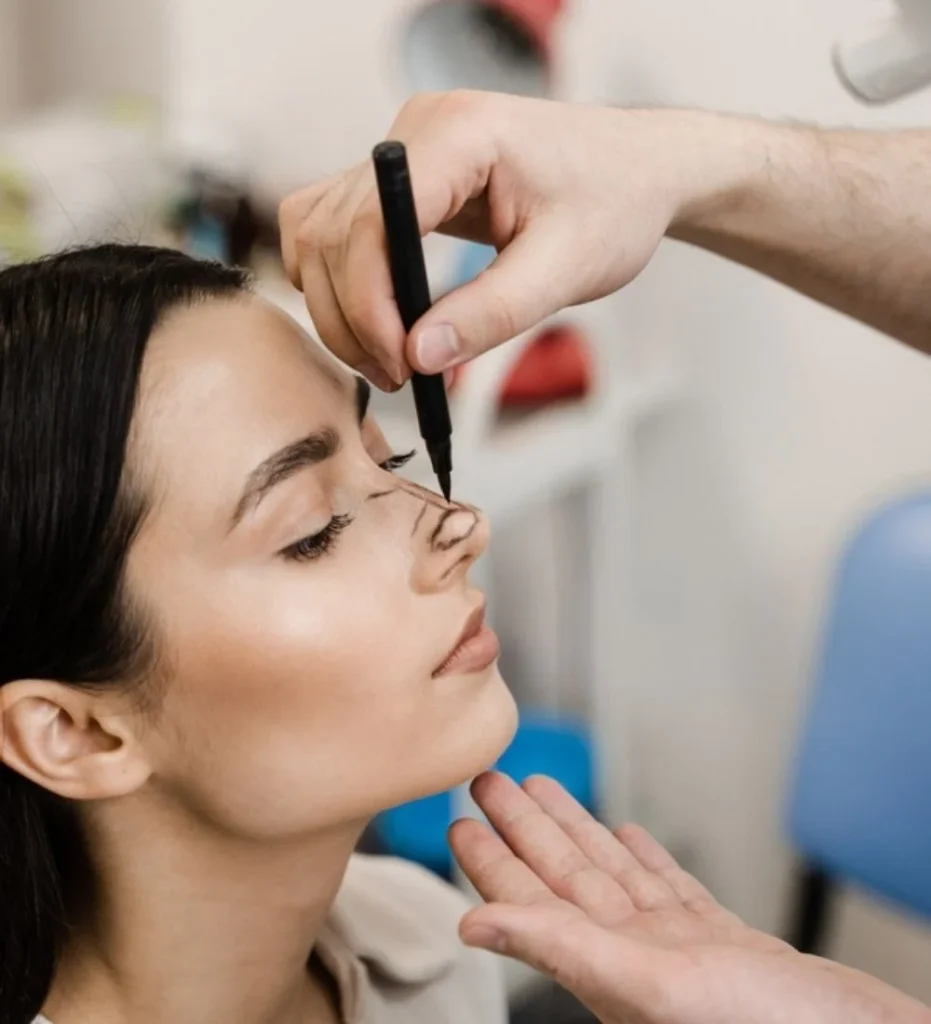
Rhinoplasty is surgery that changes the shape, structure or proportions of the nose.
Depending on the patient’s anatomy, rhinoplasty may address:
- A prominent nasal hump
- Nasal width
- Nasal tip shape
- Tip projection
- Tip rotation
- Nasal asymmetry
- A crooked nose
- Excessive or inadequate projection
- Structural irregularities
- Previous nasal trauma
- Certain breathing problems associated with internal nasal anatomy
Some patients seek rhinoplasty primarily for aesthetic reasons.
Others have both aesthetic and functional concerns.
For this reason, I assess not only how the nose looks but also its internal structure and breathing function.
About Dr. Gökhan Özerdem
Specialist Plastic Surgeon in Antalya, Turkey
I am Dr Gökhan Özerdem, Specialist in Aesthetic, Plastic and Reconstructive Surgery, practising in Antalya, Turkey.
My professional background includes:
- More than 25 years of surgical experience
- Thousands of aesthetic and reconstructive surgical procedures
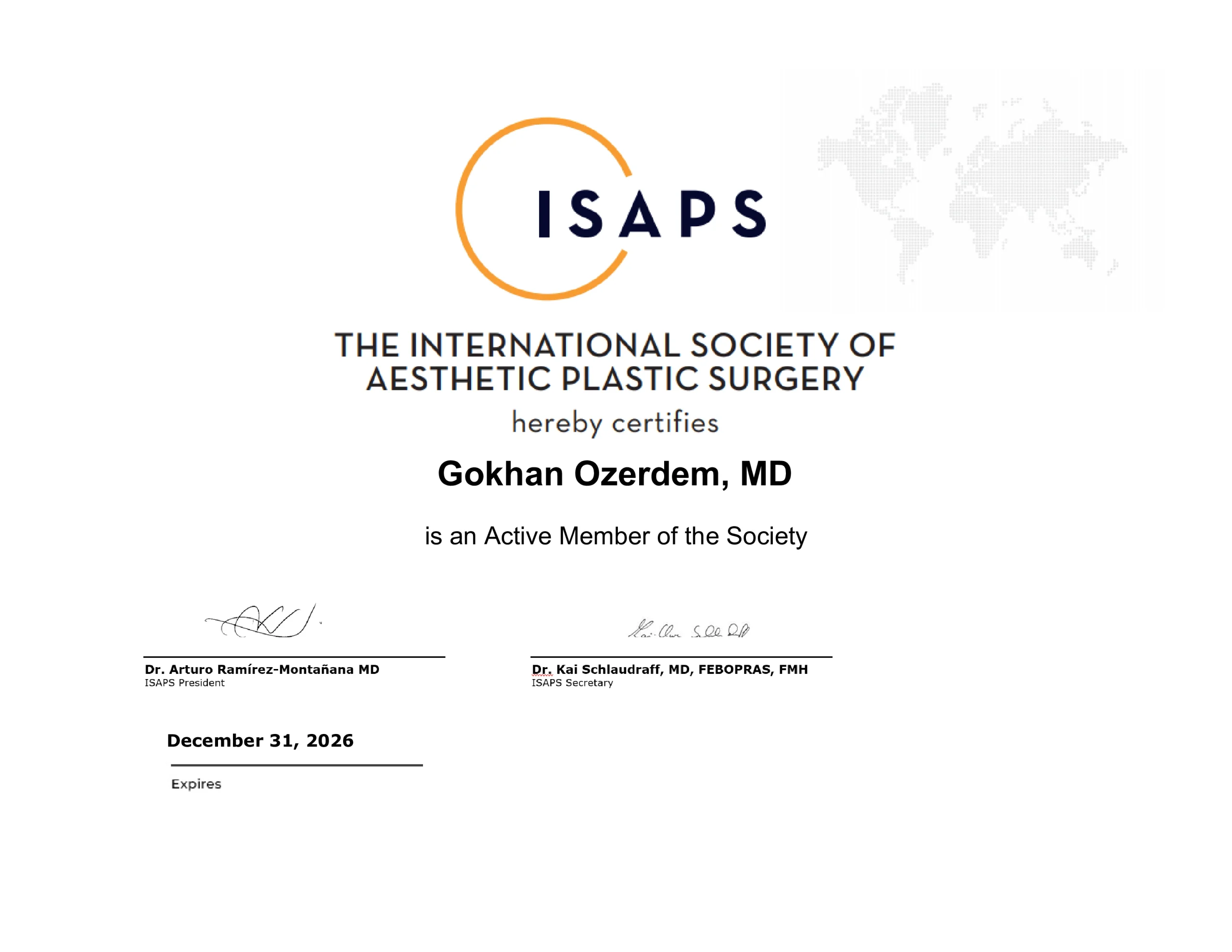
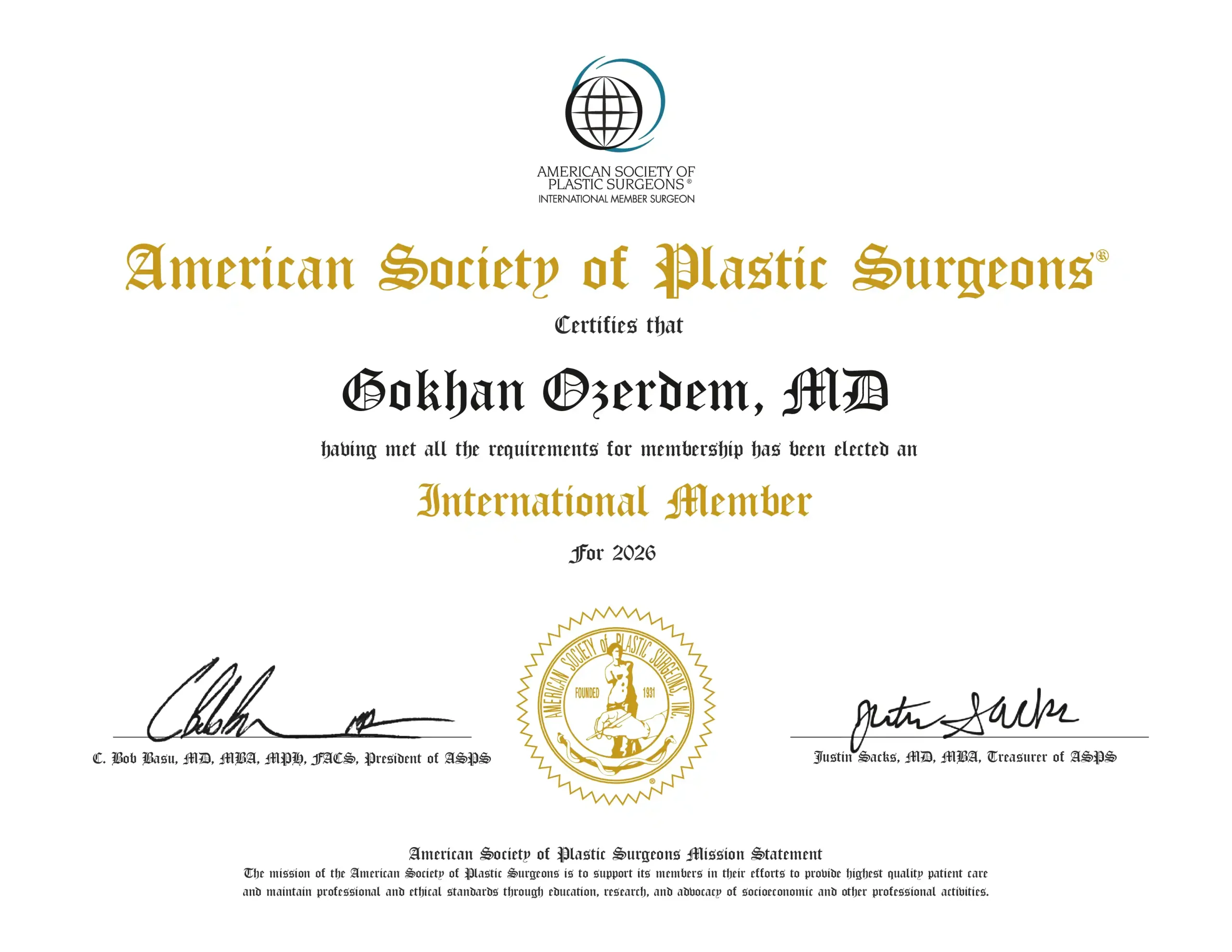
- Member of the International Society of Aesthetic Plastic Surgery (ISAPS)
- Member of the American Society of Plastic Surgeons (ASPS)
- Member of the Turkish Society of Plastic, Reconstructive and Aesthetic Surgeons
- Member of the Turkish Society of Aesthetic Plastic Surgery
- Professional medical experience and licensing in Dubai
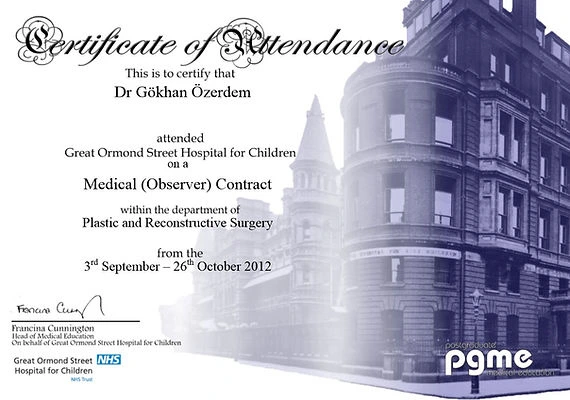
- Observer experience at Great Ormond Street Hospital for Children, London, UK
- Gamma Probe Course at Castle Hill Hospital, Hull, UK
- Oral and poster presentations at national and international scientific congresses
- Session chairmanship at the Turkish National Plastic Surgery Congress
- International scientific publications and academic work
- Authorised to provide services to international patients under the relevant Turkish Ministry of Health International Health Tourism framework
Major surgical procedures are performed in fully equipped hospital facilities in Antalya with appropriate anaesthesia and medical support.


My Approach to Rhinoplasty
Open Rhinoplasty
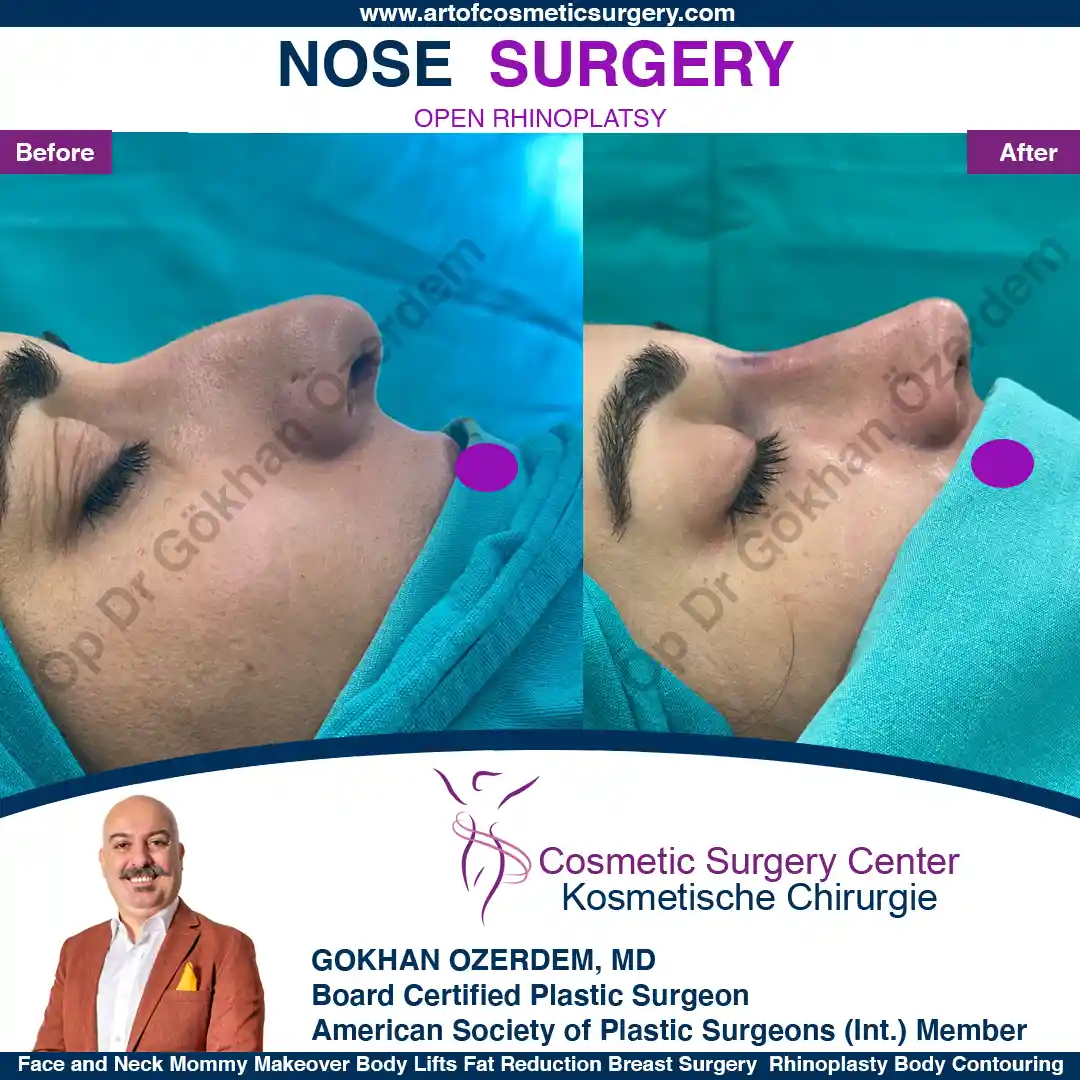
I perform my rhinoplasty procedures using an open approach.
In open rhinoplasty, a small incision is made across the columella — the strip of tissue between the nostrils — in addition to incisions inside the nose.
This allows the nasal skin and soft-tissue envelope to be carefully elevated so that the underlying cartilage and bone structures can be seen directly.
For me, the principal advantage is direct visualisation.
Rhinoplasty often requires precise assessment of:
- Nasal tip cartilages
- Septum
- Structural asymmetries
- Cartilage strength
- Nasal support
- Previous surgical changes
- Relationships between different nasal structures
Being able to see these structures directly allows me to perform the planned changes under visual control.
I prefer to see the anatomy I am changing rather than rely solely on indirect manoeuvres.
Open or Closed Rhinoplasty?
Patients frequently ask whether closed rhinoplasty is ‘better’ because there is no external columellar incision.
I do not believe that the quality of rhinoplasty should be judged simply by whether a small external incision is present.
Both open and closed approaches exist in rhinoplasty, and surgeons may have different preferences.
In my own practice, I prefer open rhinoplasty because of the exposure and control it provides.
The small columellar incision generally becomes considerably less noticeable as it matures.
For me, precise visualisation and control of the nasal structures are more important than avoiding a small incision.
Your Rhinoplasty Journey in Antalya
1. Preliminary Assessment
You provide medical information, photographs and details of any previous nasal surgery, trauma or filler treatment.
2. Face-to-Face Consultation
After arriving in Antalya, I examine both the external and internal structures of your nose.
3. Surgical Planning
We discuss the changes that may realistically be achieved, breathing, scars, recovery, limitations and relevant risks.
4. Surgery
Your rhinoplasty is performed under general anaesthesia in a fully equipped hospital.
5. Early Recovery
My team and I monitor your recovery during your stay in Antalya.
6. Returning Home
Once you are medically ready to travel, you can return home.
Follow-up continues after your departure.
7. Long-Term Follow-Up
Rhinoplasty healing continues for many months. Photographs at different stages can help monitor the gradual development of the result.
A Nose That Belongs to Your Face
There is no universally ideal nose.
A nose that looks attractive on one face may appear completely inappropriate on another.
Before planning rhinoplasty, I consider:
- Facial shape
- Forehead
- Eyes
- Cheekbones
- Lips
- Chin projection
- Jawline
- Sex
- Skin thickness
- Nasal anatomy
- Ethnic and individual facial characteristics
The objective is not to copy a celebrity’s nose or reproduce the same shape in every patient.
A successful rhinoplasty should improve facial balance without making the nose look disconnected from the rest of the face.
Aesthetic and Functional Rhinoplasty
Appearance and breathing should not be considered completely separate issues.
The nasal septum, internal nasal structures and external framework can all influence nasal airflow.
For this reason, I assess breathing during rhinoplasty consultation.
If structural problems contributing to impaired breathing are identified, these can often be addressed during the same operation when appropriate.
My priority is not to create a smaller nose at the expense of function.
A nose should look proportionate and remain structurally sound.nsidering the rest of the face.
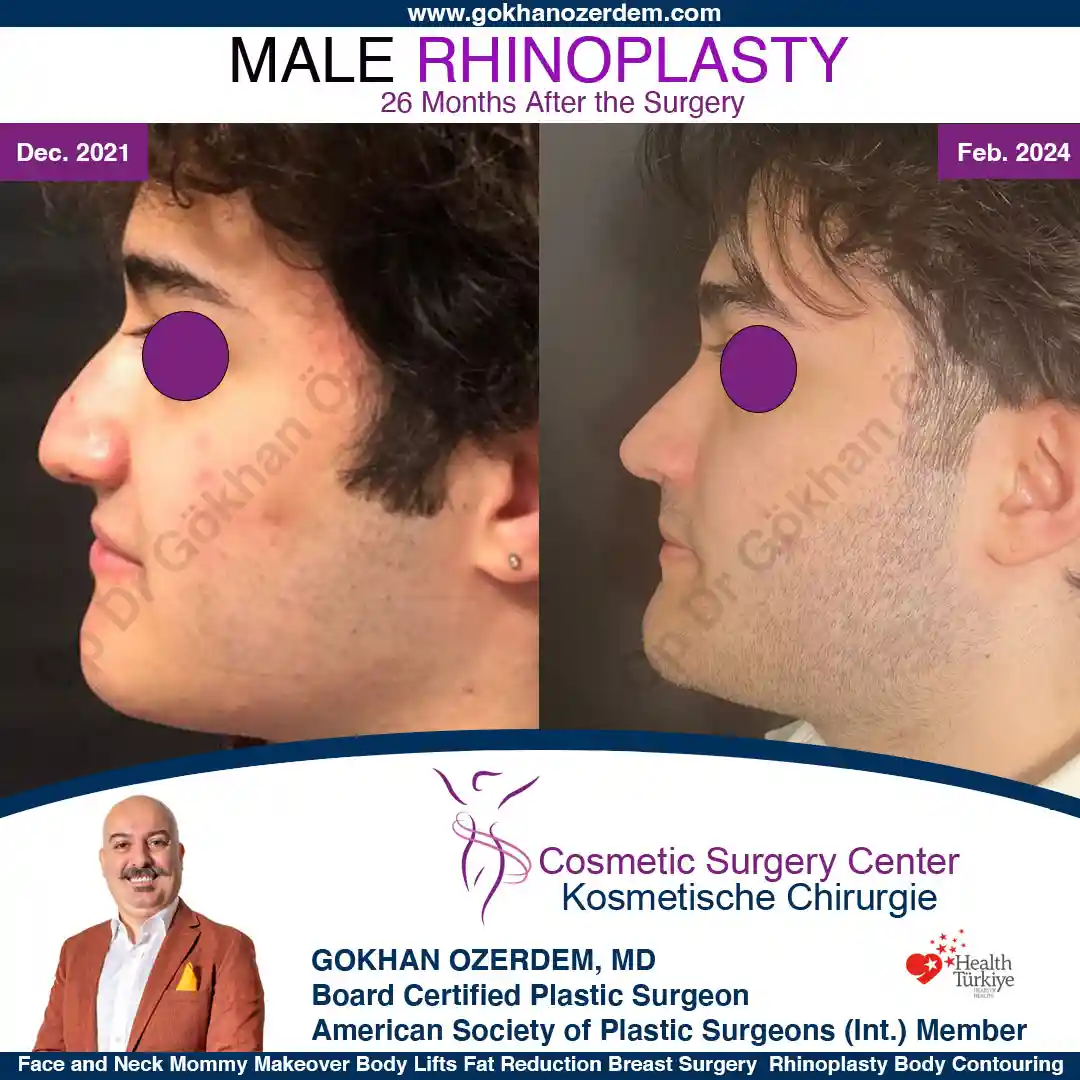
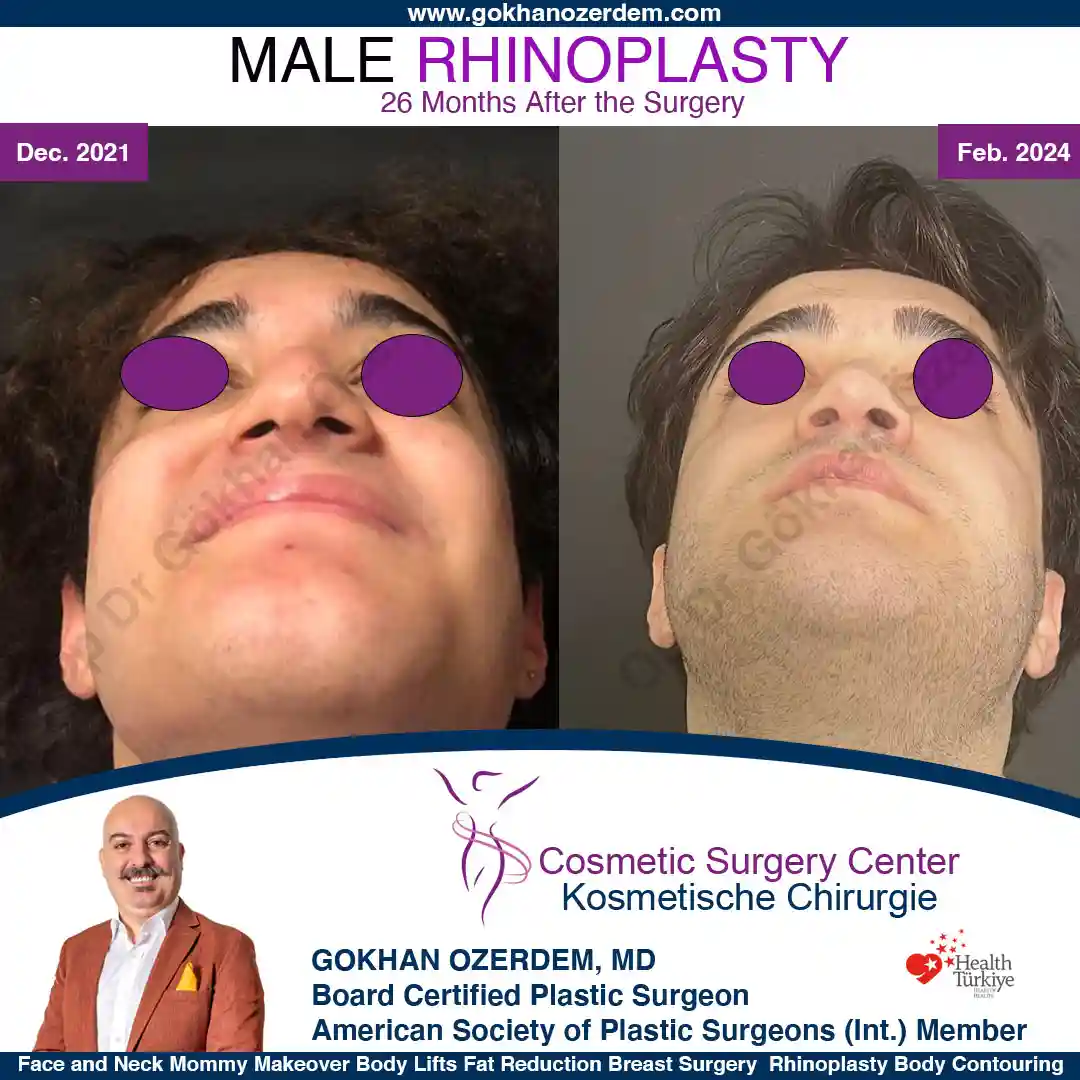
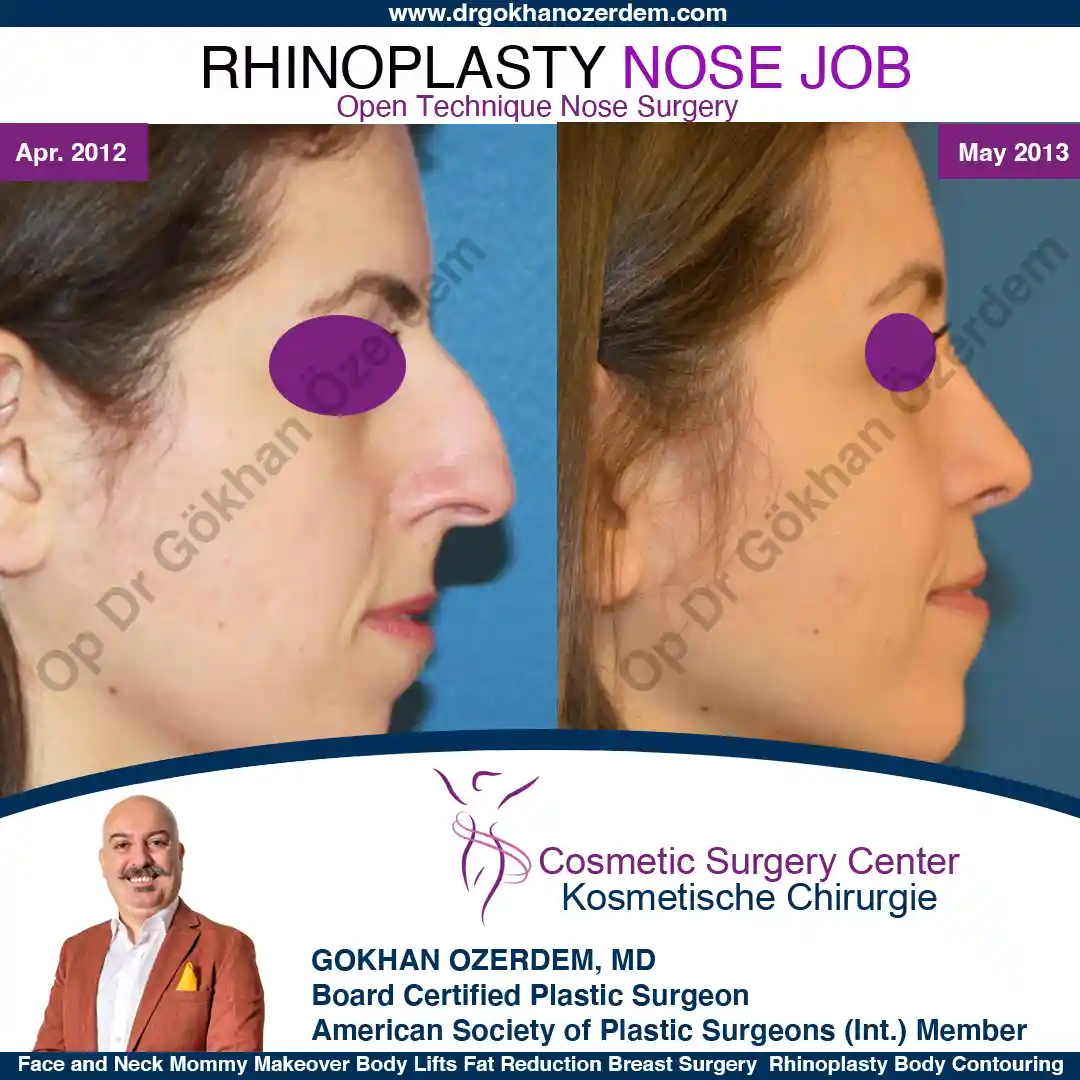
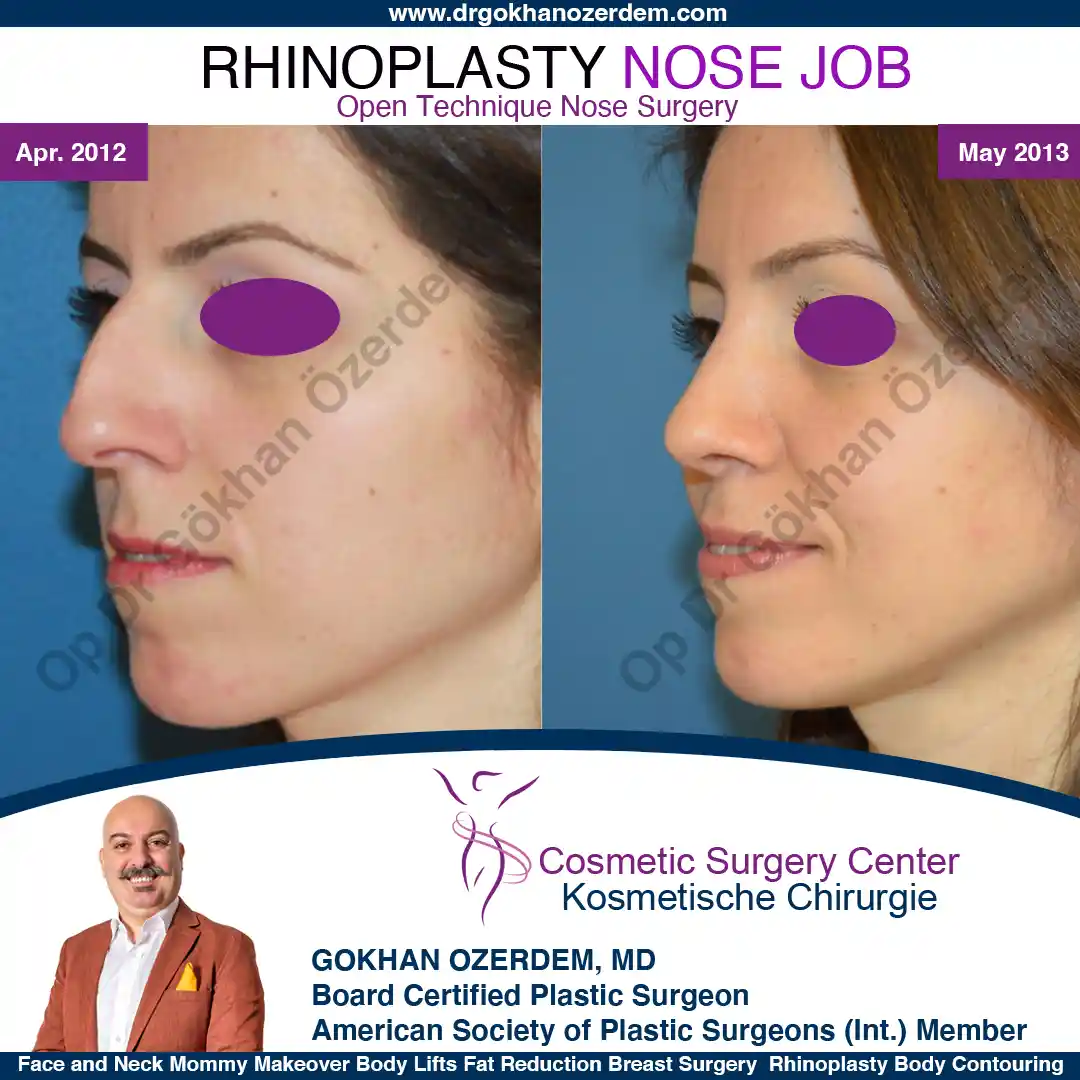
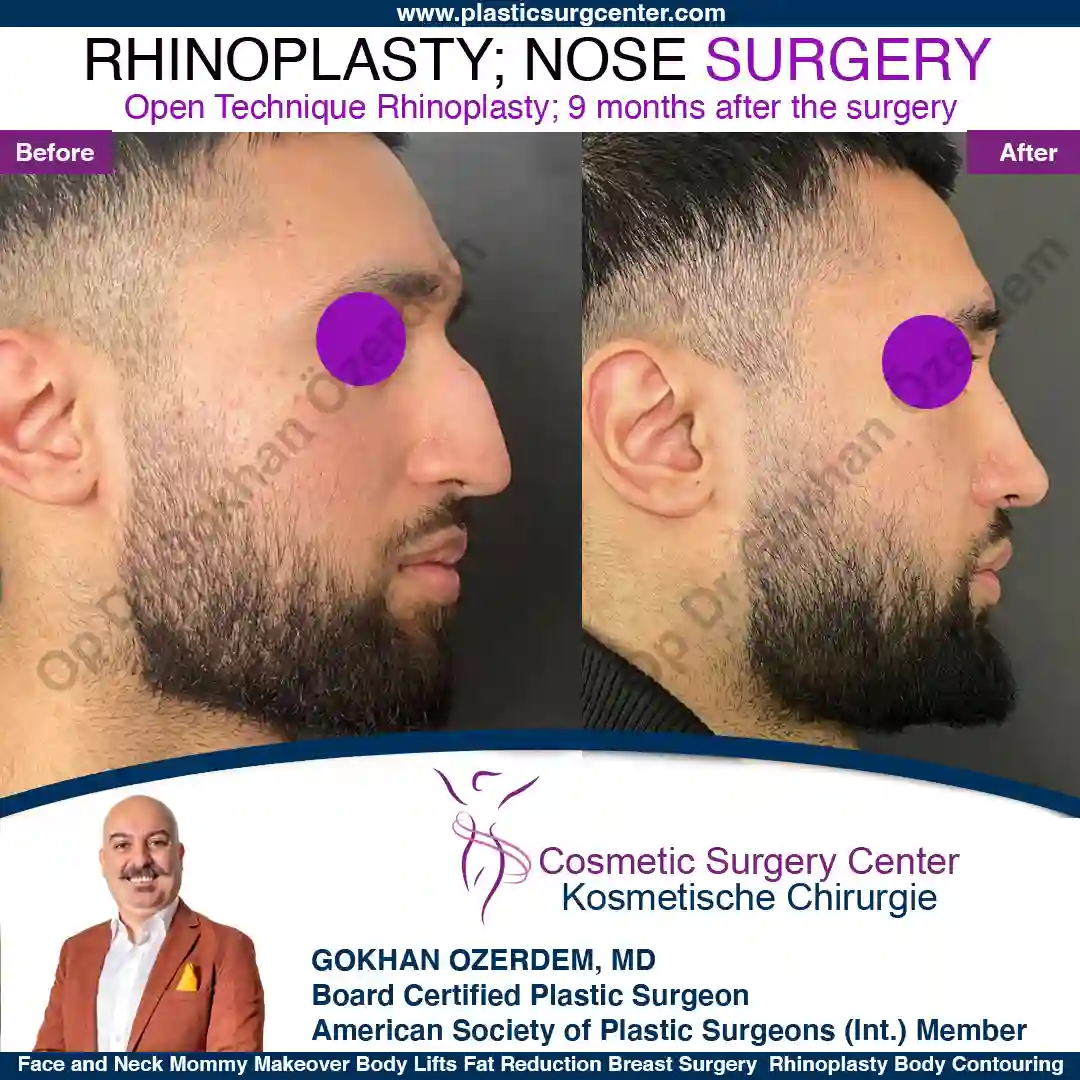
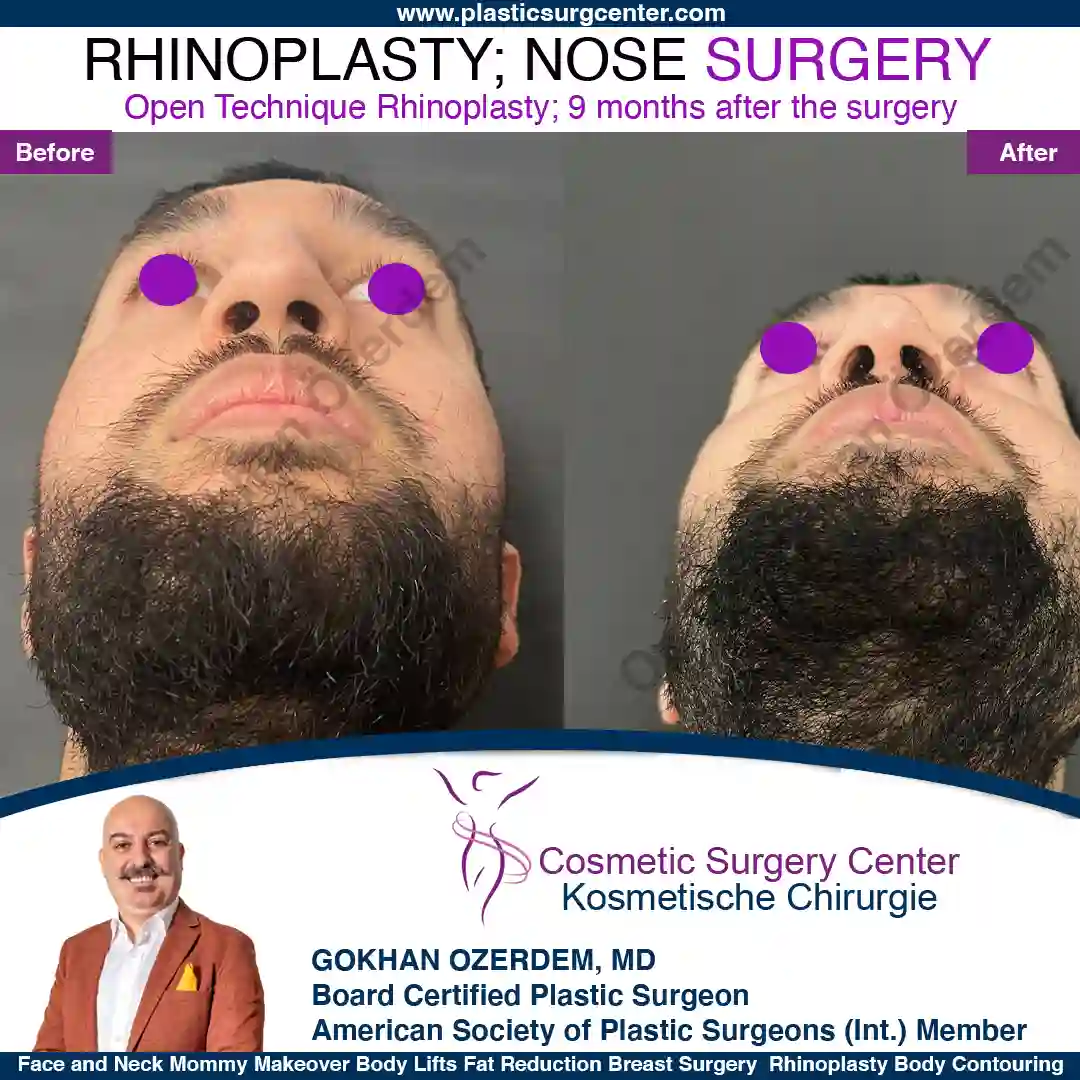
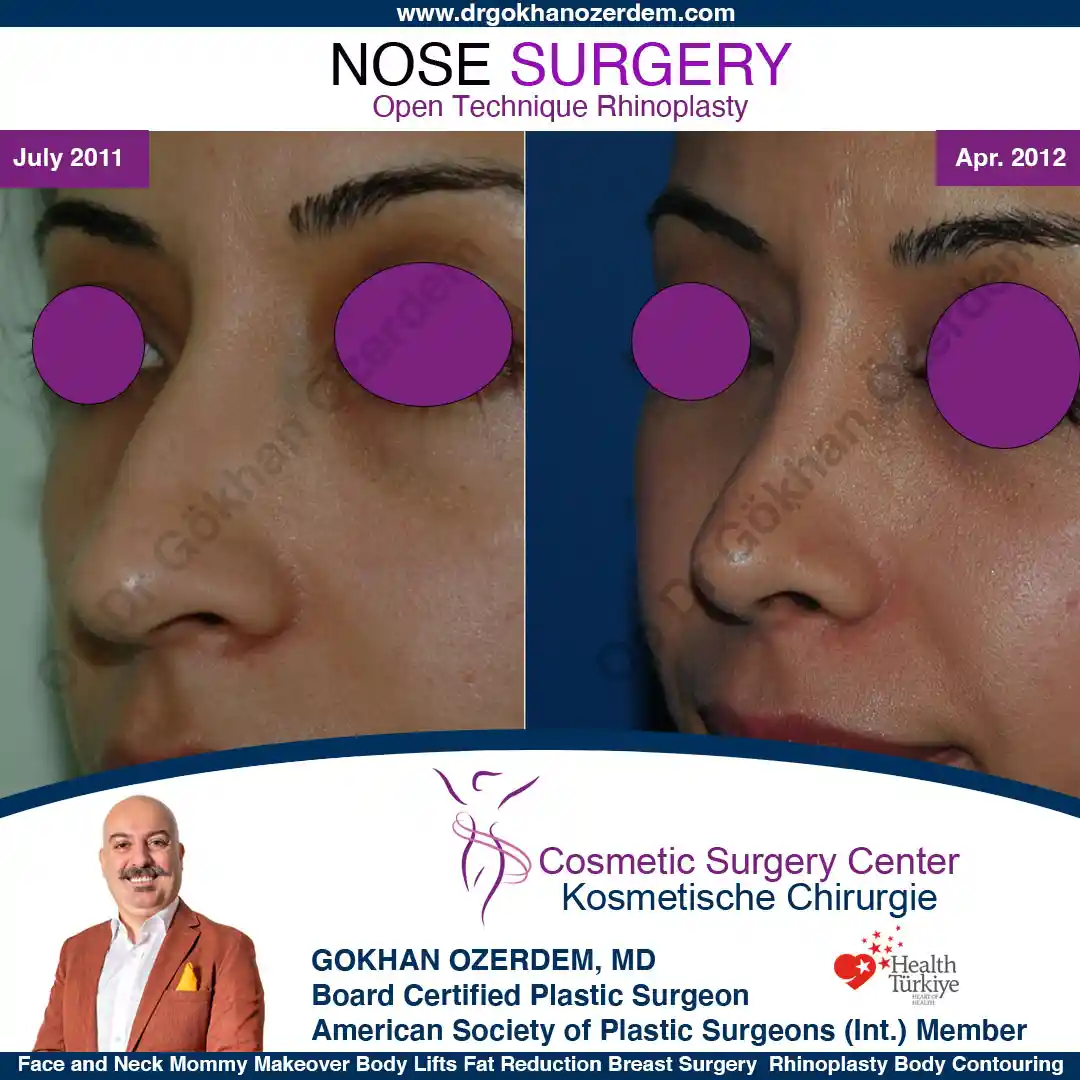
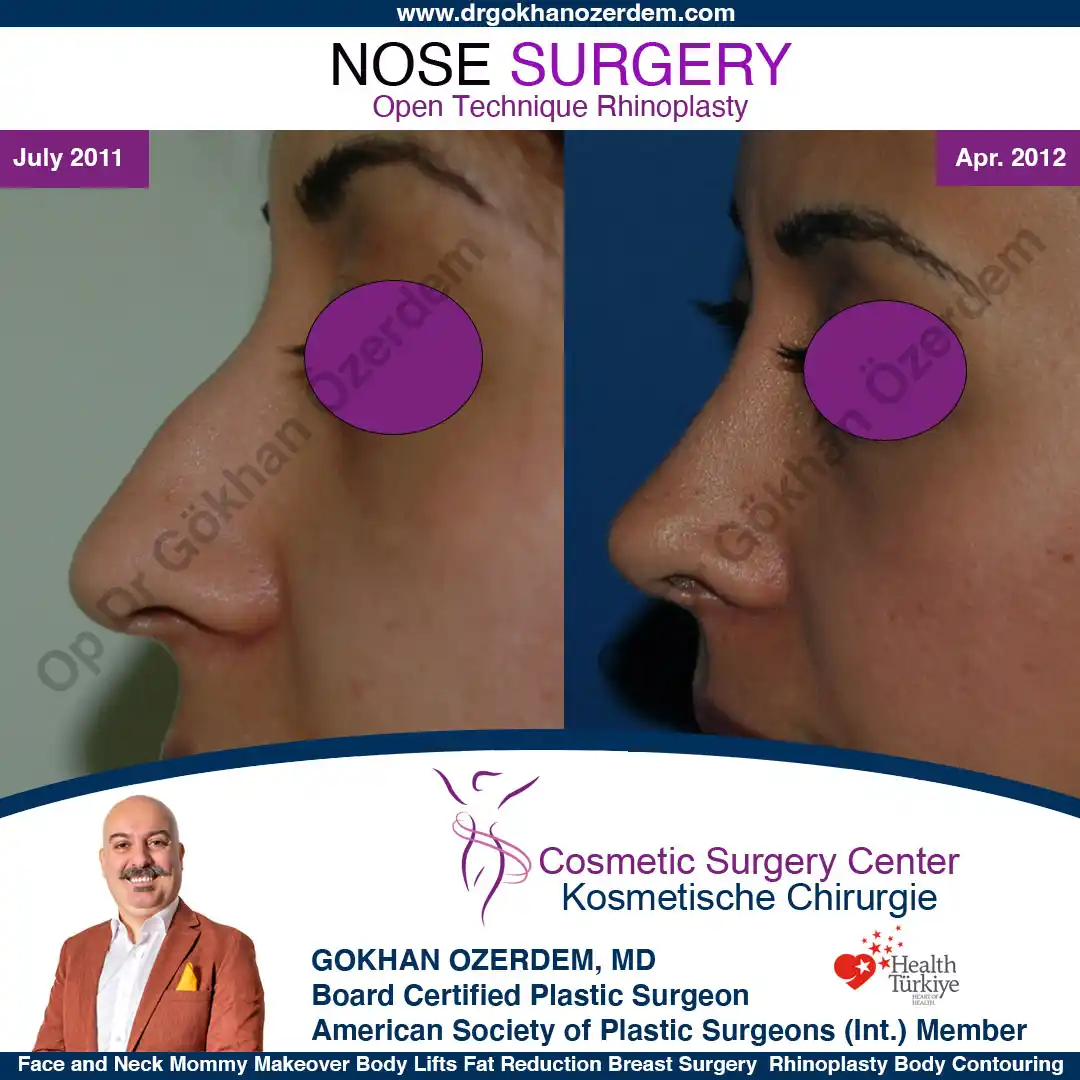
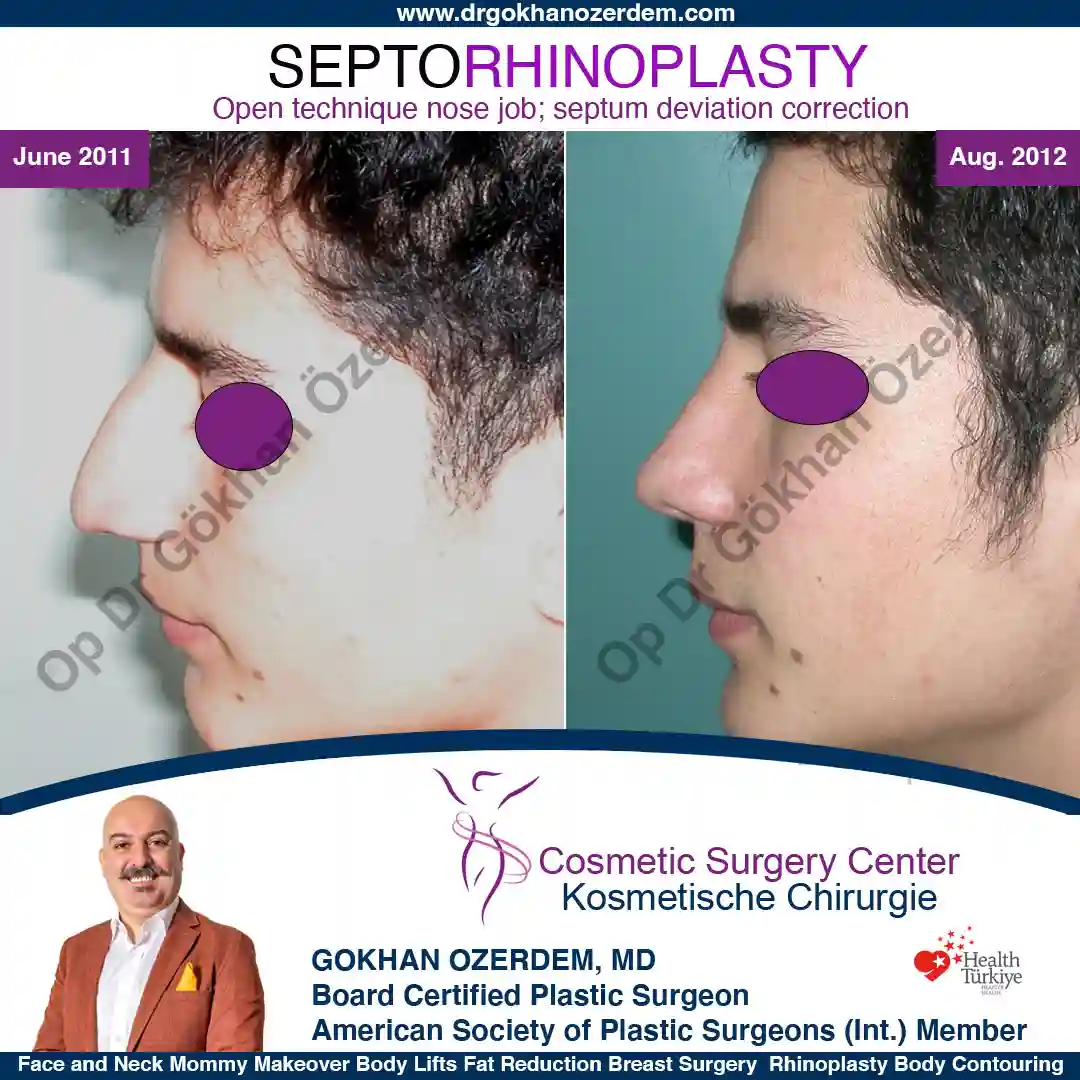
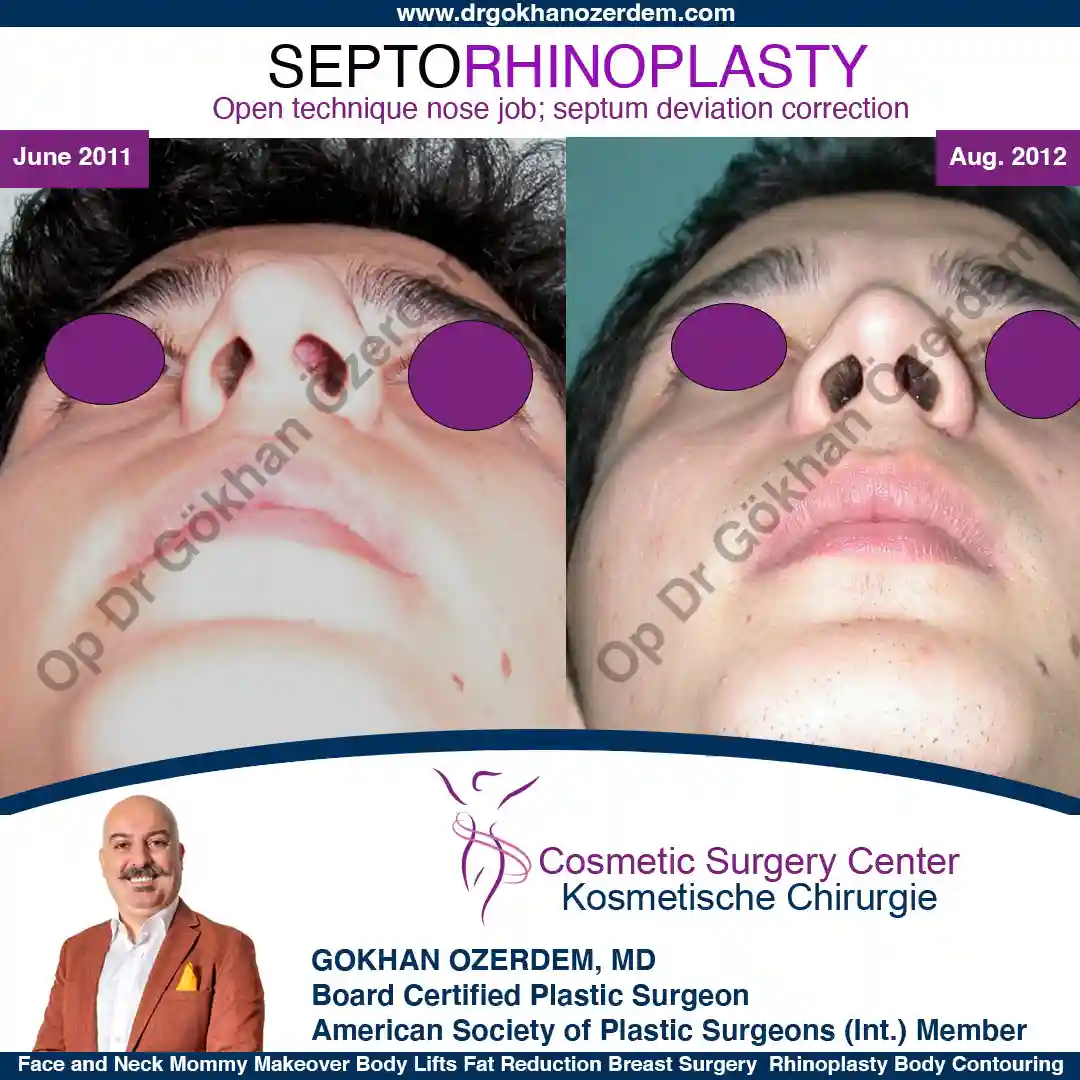
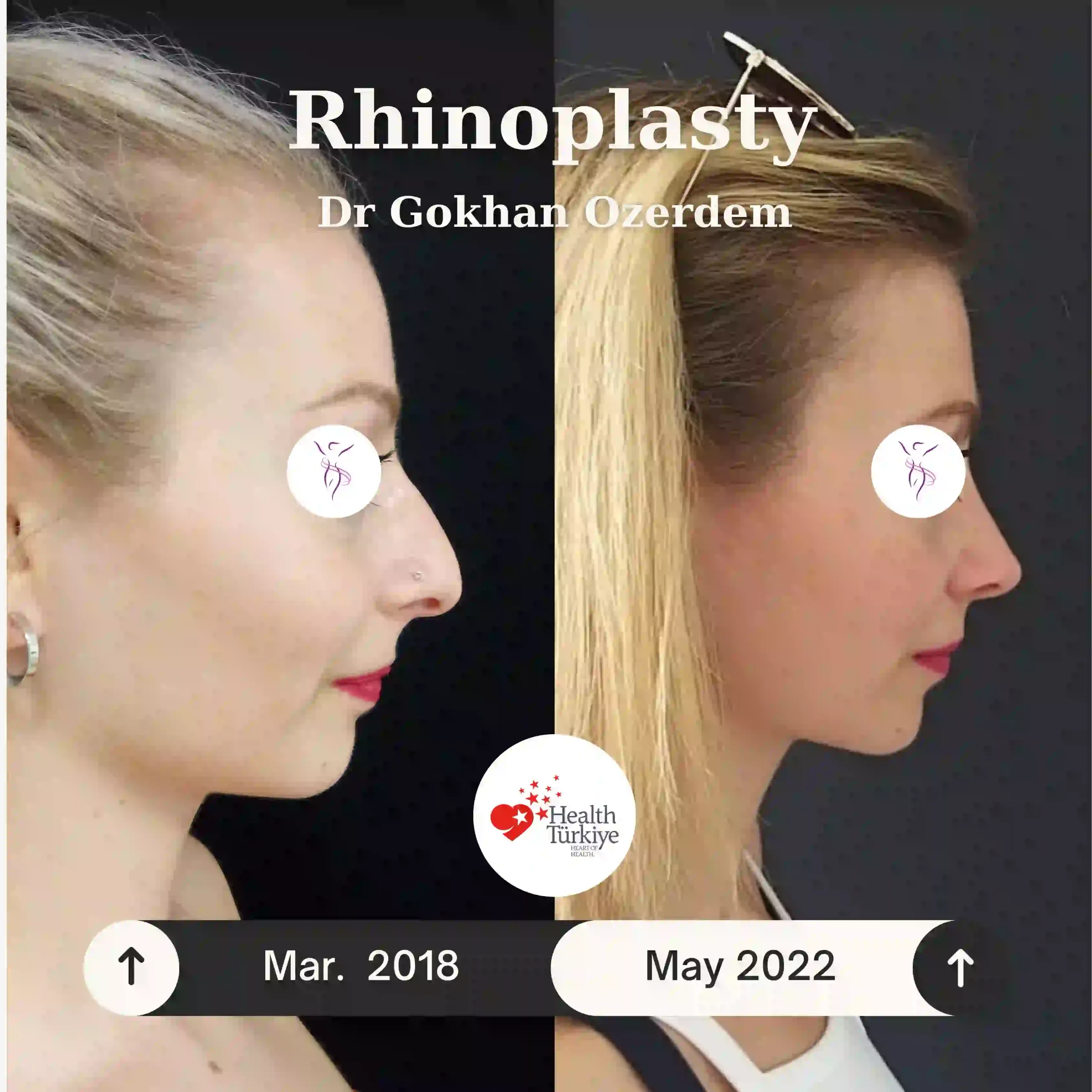
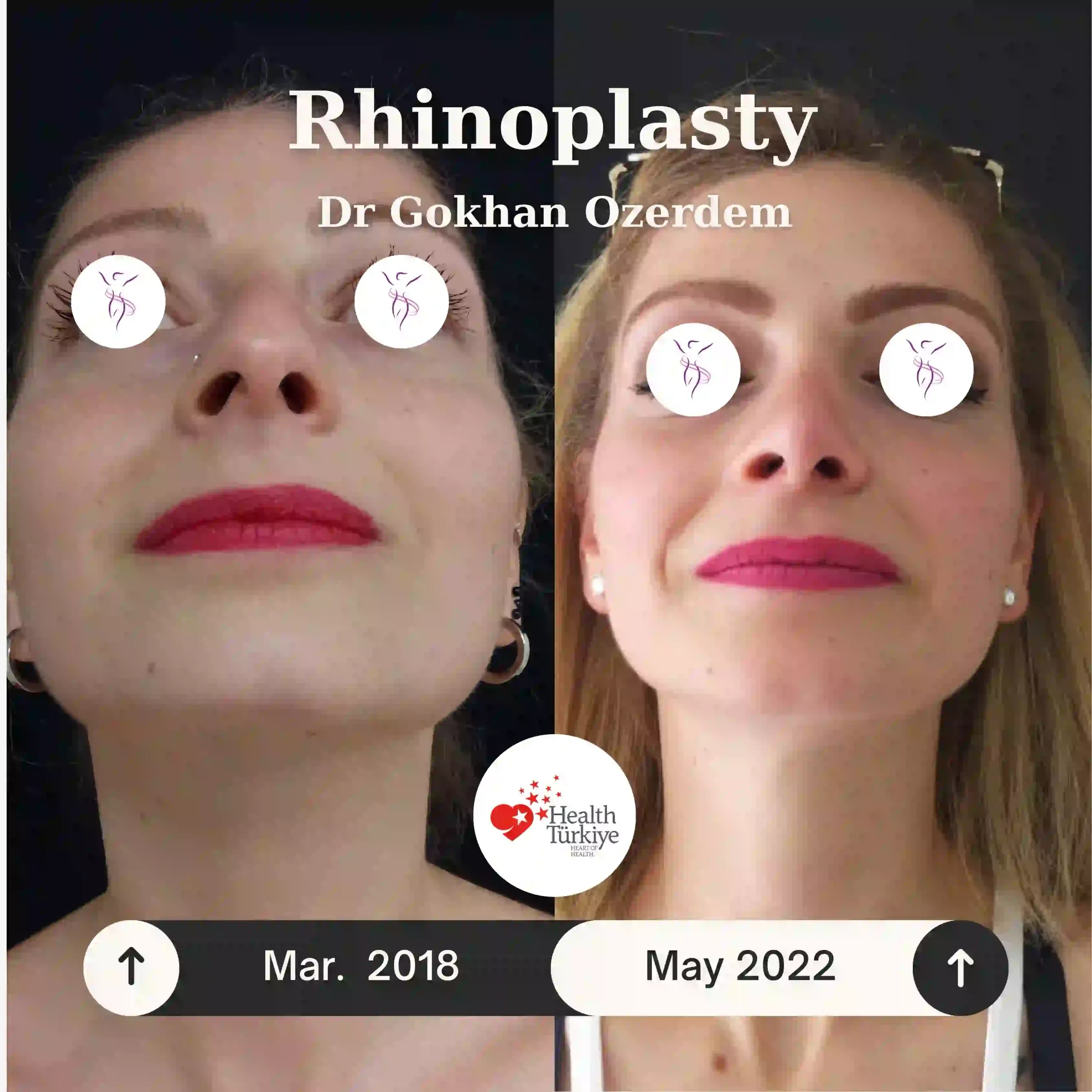
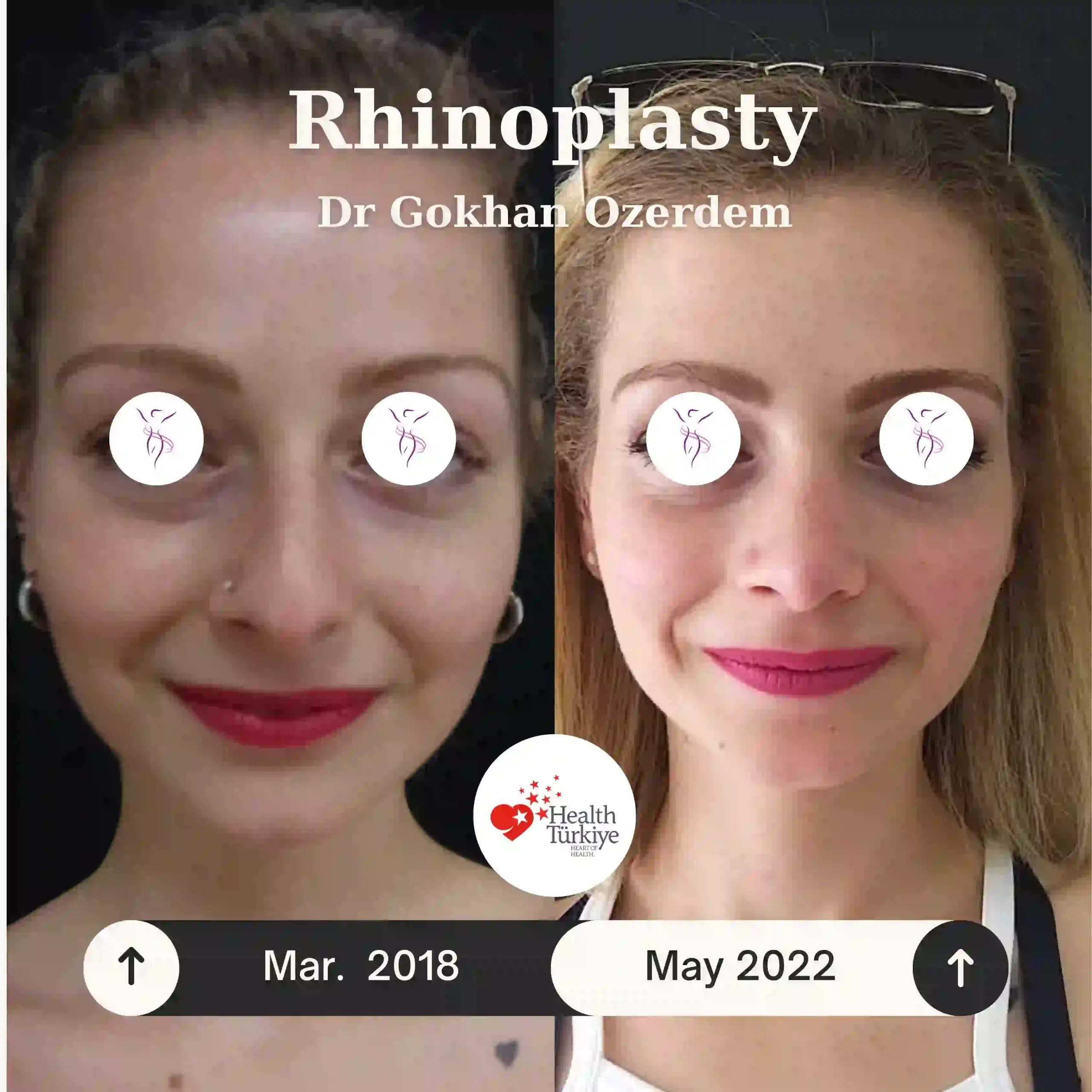
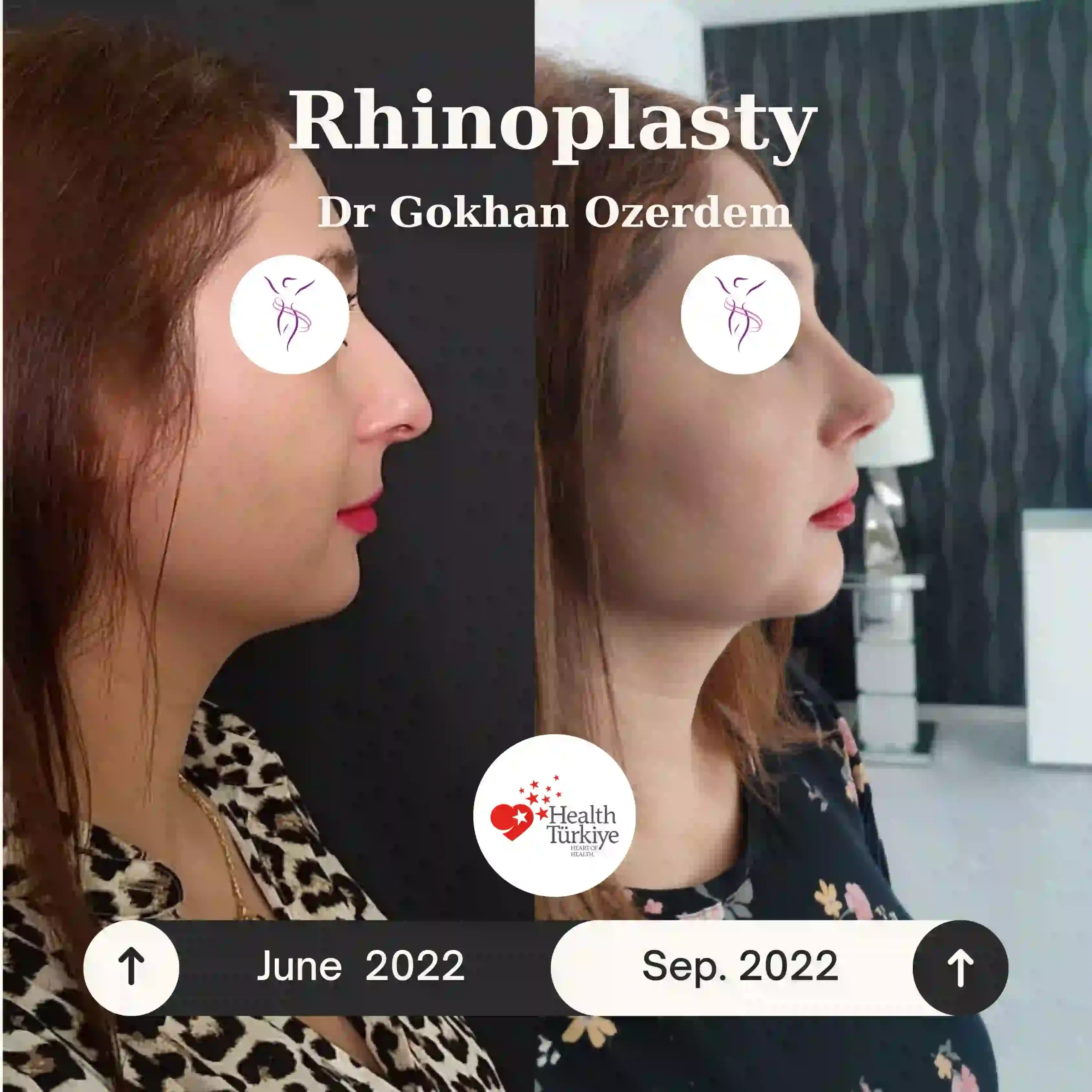
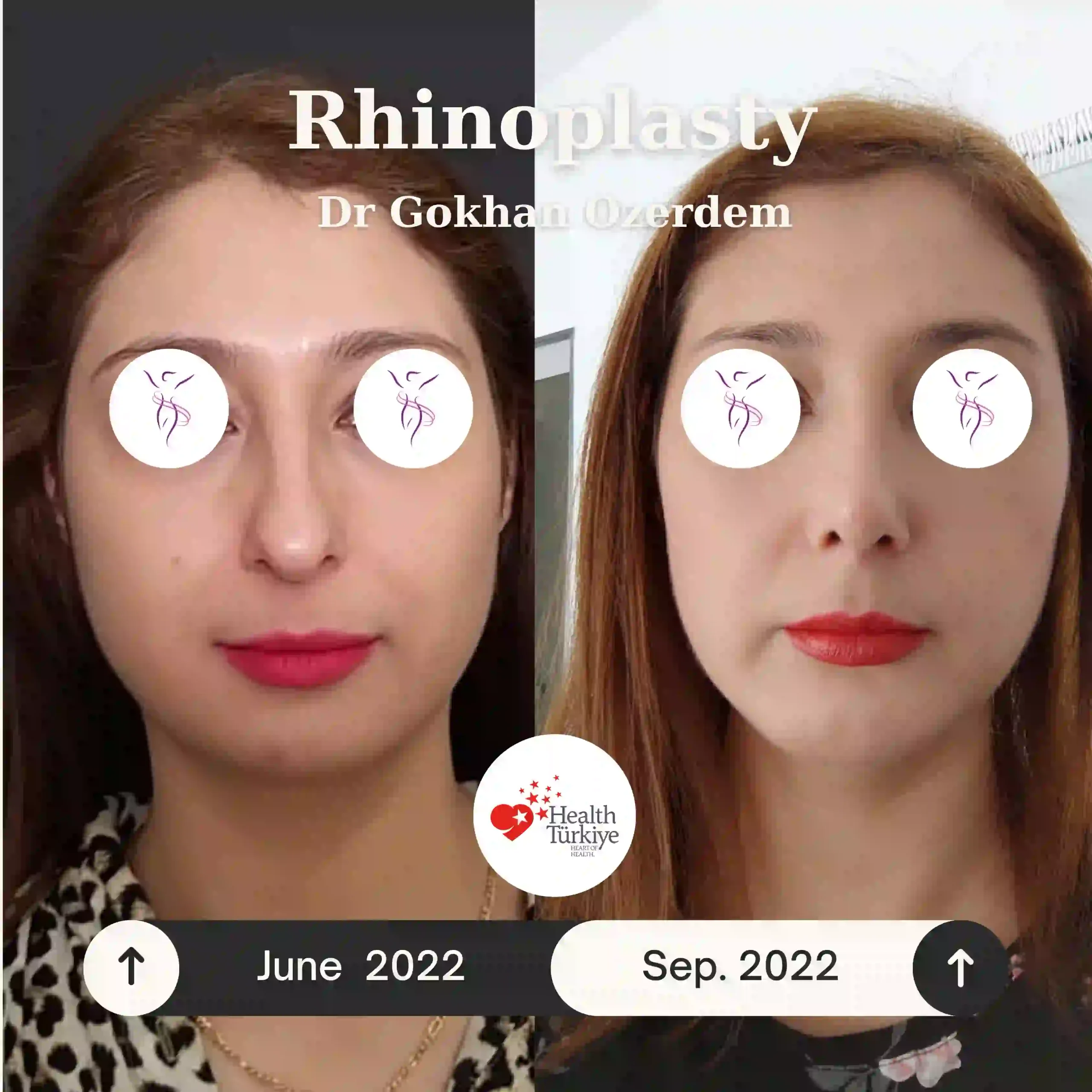
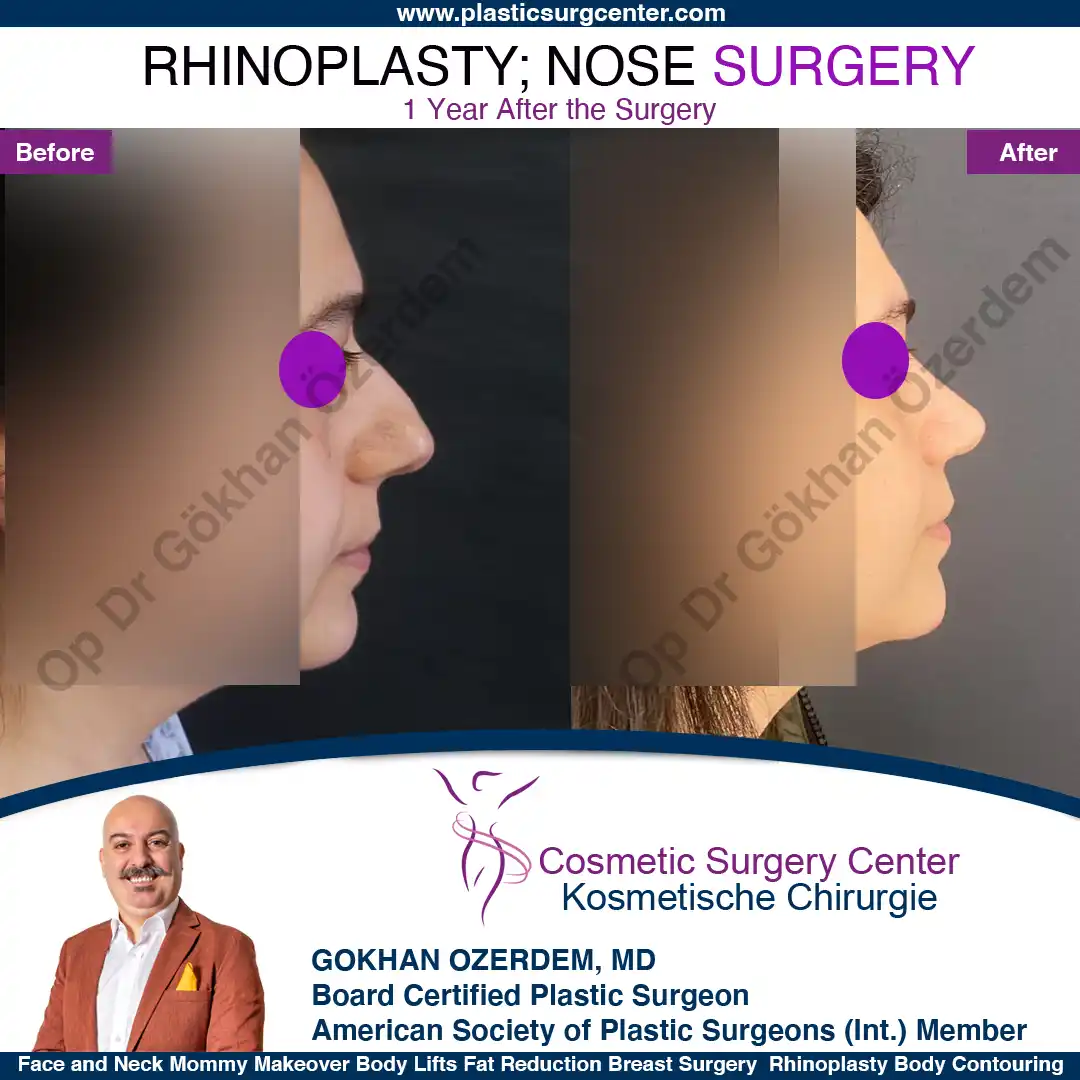
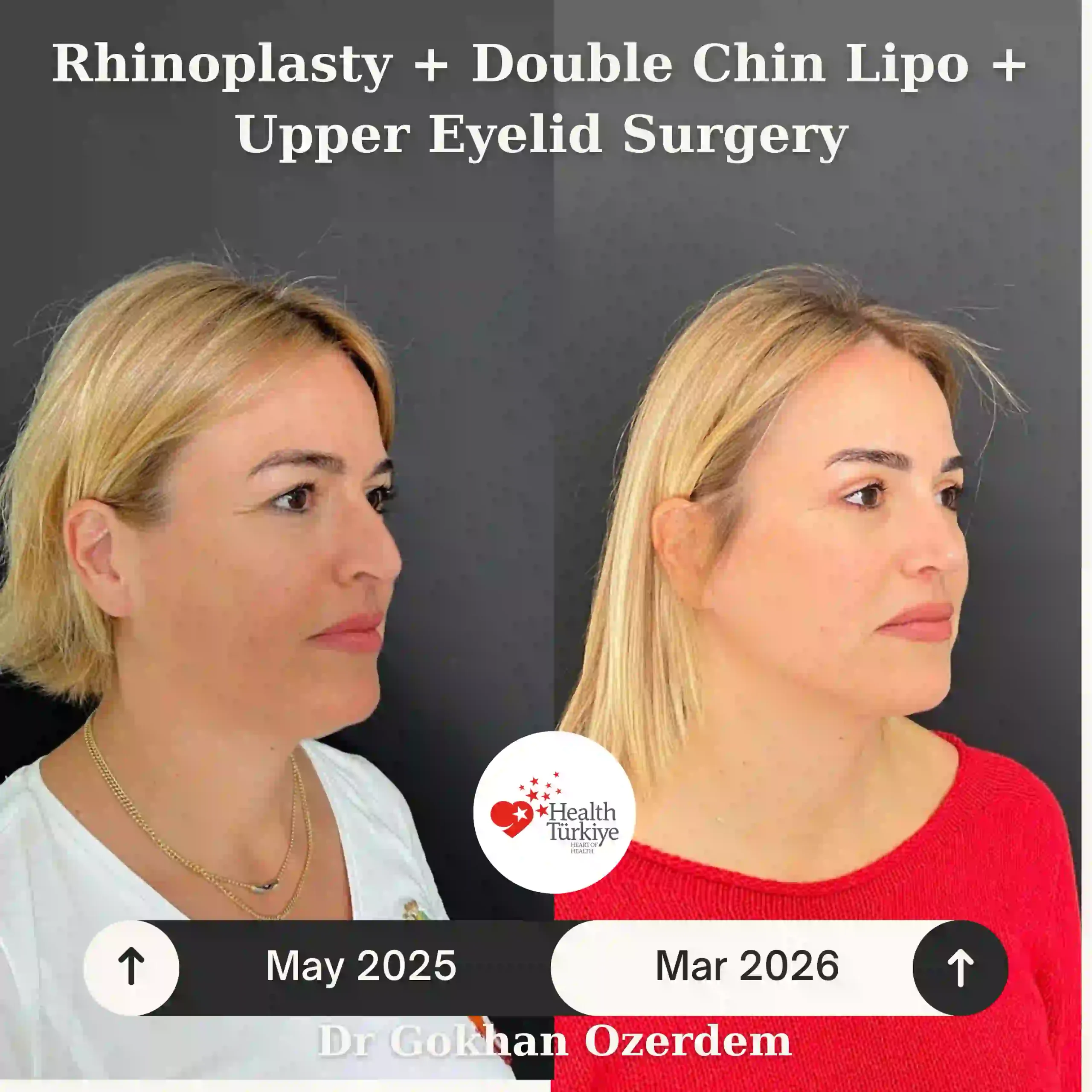
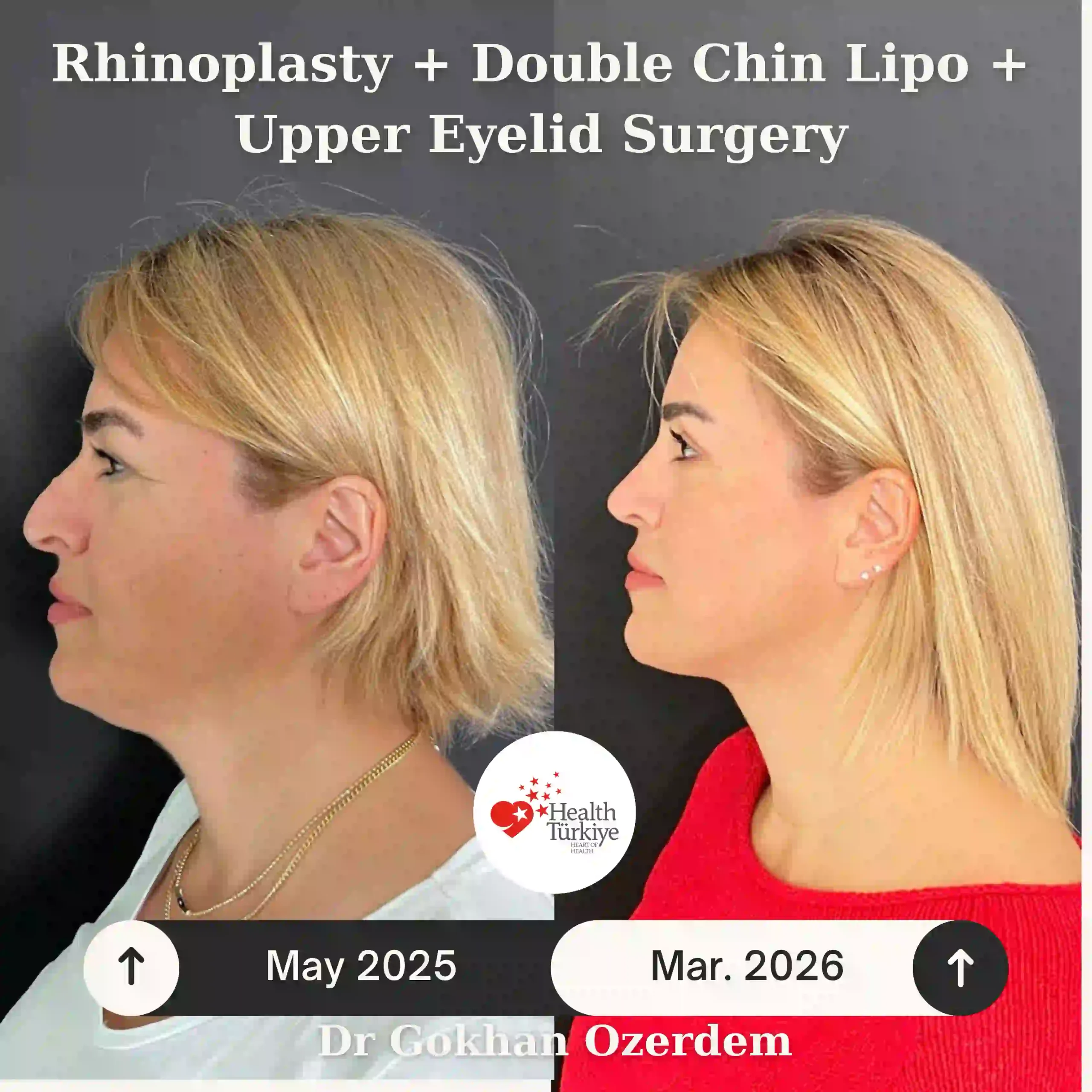
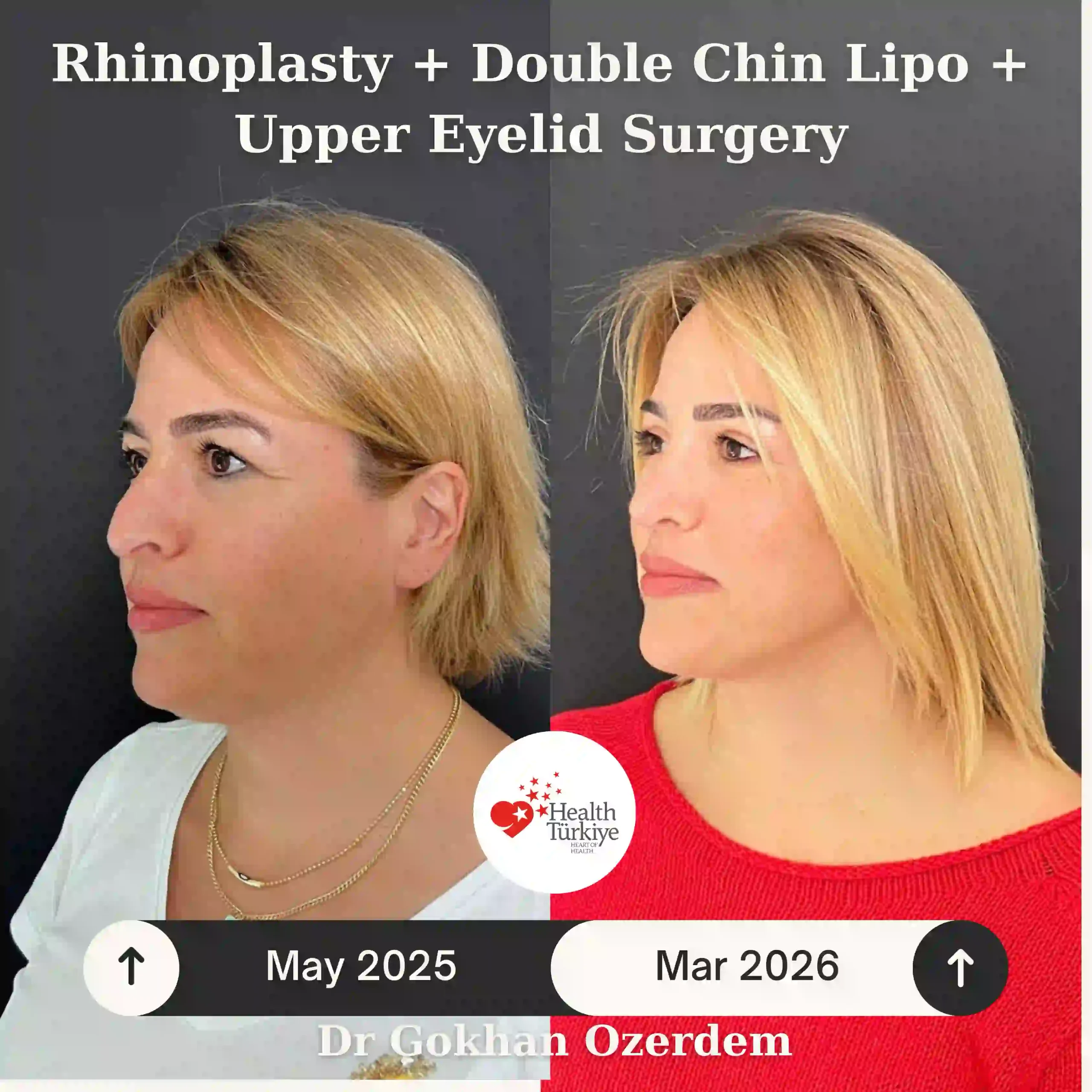
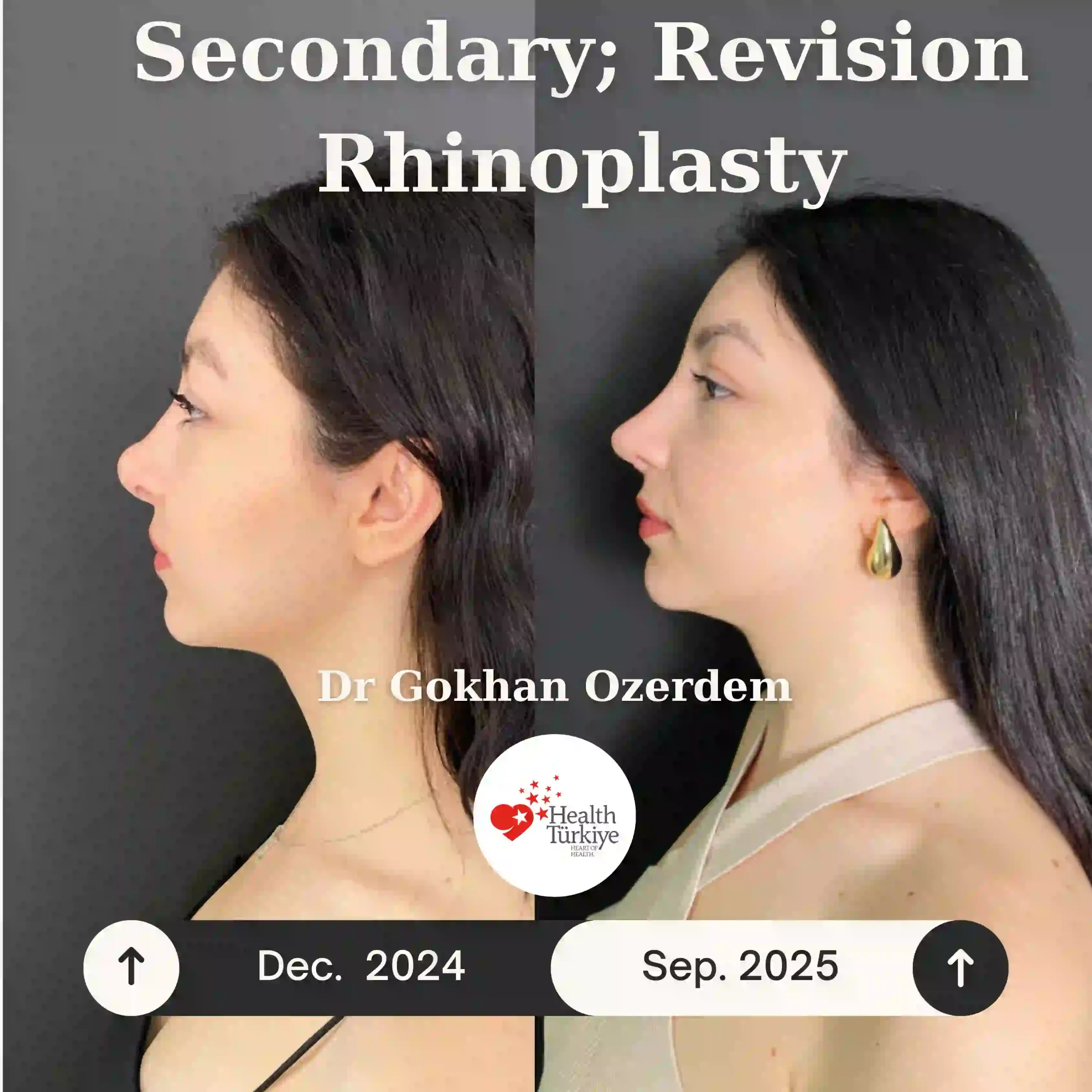
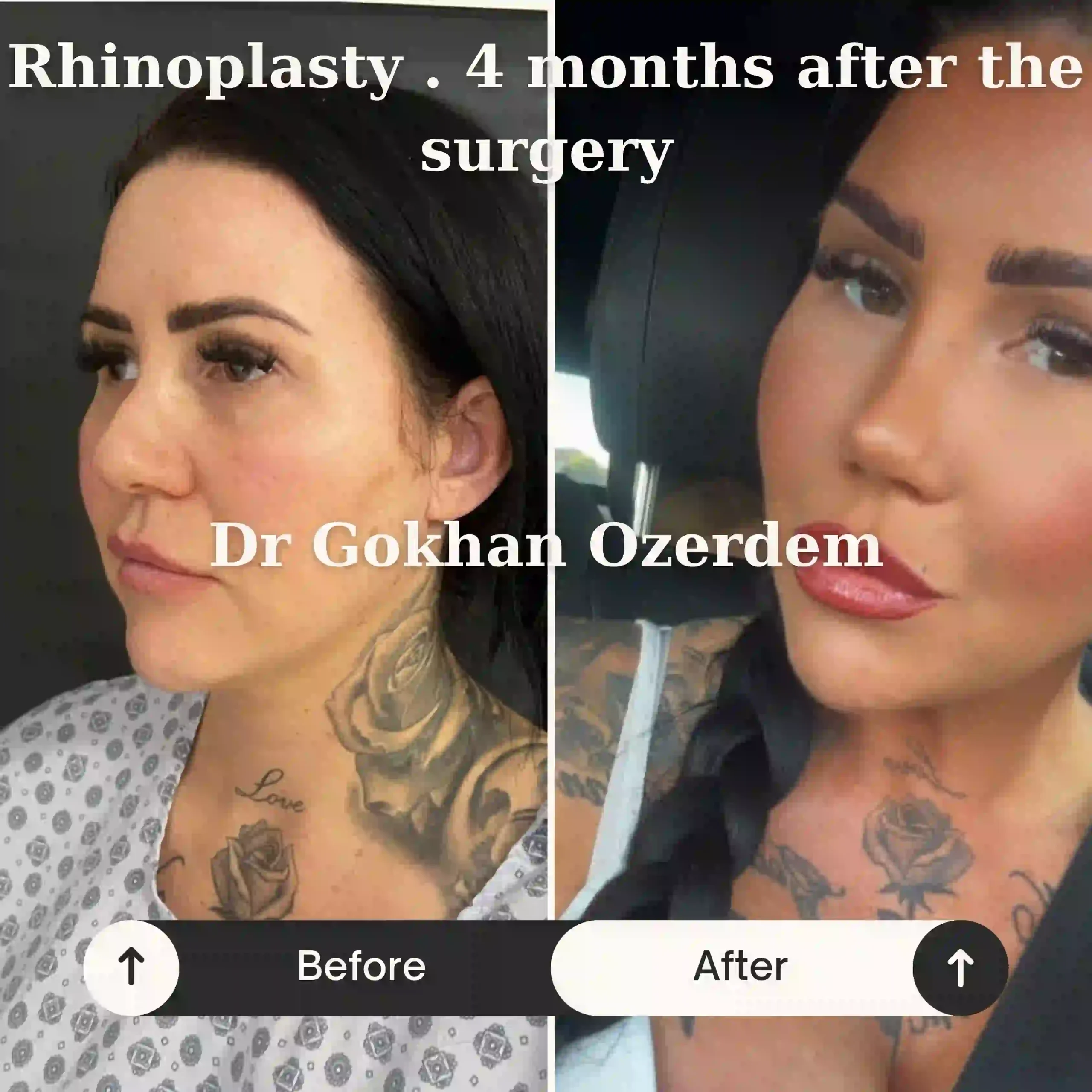
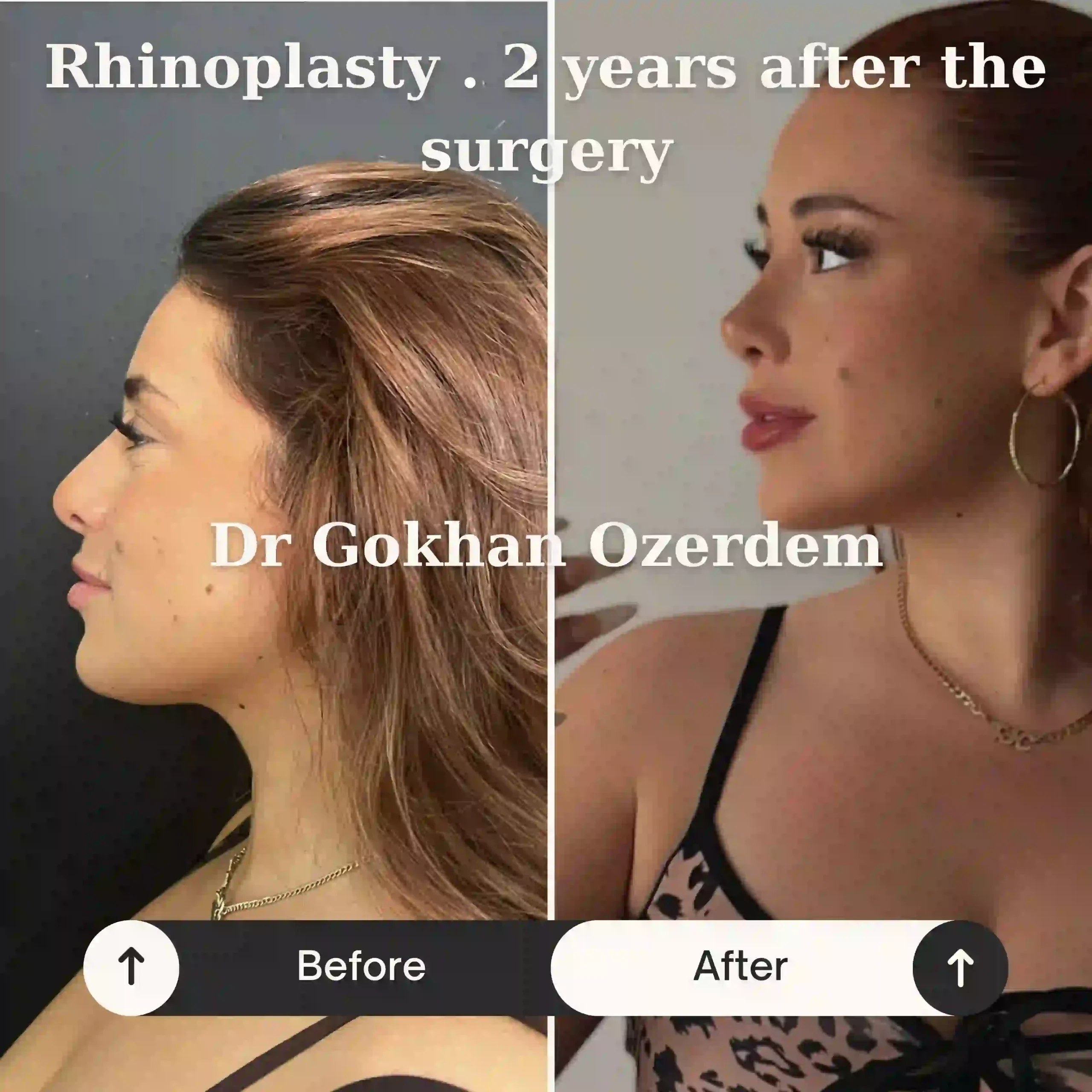
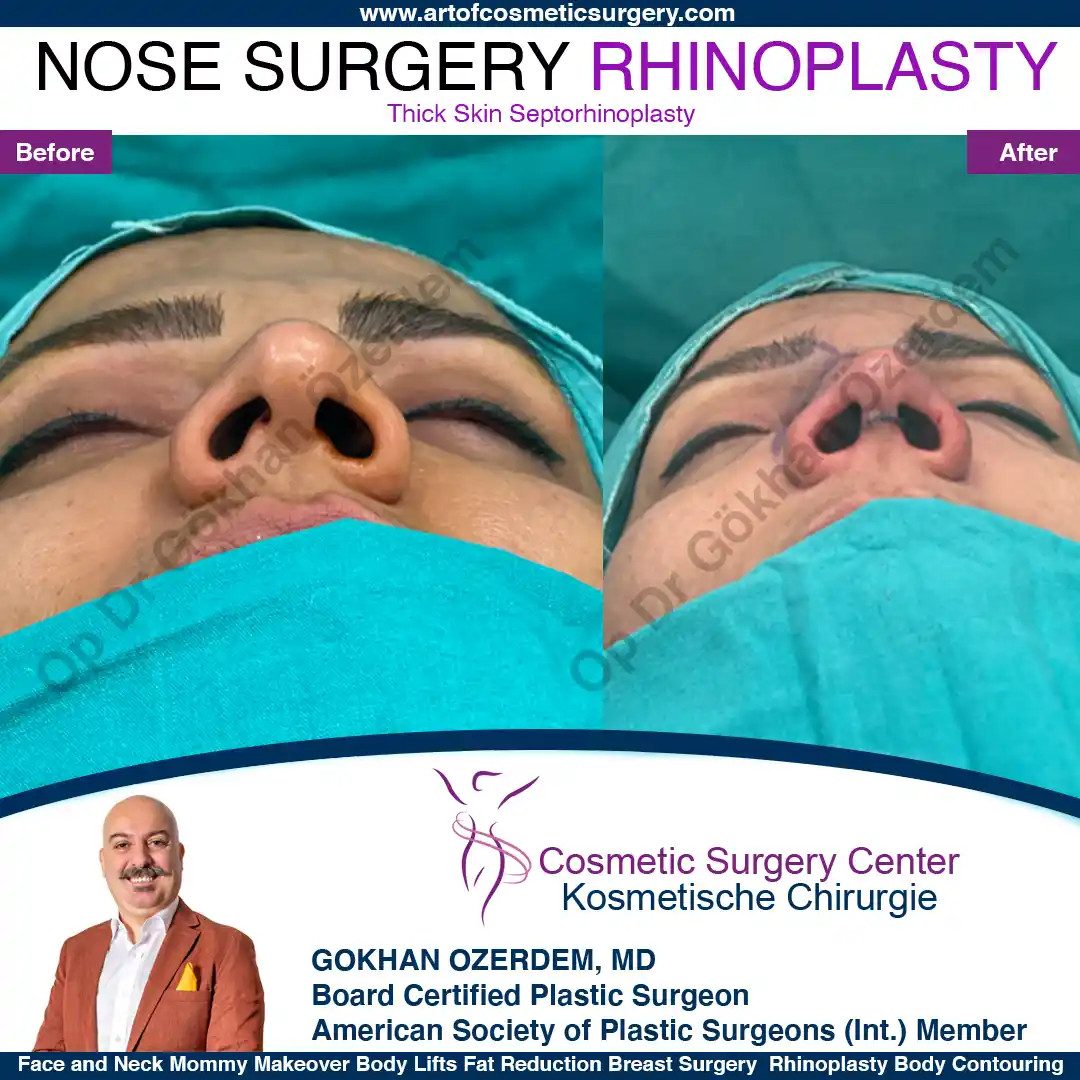
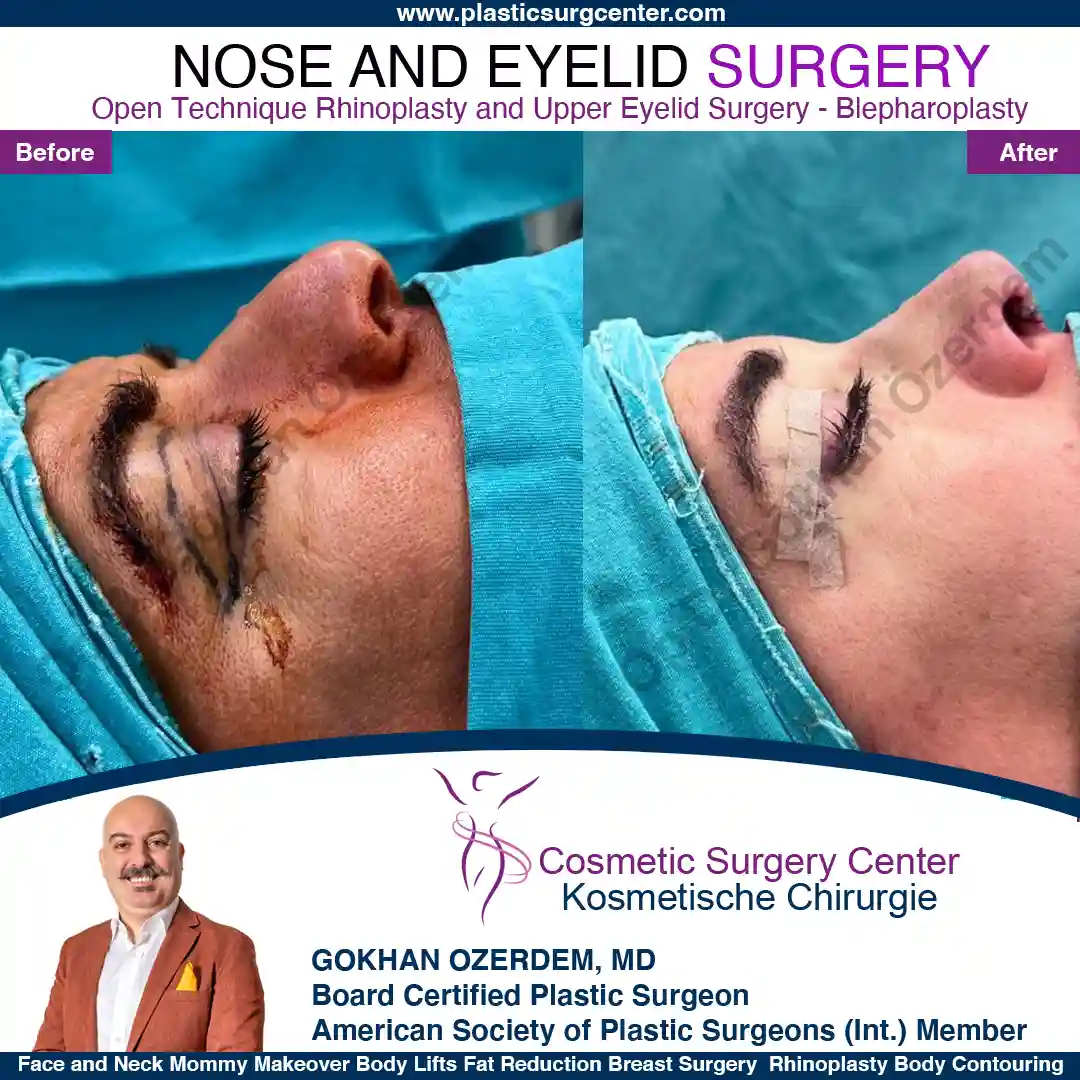
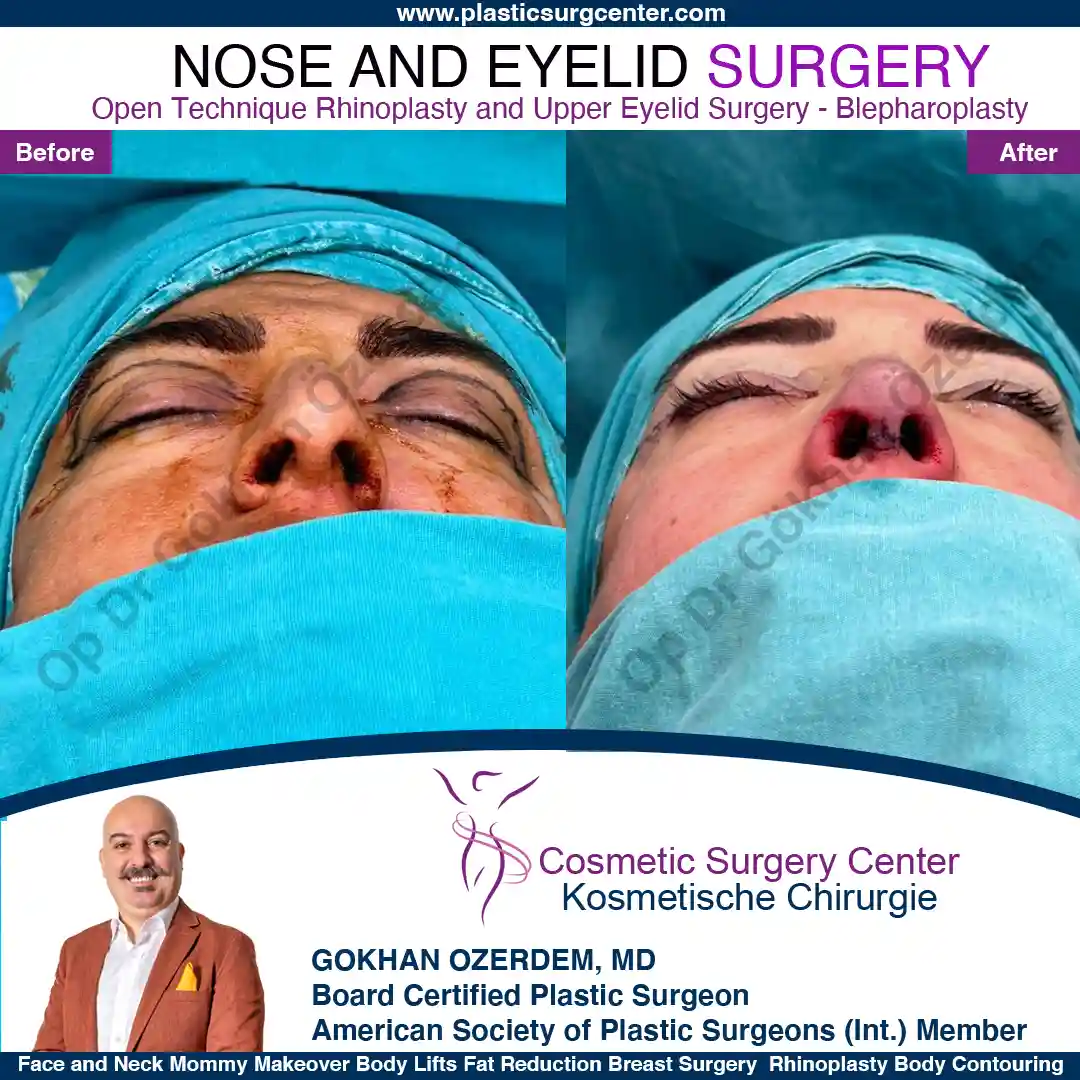
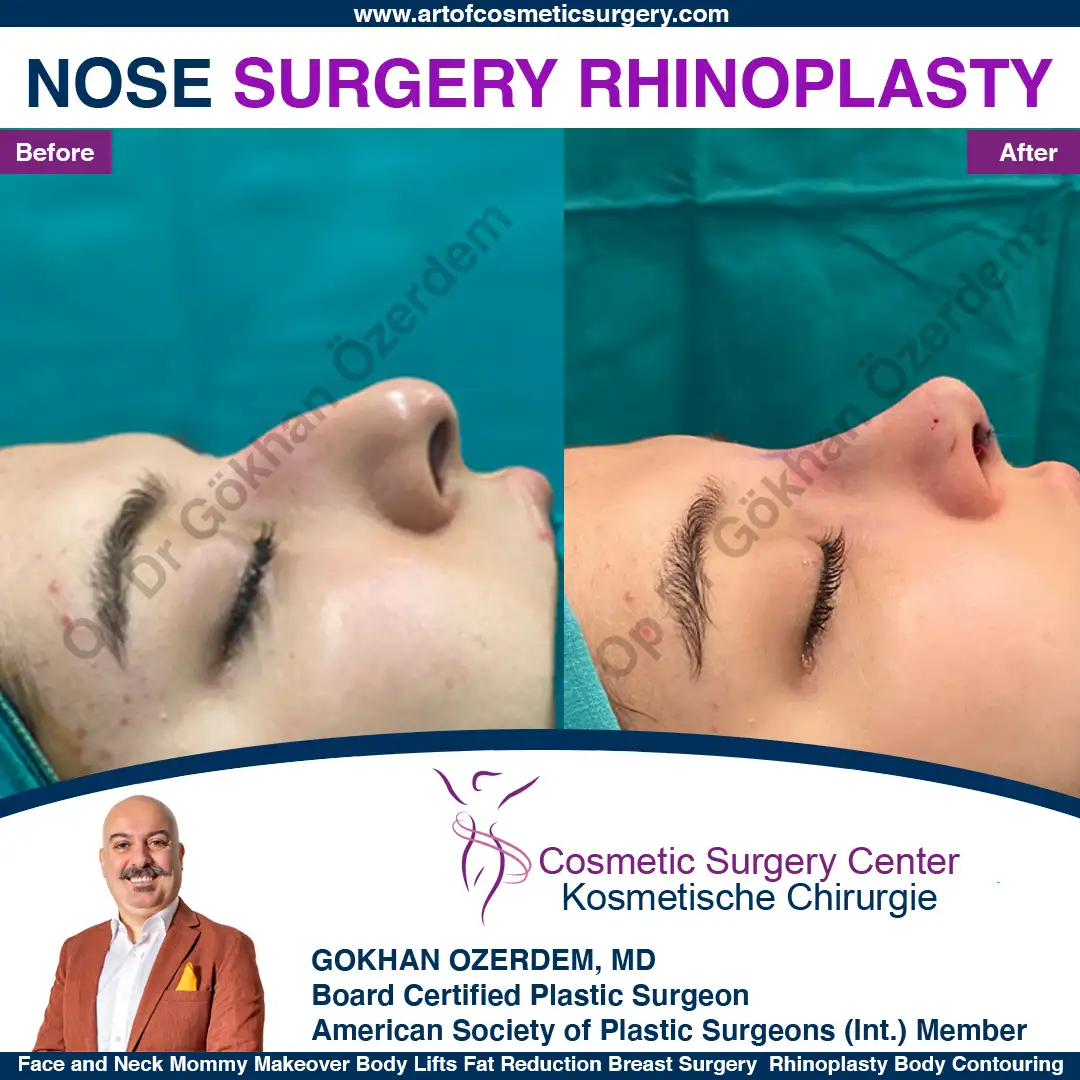
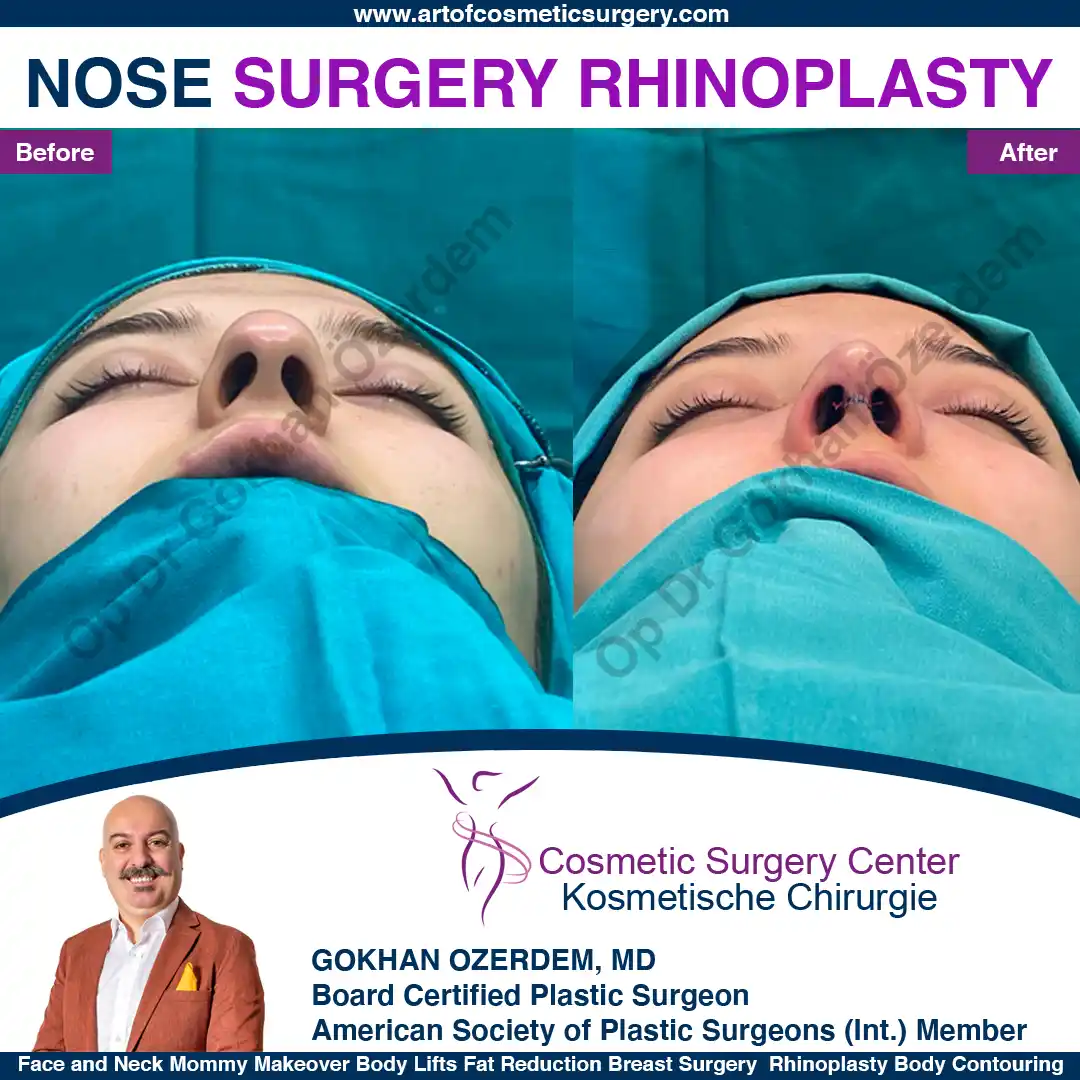
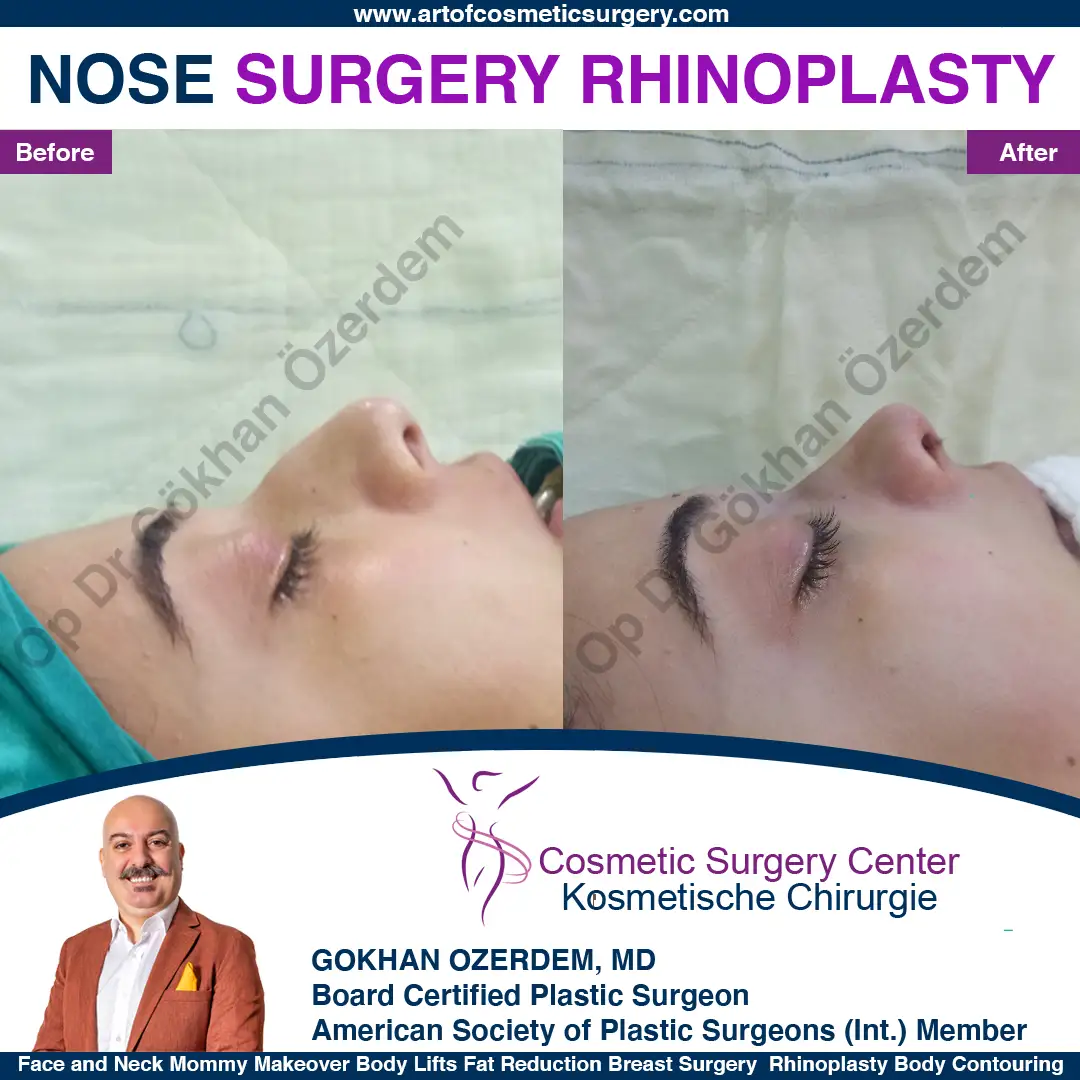
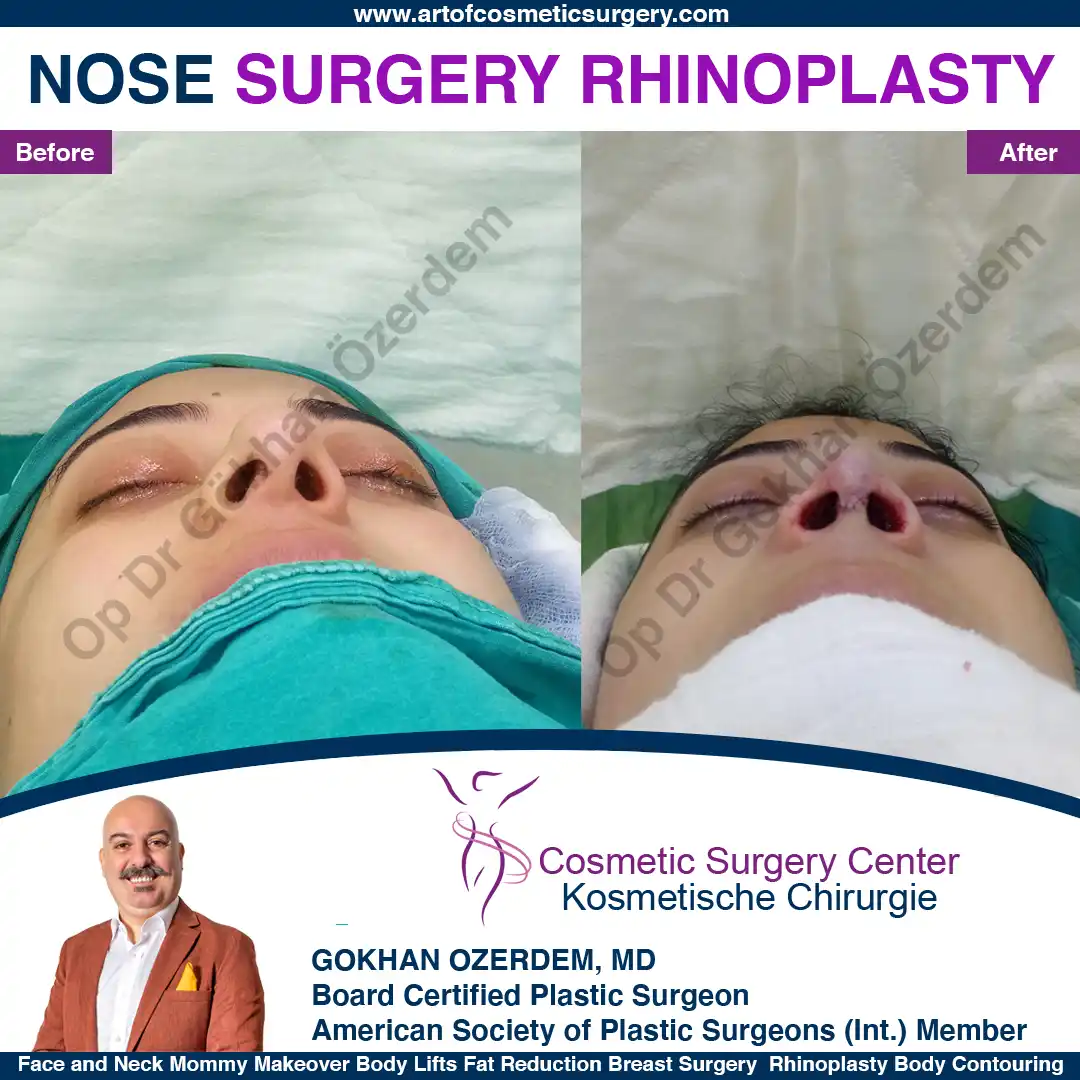
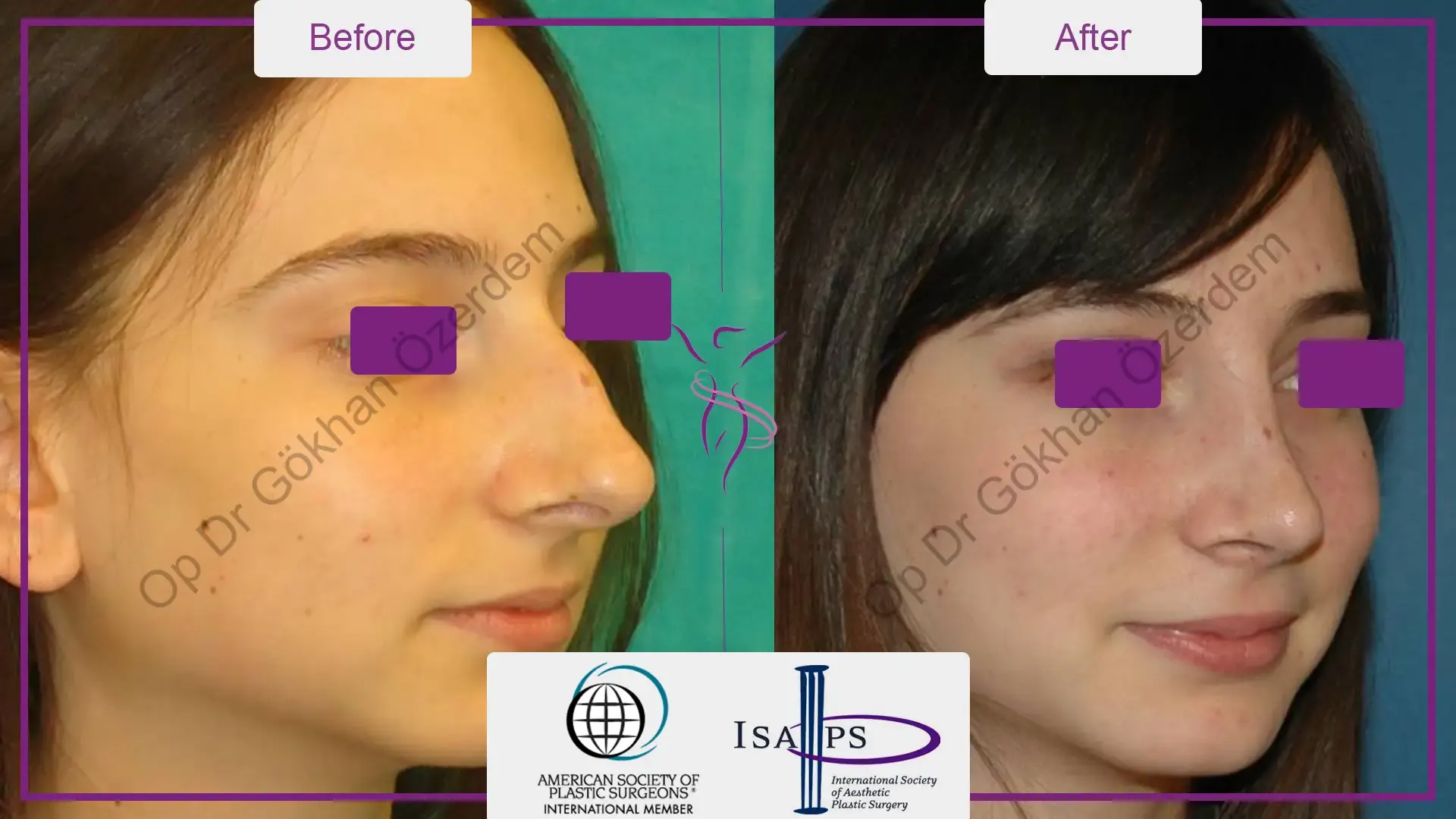
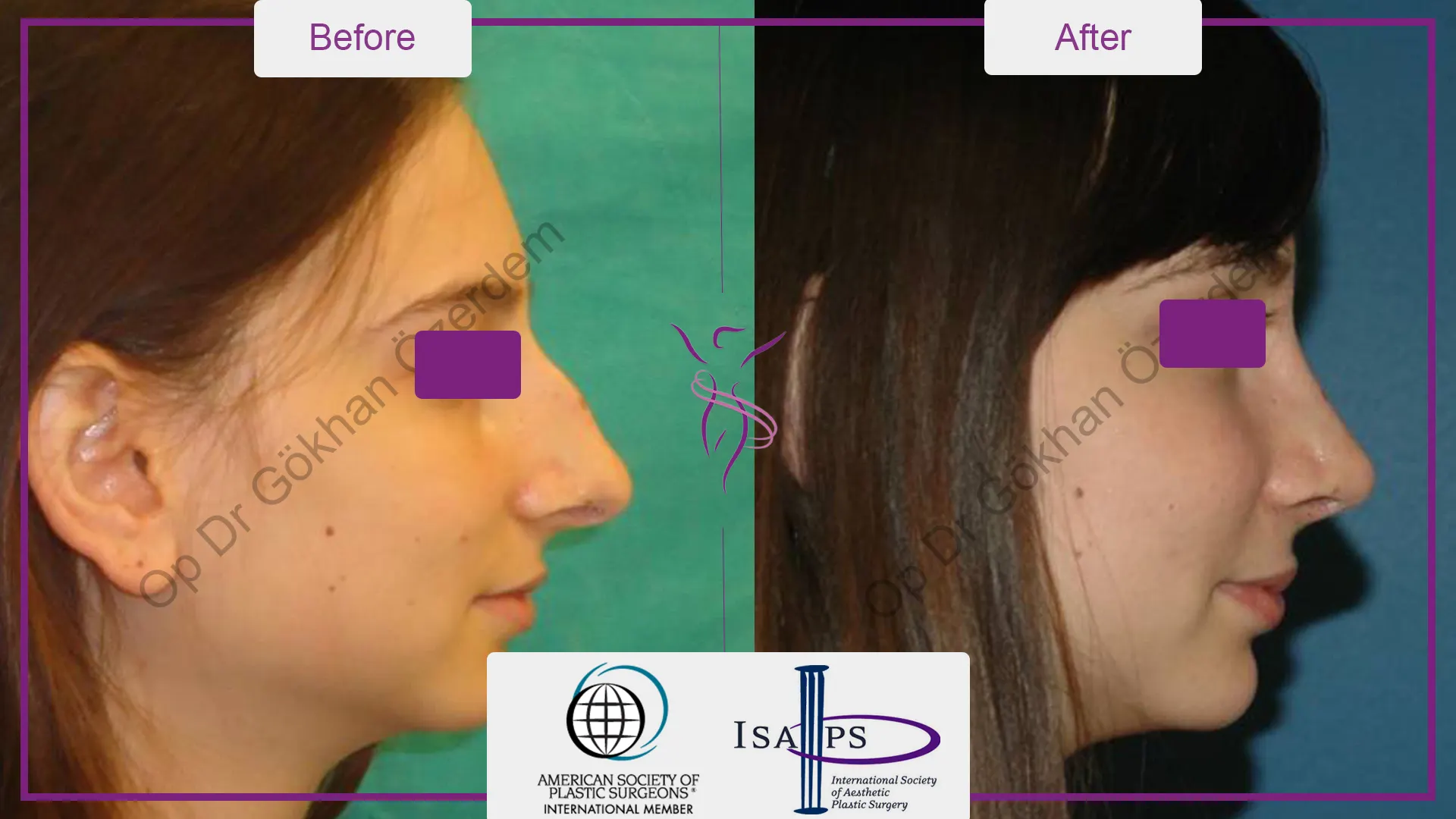
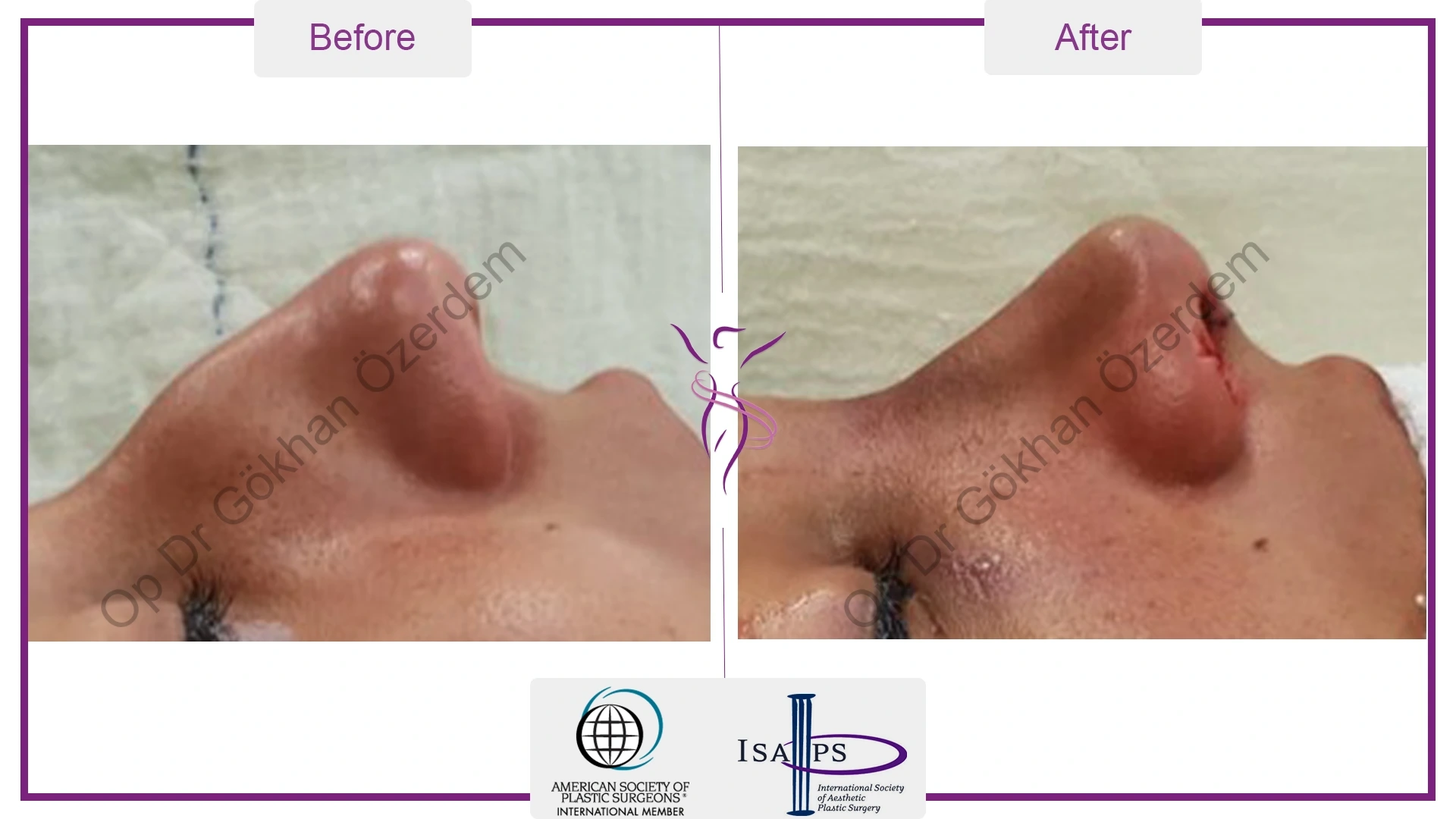
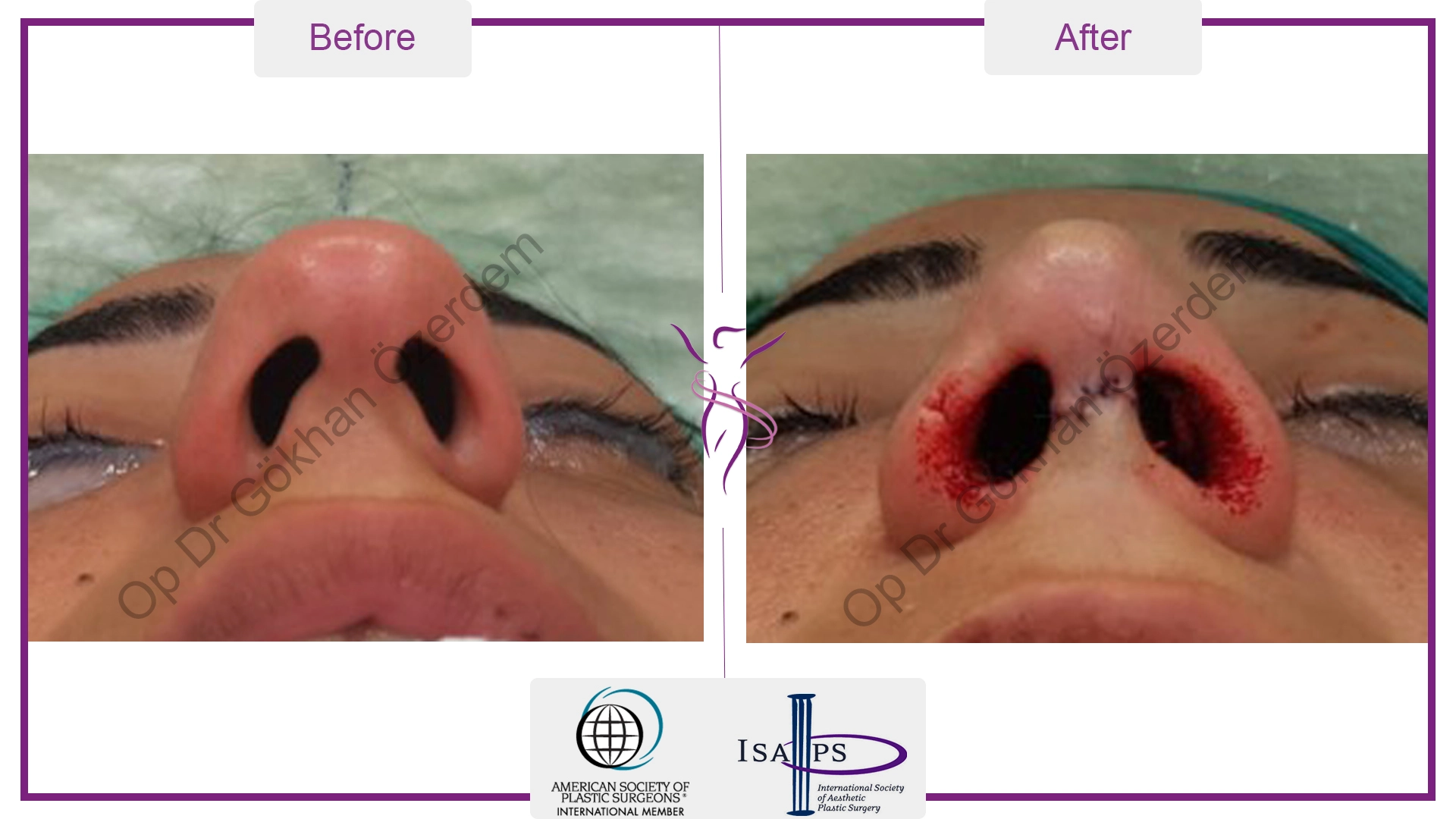
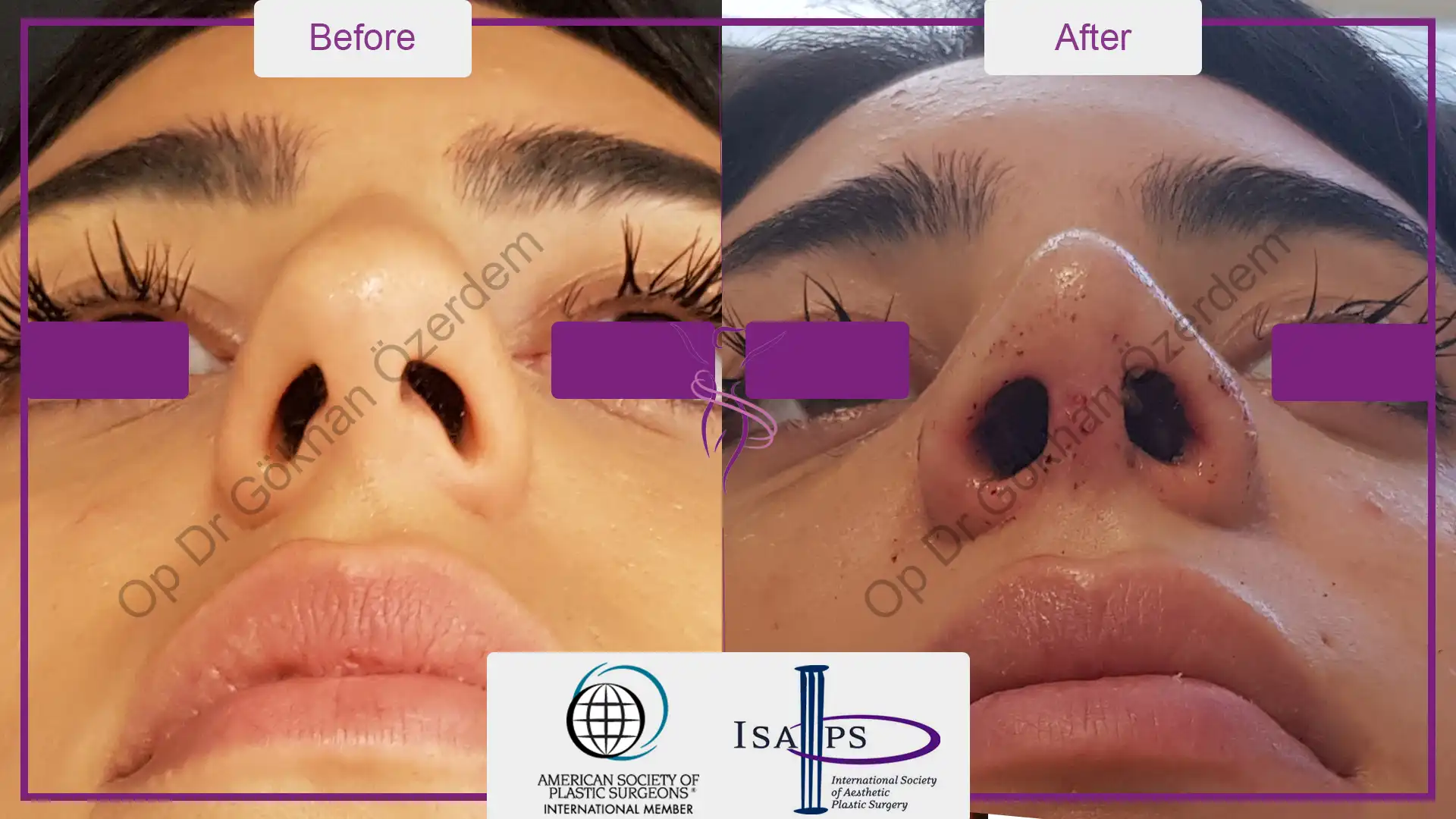
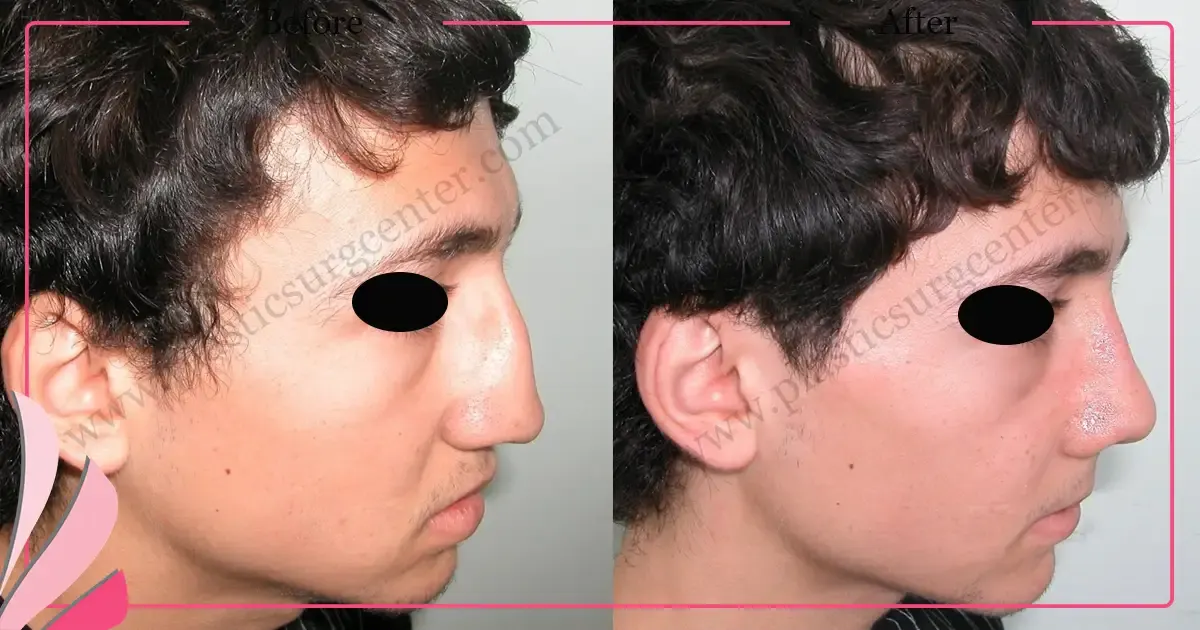
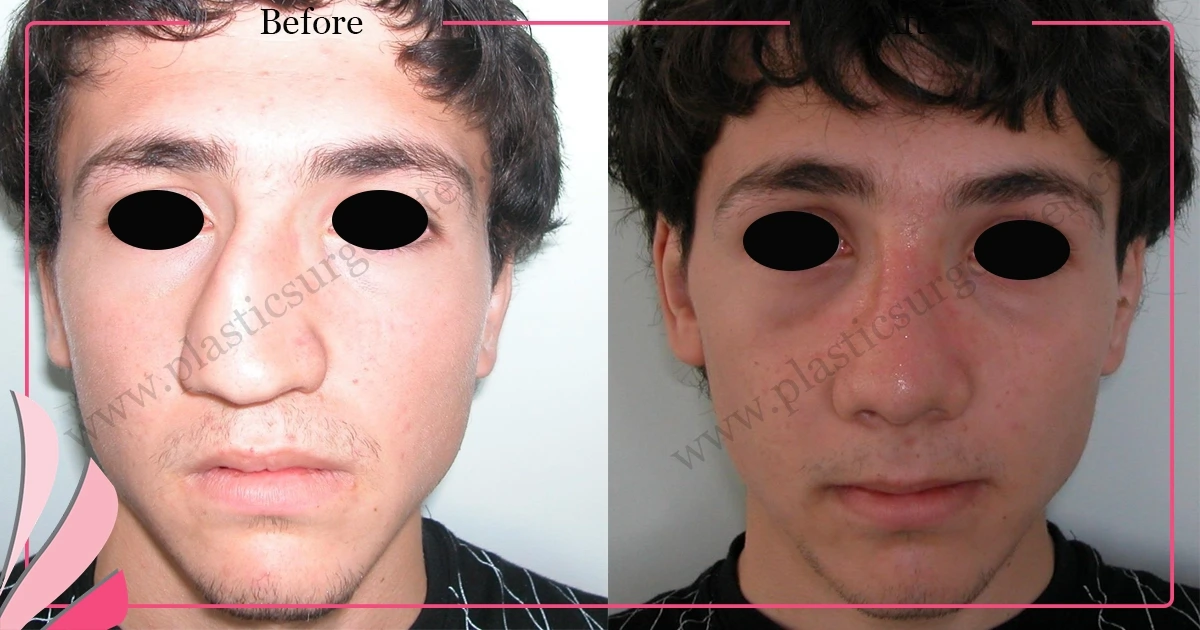
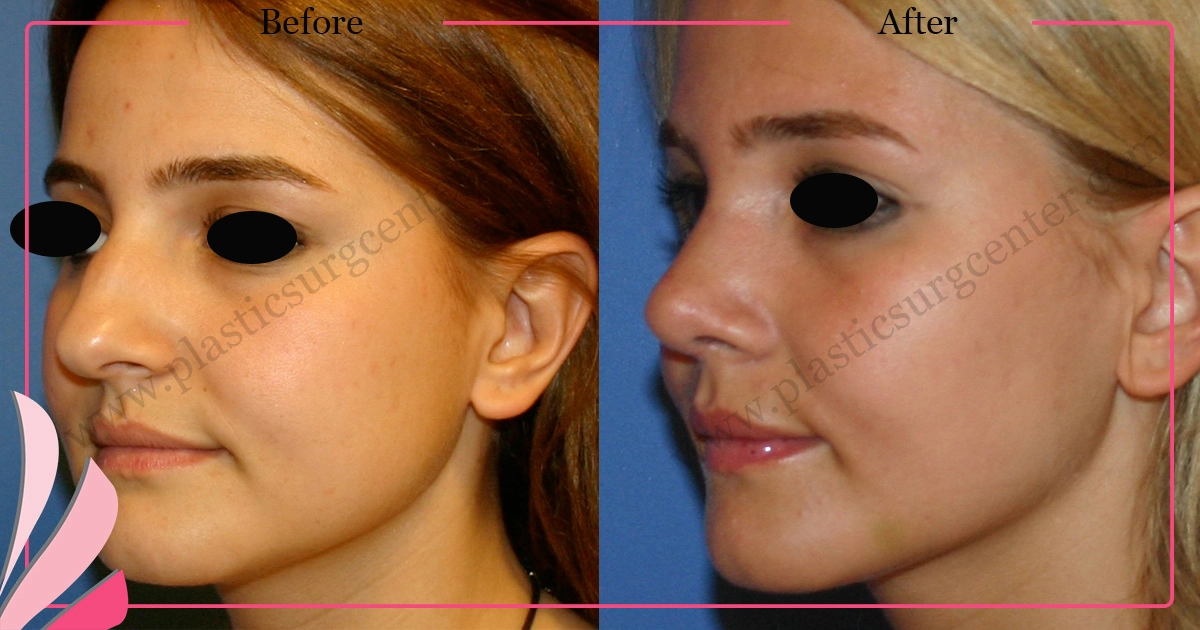
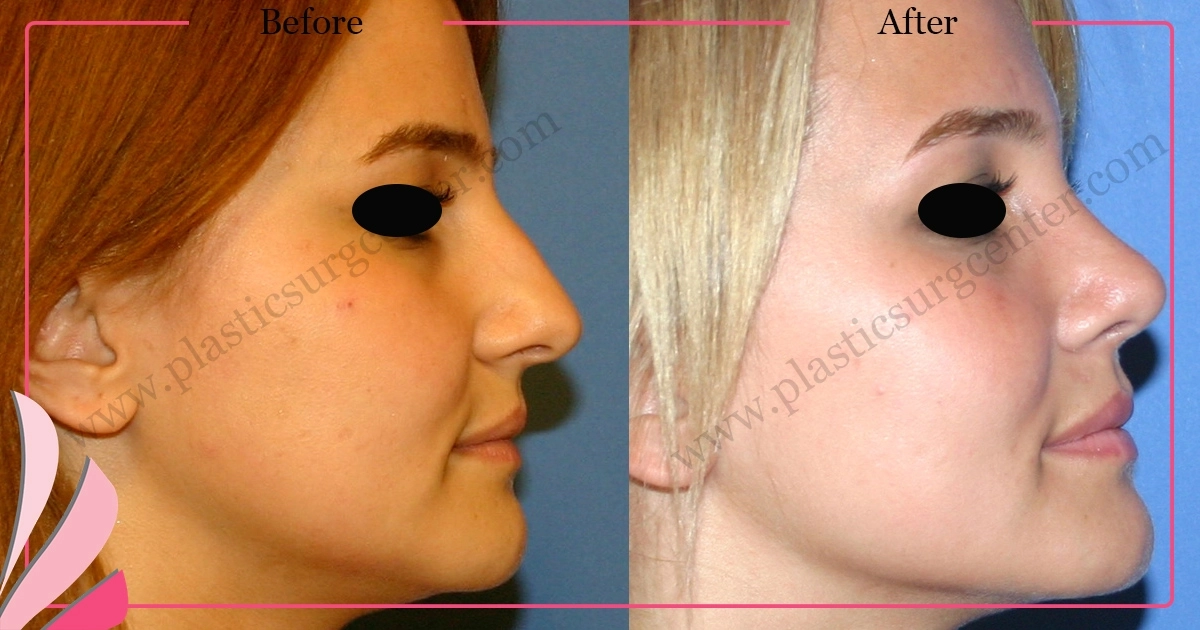
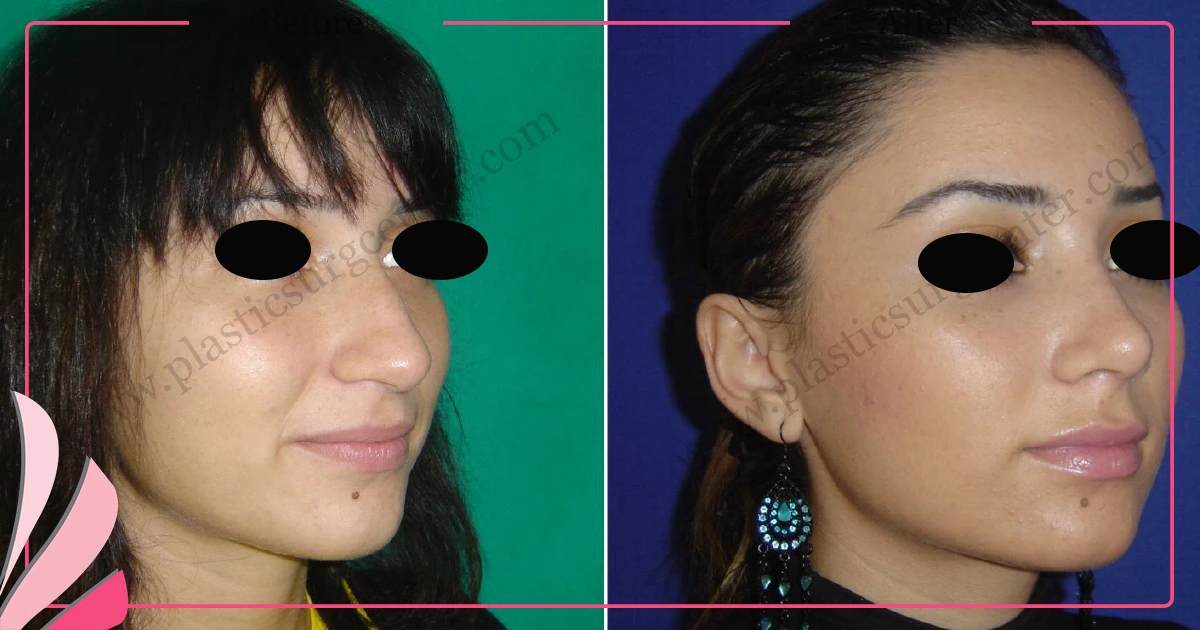
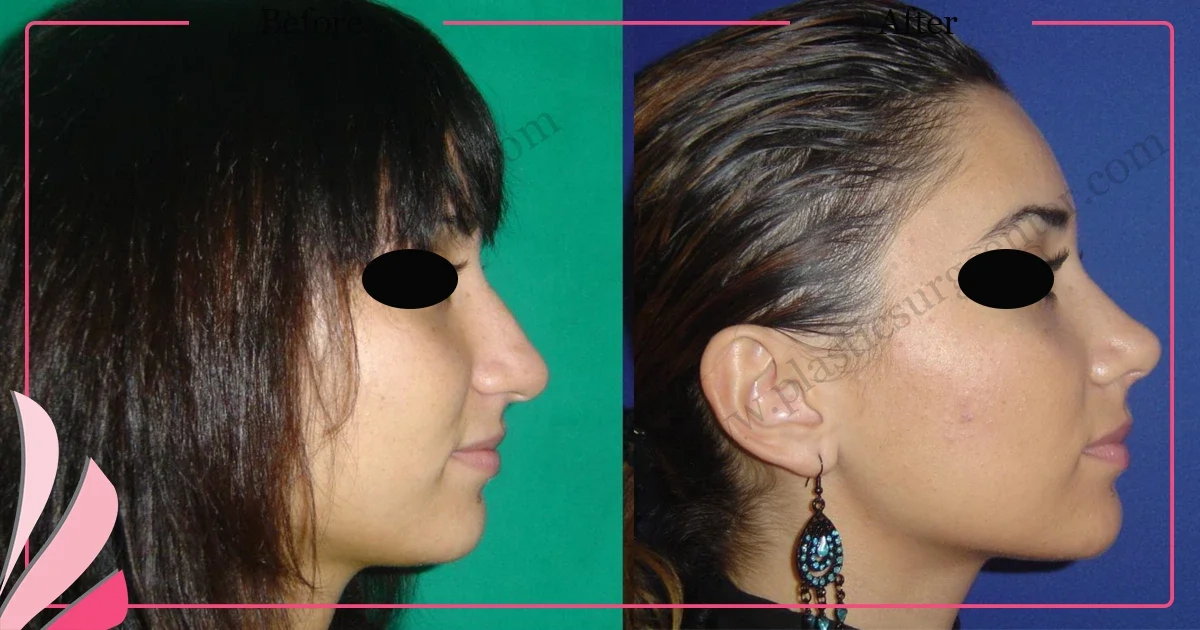
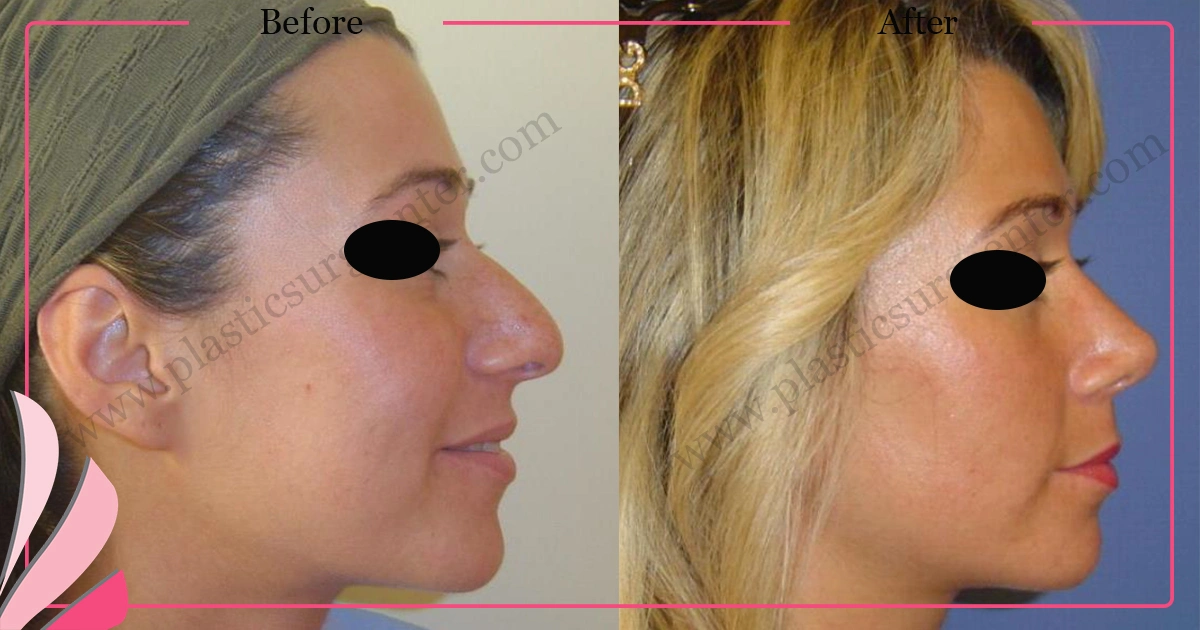
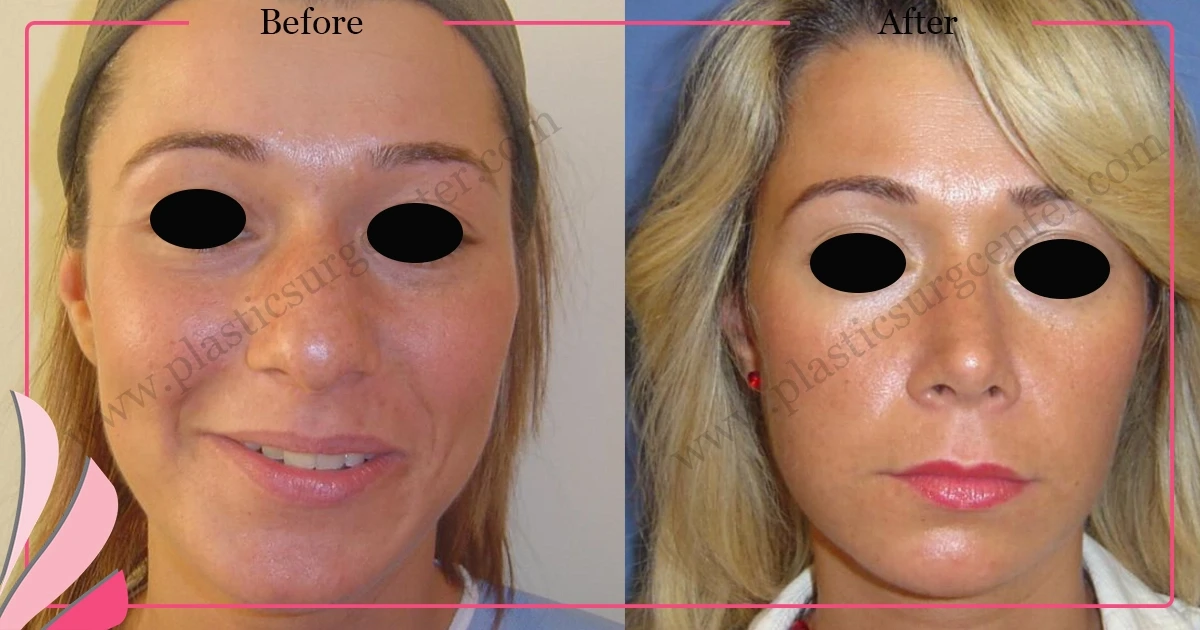
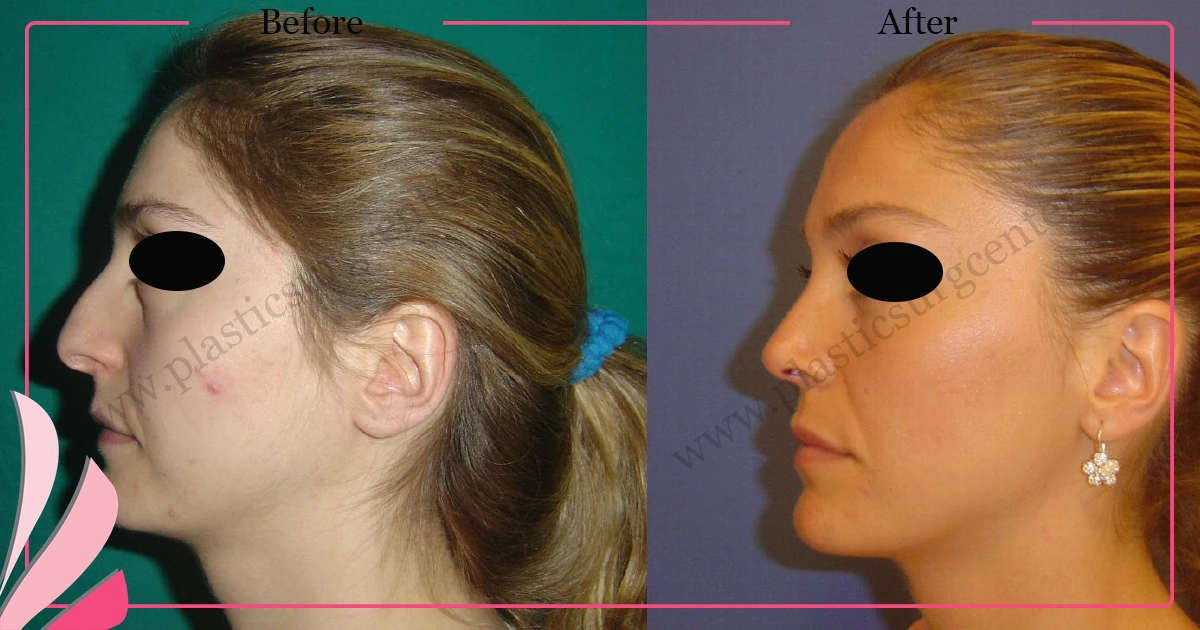
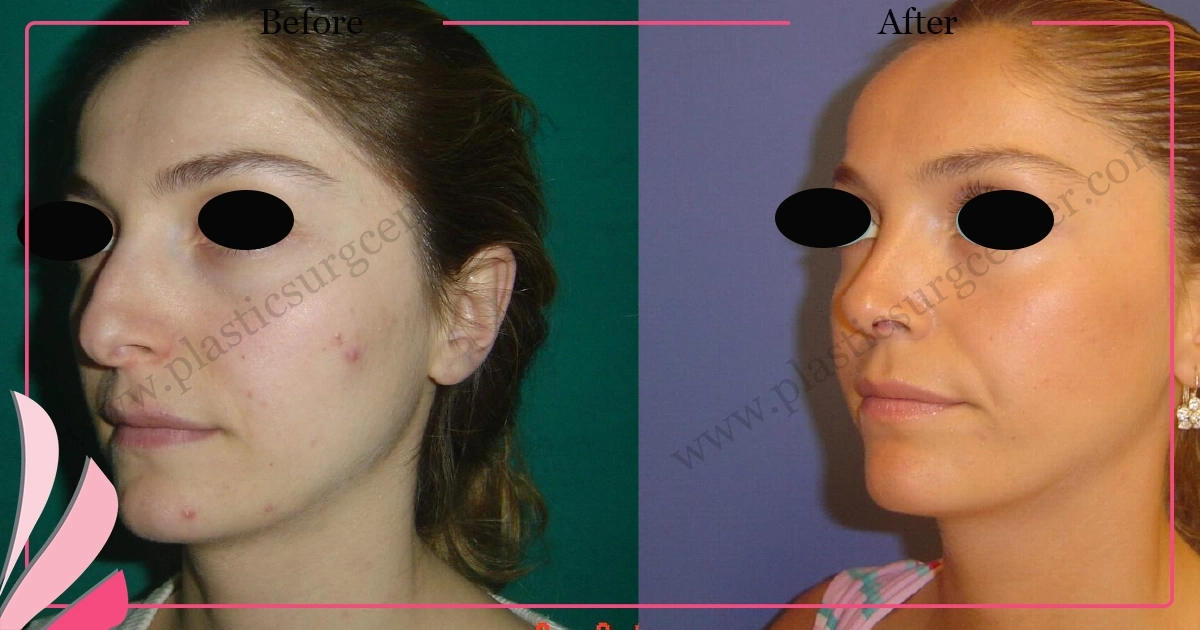
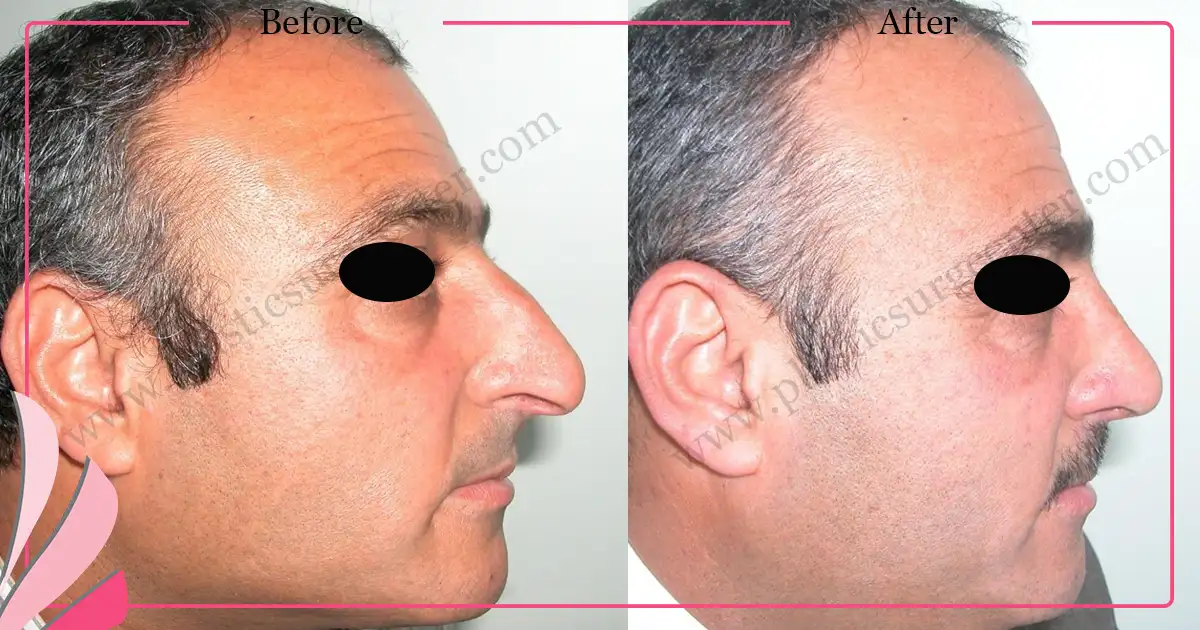
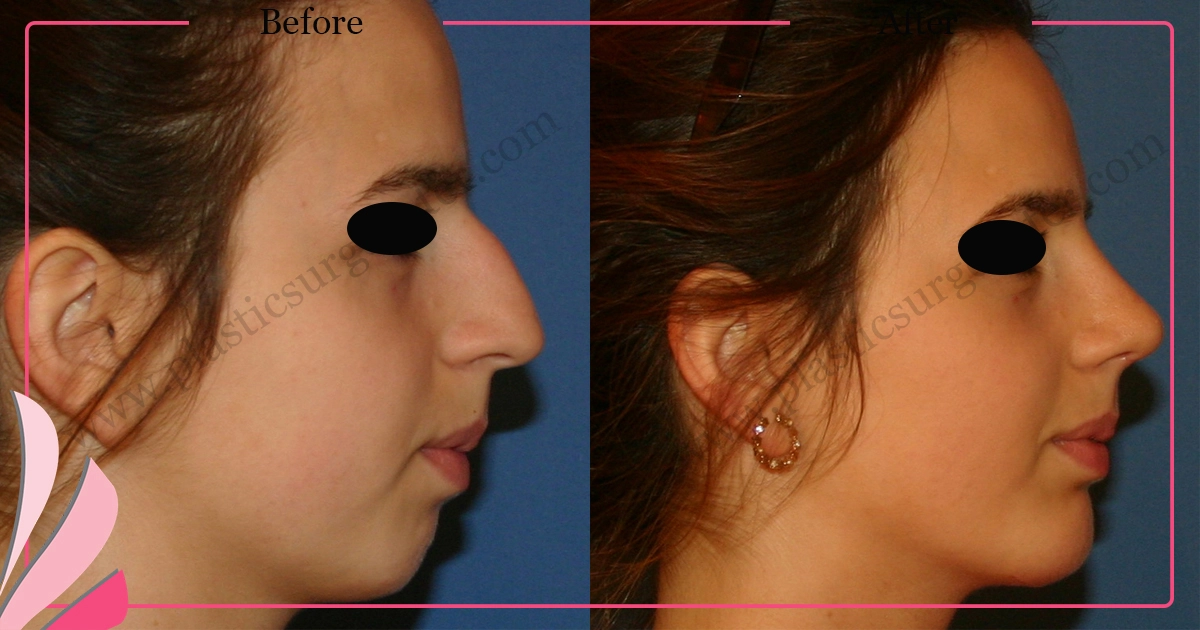
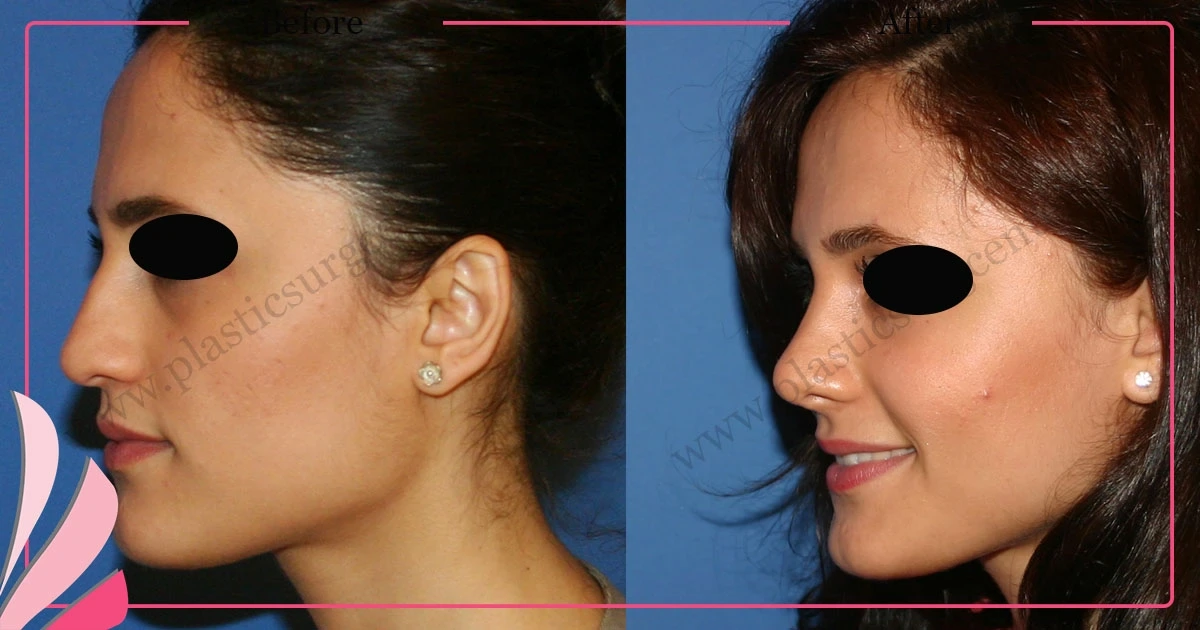
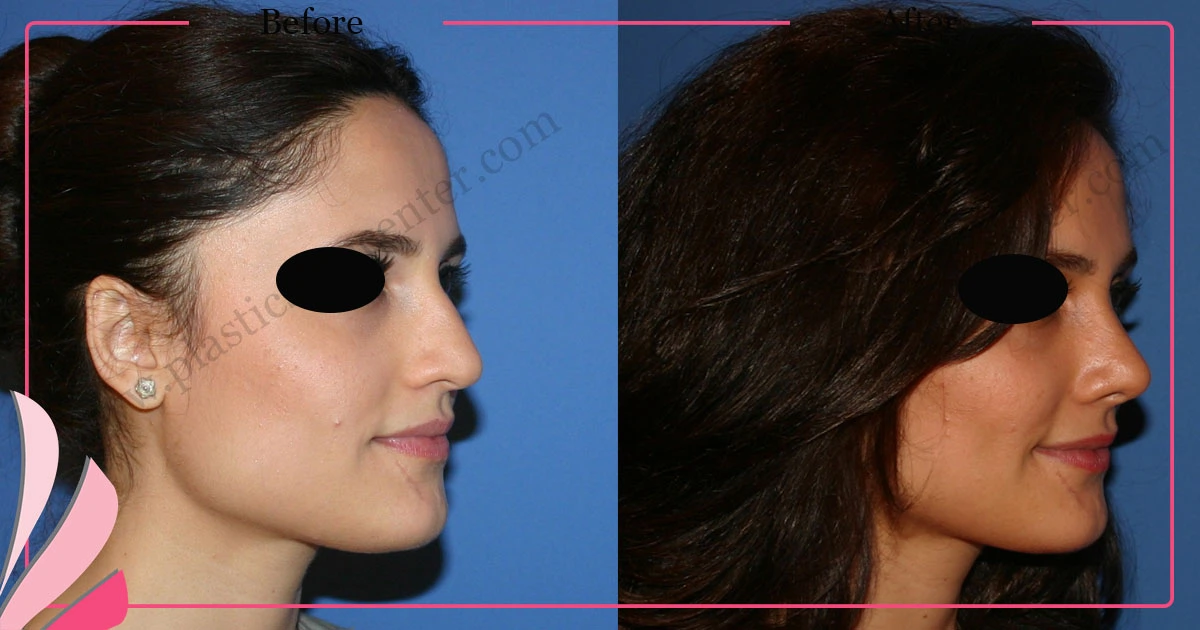
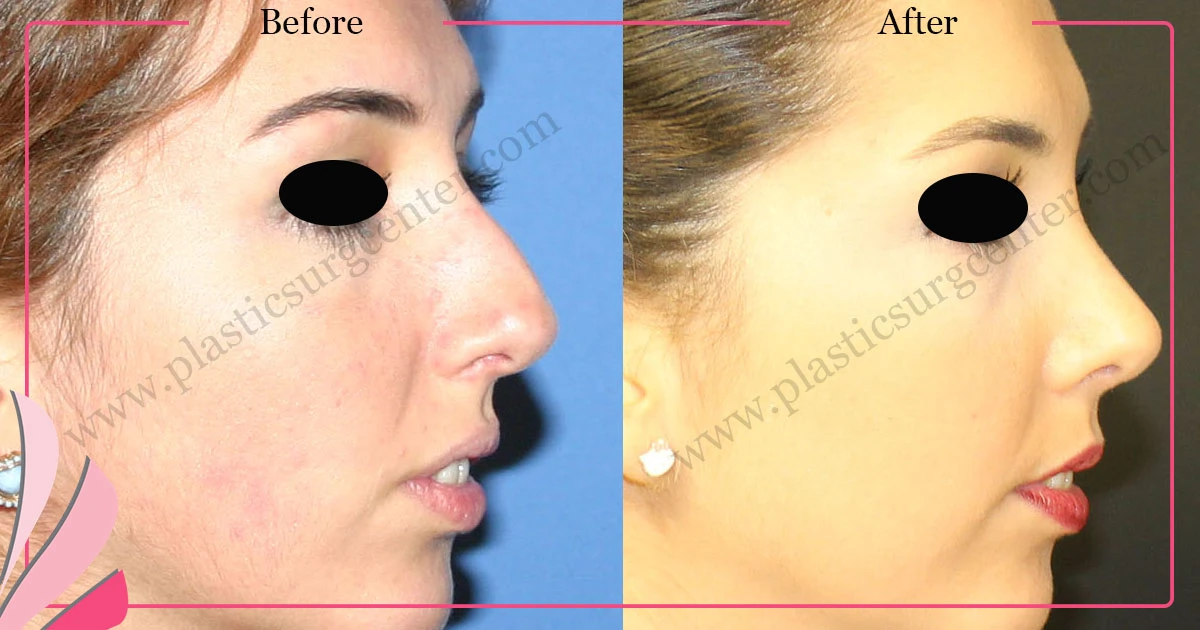
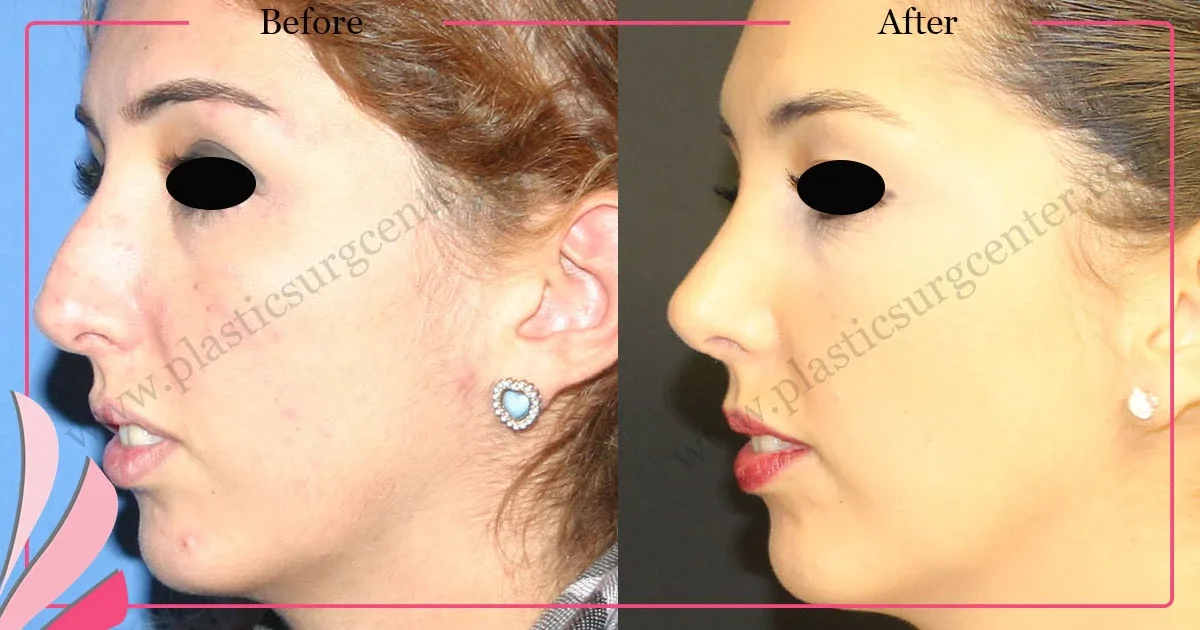
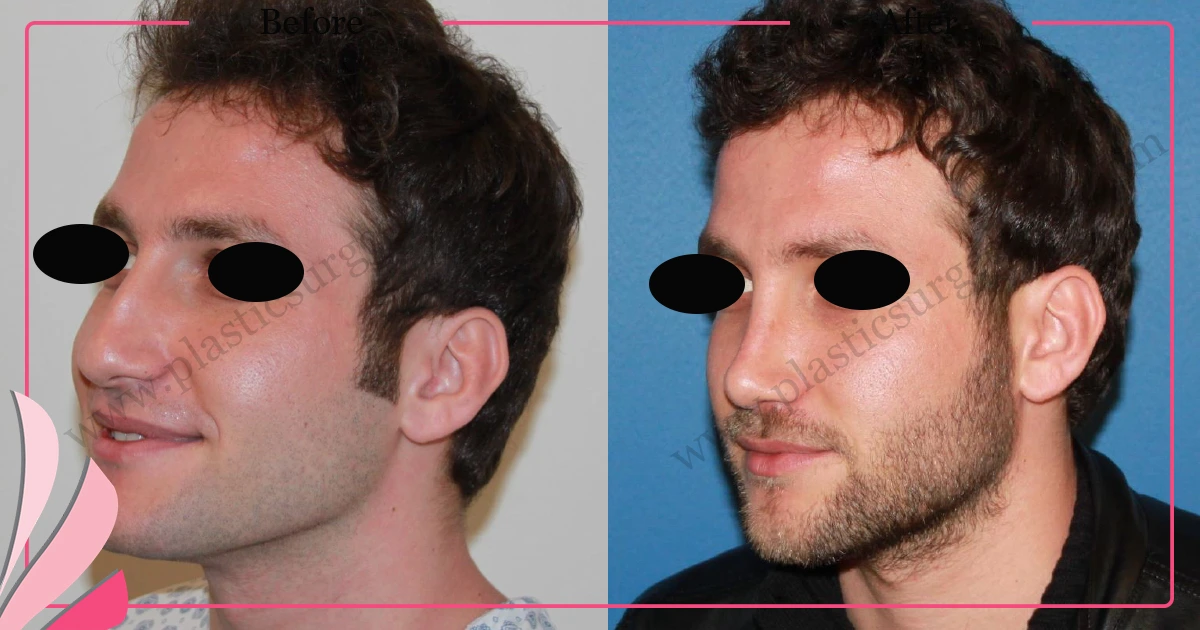
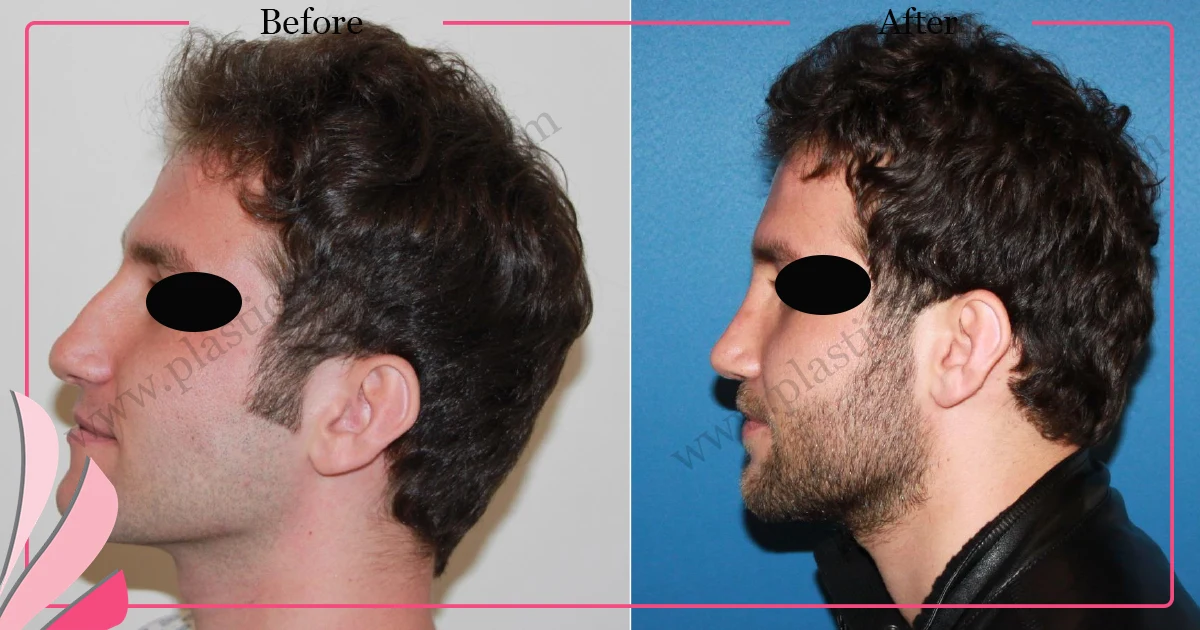
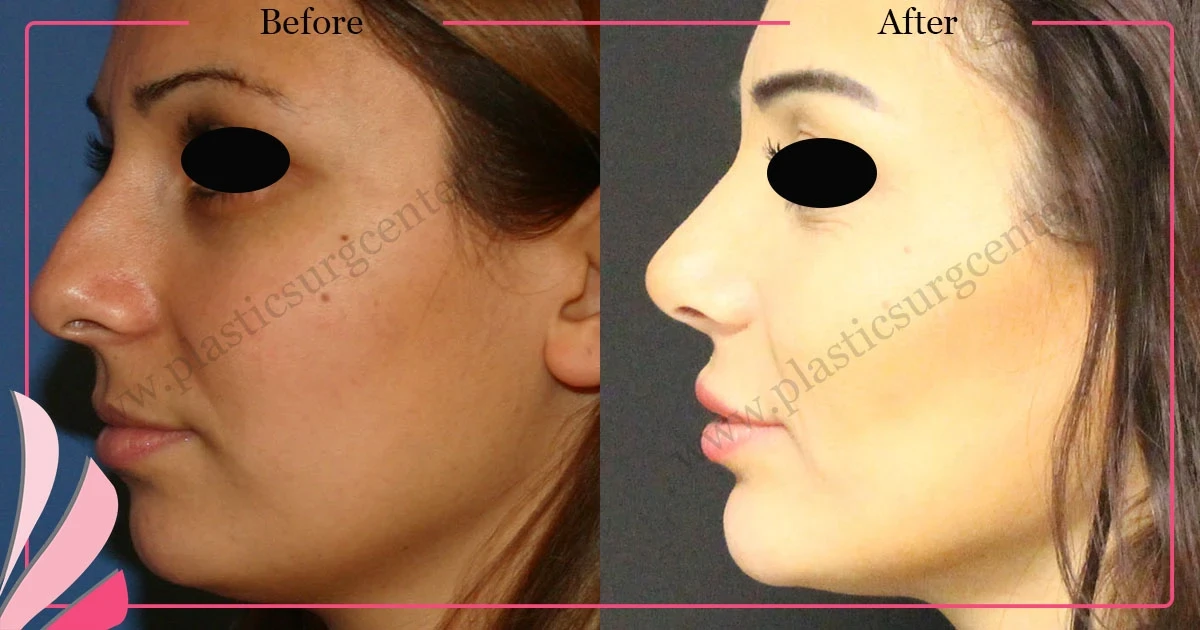
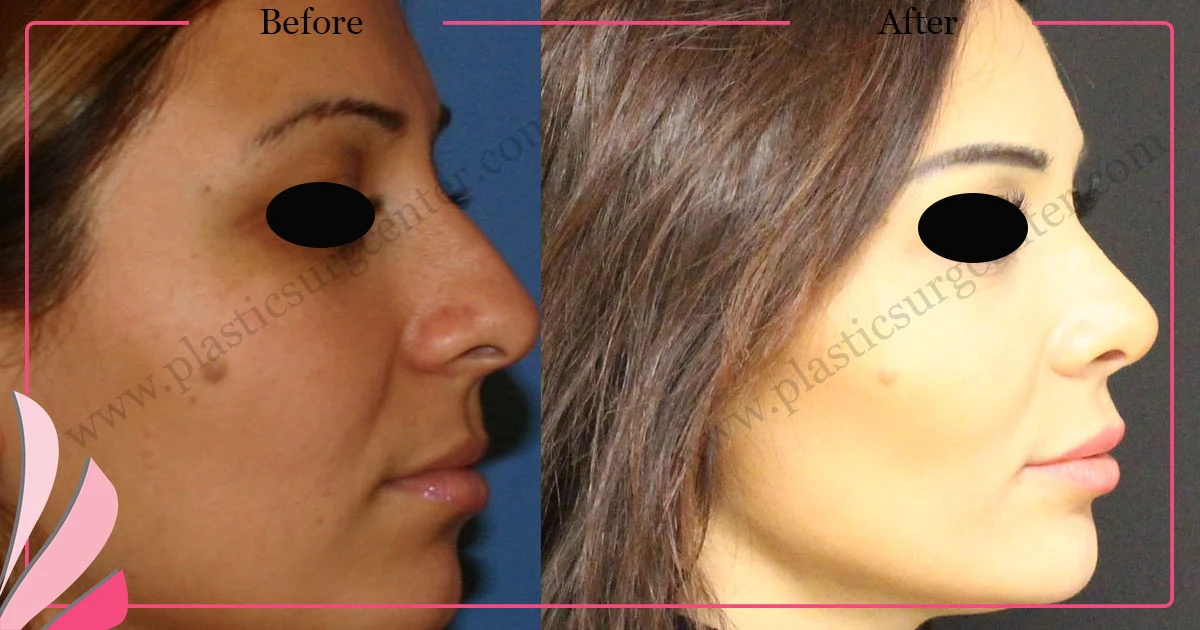
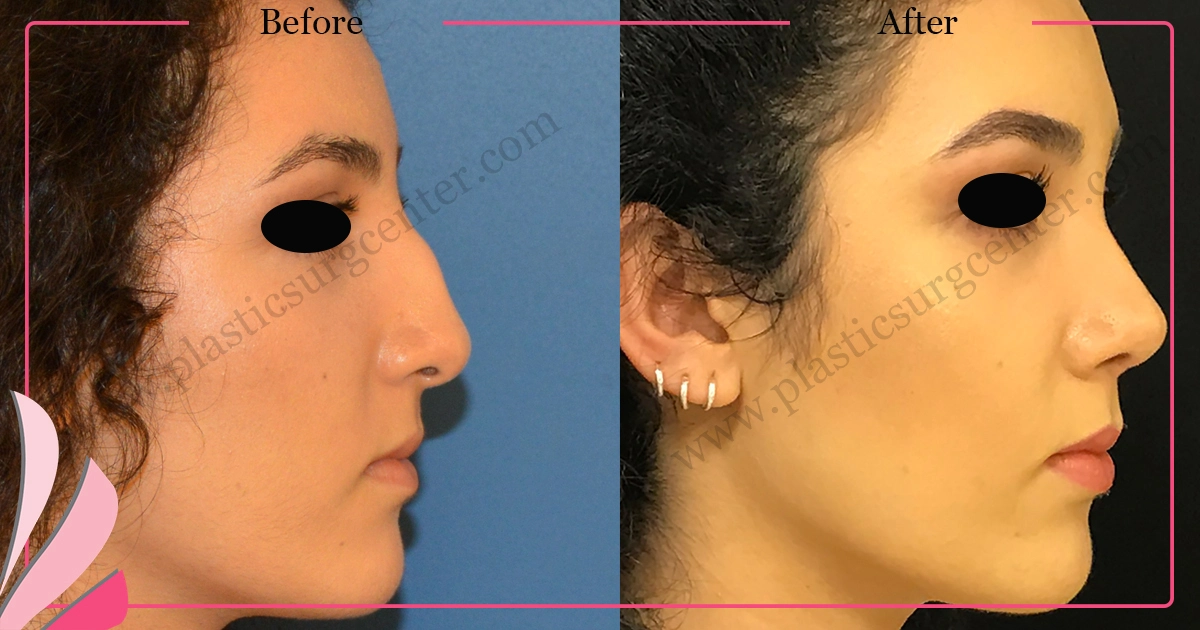
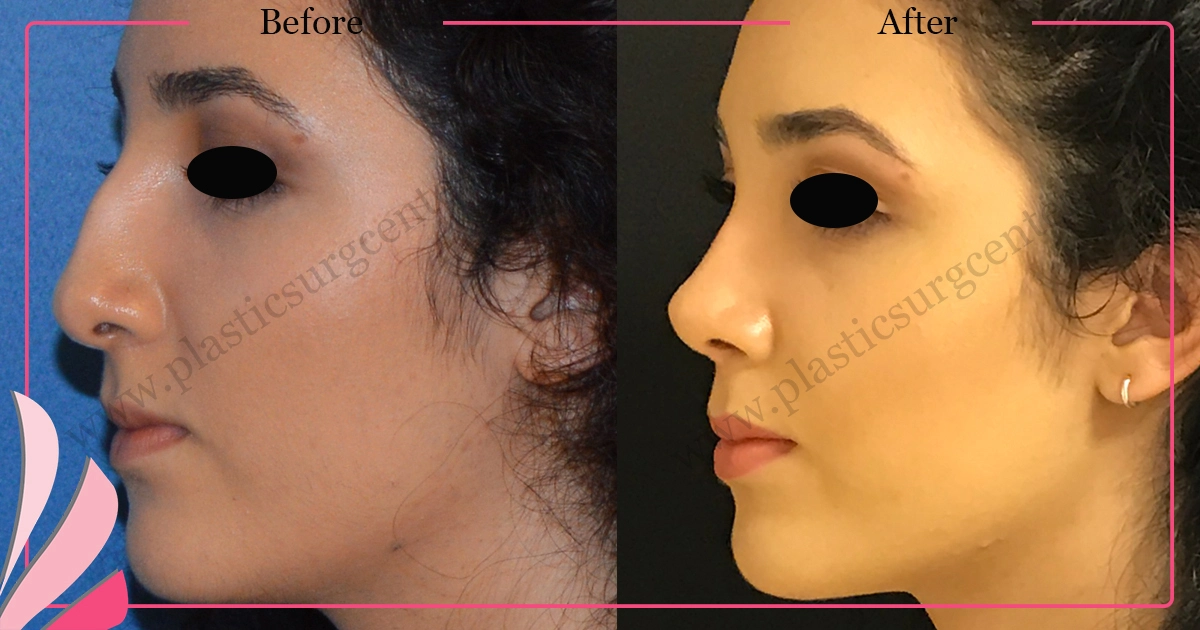
Rhinoplasty Before and After
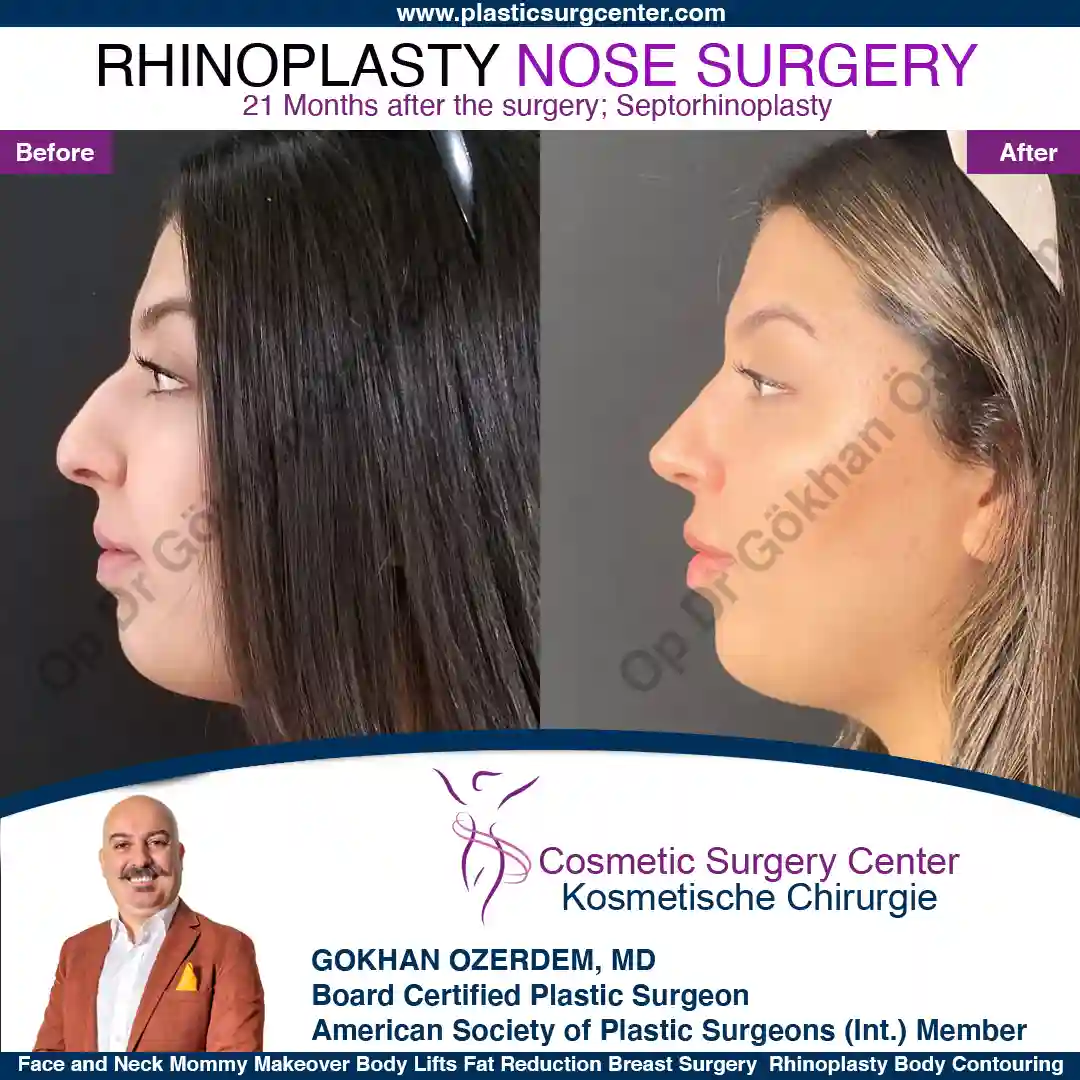
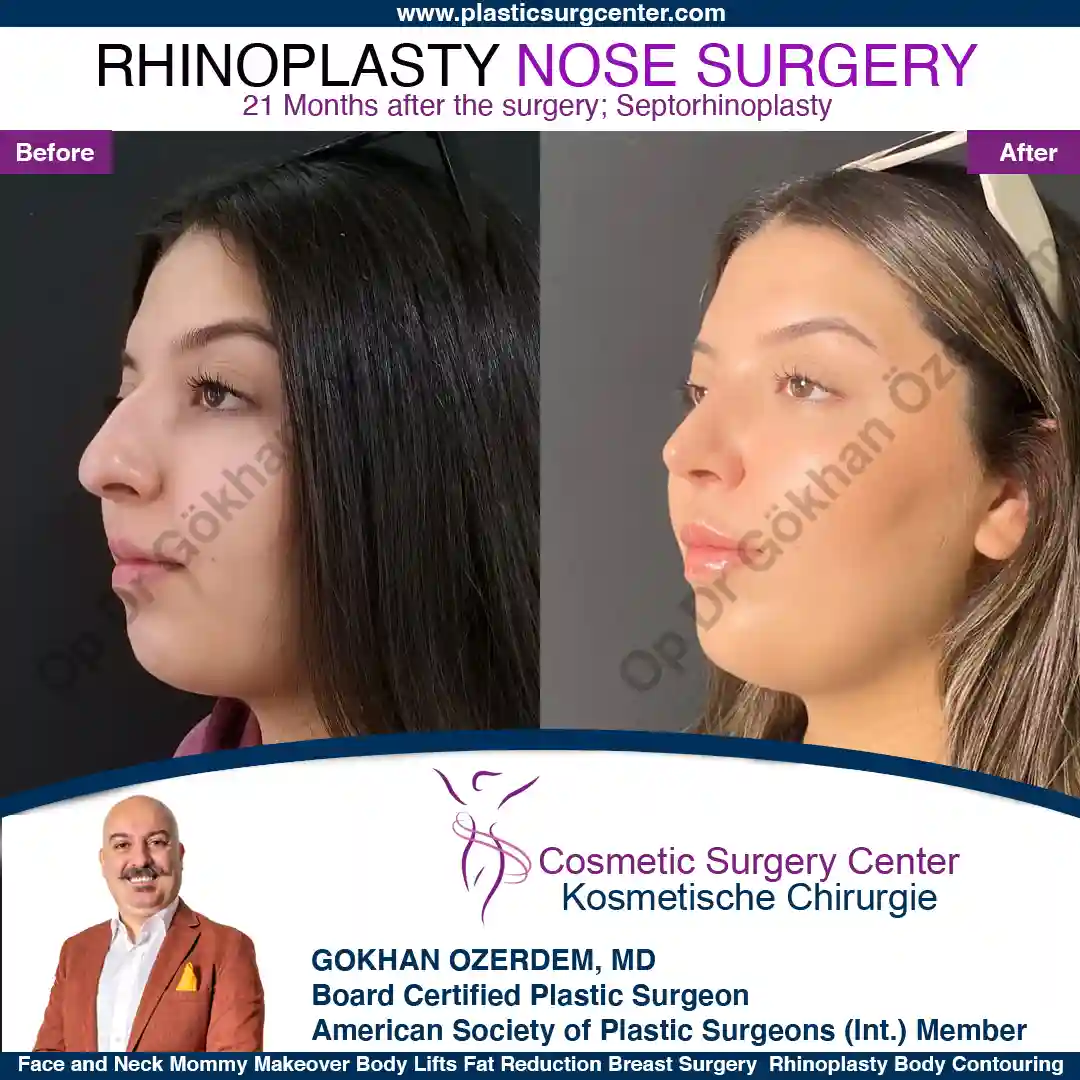
Before and after photographs are particularly useful in rhinoplasty because they demonstrate how nasal changes influence the entire face.
Photographs should ideally be evaluated from several views, including:
- Front
- Profile
- Oblique
- Base view where appropriate
However, every nose is different.
Skin thickness, cartilage strength, facial proportions and healing all influence the outcome.
Previous patient results should therefore be viewed as examples rather than as a template for your own nose.
Septal Deviation and Rhinoplasty
Why I Assess the Septum
Septal deviation is common among patients presenting for rhinoplasty.
In my clinical experience, I encounter some degree of septal deviation in a substantial proportion of rhinoplasty patients — around 70% in my practice.
Not every deviation causes significant symptoms, and not every patient requires the same correction.
However, the septum is important for two reasons:
- It can affect nasal breathing.
- It provides important structural support to the nose.
When a clinically relevant septal deviation is present, I evaluate whether it should be corrected as part of the rhinoplasty.
This allows aesthetic and functional planning to be considered together.
Septorhinoplasty
When rhinoplasty is combined with correction of a significant septal problem, the operation may be described as septorhinoplasty.
Depending on the patient, surgery may involve:
- Correction of septal deviation
- Improvement of nasal airflow
- Structural support
- Reshaping of the nasal dorsum
- Nasal tip surgery
- Correction of asymmetry
The exact procedure depends on the patient’s internal and external nasal anatomy.
Not every rhinoplasty patient requires septoplasty, but the septum should always be assessed.
Piezo / Ultrasonic Rhinoplasty
Precision During the Bone Stage
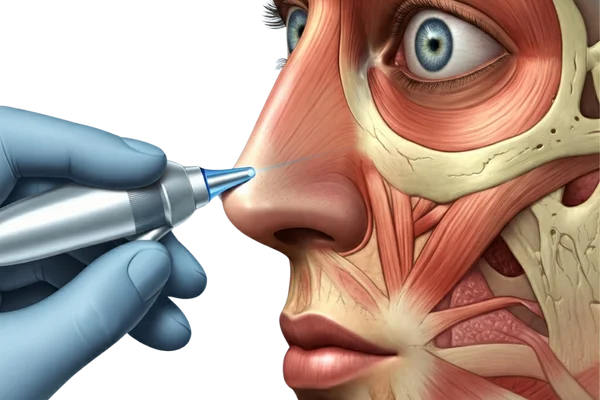
In suitable cases, I may use piezoelectric or ultrasonic instruments during the bony part of rhinoplasty.
These instruments allow controlled work on the nasal bones using ultrasonic energy.
They can be useful for selected bone cuts and contouring where precise manipulation is required.
However, I do not consider the device itself to be the operation.
Rhinoplasty results depend on:
- Diagnosis
- Surgical planning
- Understanding nasal anatomy
- Appropriate technique
- Tissue handling
- Structural support
- Healing
Technology can assist the surgeon, but it cannot replace surgical judgement.
Piezo is a surgical tool — not a guarantee of a better nose.
Nasal Hump Reduction
A prominent nasal hump is one of the most common reasons patients request rhinoplasty.
However, simply removing a hump is not enough.
The surgeon must consider what happens to the remaining nasal structures after the hump is modified.
Depending on the anatomy, additional steps may be required to maintain:
- Appropriate nasal width
- Smooth dorsal lines
- Structural stability
- Facial balance
The amount of reduction should also be proportionate.
An excessively low or scooped nasal bridge may appear unnatural, particularly on faces that originally have stronger features.
Nasal Tip Surgery
The nasal tip is one of the most technically complex areas of rhinoplasty.
Patients may seek treatment for a tip that appears:
- Wide
- Bulbous
- Droopy
- Over-projected
- Under-projected
- Asymmetrical
- Poorly defined
Tip surgery requires careful modification of the cartilage while maintaining adequate structural support.
My open rhinoplasty approach allows me to visualise the tip cartilages directly and assess their shape, symmetry and strength.
The objective is definition and proportion rather than creating an excessively small or pinched tip.
Thick-Skin Rhinoplasty
Why Skin Thickness Matters
Skin thickness has an important effect on rhinoplasty.
Patients with thicker nasal skin can achieve significant improvement, but the skin may not display small underlying structural changes as sharply as very thin skin.
Thicker skin also tends to retain swelling for longer.
For this reason, thick-skin rhinoplasty requires:
- Realistic expectations
- Appropriate structural planning
- Adequate tip support
- Patience during recovery
I explain this carefully before surgery because the early postoperative appearance can be misleading.
A thick-skinned nose should not be judged by the same recovery timetable as a thin-skinned nose.
Thin-Skin Rhinoplasty
Thin skin creates a different challenge.
Although swelling may sometimes settle more quickly, thin skin can reveal small irregularities in the underlying cartilage and bone more easily.
For this reason, smooth contours and careful tissue handling are particularly important.
Neither thick nor thin skin is automatically ‘better’ for rhinoplasty.
They simply require different considerations during surgical planning.
Rhinoplasty for Men
Male rhinoplasty should respect masculine facial proportions.
An excessively small, narrow or upturned nose may not suit a male face.
When planning male rhinoplasty, I consider:
- Nasal bridge strength
- Tip rotation
- Tip projection
- Facial width
- Chin and jawline
- Overall facial proportions
The objective is not to feminise the nose.
It is to improve the features that concern the patient while preserving an appropriate relationship with the rest of the face.
Rhinoplasty and Chin Projection
The nose should never be evaluated entirely in isolation.
A relatively small or retruded chin can make the nose appear more prominent in profile.
For this reason, I assess chin projection during rhinoplasty consultation.
Some patients who believe they have an extremely large nose actually have a combination of nasal prominence and limited chin projection.
In selected cases, chin surgery may be discussed.
However, this does not mean that every rhinoplasty patient needs chin augmentation.
If the chin is proportionate, there is no reason to alter it.
Rhinoplasty After Nasal Trauma
Previous trauma can affect both the appearance and function of the nose.
Trauma may result in:
- Nasal deviation
- Bone irregularities
- Septal deviation
- Asymmetry
- Breathing difficulty
In these cases, surgery may require correction of both external and internal structural changes.
Previous trauma can also make the anatomy more complex, particularly when significant scarring or old fractures are present.
Revision Rhinoplasty
Revision rhinoplasty is surgery performed on a nose that has previously undergone rhinoplasty.
These operations can be more complex because previous surgery may have altered:
- Cartilage
- Bone
- Septal support
- Scar tissue
- Skin and soft tissues
For this reason, revision surgery requires particularly careful assessment.
One of the most important issues is timing.
I generally prefer to evaluate the need for revision after the nose has had sufficient time to heal and stabilise.
In many cases, I prefer to wait approximately 18–24 months before making a definitive assessment for revision surgery, unless there is a specific functional or structural reason that requires earlier intervention.
A nose that is still healing should not be mistaken for a final result.
Rhinoplasty Recovery
Swelling is a normal part of rhinoplasty recovery.
The amount and duration vary considerably between patients.
During the early recovery period, patients may experience:
- Swelling
- Bruising around the eyes
- Nasal congestion
- Temporary changes in sensation
- A feeling of pressure
- Temporary asymmetry caused by swelling
A nasal splint may be used during the early postoperative period.
Most visible bruising and swelling improve progressively, but this does not mean that the nose has reached its final shape.
How Long Does Rhinoplasty Swelling Last?
This is one of the most important questions to understand before rhinoplasty.
The nose heals slowly.
A large proportion of early swelling improves during the first weeks and months, but residual swelling — particularly around the nasal tip — can persist much longer.
This is especially true in patients with thicker skin.
The nose continues to refine gradually.
For many patients, meaningful changes continue for more than one year after surgery.
This is why I do not judge rhinoplasty results too early.
When Will I See My Final Rhinoplasty Result?
Rhinoplasty is not an operation with an immediate final result.
Although the main structural change is visible relatively early, swelling affects the shape for months.
The bridge may settle before the tip.
Tip definition often takes longer to develop.
In thick-skinned patients, this process may be particularly slow.
Patients should therefore think of rhinoplasty recovery in months rather than days.
The final result may take a year or longer to become fully established.
Rhinoplasty Scars
With open rhinoplasty, there is a small incision across the columella between the nostrils.
Additional incisions are located inside the nose.
The external scar is initially visible but usually becomes considerably less noticeable as it matures.
Scar quality varies between individuals, and no surgical scar can be guaranteed to disappear completely.
Careful closure and appropriate postoperative care are important parts of scar management.
Do I Recommend Non-Surgical Rhinoplasty with Filler?
Why I Do Not Perform Nasal Filler
I do not routinely perform or recommend filler injections into the nose.
The nose is a vascularly complex area, and filler injection carries recognised risks, including vascular occlusion, skin necrosis and, in rare cases, severe visual complications.
During my career, I have seen serious tissue complications following filler injections.
Another consideration is future surgery.
Previous filler may alter tissue planes or complicate assessment when a patient later decides to undergo surgical rhinoplasty.
For these reasons, I prefer surgical correction when a patient’s nasal anatomy genuinely requires structural change.
The fact that a treatment does not involve an operation does not automatically make it risk-free.
Anaesthesia and Hospital
I perform rhinoplasty under general anaesthesia in a fully equipped hospital in Antalya, Turkey.
The duration of surgery varies according to the anatomy and complexity of the operation.
A primary rhinoplasty may require less time than a complex revision procedure.
In my practice, many rhinoplasty operations take approximately 1.5–2 hours, although more complex noses may require considerably longer.
Certain patients with thicker skin, stronger cartilage or more complex nasal anatomy may require approximately 3–4 hours of surgery.
Operating time is determined by what needs to be corrected rather than by a fixed schedule.
Rhinoplasty in Turkey for International Patients
Travelling to Antalya for Nose Surgery
Turkey is a popular destination for international rhinoplasty patients, but choosing a country is only one part of the decision.
Patients should also consider:
- The surgeon’s qualifications
- Experience in rhinoplasty
- Surgical approach
- Hospital facilities
- Anaesthesia
- Postoperative care
- Length of stay
- Follow-up after returning home
Before travelling to Antalya, my team may request:
- Medical history
- Current medication
- Previous nasal surgery
- Previous nasal trauma
- Breathing problems
- Previous nasal filler
- Photographs from several angles
These photographs help with preliminary assessment but do not replace examination.
The final surgical plan is confirmed after I examine your nose personally in Antalya.
How Long Should I Stay in Antalya After Rhinoplasty?
For international rhinoplasty patients, I generally recommend remaining in Antalya for approximately 7–10 days.
This allows time for early postoperative monitoring and the necessary controls before travelling home.
The exact period may vary according to the procedure and individual recovery.
I do not recommend choosing a return flight simply because it is the earliest available option.
Your recovery should determine your travel schedule.
Why Choose Dr Gökhan Özerdem for Rhinoplasty?
Rhinoplasty requires a combination of aesthetic judgement and structural understanding.
The surgeon must consider:
- Facial proportions
- Nasal skin thickness
- Cartilage strength
- Nasal bones
- Septum
- Tip support
- Breathing
- Asymmetry
- Previous trauma or surgery
- The patient’s expectations
With more than 25 years of surgical experience, I perform rhinoplasty using an open approach because I value direct visualisation of the anatomy.
Where appropriate, I may use piezoelectric/ultrasonic instruments during the bony stage.
I also assess the septum and nasal function rather than treating the external appearance alone.
Most importantly, I do not believe in giving every patient the same nose.
The operation should respect your anatomy, your face and your identity.
Frequently Asked Questions About Rhinoplasty
I perform open rhinoplasty. It provides direct visualization of the nasal structures and allows me to assess and modify the anatomy under direct vision.
Open rhinoplasty requires a small incision across the columella between the nostrils. The scar is initially visible but generally becomes much less noticeable as it matures.
Both techniques are used in modern rhinoplasty, and different surgeons have different preferences. I prefer the open approach because of the visualisation and control it provides during surgery.
Piezo or ultrasonic rhinoplasty refers to the use of ultrasonic instruments during selected parts of the bony work. I may use these instruments when appropriate, but the device is only one part of the operation.
If a structural problem such as clinically relevant septal deviation contributes to breathing difficulty, it can often be addressed during the same operation when appropriate.
Septorhinoplasty combines reshaping of the external nose with treatment of the nasal septum when required.
In my clinical experience, I find some degree of septal deviation in a substantial proportion of patients — approximately 70% in my practice. Not every deviation causes symptoms or requires the same treatment.
It can reduce selected dimensions where appropriate, but making the nose as small as possible is not my objective. The nose must remain proportionate and structurally supported.
No. A reference photograph can help explain what you like or dislike, but another person’s nose cannot simply be transferred to your face. Your own anatomy determines what can realistically be achieved.
Thick skin changes both surgical planning and recovery. It can conceal fine structural definition and tends to retain swelling for longer. Significant improvement is still possible, but realistic expectations and patience are particularly important.
Most early swelling improves progressively, but residual swelling can persist for many months, especially around the tip and in patients with thicker skin.
The nose continues to change for a year or longer. Tip refinement often takes longer than changes in the bridge, particularly in thick-skinned patients.
Many primary rhinoplasty procedures in my practice take approximately 1.5–2 hours. More complex anatomy or revision surgery may require considerably longer, and some complex cases may take approximately 3–4 hours.
Activity is restricted during the early recovery period. The timing of return to exercise depends on healing and the type of activity, so I give patients an individual postoperative plan.
Pressure from glasses can be important when the nasal bones have been treated. The timing depends on the operation, and I advise patients individually during follow-up.
Swimming should be avoided during the early healing period. Patients travelling to Antalya for rhinoplasty should not plan their trip as an immediate swimming or beach holiday.
Yes. Rhinoplasty can be performed during the summer, but postoperative restrictions, sun protection and avoidance of trauma to the nose remain important.
I do not routinely perform or recommend nasal filler because of the vascular risks associated with injections in this area and because previous filler can complicate future surgical assessment.
Unless there is a specific reason for earlier intervention, I generally prefer to allow the nose sufficient time to heal before making a definitive revision assessment. In many cases, this means approximately 18–24 months.
For many international rhinoplasty patients, I recommend approximately 7–10 days in Antalya. The exact period depends on the procedure and your recovery.
Yes. Rhinoplasty requires long-term follow-up because the nose continues to change for many months. Follow-up communication and photographs can continue after you return home.
Considering Rhinoplasty in Antalya, Turkey?
If you are considering travelling to Turkey for rhinoplasty, the first question should not be:
‘How small can you make my nose?’
The more useful questions are:
What is anatomically wrong? What can safely be changed? How will the nose fit the rest of my face? And how can nasal function be preserved or improved?
An initial assessment can help answer these questions before you make your travel arrangements.
Dr Gökhan Özerdem
Specialist in Aesthetic, Plastic and Reconstructive Surgery
Antalya, Turkey
Contact Our International Patient Team
Request a Preliminary Assessment
Face: – Rhinoplasty – Eyelid Surgery – Forehead and Brow Lift – Ear Surgery –
Breast: – Breast Augmentation – Breast Lift – Breast Reduction – Gynecomastia –
Body: – Tummy Tuck – Mini Tummy Tuck – Liposuction – Arm Lift – Thigh Lift – Body Contouring – Mommy Makeover –