

Prominent ears do not usually cause a physical health problem, but they can have a considerable effect on how a person feels about their appearance.
Some patients have been self-conscious about their ears since childhood. Others simply want the ears to appear less noticeable when viewed from the front.
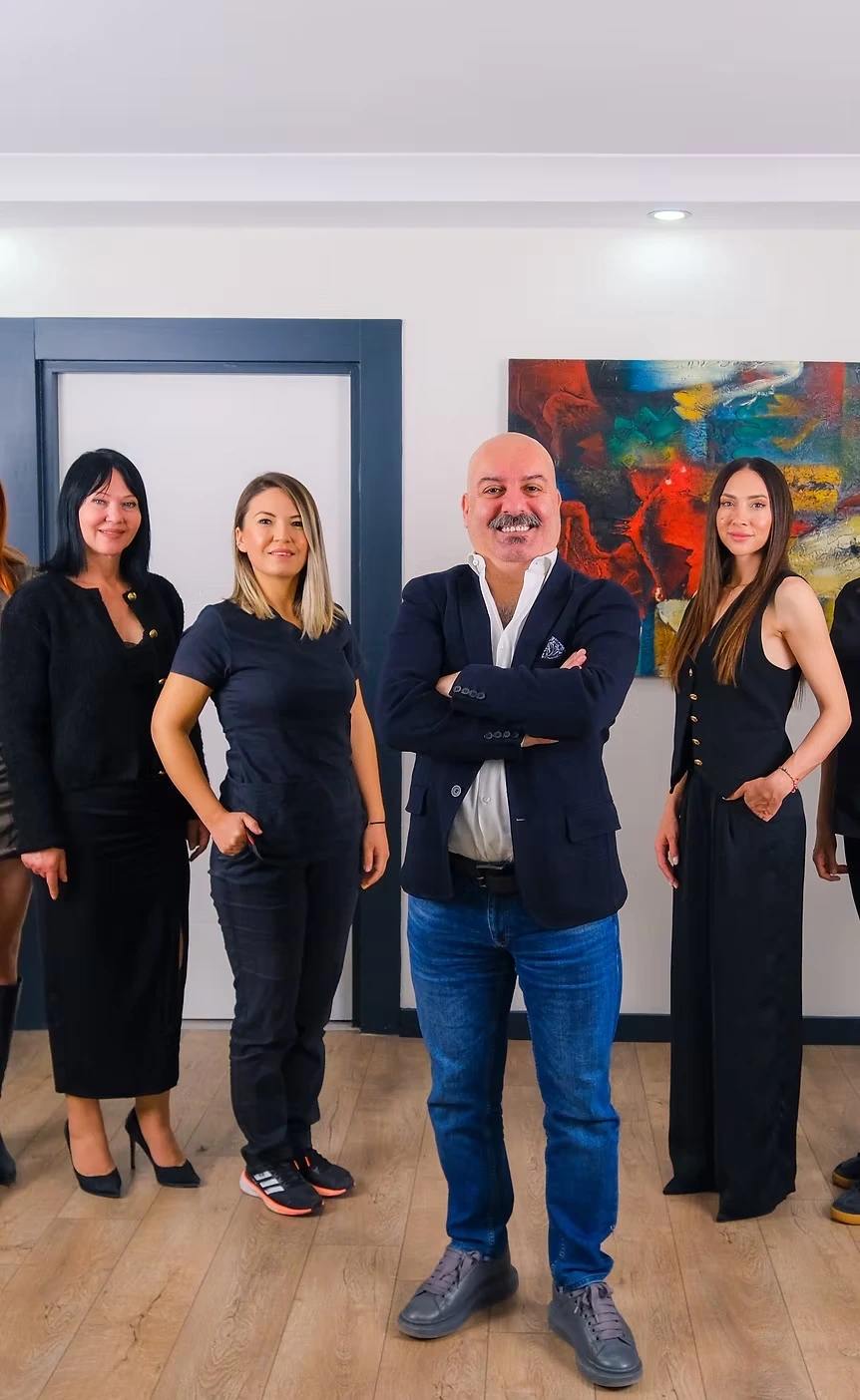
I am Dr Gökhan Özerdem, Specialist in Aesthetic, Plastic and Reconstructive Surgery in Antalya, Turkey. With more than 25 years of surgical experience, I perform prominent ear correction for both adults and appropriately selected younger patients.
Otoplasty is not simply an operation to pull the ears closer to the head.
The natural folds, shape, projection and symmetry of the ears all need to be considered.
The objective is for the ears to become less noticeable — not to look tightly pinned or surgically altered.
What Is Otoplasty?
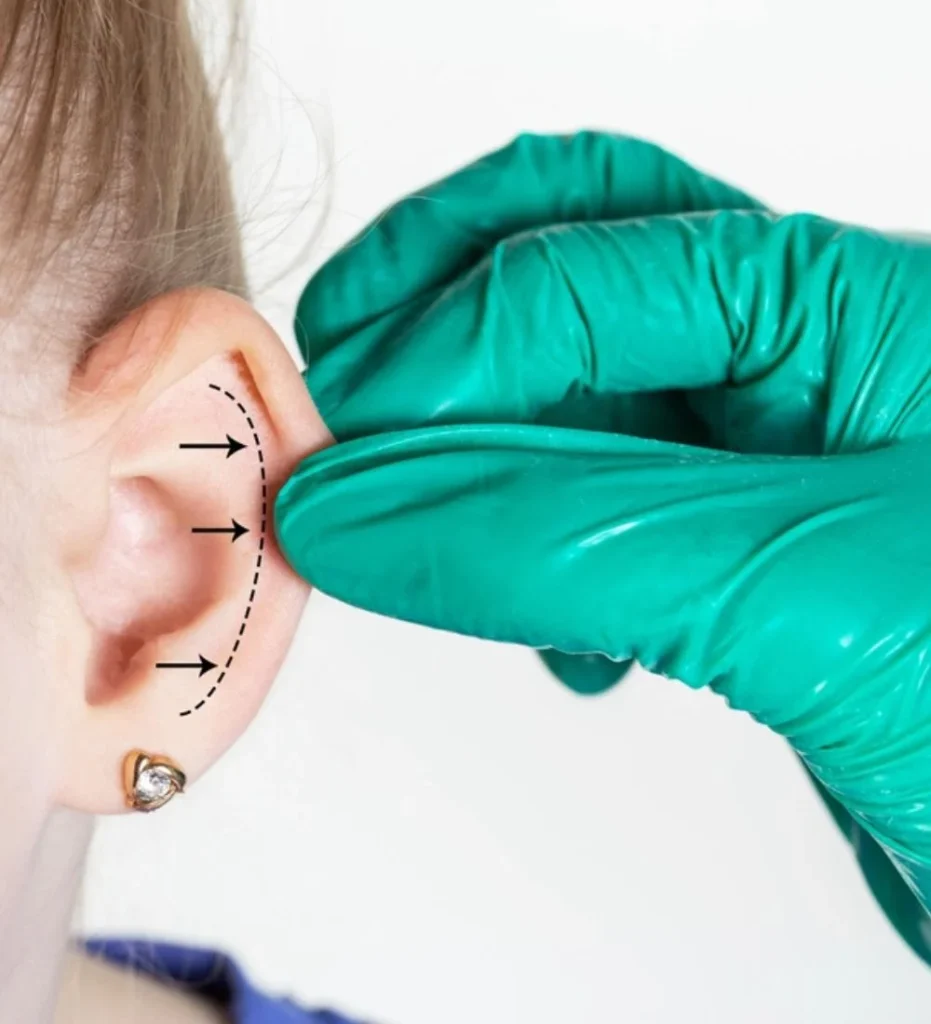
Otoplasty is plastic surgery performed to change the shape, position or projection of the external ear.
When the main concern is ears that project further from the head than desired, the operation is commonly referred to as:
- Prominent ear correction
- Ear pinning
- Pinnaplasty
- Otoplasty
The exact anatomical reason for prominent ears differs between patients.
In some patients, the natural fold of the upper ear is insufficiently developed.
In others, the central bowl of the ear is relatively prominent or deep.
Many patients have a combination of anatomical features.
For this reason, the operation should be planned according to the individual ear rather than simply pulling the entire ear backwards.
About Dr. Gökhan Özerdem
Specialist Plastic Surgeon in Antalya, Turkey
I am Dr Gökhan Özerdem, Specialist in Aesthetic, Plastic and Reconstructive Surgery, practising in Antalya, Turkey.
My professional background includes:
- More than 25 years of surgical experience
- Thousands of aesthetic and reconstructive surgical procedures
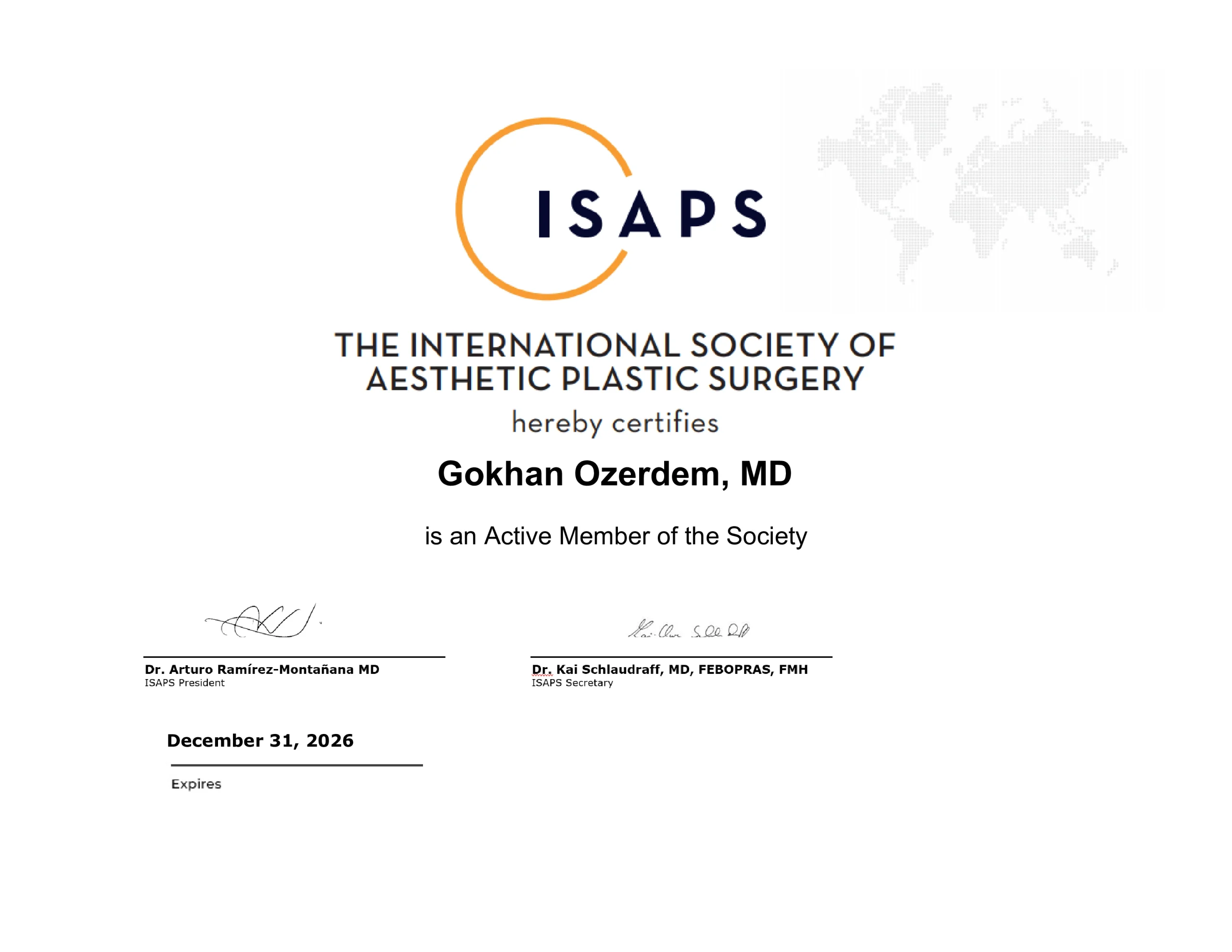
- Member of the International Society of Aesthetic Plastic Surgery (ISAPS)
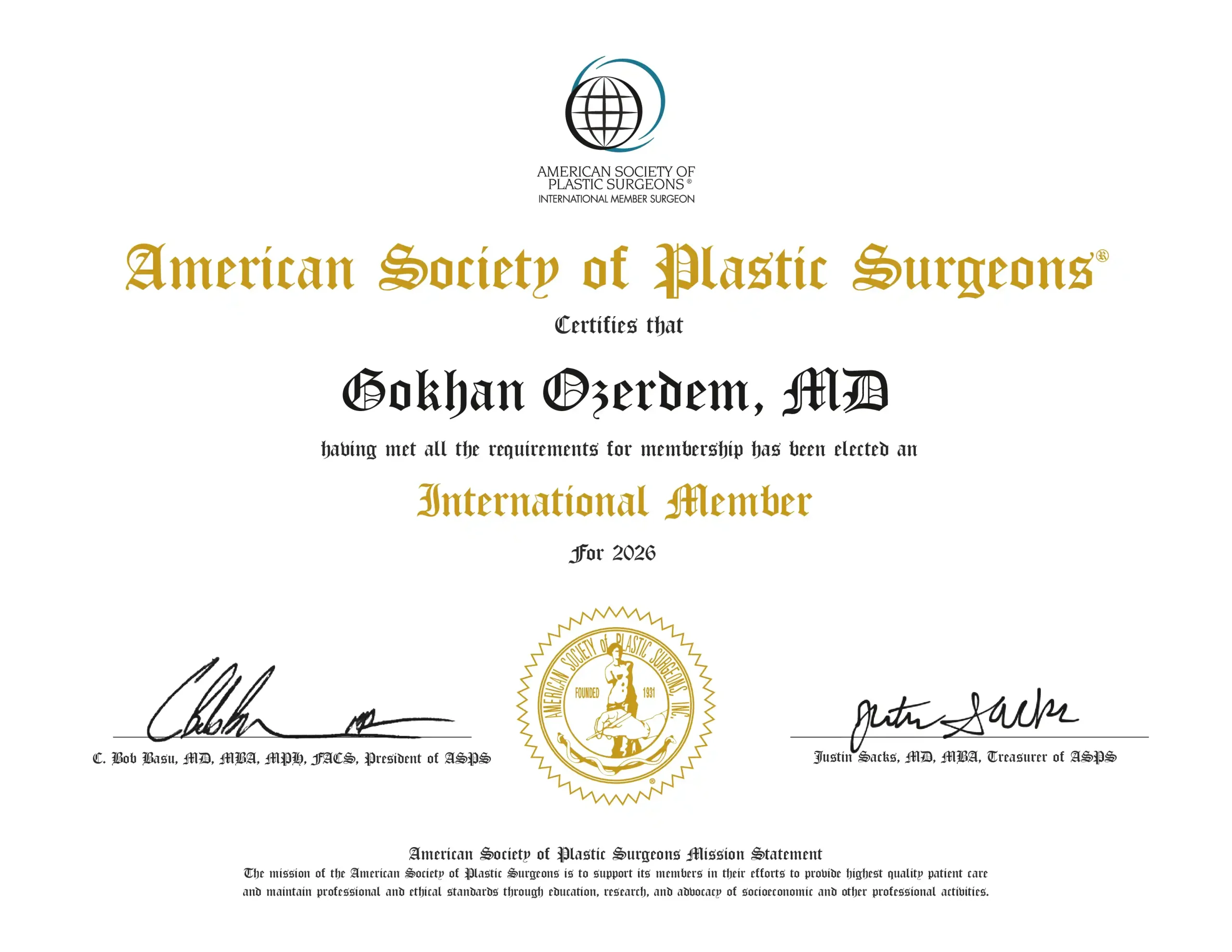
- Member of the American Society of Plastic Surgeons (ASPS)
- Member of the Turkish Society of Plastic, Reconstructive and Aesthetic Surgeons
- Member of the Turkish Society of Aesthetic Plastic Surgery
- Professional medical experience and licensing in Dubai
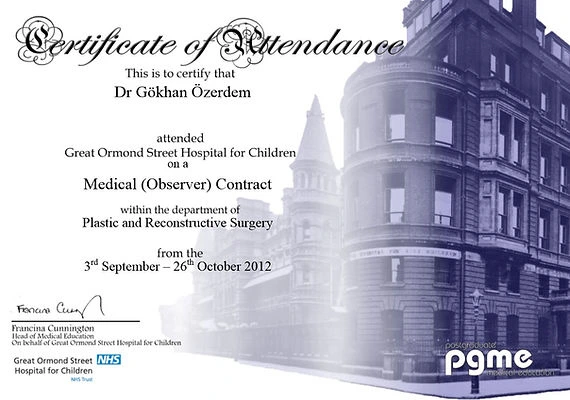
- Observer experience at Great Ormond Street Hospital for Children, London, UK
- Gamma Probe Course at Castle Hill Hospital, Hull, UK
- Oral and poster presentations at national and international scientific congresses
- Session chairmanship at the Turkish National Plastic Surgery Congress
- International scientific publications and academic work
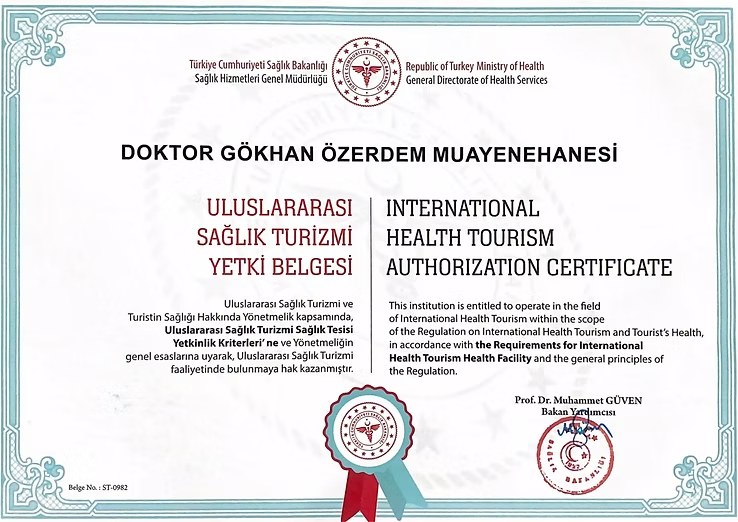
- Authorised to provide services to international patients under the relevant Turkish Ministry of Health International Health Tourism framework
Major surgical procedures are performed in fully equipped hospital facilities in Antalya with appropriate anaesthesia and medical support.
Why Do Ears Become Prominent?
The external ear has a complex three-dimensional cartilage structure.
Prominence can result from several anatomical features, including:
- An underdeveloped antihelical fold
- A relatively prominent conchal bowl
- Increased distance between the ear and the side of the head
- Differences in cartilage shape
- Asymmetry between the ears
- A combination of these factors
These differences are usually developmental rather than the result of anything the patient has done.
The first step in otoplasty is therefore to identify which part of the ear anatomy is creating the prominence.
My Approach to Prominent Ear Surgery
My objective is not to position the ear as close to the head as technically possible.
An ear that has been pulled excessively backwards can look unnatural.
Instead, I aim to create or restore the natural contours of the ear and achieve a more appropriate relationship between the ear and the side of the head.
Depending on the anatomy, surgery may involve:
- Creating or improving the antihelical fold
- Reshaping selected areas of cartilage
- Adjusting excessive conchal prominence
- Repositioning the ear
- Correcting significant asymmetry where possible
The operation is adapted to the individual ear.
Natural-looking otoplasty is about shape as much as position.
The Natural Antihelical Fold
One of the common anatomical features in prominent ears is an insufficiently developed antihelical fold.
This is one of the natural curves visible in the upper part of the ear.
If this fold is weak or absent, the upper ear may project further away from the head.
In suitable patients, part of the operation involves creating or improving this natural fold.
The objective is not to produce a sharp artificial crease.
It is to create a contour that resembles the natural anatomy of the ear.
Conchal Prominence
The concha is the bowl-shaped central part of the external ear.
In some patients, a relatively deep or prominent concha contributes significantly to the ear standing away from the head.
In these cases, simply creating an antihelical fold may not provide an appropriate correction.
The conchal component may also need to be addressed.
This illustrates why prominent ear surgery should not be considered a single standard manoeuvre.
Different anatomical causes require different corrections.
Otoplasty for Adults
Adults can undergo prominent ear correction at almost any age, provided they are medically suitable for surgery.
Many adult patients have considered otoplasty for years but did not have the opportunity to undergo surgery when they were younger.
Common reasons adults seek treatment include:
- Long-standing concern about prominent ears
- Avoiding certain hairstyles
- Feeling uncomfortable in photographs
- Increased awareness of ear asymmetry
- Desire for better facial balance
There is no requirement to have otoplasty during childhood.
The operation can also provide meaningful improvement in adulthood.
Otoplasty for Children
Prominent ear correction can also be performed in children once the ears have reached sufficient development and the child is an appropriate candidate.
However, age alone should not determine whether surgery is performed.
I also consider:
- Ear development
- Degree of prominence
- General health
- Emotional maturity
- Whether the child personally wants the operation
- Ability to cooperate with postoperative care
I do not believe a child should undergo cosmetic ear surgery simply because an adult wants their ears to look different.
The child’s own feelings and readiness are important parts of the decision.
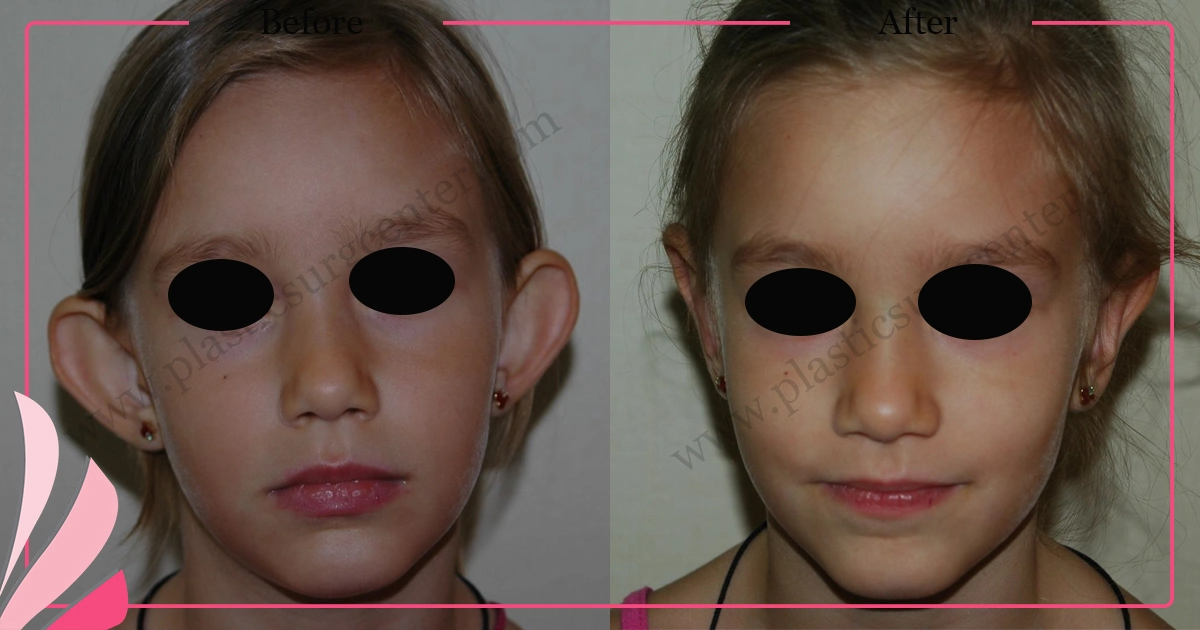
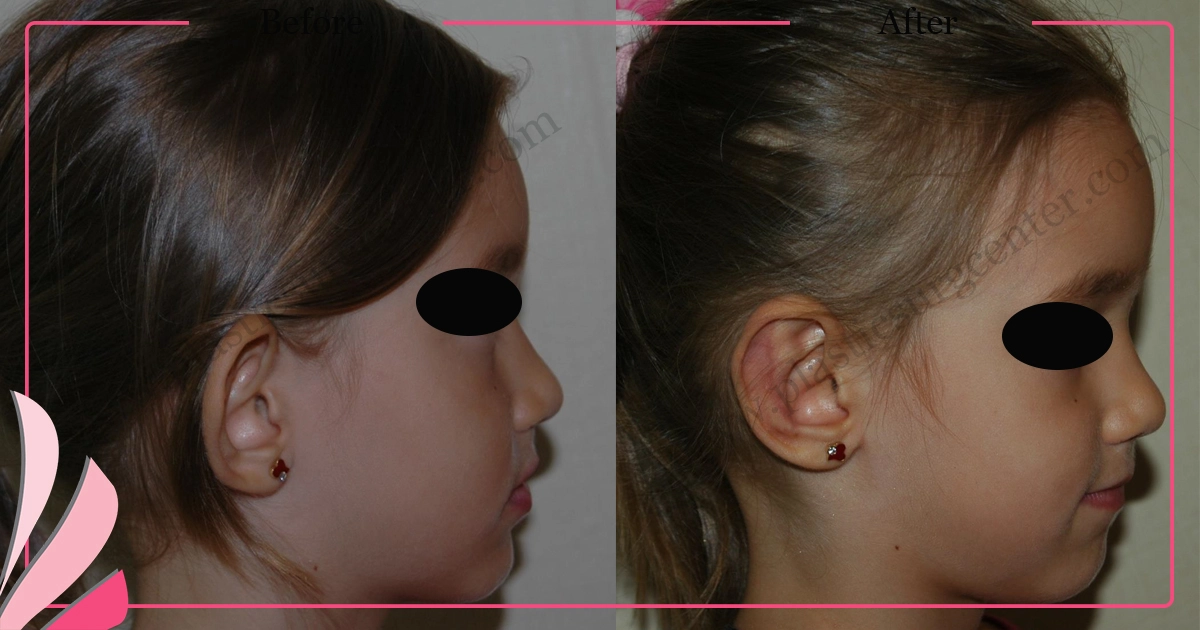
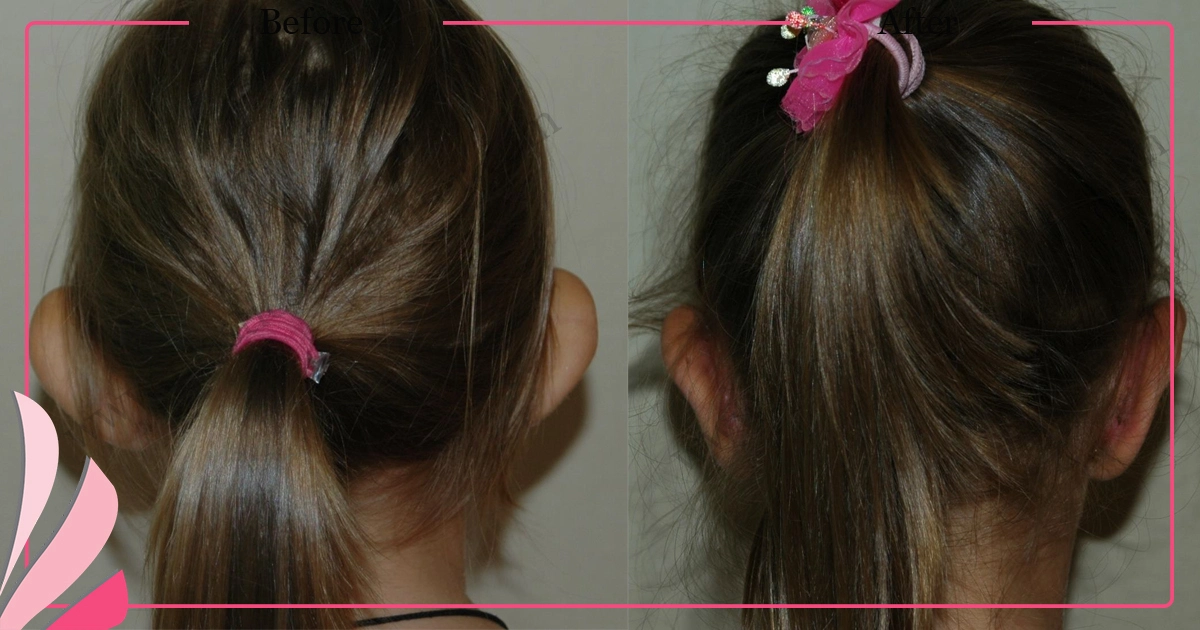
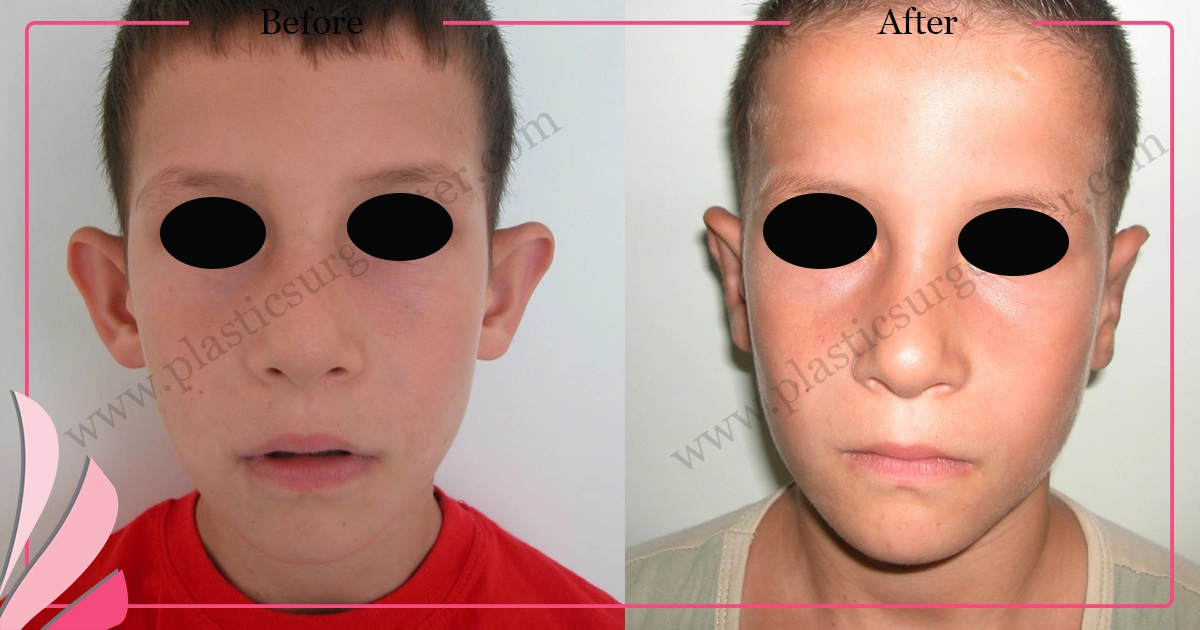
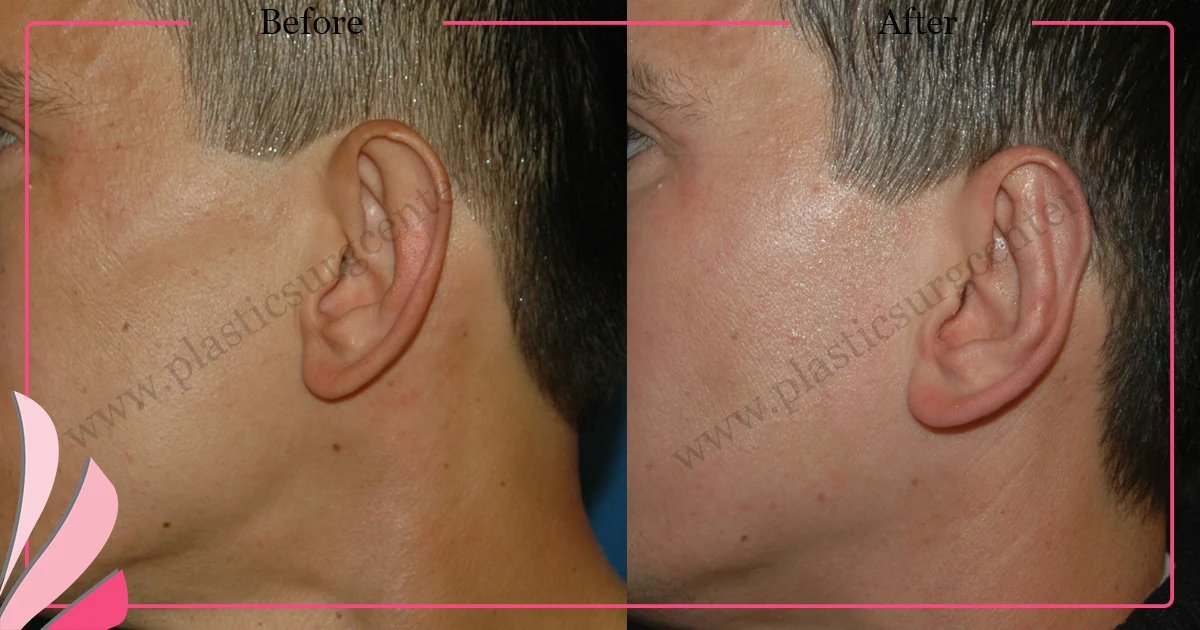
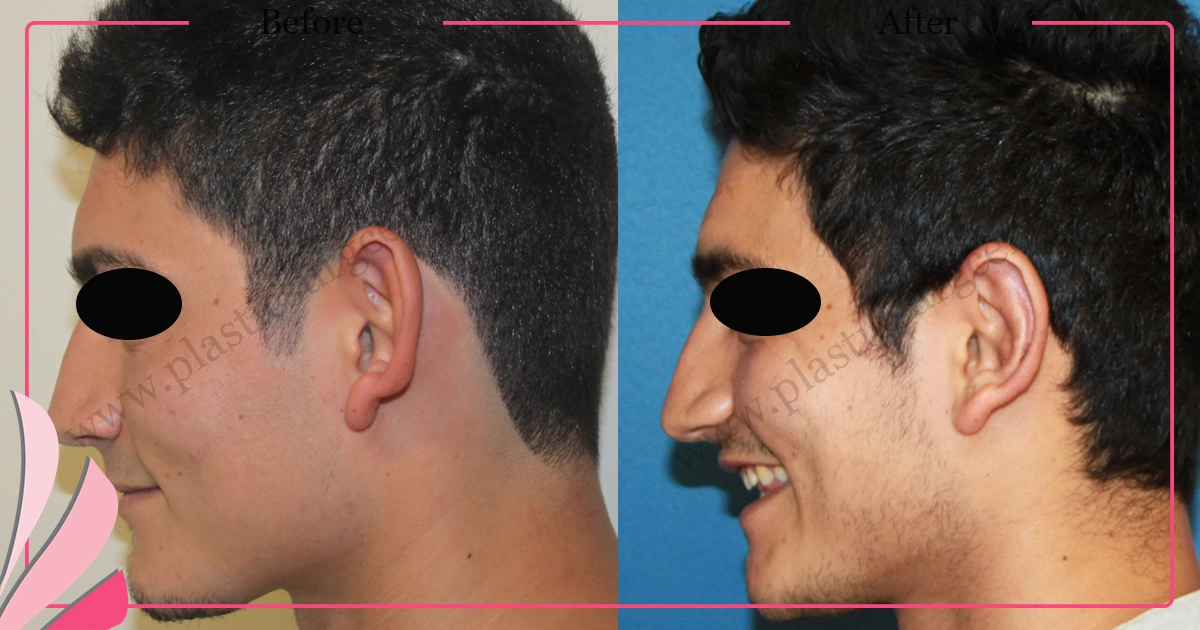
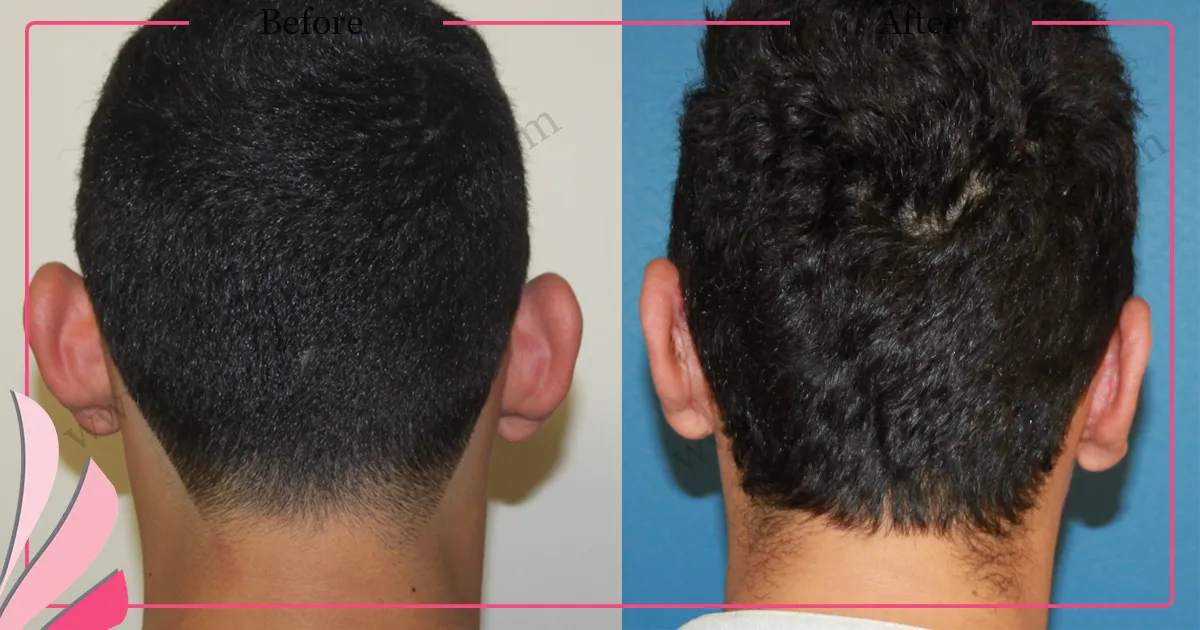
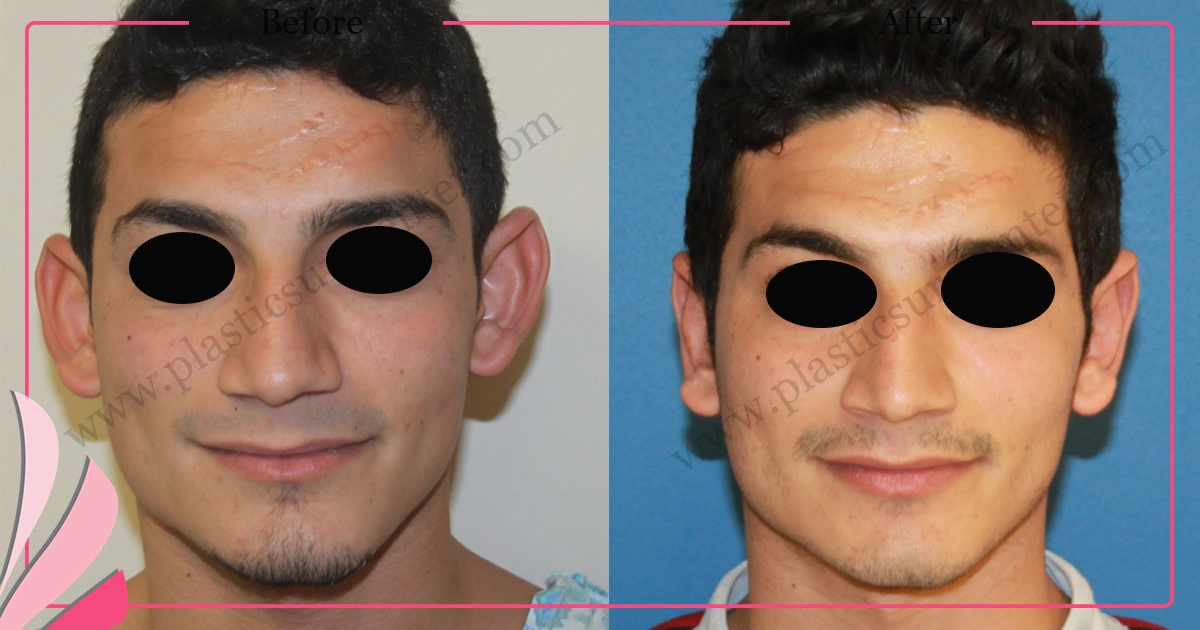
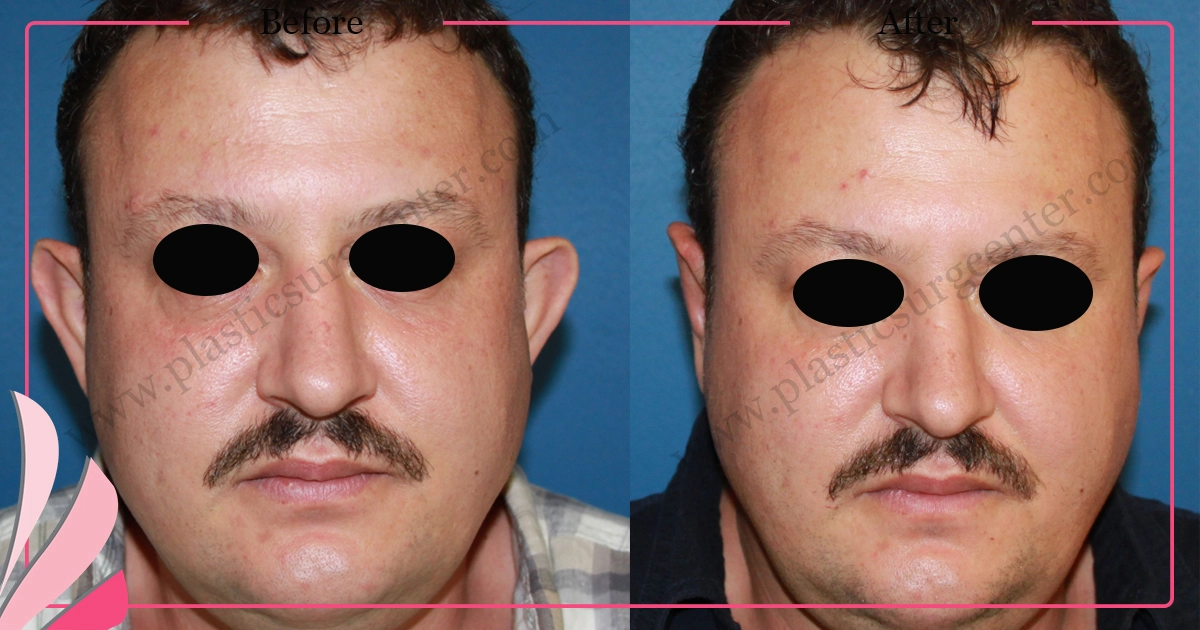
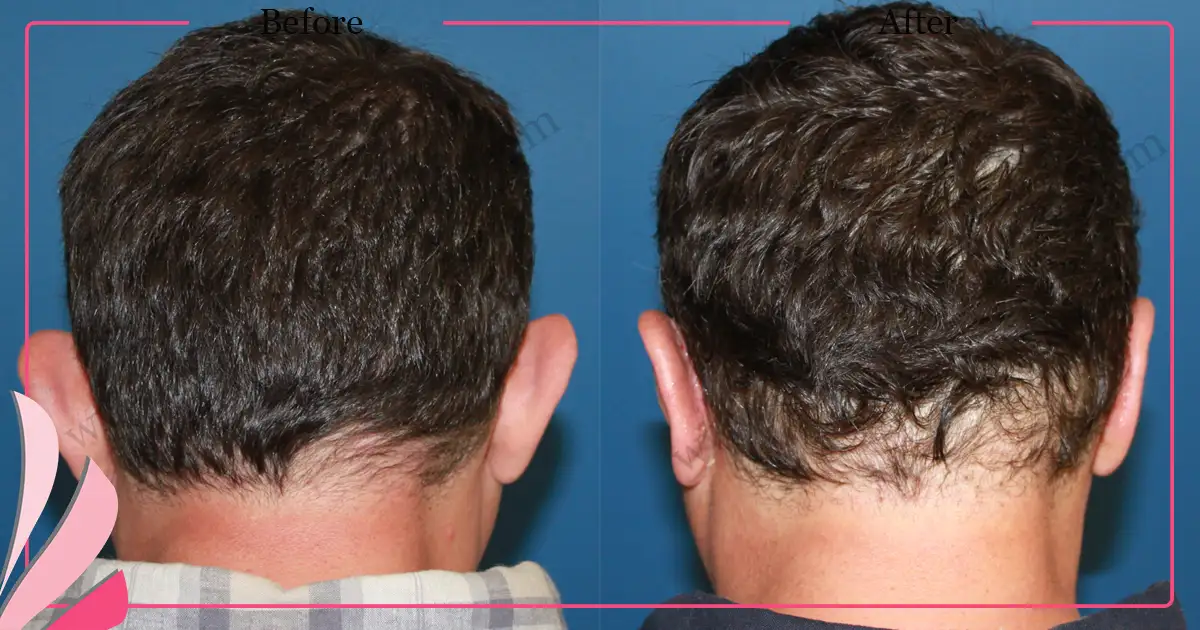
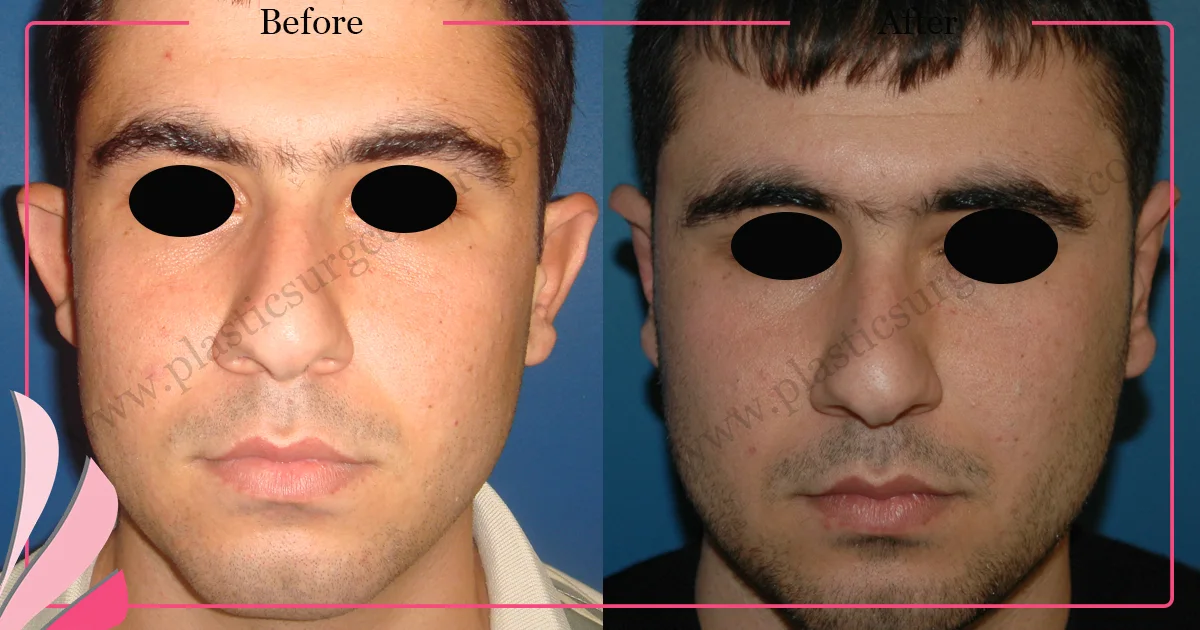
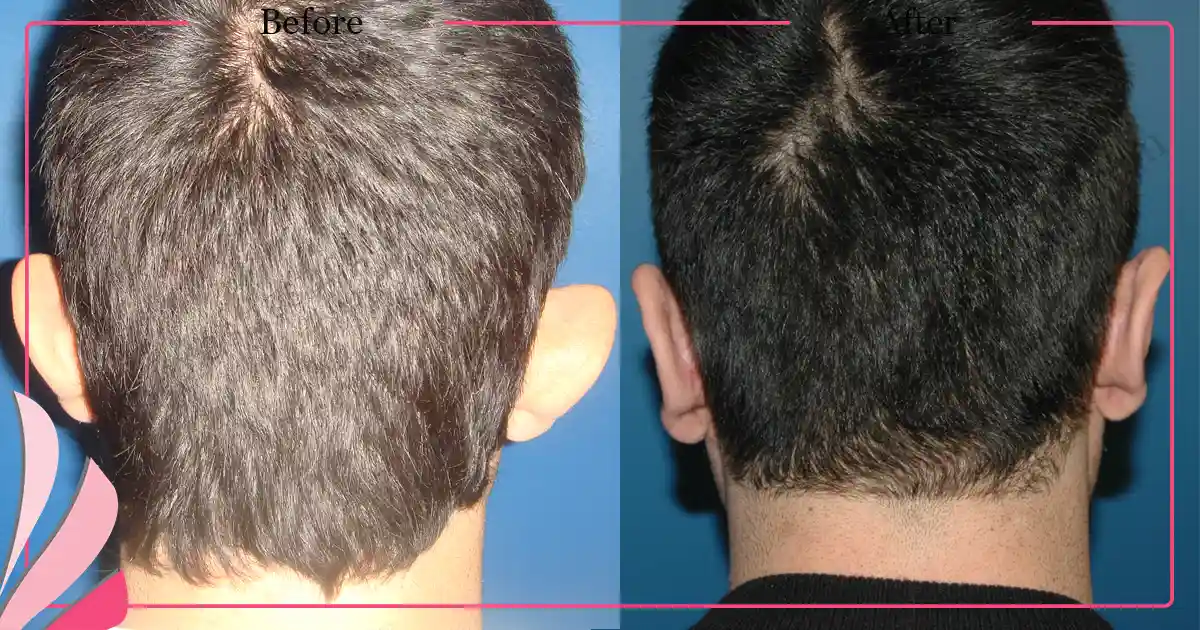
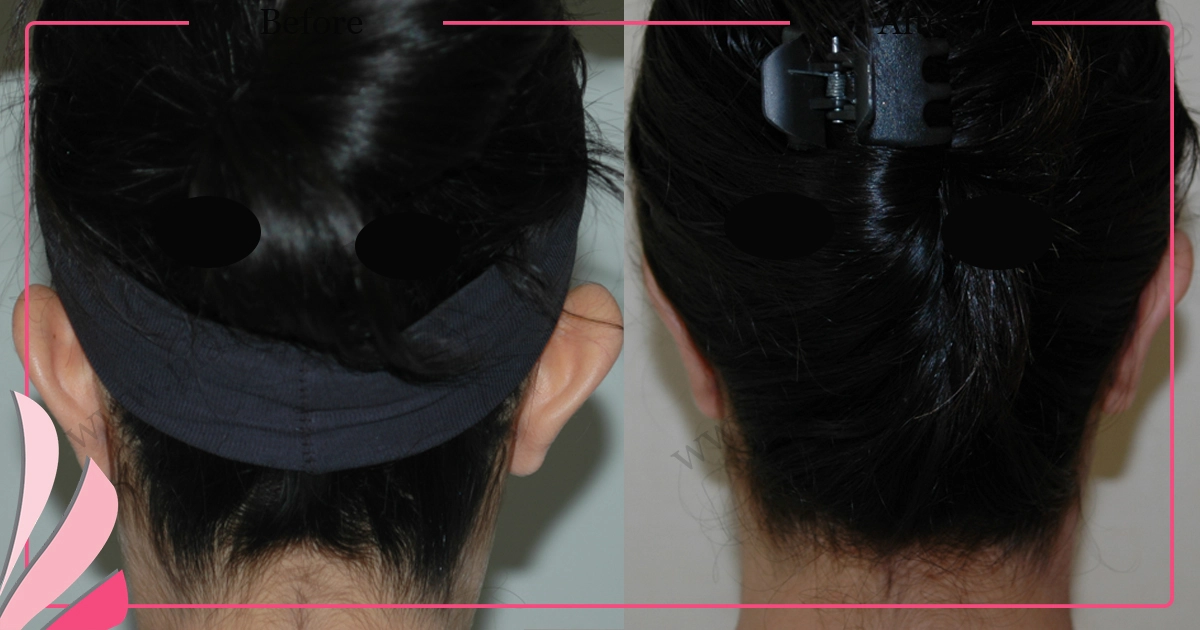
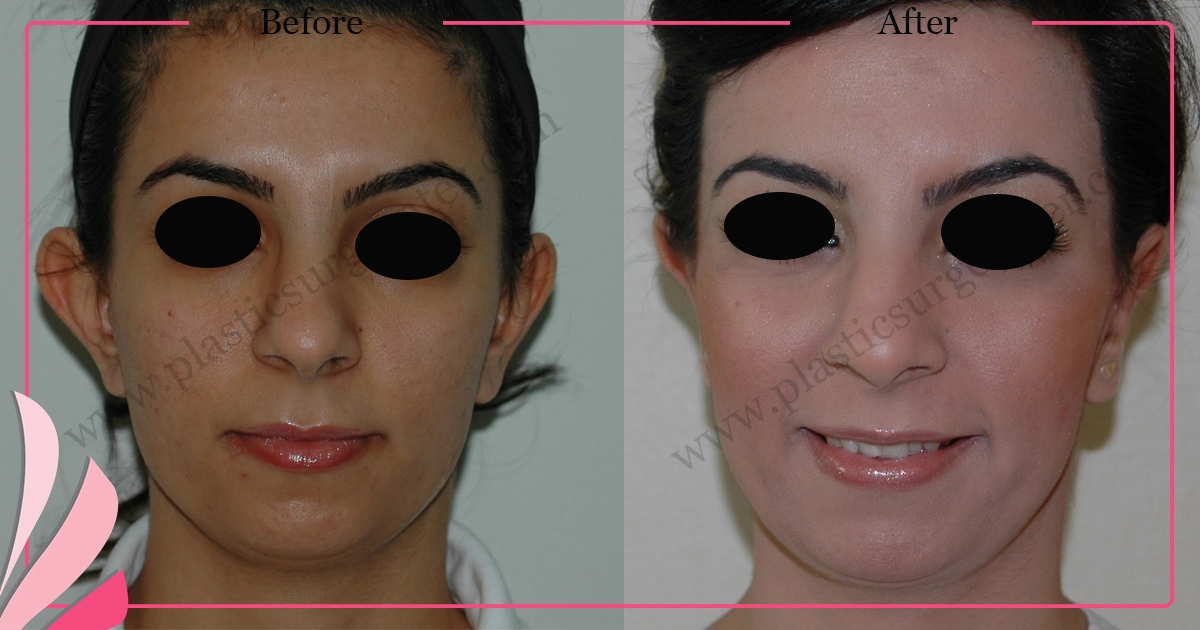
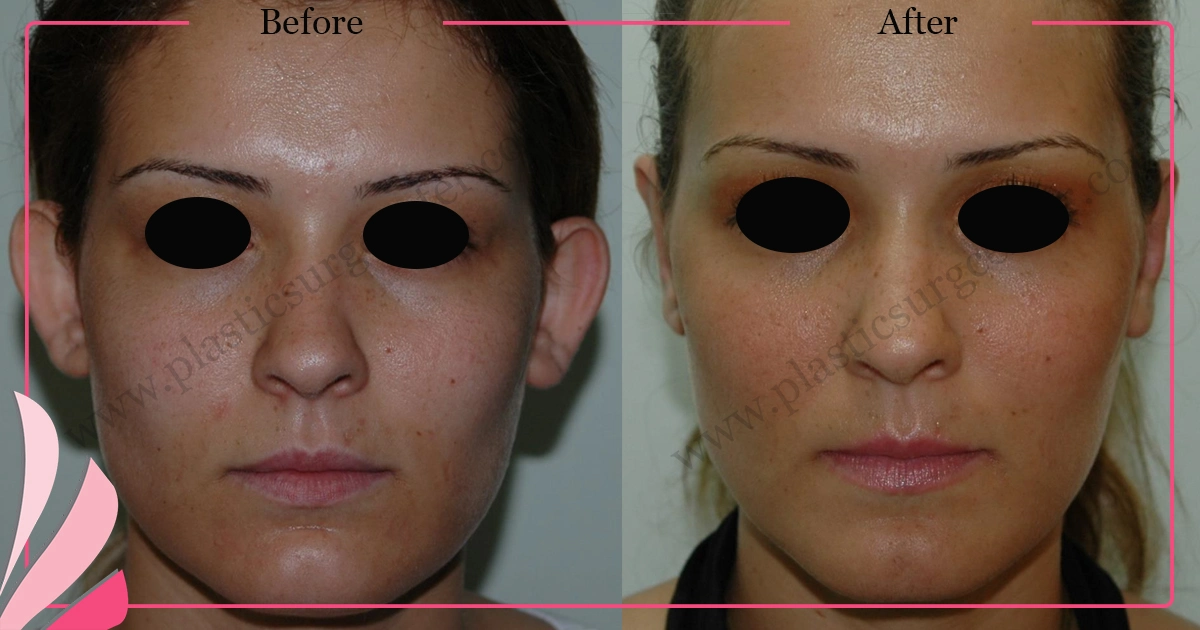
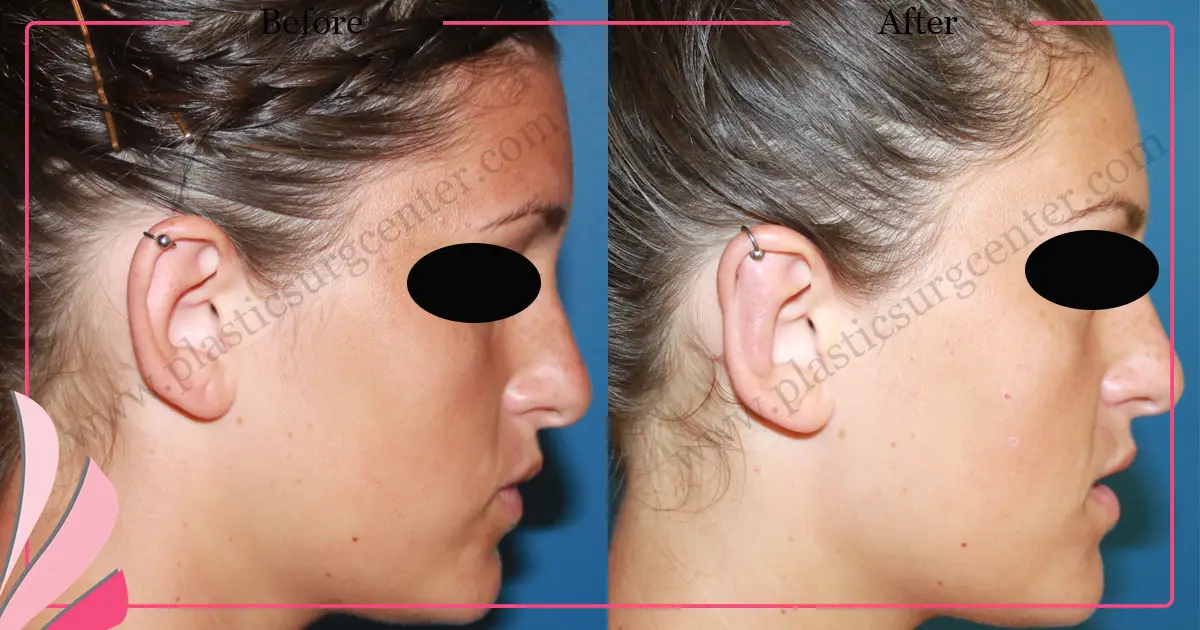
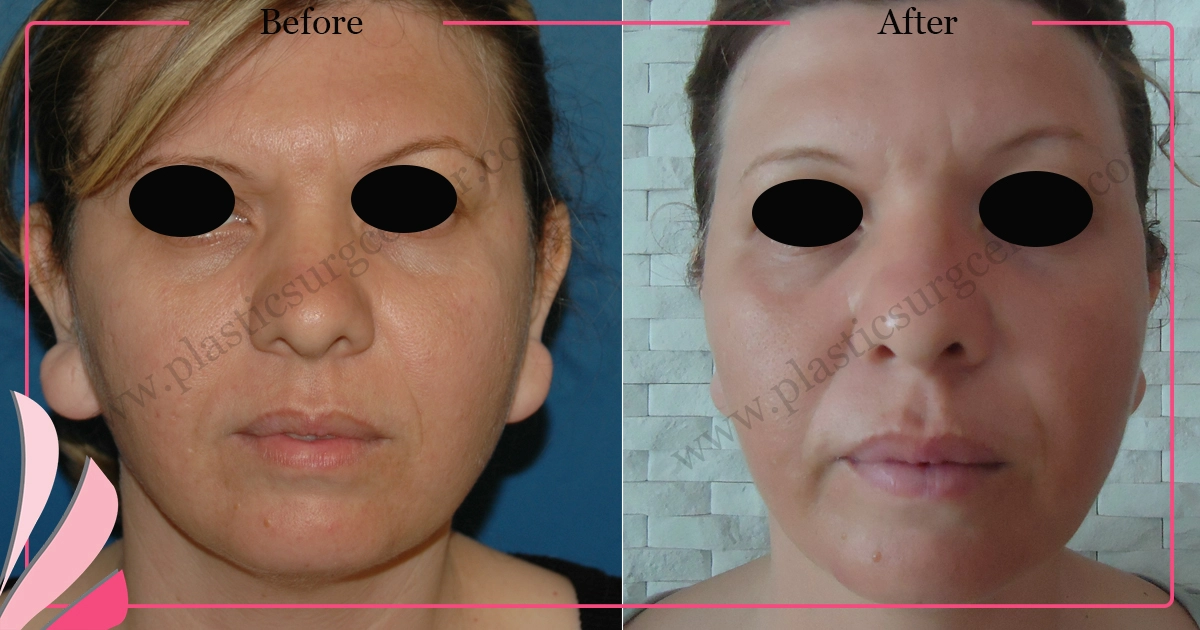
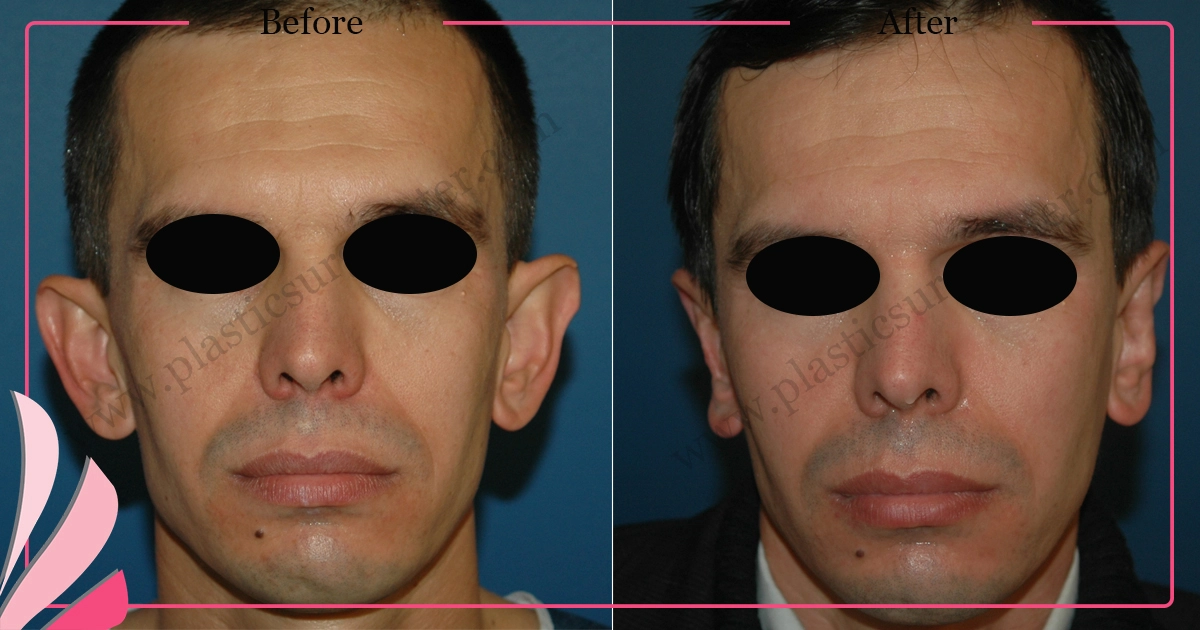
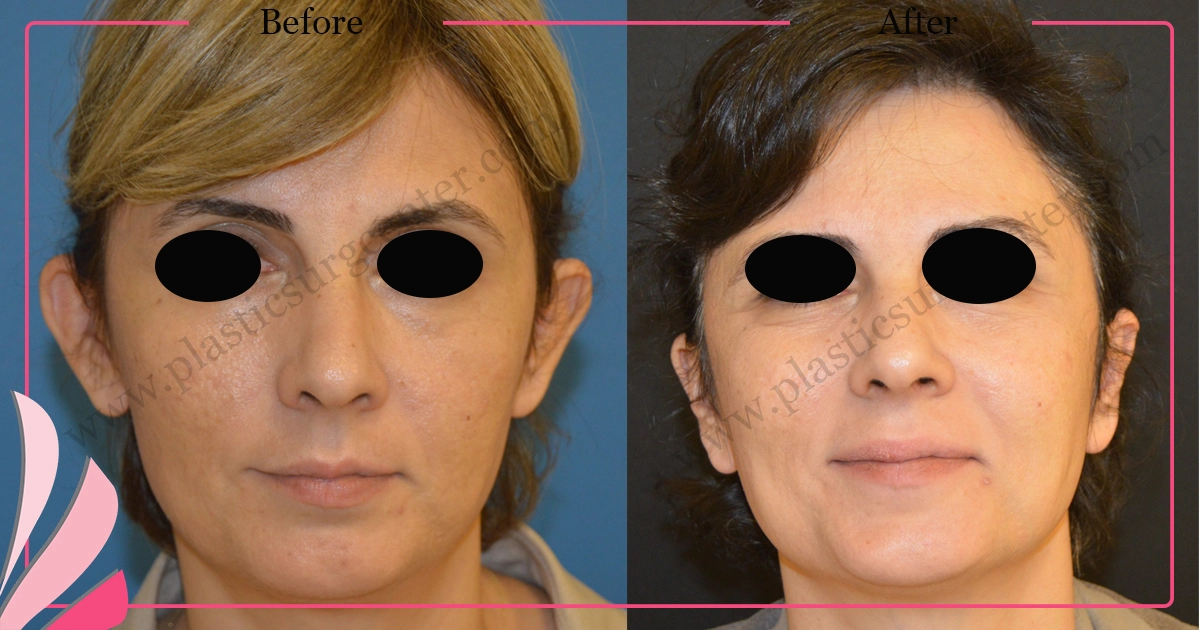
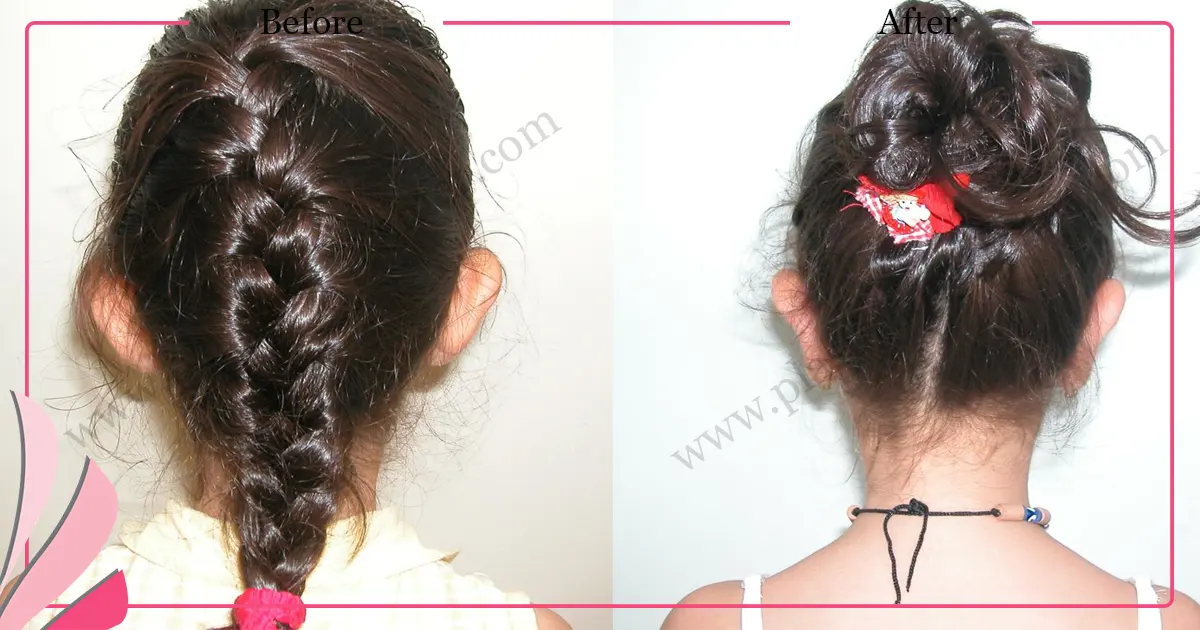
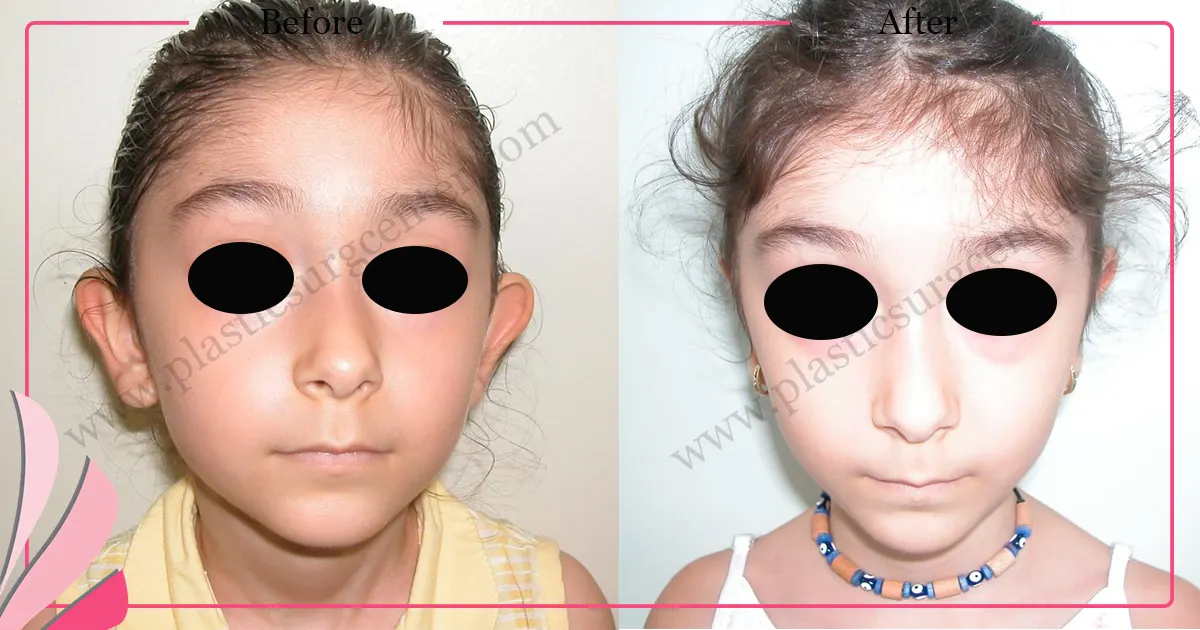
Otoplasty Before and After
Before and after photographs can demonstrate how changes in ear position and shape influence the overall appearance of the face.
Photographs from the front are particularly useful because prominent ears may draw attention away from the central facial features.
However, every patient’s cartilage, ear shape and degree of prominence are different.
Previous results should therefore be viewed as examples of individual outcomes rather than a guarantee of a particular result.
Is There a Best Age for Otoplasty?
There is no single age that is appropriate for every patient.
In children, surgery is generally considered only after sufficient ear development has occurred.
In adults, there is no specific upper age limit provided the patient is medically suitable for surgery.
The decision depends on anatomy, health, expectations and, in younger patients, maturity and cooperation.
Will My Ears Be Completely Symmetrical?
Perfect symmetry does not exist naturally.
Almost everyone has some difference between the right and left ears before surgery.
Differences may involve:
- Ear size
- Shape
- Projection
- Height
- Cartilage folds
- Earlobes
Otoplasty can improve significant asymmetry, but it cannot guarantee that both ears will become identical.
In fact, attempting to create mathematically identical ears may not produce the most natural appearance.
The objective is improved balance, not artificial perfection.
Will My Ears Look Pinned Back?
They should not look excessively pinned.
One of the signs of an unnatural otoplasty result is an ear that lies too flat against the head.
The external ear naturally has some projection.
My aim is to reduce excessive prominence while preserving an appropriate distance between the ear and the head.
The natural curves of the ear should also remain visible.
Where Is the Otoplasty Scar?
In many otoplasty procedures, the main incision is positioned in the natural crease behind the ear.
This location helps conceal the scar when the ear is viewed normally.
The scar may initially appear pink, firm or more noticeable.
It usually becomes softer and less conspicuous as it matures.
Scar healing varies between patients.
Some individuals have a greater tendency to develop thick or raised scars, and this should be considered before surgery.
No surgeon can promise a completely invisible scar.
Local or General Anaesthesia?
Otoplasty can be performed under local or general anaesthesia, depending on the patient’s age, the extent of surgery and individual circumstances.
For suitable adults, local anaesthesia may be an option.
General anaesthesia may be more appropriate for younger patients or when the planned procedure requires it.
The anaesthetic plan is discussed before surgery.
When general anaesthesia is required, I perform the procedure in an appropriately equipped hospital setting in Antalya.
How Long Does Otoplasty Take?
The duration of surgery depends on the anatomy and the correction required.
Both ears need to be assessed individually because one ear may require different adjustments from the other.
A relatively straightforward case may require less operating time than an ear with complex asymmetry or cartilage differences.
I therefore do not consider operating time to be a measure of the quality of the operation.
The objective is to complete the required correction carefully and safely.
Recovery After Otoplasty
Swelling, bruising and tenderness are expected during the early recovery period.
The ears may initially appear more swollen or closer to the head than expected.
This early appearance is not the final result.
A protective dressing or headband may be recommended during part of the recovery period, depending on the operation.
Patients should follow instructions regarding:
- Wound care
- Sleeping position
- Hair washing
- Physical activity
- Headwear
- Medication
- Protection from trauma
- Wearing glasses where relevant
Particular care is required to avoid accidentally folding or traumatising the ears during early healing.
Sleeping After Otoplasty
Patients should avoid unnecessary pressure on the ears during early recovery.
Sleeping directly on the operated ears may be uncomfortable and can place pressure on healing tissues.
I therefore provide instructions regarding sleeping position after surgery.
The duration of these restrictions depends on the operation and the progress of healing.
Wearing a Headband After Otoplasty
A headband may be recommended after prominent ear surgery.
Its use and duration depend on the technique and stage of recovery.
It can help protect the ears from accidental folding or trauma, particularly during sleep.
However, postoperative protocols should not be copied from another patient’s treatment plan.
I give specific instructions according to the individual operation.
When Can I Wash My Hair?
Hair washing is restricted during the initial wound-healing period.
Once the incisions are sufficiently secure, patients can begin washing their hair according to the postoperative instructions provided.
Care should be taken not to pull, rub or traumatise the ears.
I confirm the appropriate timing during follow-up.
When Can I Exercise After Otoplasty?
Light daily activity can usually be resumed before strenuous exercise.
Activities that create a risk of impact or trauma to the ears require particular caution.
Contact sports should be avoided until healing is sufficiently advanced.
The timing of return to exercise depends on the operation and the patient’s recovery.
When Will I See the Final Result?
The change in ear position is visible immediately after surgery, but swelling affects the early appearance.
As swelling decreases, the ears gradually begin to look more natural.
The cartilage and surrounding tissues also require time to heal and settle.
For this reason, the final result should not be judged during the first days or weeks.
Scar maturation continues for considerably longer.
How Long Do Otoplasty Results Last?
Otoplasty is designed to produce a long-lasting change in ear position and shape.
However, biological tissues are not completely rigid.
Cartilage has natural elasticity, and some degree of change can occur during healing.
This is one reason why careful technique and appropriate postoperative protection are important.
Although significant recurrence is not expected in most appropriately treated patients, no surgical result can be guaranteed to remain absolutely unchanged throughout life.
Risks and Limitations of Otoplasty
Otoplasty is a commonly performed plastic surgery procedure, but it remains surgery and therefore carries potential risks.
These may include:
- Bleeding
- Infection
- Haematoma
- Delayed wound healing
- Unfavourable scarring
- Thick or raised scars
- Temporary or persistent changes in sensation
- Asymmetry
- Cartilage irregularity
- Suture-related problems
- Over-correction
- Under-correction
- Partial recurrence of prominence
- Need for further surgery
- Anaesthetic risks where applicable
The relevant risks and limitations are discussed during consultation according to the planned procedure.
Otoplasty in Turkey for International Patients
Travelling to Antalya for Prominent Ear Surgery
International patients considering otoplasty can begin with a preliminary assessment before travelling to Turkey.
My team may request:
- Medical history
- Current medication
- Previous ear surgery
- Relevant medical conditions
- History of abnormal or raised scarring
- Photographs from the front, side and back where appropriate
Photographs can help assess the degree and pattern of ear prominence.
However, the final surgical plan is confirmed only after I examine the ears personally in Antalya.
How Long Should I Stay in Antalya After Otoplasty?
The recommended stay depends on the procedure, anaesthesia and individual recovery.
Otoplasty is generally less extensive than many major body or facial operations, so the required stay may be shorter.
However, international patients should remain in Antalya long enough for the necessary early postoperative checks.
I prefer to determine the appropriate return date according to the operation and early healing rather than give every patient the same fixed timetable.
Otoplasty and Your Stay in Antalya
Although prominent ear surgery may involve a relatively manageable recovery, patients should remember that they have travelled for an operation rather than an ordinary holiday.
During early recovery, you may need to avoid:
- Swimming
- Strenuous exercise
- Prolonged sun exposure
- Activities that could traumatise the ears
- Tight or difficult clothing that must be pulled over the head
Planning a calm recovery period is more appropriate than arranging an intensive holiday immediately after surgery.
Why Choose Dr Gökhan Özerdem for Otoplasty?
Prominent ear correction is sometimes described simply as ‘ear pinning’.
I believe this description can be misleading.
Good otoplasty requires the surgeon to consider:
- Why the ear is prominent
- Antihelical fold development
- Conchal anatomy
- Cartilage strength
- Ear-to-head relationship
- Differences between the two ears
- Scar position
- Risk of over-correction
- Natural ear shape
With more than 25 years of surgical experience, my approach is to correct the anatomical features responsible for prominence while preserving a natural ear contour.
I do not aim to place the ears as close to the head as possible.
The best result is usually one in which the ears stop attracting attention and become a natural part of the overall face.
Frequently Asked Questions About Otoplasty – Prominent Ear Surgery
Otoplasty is plastic surgery performed to change the shape, position or projection of the external ear. When used to treat prominent ears, it is also commonly called prominent ear correction, ear pinning or pinnaplasty.
Prominent ears may result from an underdeveloped antihelical fold, a prominent conchal bowl, other cartilage characteristics or a combination of these features.
No. My objective is to address the anatomical cause of the prominence while preserving natural ear contours. Pulling the ears excessively close to the head can produce an unnatural appearance.
Perfect symmetry cannot be guaranteed. Natural differences exist between almost everyone’s ears. Surgery can improve significant asymmetry while aiming for overall balance.
The main incision is commonly positioned in the natural crease behind the ear, where it is relatively well concealed during normal viewing.
Yes. Some patients have a greater tendency to develop hypertrophic or keloid scars. Previous abnormal scarring should therefore be discussed before surgery.
Yes. Otoplasty can be performed in adults at almost any age provided they are medically suitable for surgery.
Yes, in appropriately selected children once sufficient ear development has occurred. The child’s maturity, willingness to undergo surgery and ability to cooperate with postoperative care are also important.
There is no single correct age for everyone. In younger patients, ear development and emotional readiness must be considered. Adults can also undergo the operation successfully.
Yes, local anaesthesia may be appropriate for selected adult patients. General anaesthesia may be preferable for younger patients or depending on the extent of surgery.
A protective headband may be recommended during part of the recovery period. I determine how and when it should be worn according to the procedure performed.
Pressure on the ears should be avoided during early healing. I provide individual instructions about sleeping position after surgery.
Hair washing can resume once the incisions have healed sufficiently. The exact timing depends on the procedure and early wound healing.
This varies according to the type of work, degree of swelling and whether a visible dressing or headband is required. Many patients can return to non-physical work relatively quickly.
Light activity can generally resume before strenuous exercise. Contact sports and activities that could injure the ears require a longer period of restriction.
The operation is intended to provide a long-lasting correction. However, cartilage has natural elasticity and some change can occur during healing. Partial recurrence is a recognized possibility.
Yes. Otoplasty can be performed during the summer, but swimming, strong sun exposure and activities that may traumatize the ears should be avoided during early recovery.
The required stay depends on the operation, anaesthesia and recovery. I determine the recommended travel schedule individually so that the necessary early postoperative checks can be completed.
Yes. Follow-up communication continues after you leave Turkey. Photographs may be requested during recovery, and local medical assessment may be recommended if an in-person examination becomes necessary.
Considering Otoplasty in Antalya, Turkey?
If you are considering surgery for prominent ears, the first step is to identify why the ears are prominent.
The problem may involve the antihelical fold, conchal prominence, cartilage shape, asymmetry or a combination of these features.
The operation can then be planned according to your individual anatomy.
Dr Gökhan Özerdem
Specialist in Aesthetic, Plastic and Reconstructive Surgery
Antalya, Turkey
Contact Our International Patient Team
Request a Preliminary Assessment
Face: – Rhinoplasty – Eyelid Surgery – Forehead and Brow Lift – Ear Surgery –
Breast: – Breast Augmentation – Breast Lift – Breast Reduction – Gynecomastia –
Body: – Tummy Tuck – Mini Tummy Tuck – Liposuction – Arm Lift – Thigh Lift – Body Contouring – Mommy Makeover –