


Large and heavy breasts can be an aesthetic concern, but for many women the problem is also physical.
Breast weight may contribute to neck, shoulder and back discomfort, bra-strap pressure, difficulty exercising and irritation beneath the breasts. As breast size increases, the skin and supporting tissues may also stretch, causing the breasts and nipples to descend.
I am Dr Gökhan Özerdem, Specialist in Aesthetic, Plastic and Reconstructive Surgery in Antalya, Turkey. With more than 25 years of surgical experience, I perform breast reduction surgery for women from Turkey and abroad.
Breast reduction is not simply an operation to remove a certain number of grams.
The breast must also be reshaped, the nipple repositioned where appropriate and the remaining tissue balanced with the patient’s chest and body.
The objective is a breast that is lighter, better proportioned and appropriately shaped — not simply smaller.

What Is Breast Reduction Surgery?
Breast reduction surgery, also known as reduction mammoplasty, removes excess breast tissue, fat and skin to reduce breast volume and weight.
At the same time, the remaining breast tissue is reshaped and the nipple–areola complex is generally repositioned to a more appropriate level.
Depending on the patient’s anatomy, breast reduction can address:
- Excessive breast volume
- Heavy breasts
- Breast sagging
- Low nipple position
- Enlarged areolae
- Breast asymmetry
- Discomfort associated with breast weight
- Difficulty with physical activity
- Problems finding suitable clothing or supportive bras
The operation therefore combines volume reduction with breast reshaping and lifting.
About Dr. Gökhan Özerdem
Specialist Plastic Surgeon in Antalya, Turkey
I am Dr Gökhan Özerdem, Specialist in Aesthetic, Plastic and Reconstructive Surgery, practising in Antalya, Turkey.
My professional background includes:
- More than 25 years of surgical experience
- Thousands of aesthetic and reconstructive surgical procedures
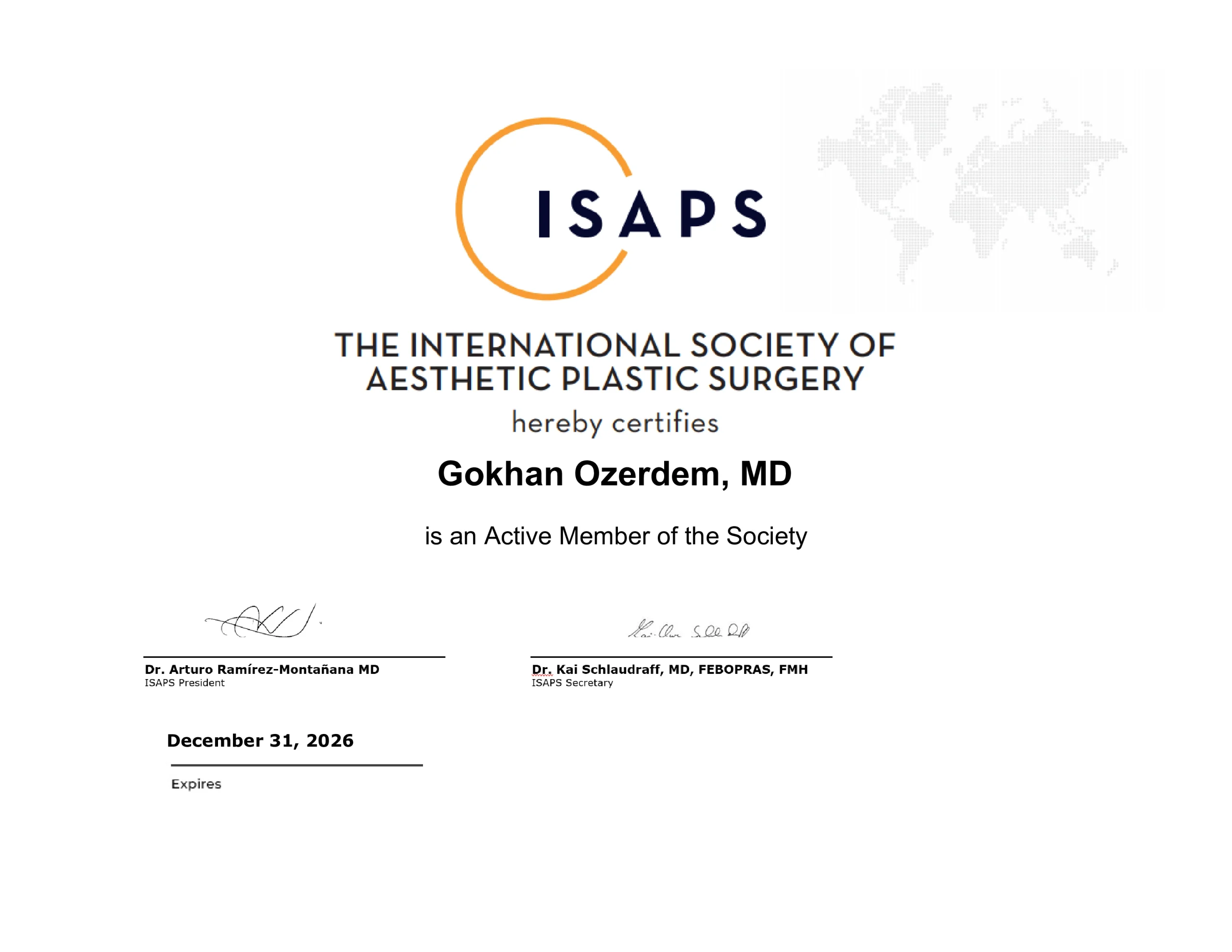
- Member of the International Society of Aesthetic Plastic Surgery (ISAPS)
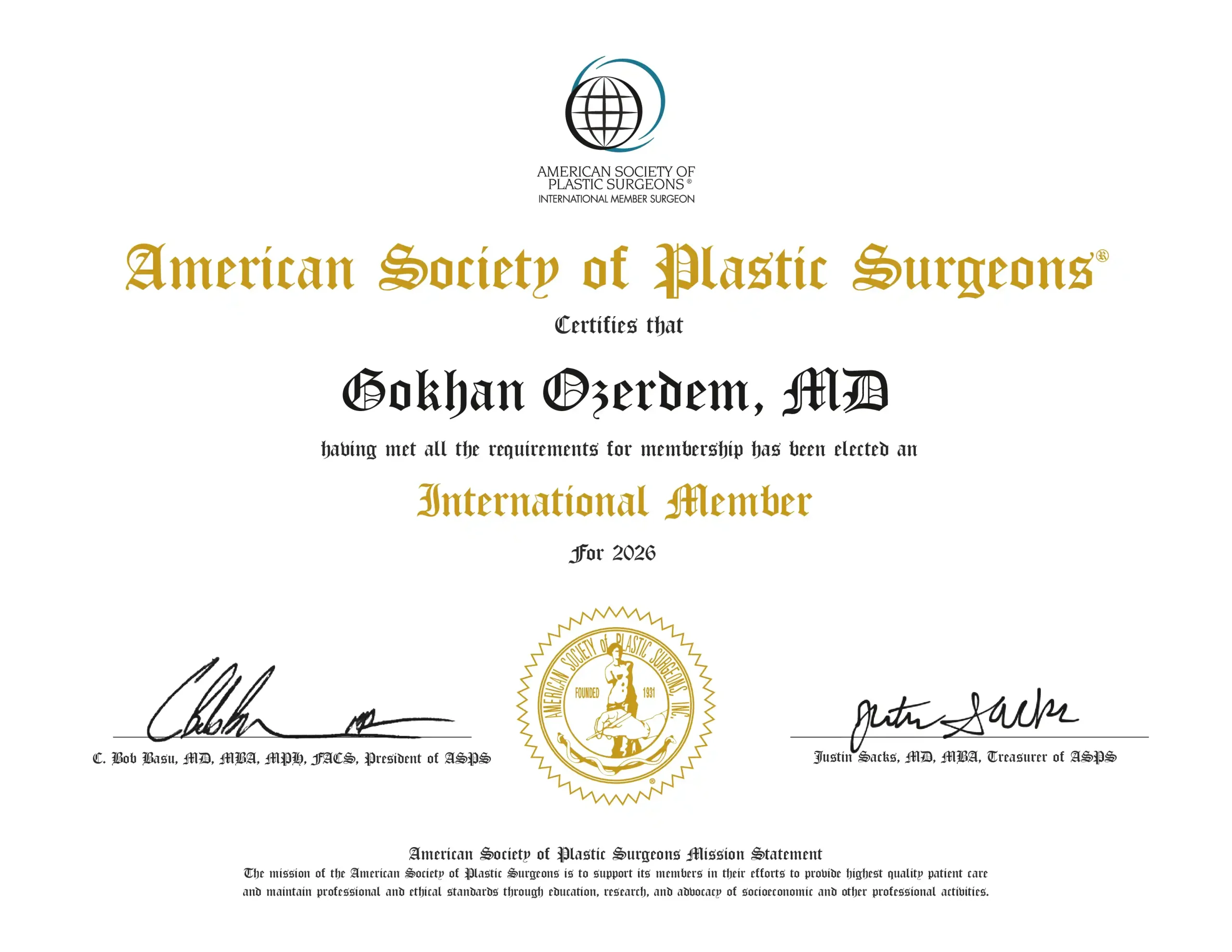
- Member of the American Society of Plastic Surgeons (ASPS)
- Member of the Turkish Society of Plastic, Reconstructive and Aesthetic Surgeons
- Member of the Turkish Society of Aesthetic Plastic Surgery
- Professional medical experience and licensing in Dubai
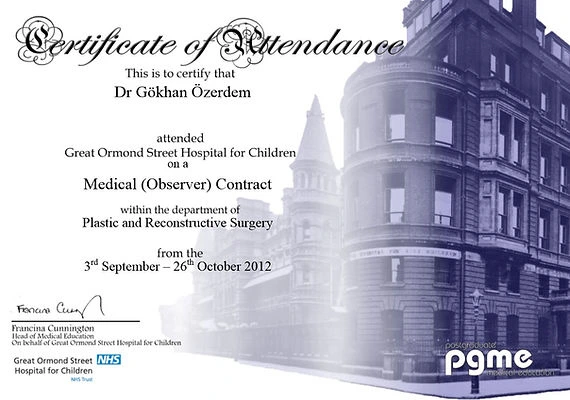
- Observer experience at Great Ormond Street Hospital for Children, London, UK
- Gamma Probe Course at Castle Hill Hospital, Hull, UK
- Oral and poster presentations at national and international scientific congresses
- Session chairmanship at the Turkish National Plastic Surgery Congress
- International scientific publications and academic work
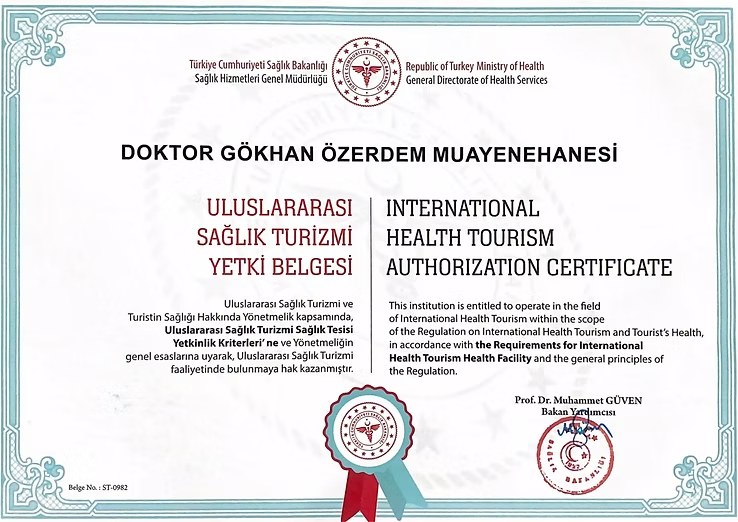
- Authorised to provide services to international patients under the relevant Turkish Ministry of Health International Health Tourism framework
Major surgical procedures are performed in fully equipped hospital facilities in Antalya with appropriate anaesthesia and medical support.

Who May Consider Breast Reduction?
Breast reduction may be appropriate for women who are troubled by the size or weight of their breasts.
Common concerns include:
- Neck discomfort
- Shoulder discomfort
- Back discomfort
- Deep bra-strap marks
- Skin irritation beneath the breasts
- Difficulty exercising
- Difficulty finding suitable bras or clothing
- Feeling that the breasts are disproportionate to the body
- Breast sagging associated with excessive weight
- Significant asymmetry
Not every patient experiences all of these problems.
Some women seek surgery primarily for physical relief, while others are mainly concerned about breast proportion and appearance.
Both aspects are considered during consultation.
Breast Reduction Is Also a Breast Lift
This is one of the most important points for patients to understand.
Large breasts frequently descend because their weight stretches the skin and supporting tissues.
For this reason, breast reduction generally involves more than removing volume.
During surgery, I also reshape the remaining breast and reposition the nipple–areola complex where necessary.
In practical terms, breast lifting is usually an integral part of breast reduction surgery.
The difference between breast reduction and breast lift is mainly the amount of breast tissue being removed.

Your Breast Reduction Journey in Antalya
1. Preliminary Assessment
You provide medical information, breast history, photographs and details of the reduction you hope to achieve.
2. Consultation in Antalya
I examine your breasts, skin quality, nipple position, asymmetry and body proportions.
3. Surgical Planning
We discuss the expected degree of reduction, scars, nipple position, possible sensory changes, breastfeeding, recovery and limitations.
4. Surgery
Your breast reduction is performed under general anaesthesia in a fully equipped hospital.
5. Early Recovery
My team and I monitor wound healing and your general recovery during your stay in Antalya.
6. Returning Home
You travel home once your early postoperative condition allows.
7. Long-Term Follow-Up
Breast shape and scars continue to change for months. Follow-up communication can continue after you return to your country.
My Approach to Breast Reduction
Before planning breast reduction, I assess:
- Breast volume
- Breast width
- Degree of sagging
- Nipple position
- Areola size
- Skin quality
- Breast asymmetry
- Chest-wall anatomy
- Body proportions
- Patient expectations
- Desired final breast size
The question is not simply:
‘How much tissue can be removed?’
The more important question is:
How much tissue should remain to create a breast that is proportionate, appropriately shaped and surgically safe?
How Small Can My Breasts Be Made?
Patients frequently ask for a specific cup size after breast reduction.
Cup size is not a precise surgical measurement.
Bra sizing varies considerably between manufacturers and countries, so no surgeon can reliably guarantee a specific postoperative cup size.
The amount of reduction depends on factors including:
- Original breast size
- Breast width
- Nipple position
- Blood supply to the nipple
- Tissue quality
- Skin excess
- Body proportions
- Patient preference
I discuss the desired degree of reduction carefully, but I do not promise an exact bra size.
Can My Breasts Be Made Very Small?
In some patients, substantial reduction is possible.
However, there are anatomical and surgical limits.
The nipple–areola complex requires an adequate blood supply, and the remaining breast must maintain an appropriate shape.
Attempting to make an extremely large breast excessively small can increase surgical complexity and may affect the techniques available.
My responsibility is to balance the patient’s desired reduction with tissue safety and realistic breast shape.
The maximum possible reduction is not automatically the best reduction.
What Happens to the Nipple During Breast Reduction?
In most breast reduction operations, the nipple–areola complex remains attached to breast tissue through a pedicle that maintains its blood supply.
The nipple is then repositioned to a more appropriate level as the breast is reduced and reshaped.
The exact technique depends on:
- Breast size
- Degree of sagging
- Nipple position
- Amount of reduction required
- Tissue characteristics
In extremely large or severely descended breasts, different techniques may occasionally be required.
The planned method is discussed before surgery.
What Happens to the Areola?
Large breasts may also have enlarged or stretched areolae.
During breast reduction, the areolar diameter can usually be reduced while the nipple–areola complex is repositioned.
The objective is to create an areola that is more proportionate to the new breast shape.
Natural differences between the two sides may remain.
Perfect symmetry cannot be guaranteed.
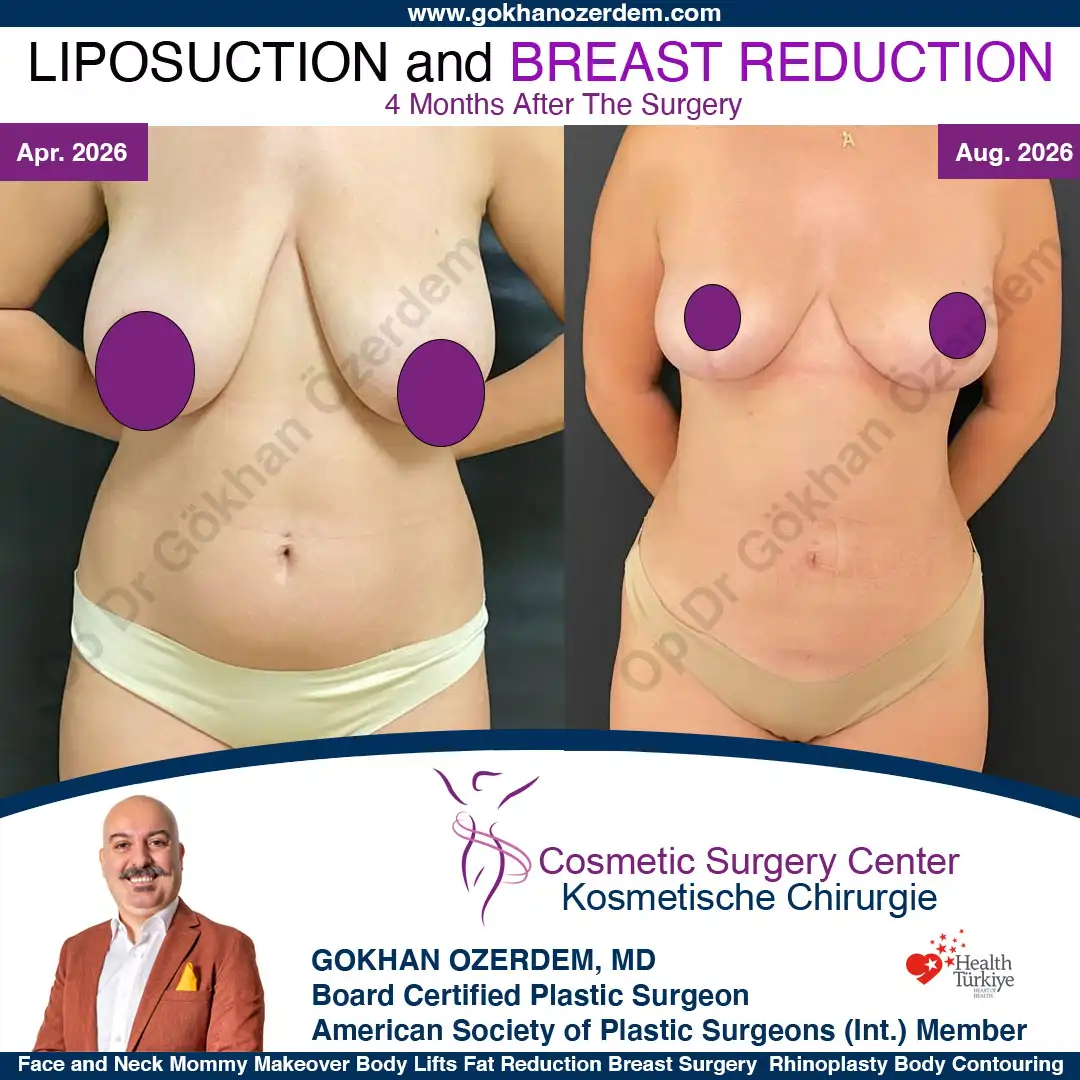
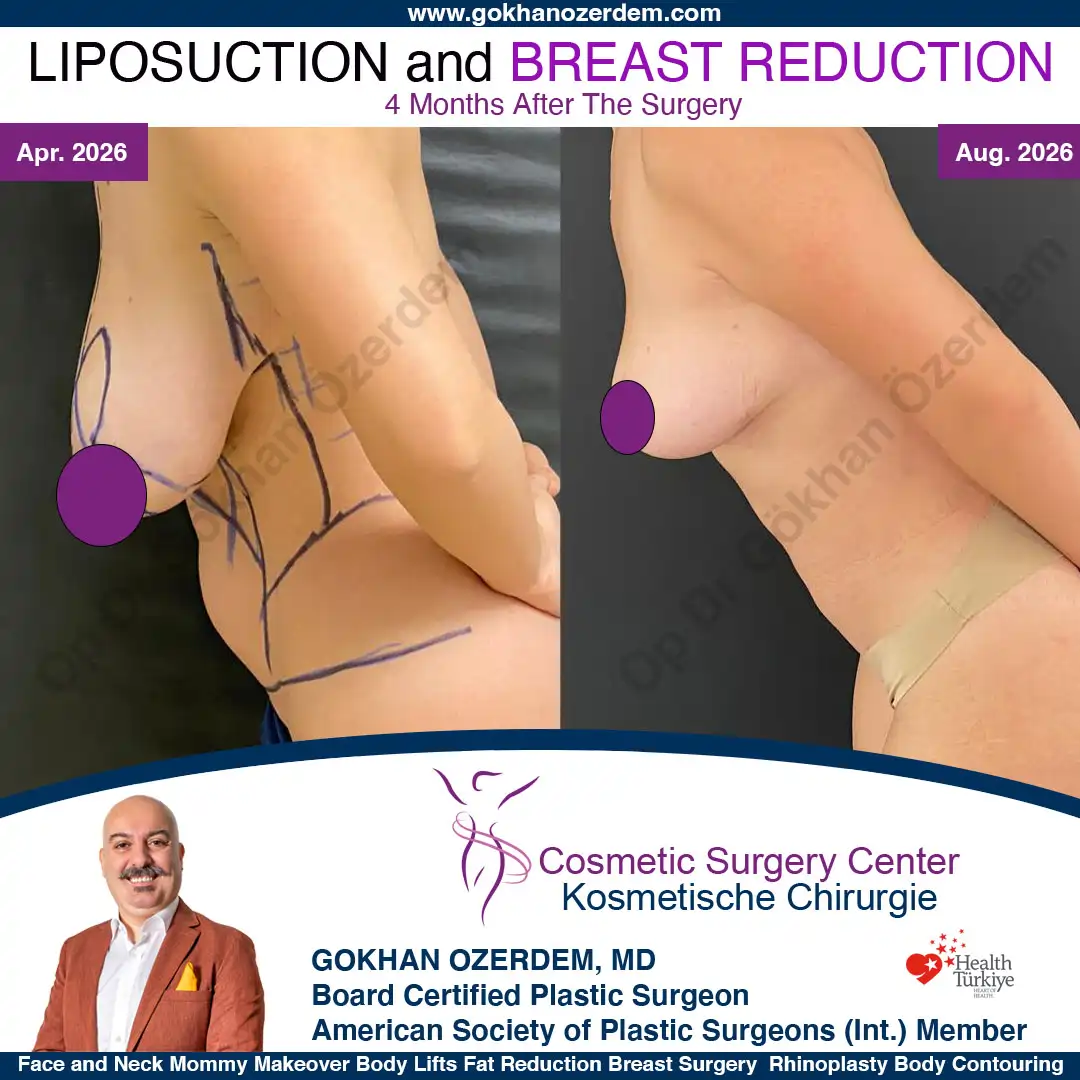
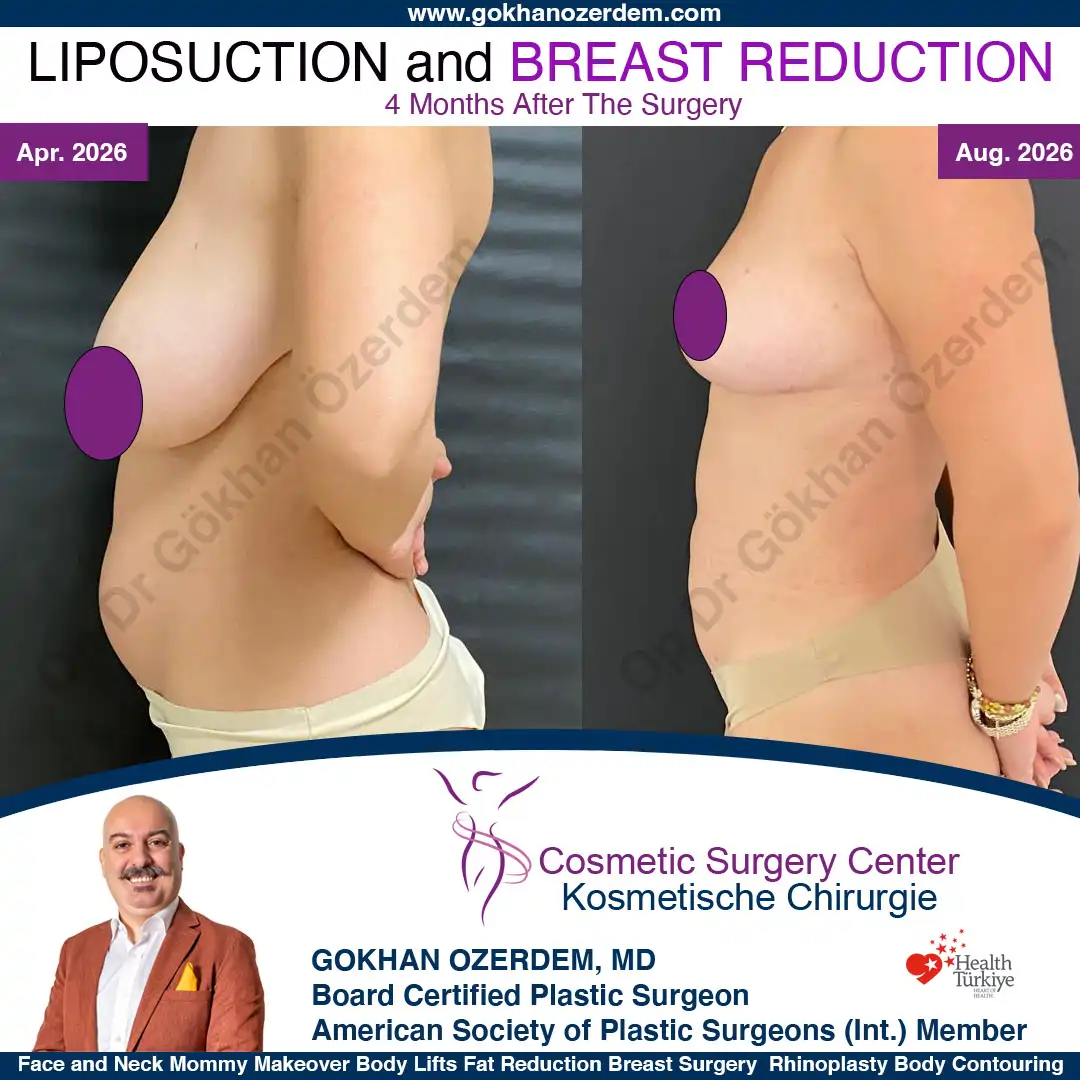
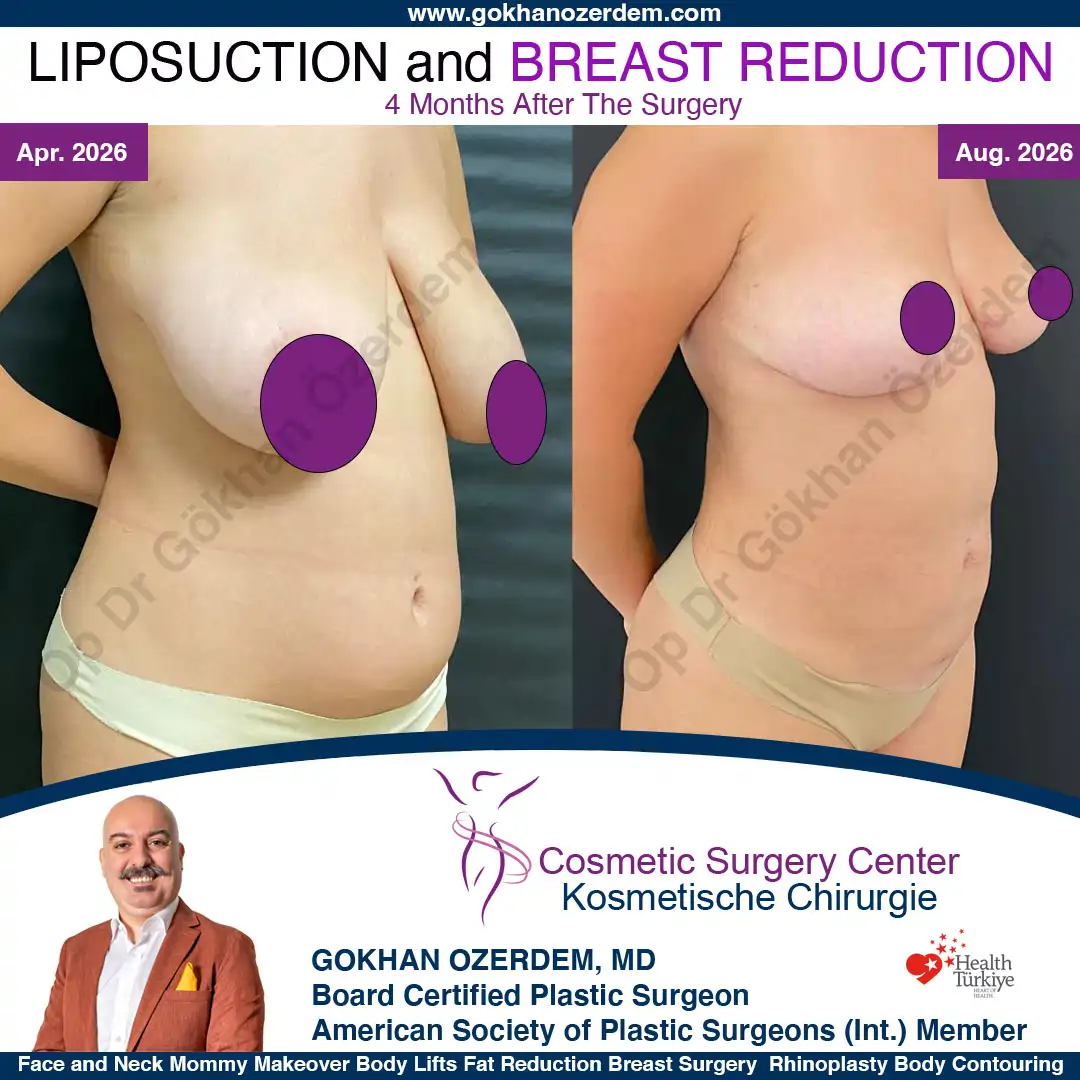
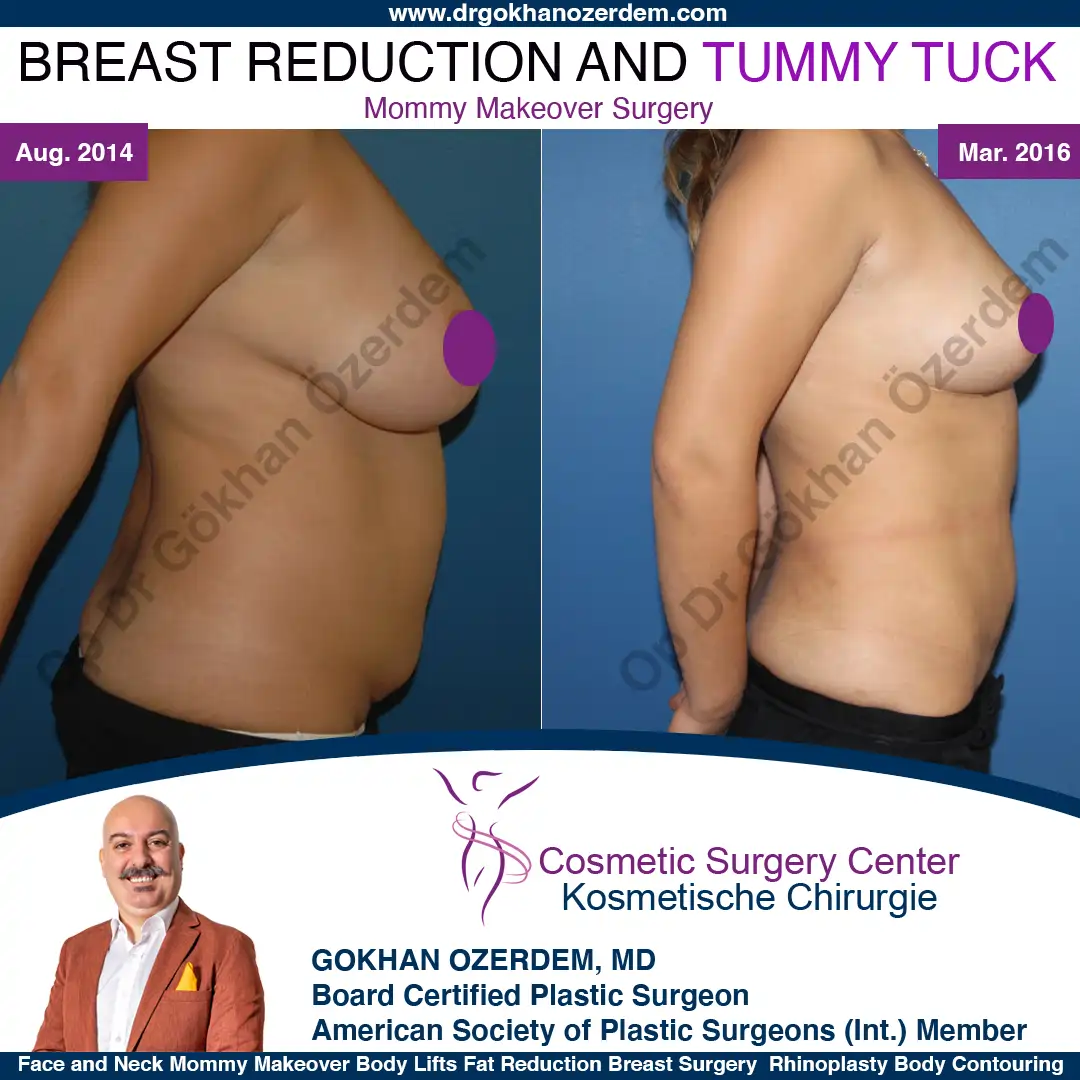
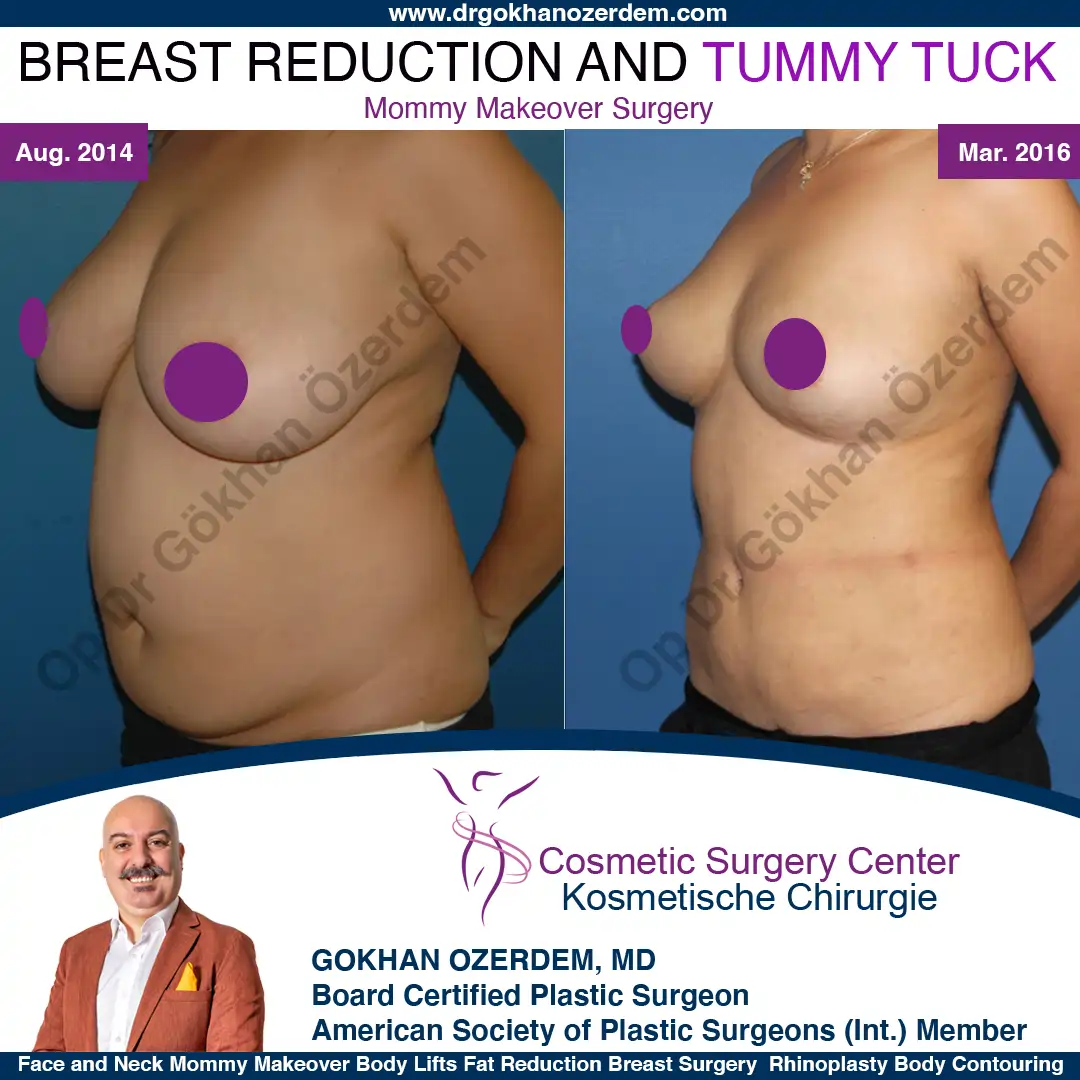
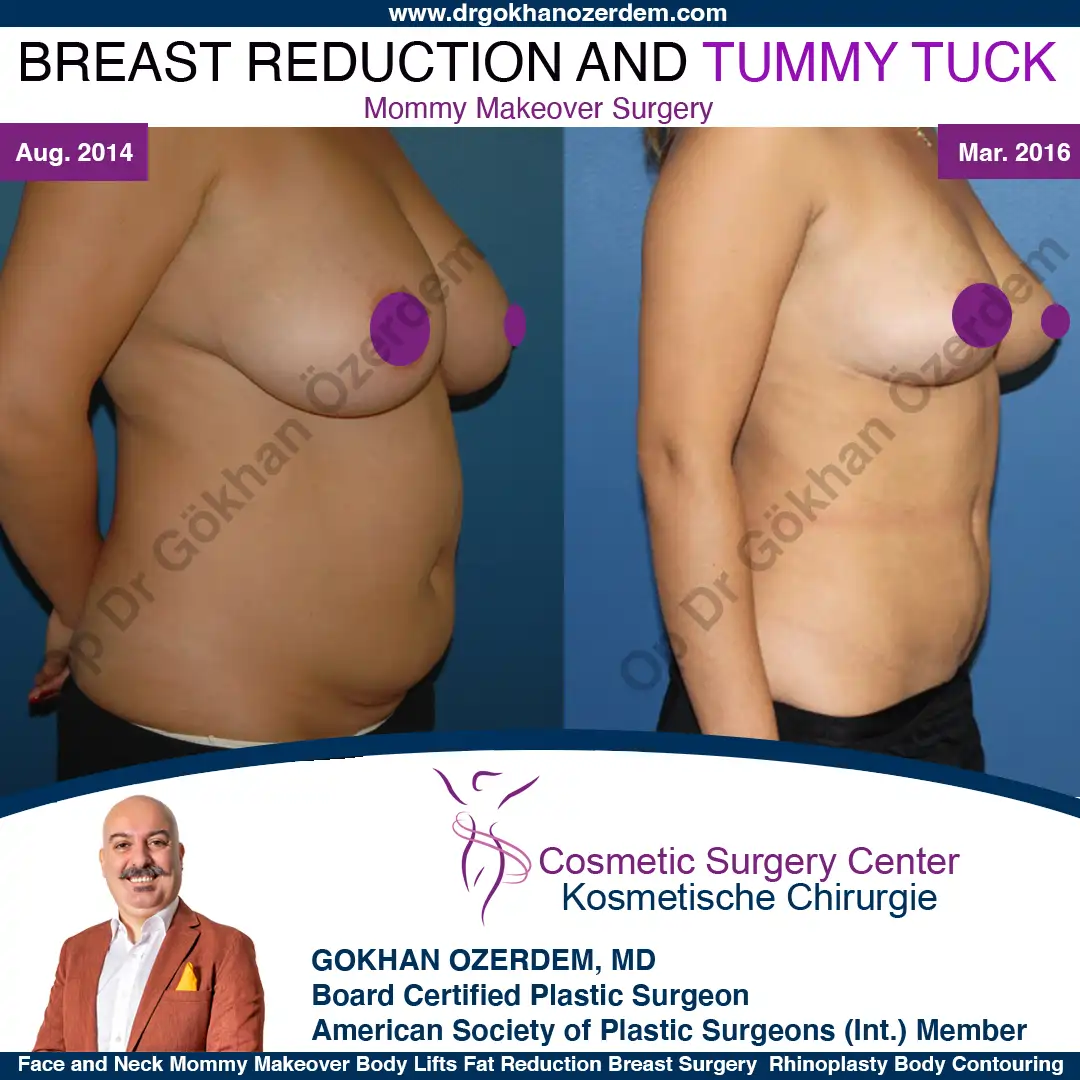
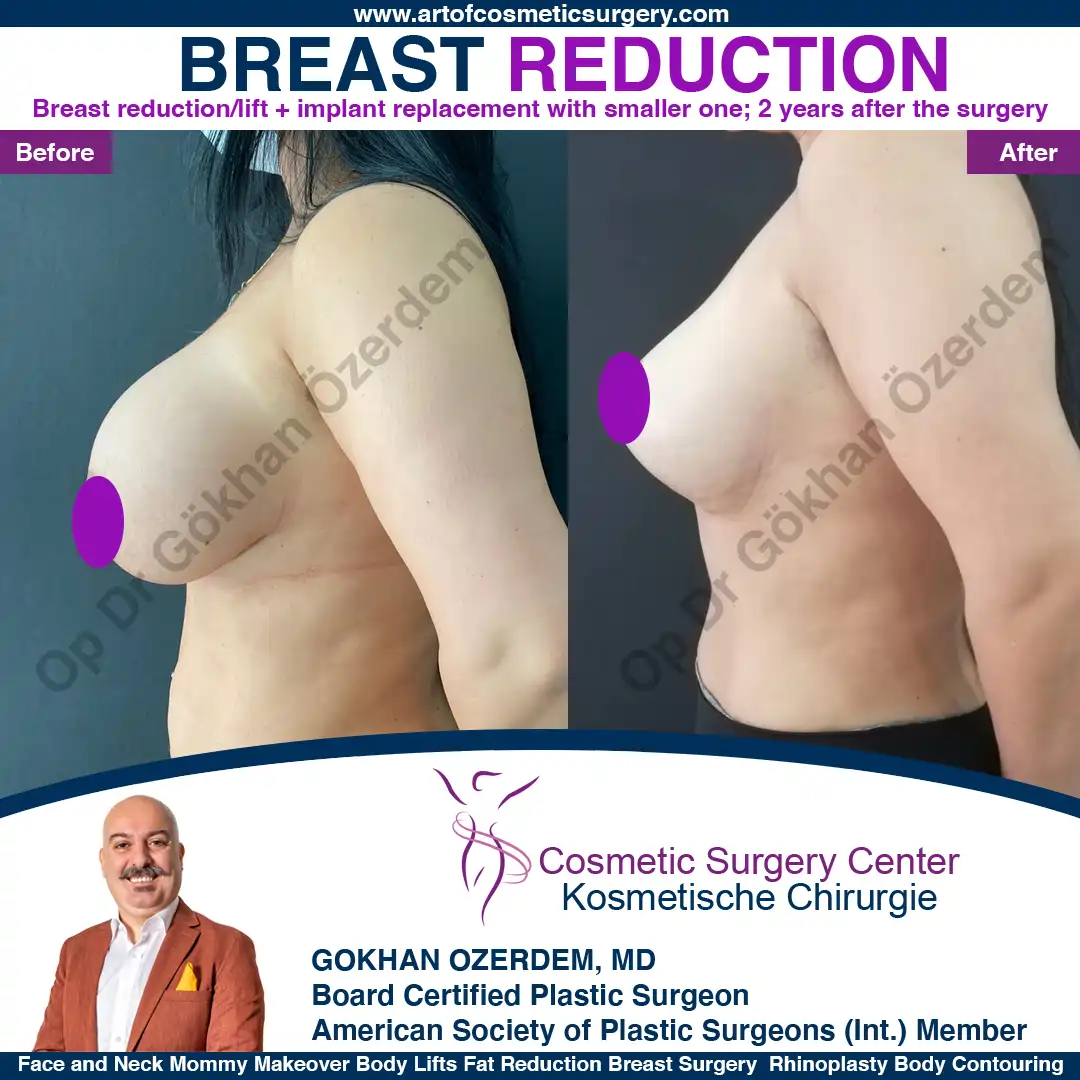
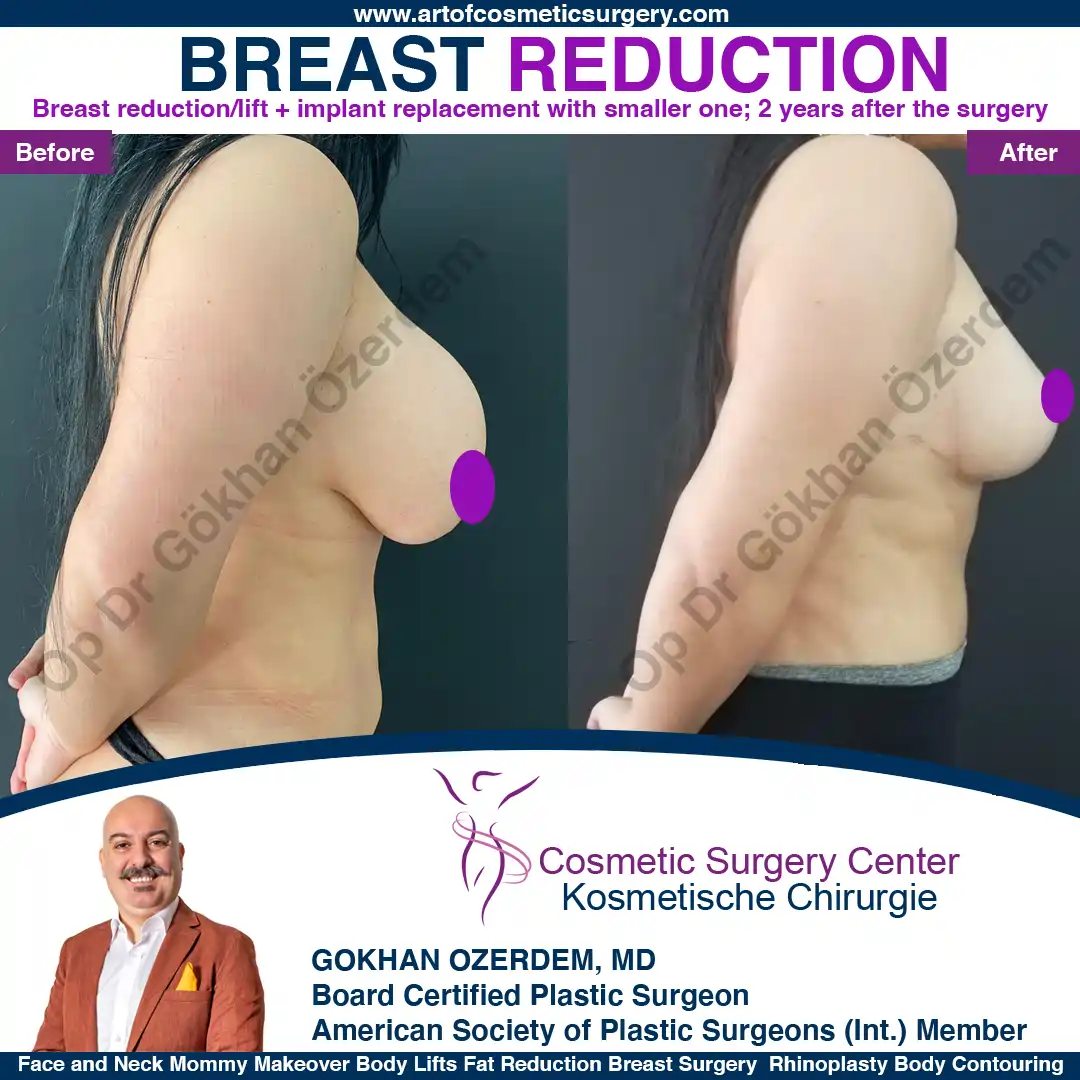
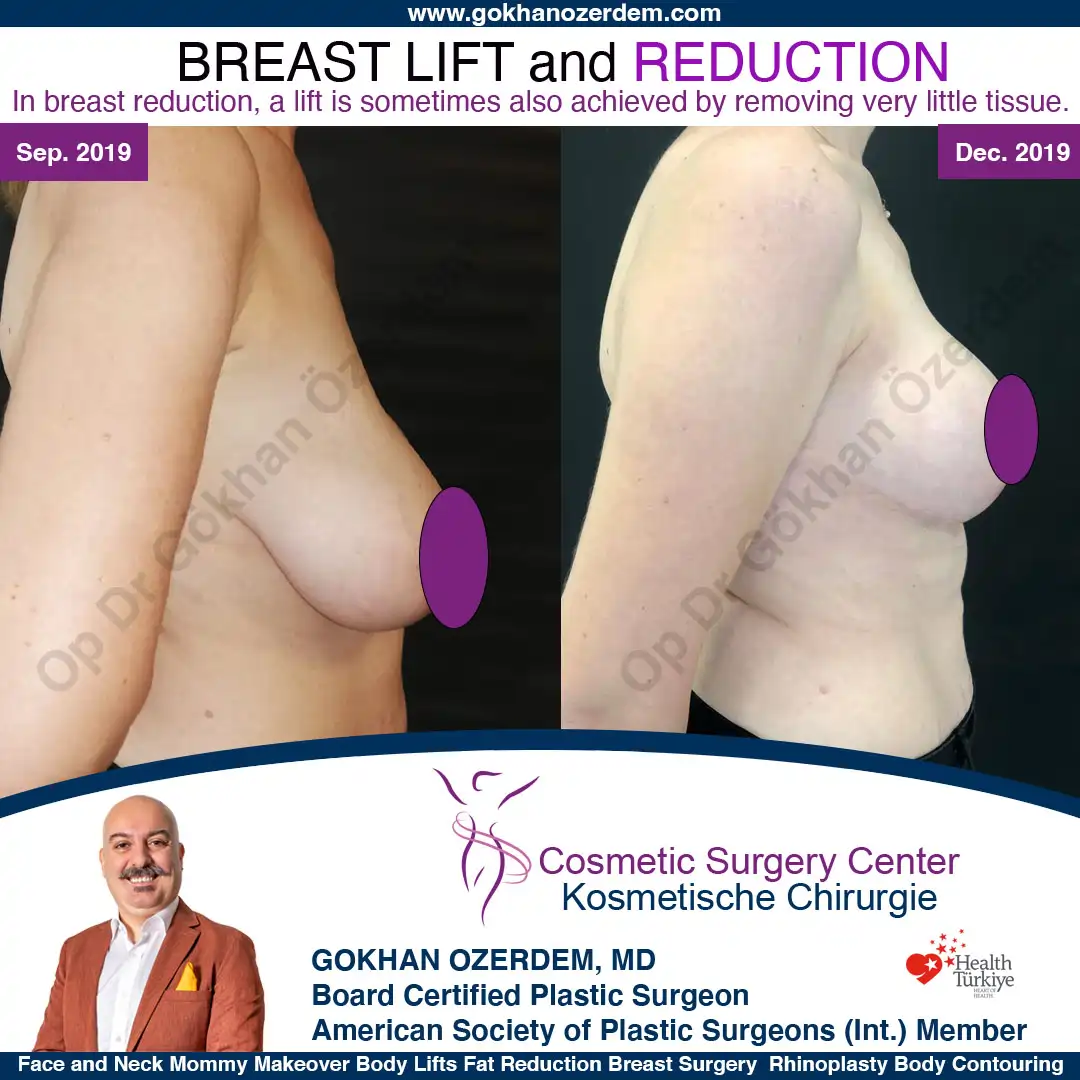
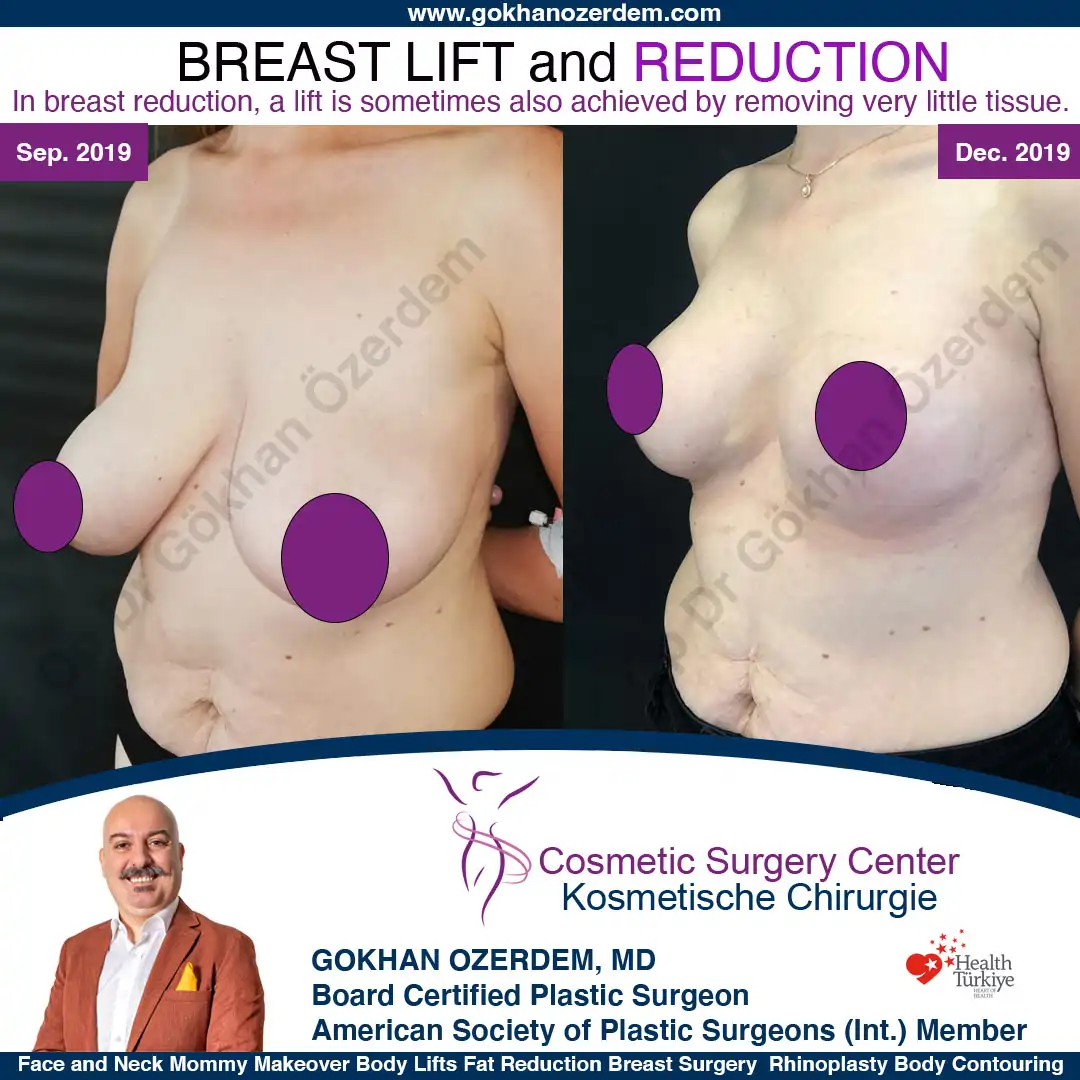
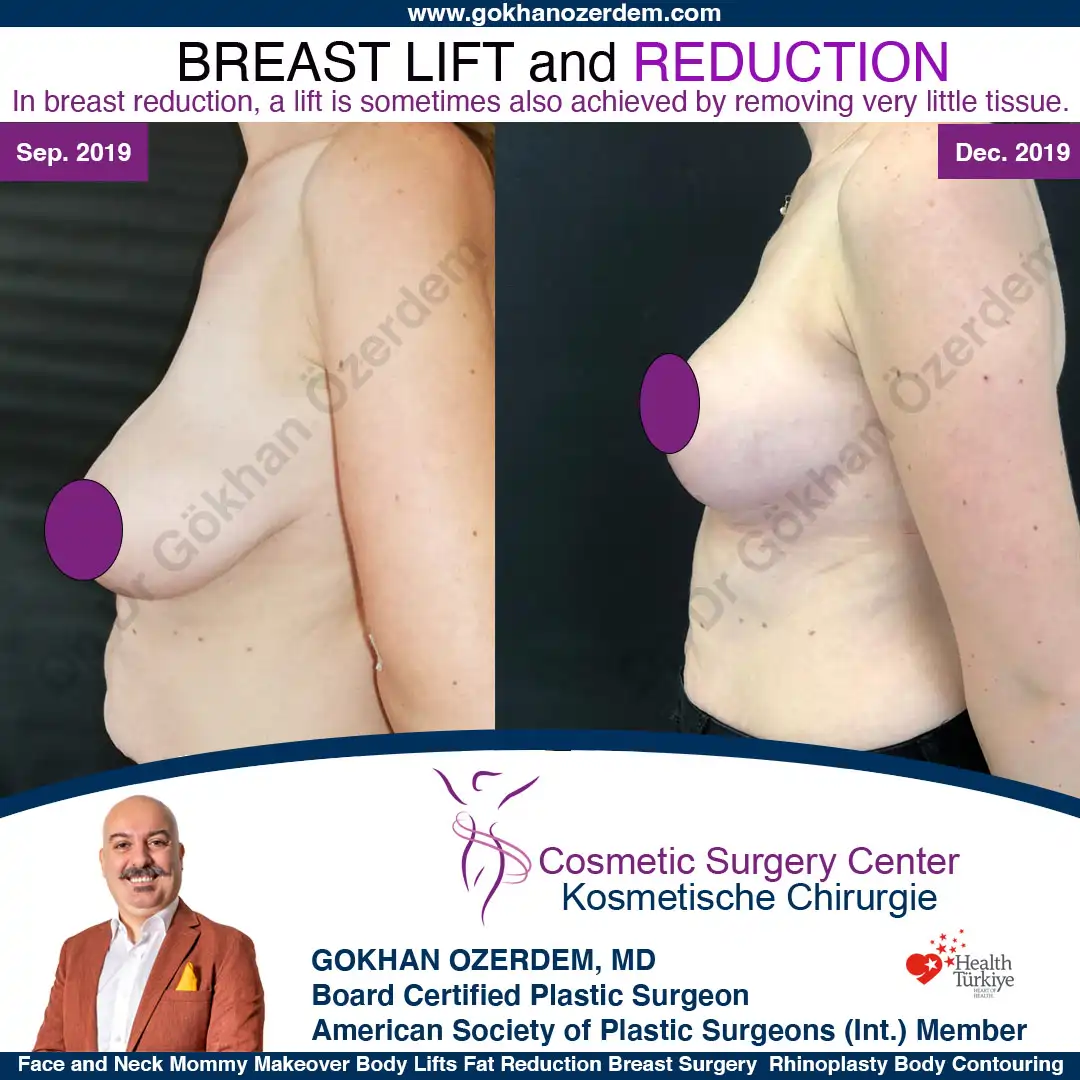
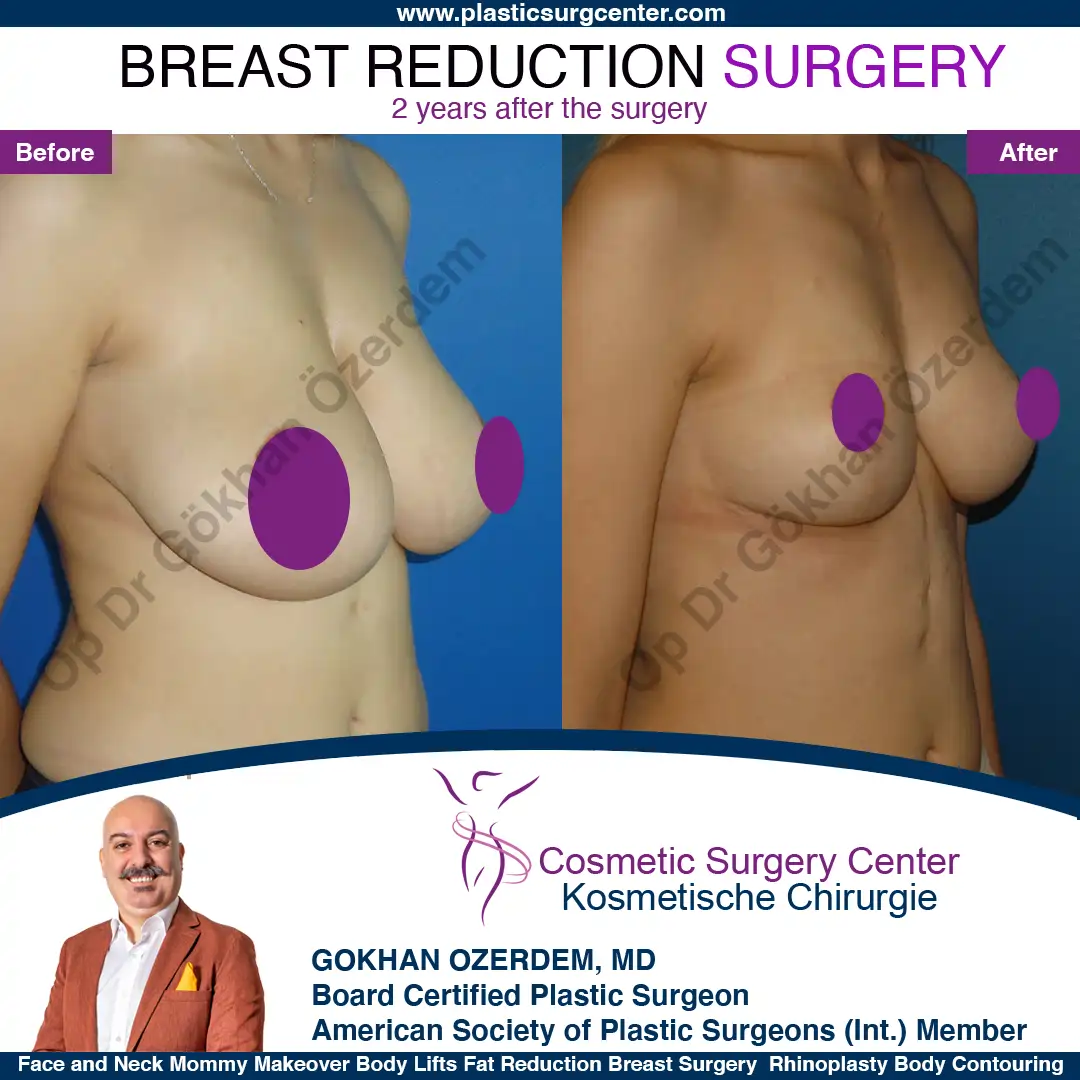
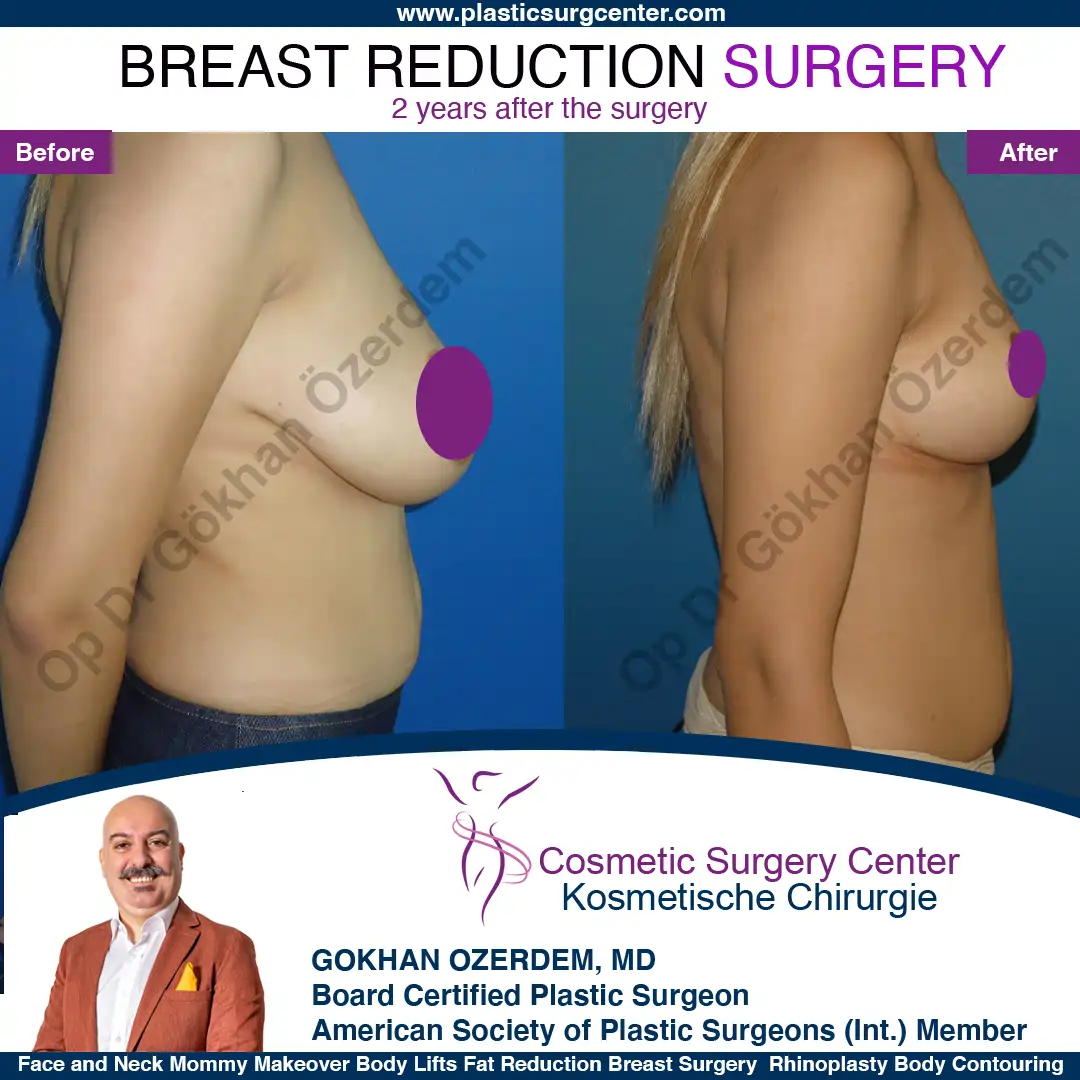
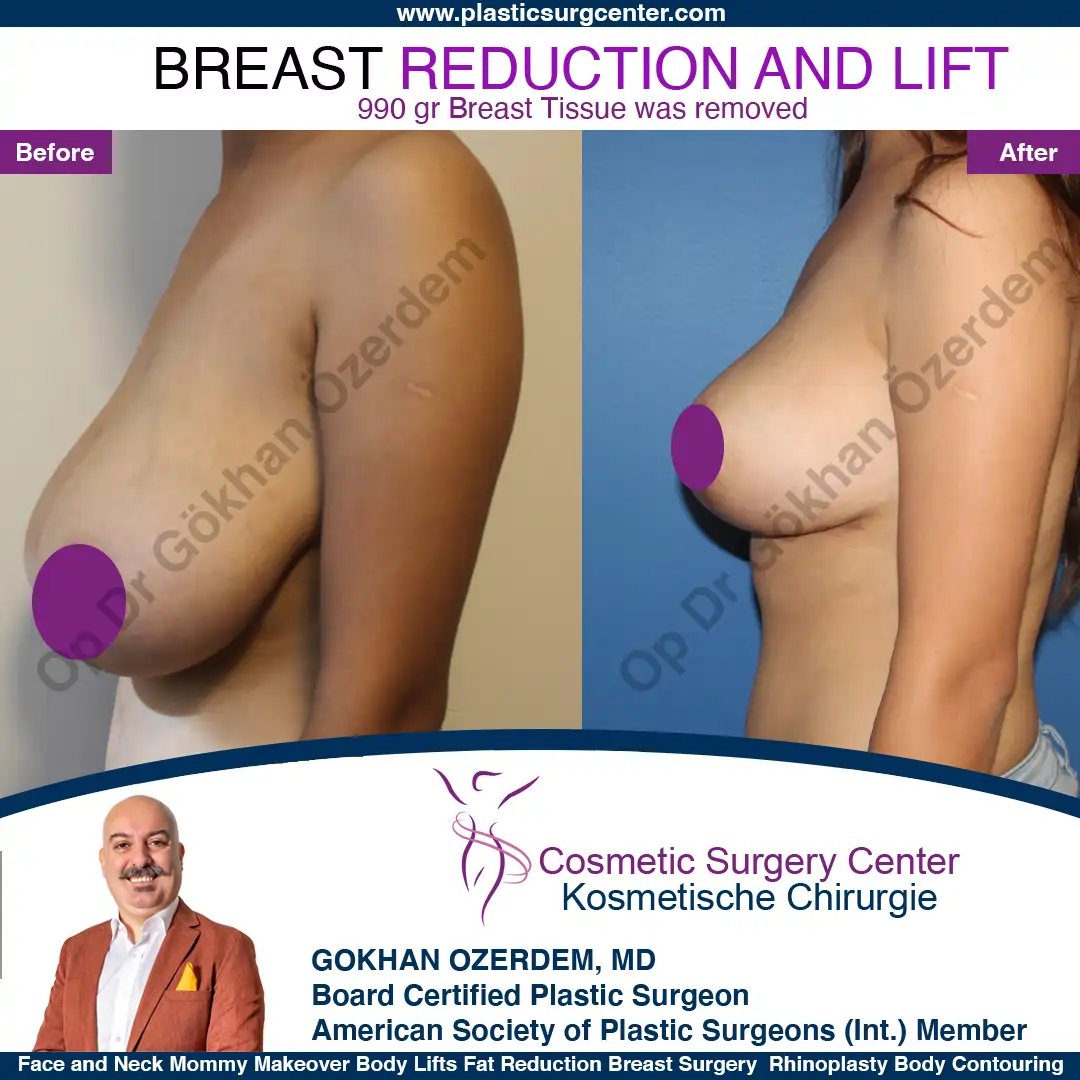
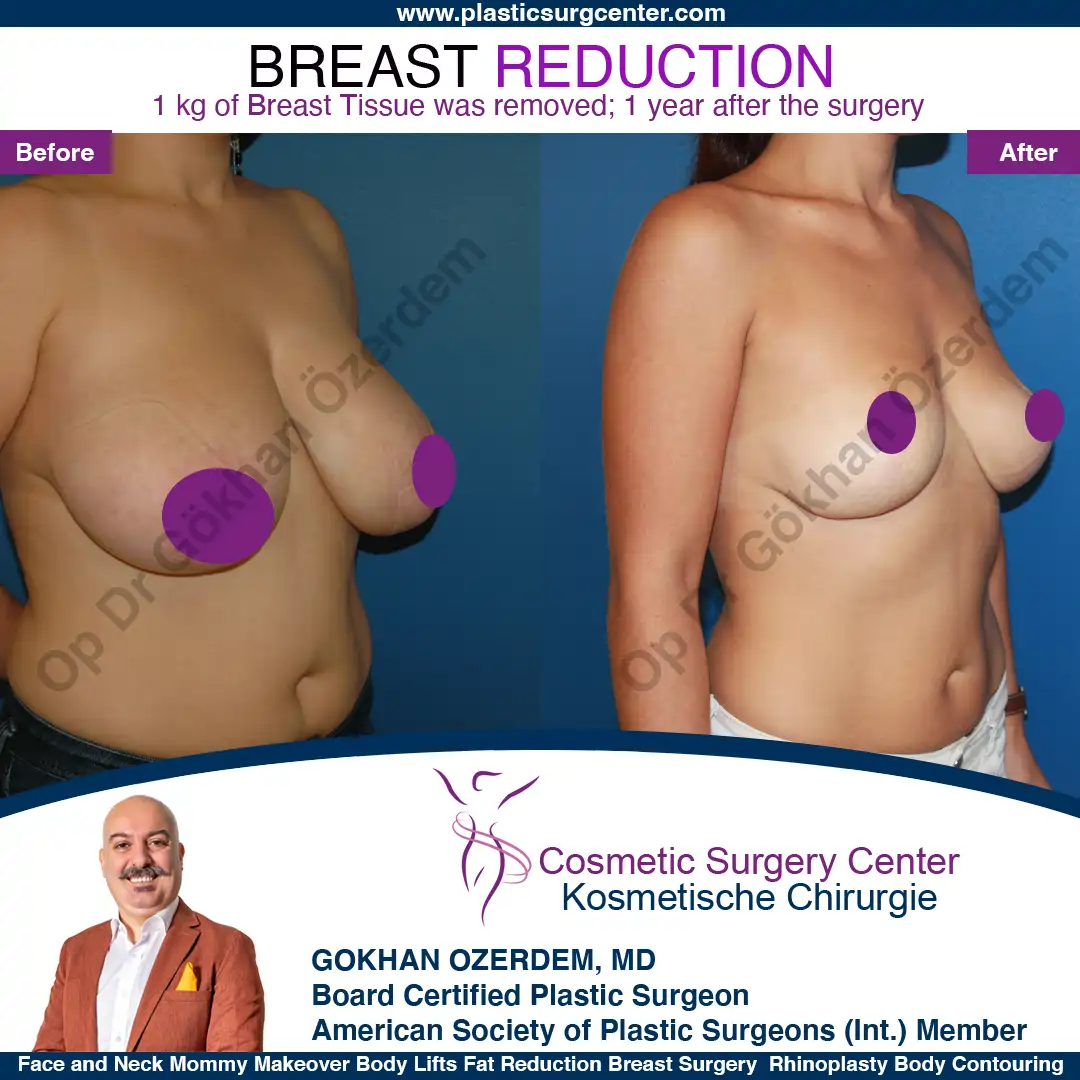
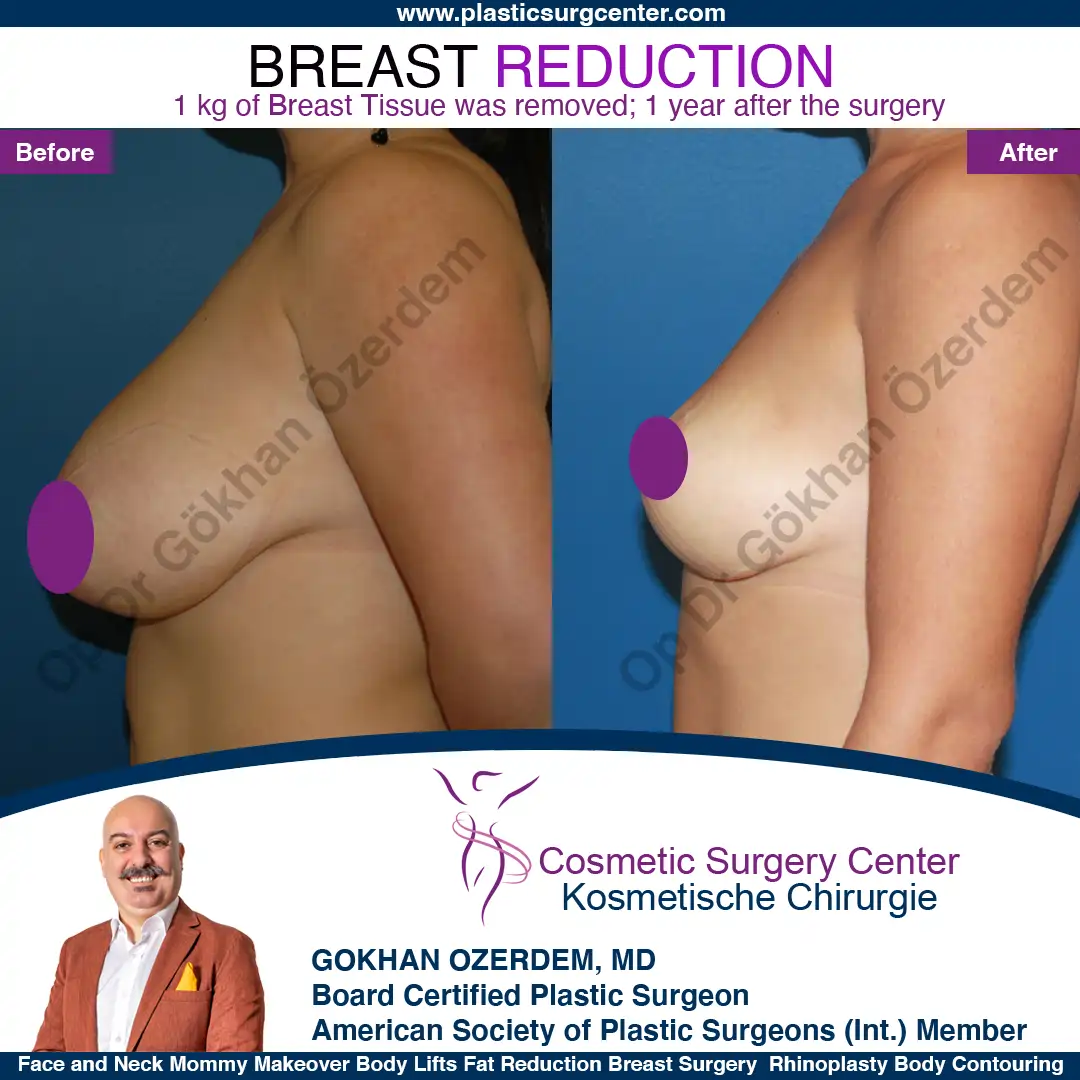
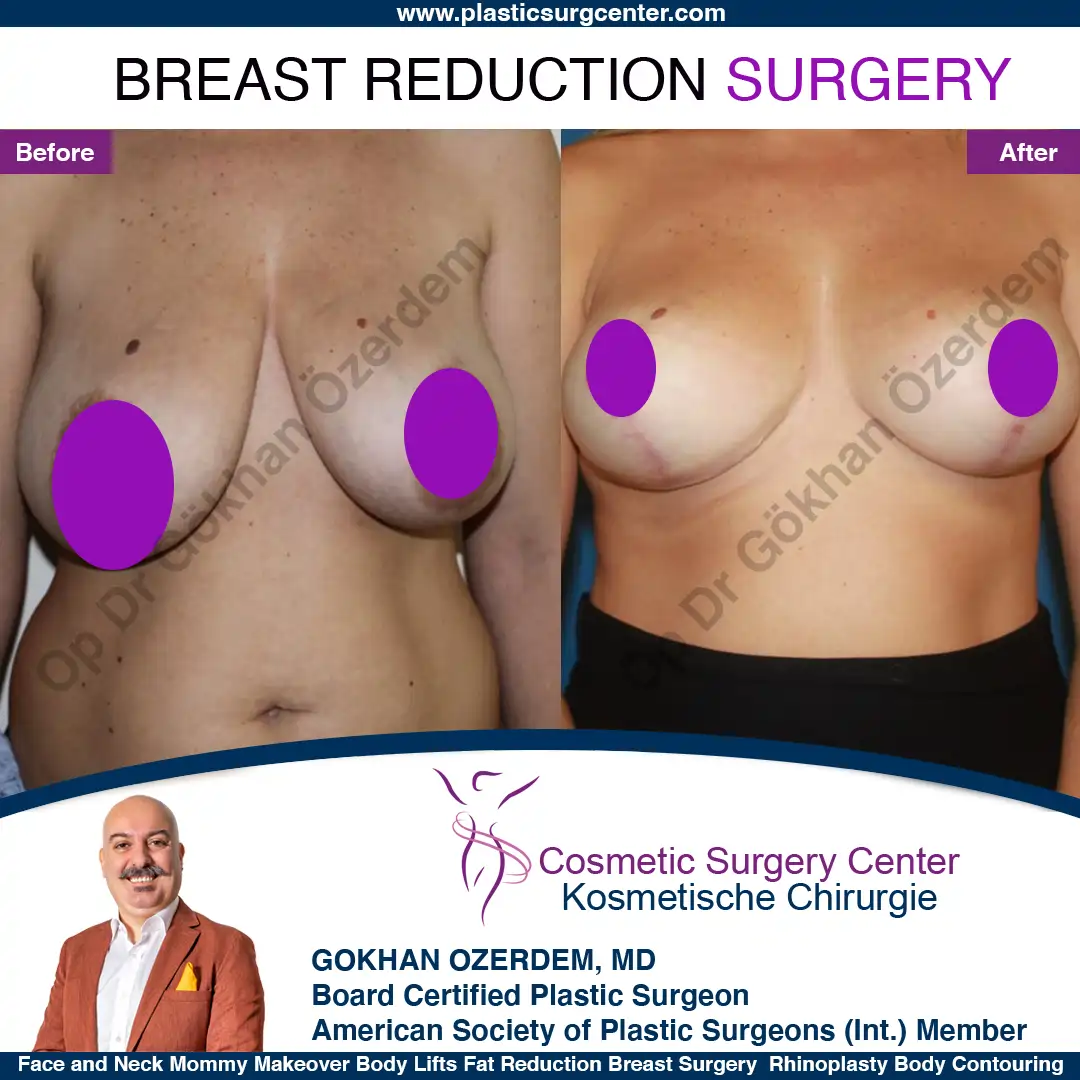
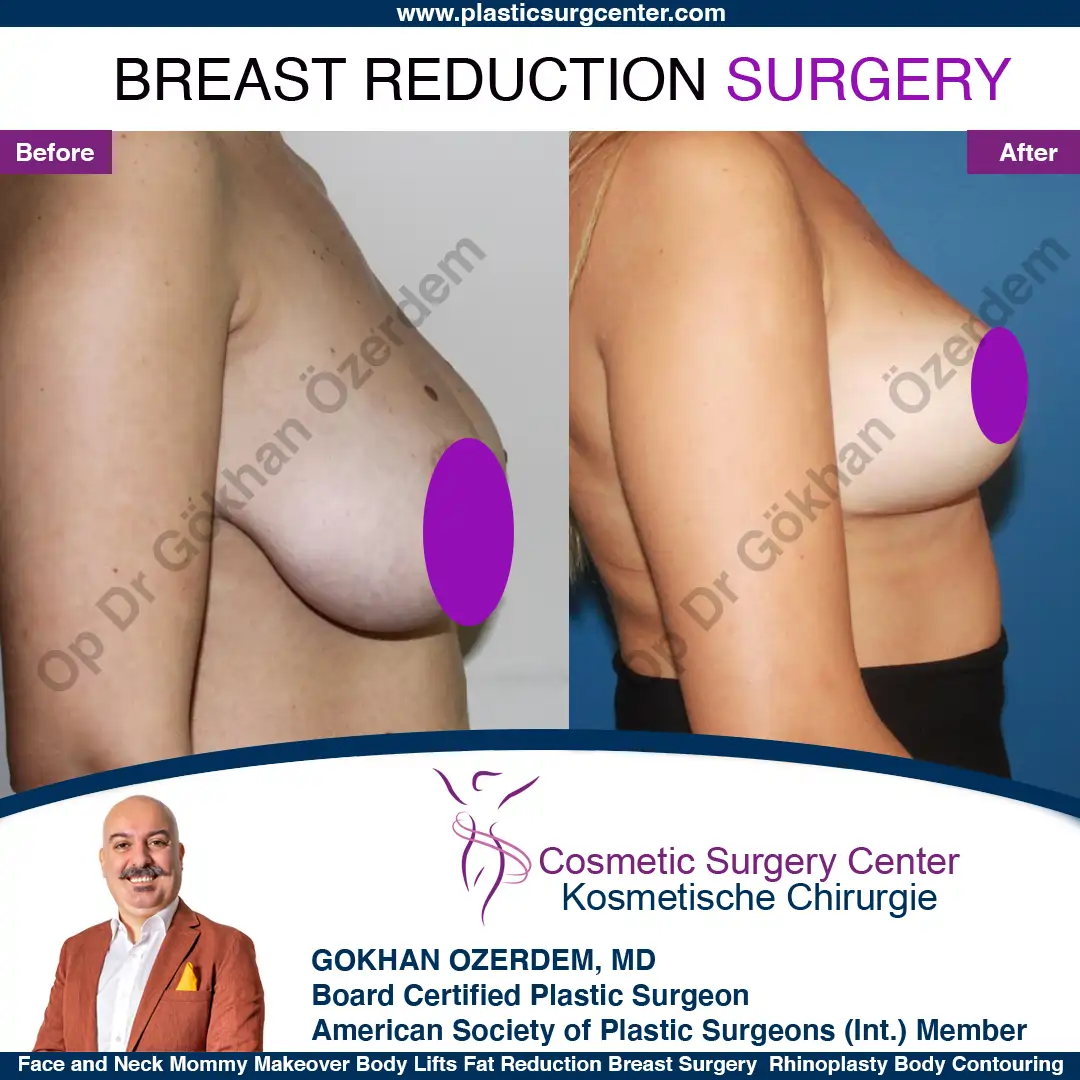
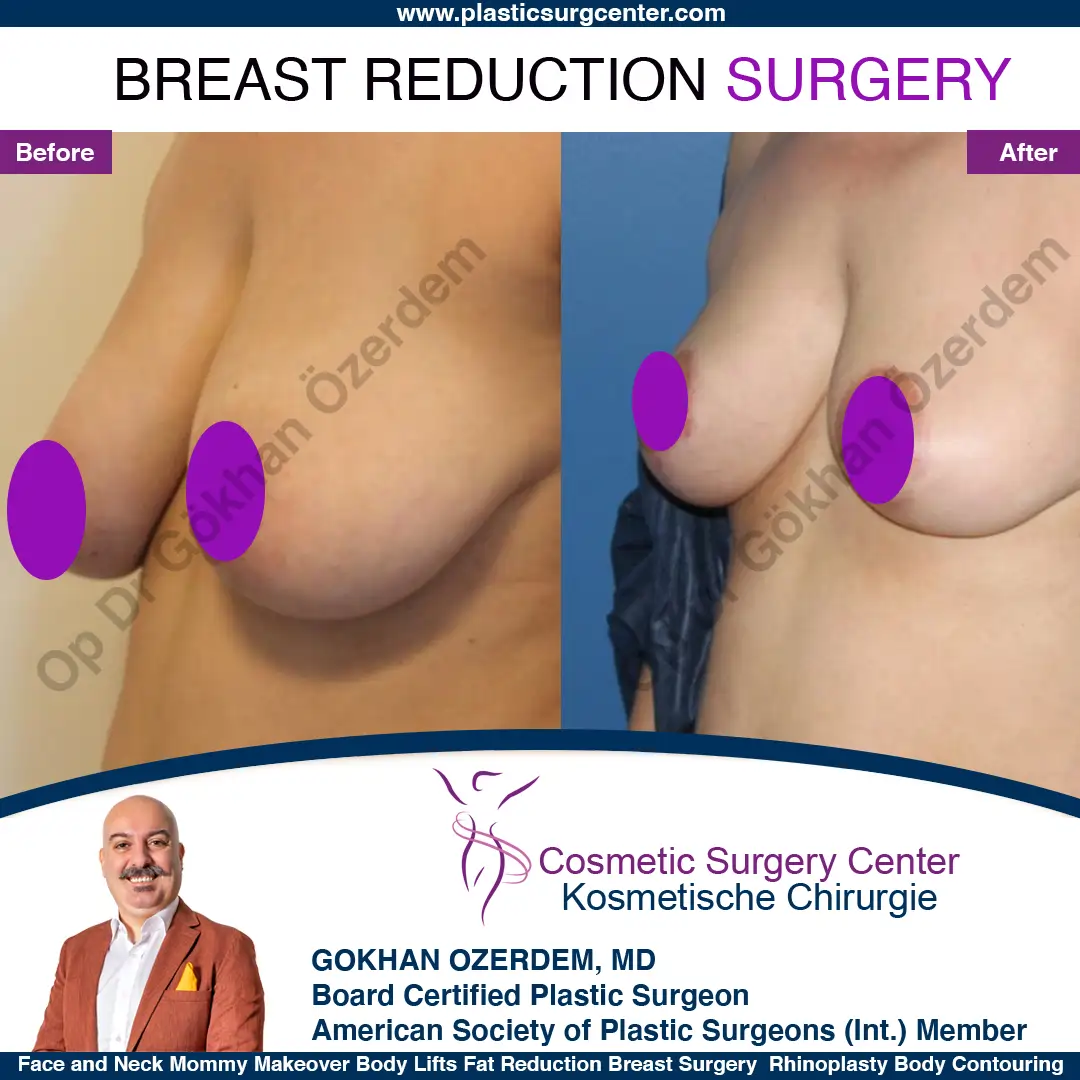
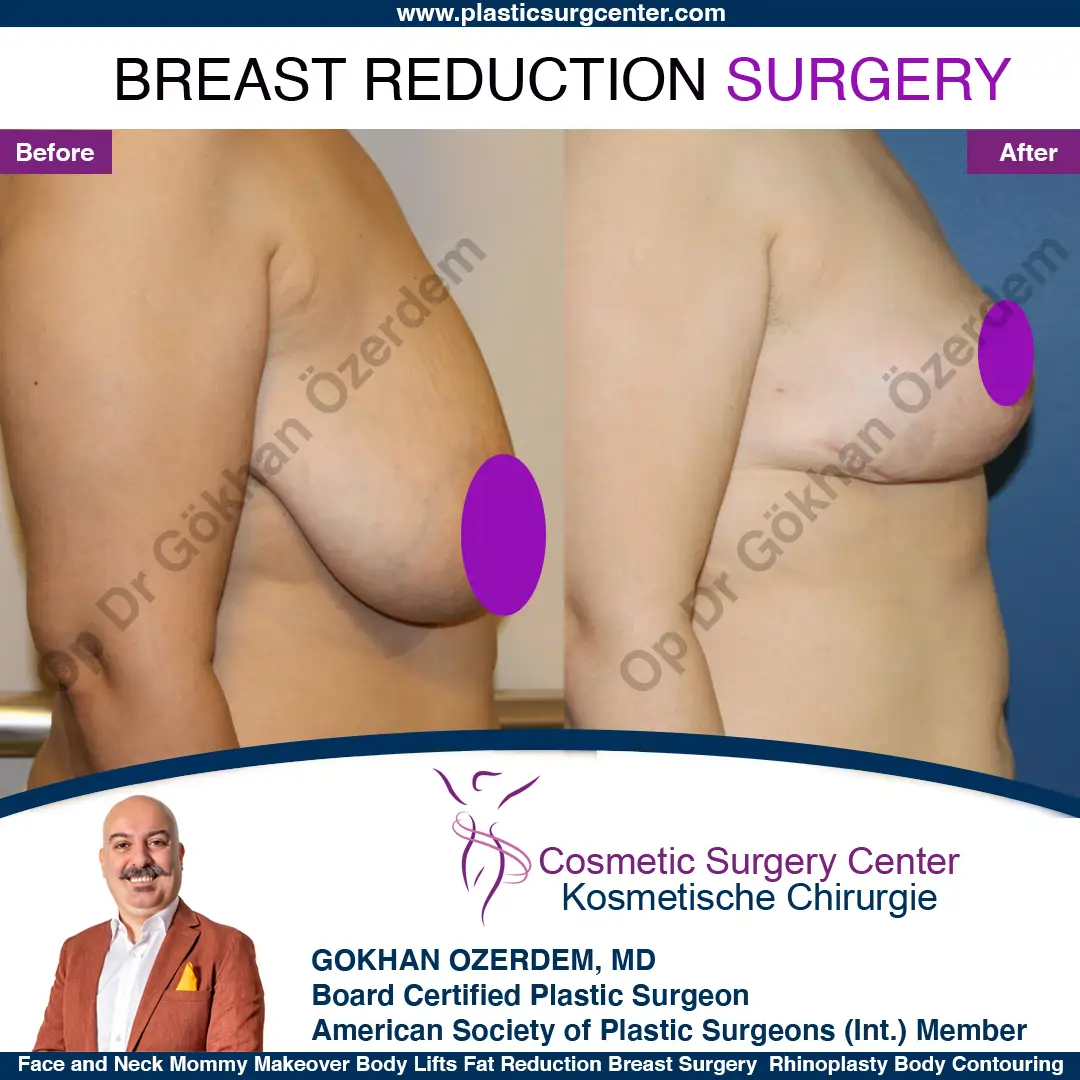
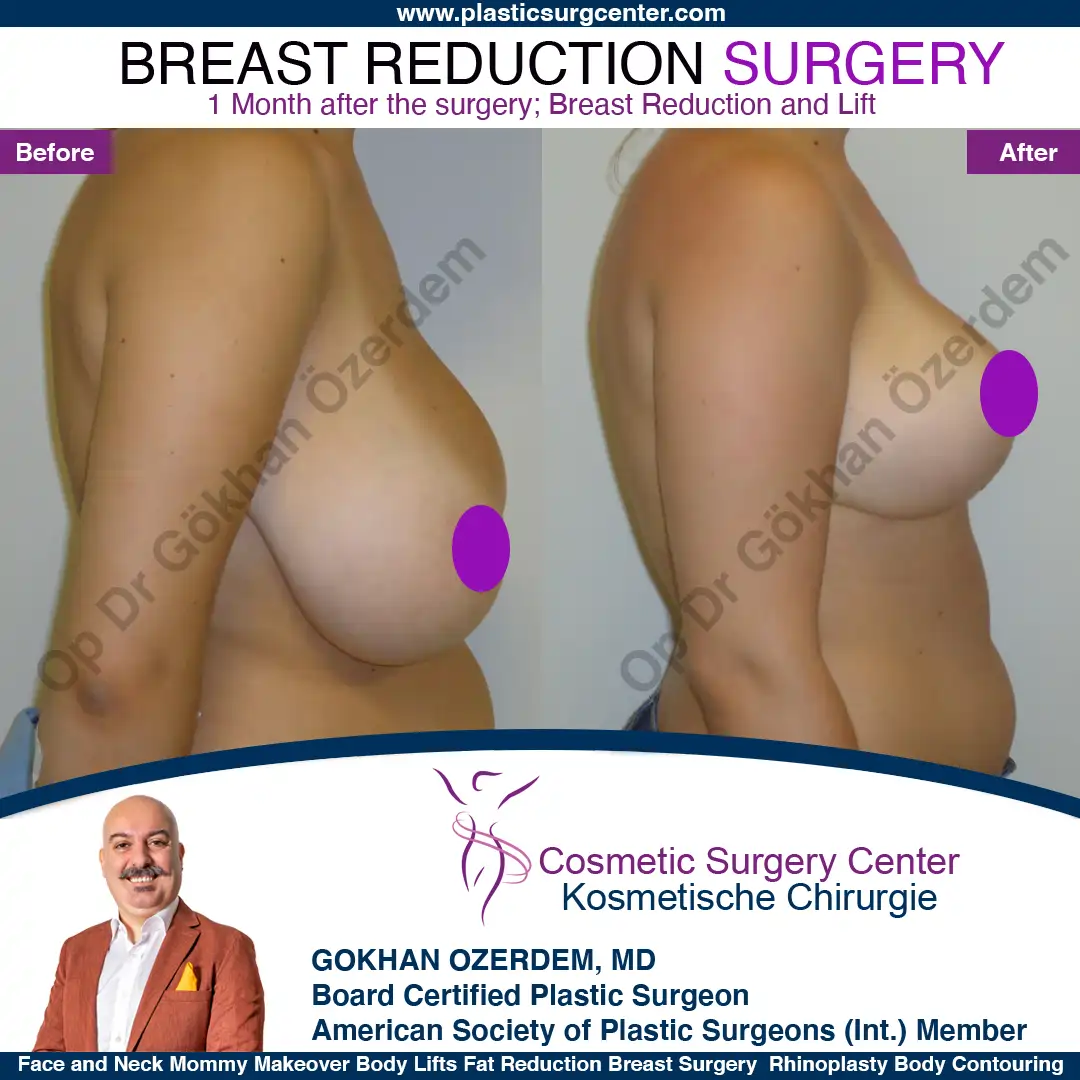
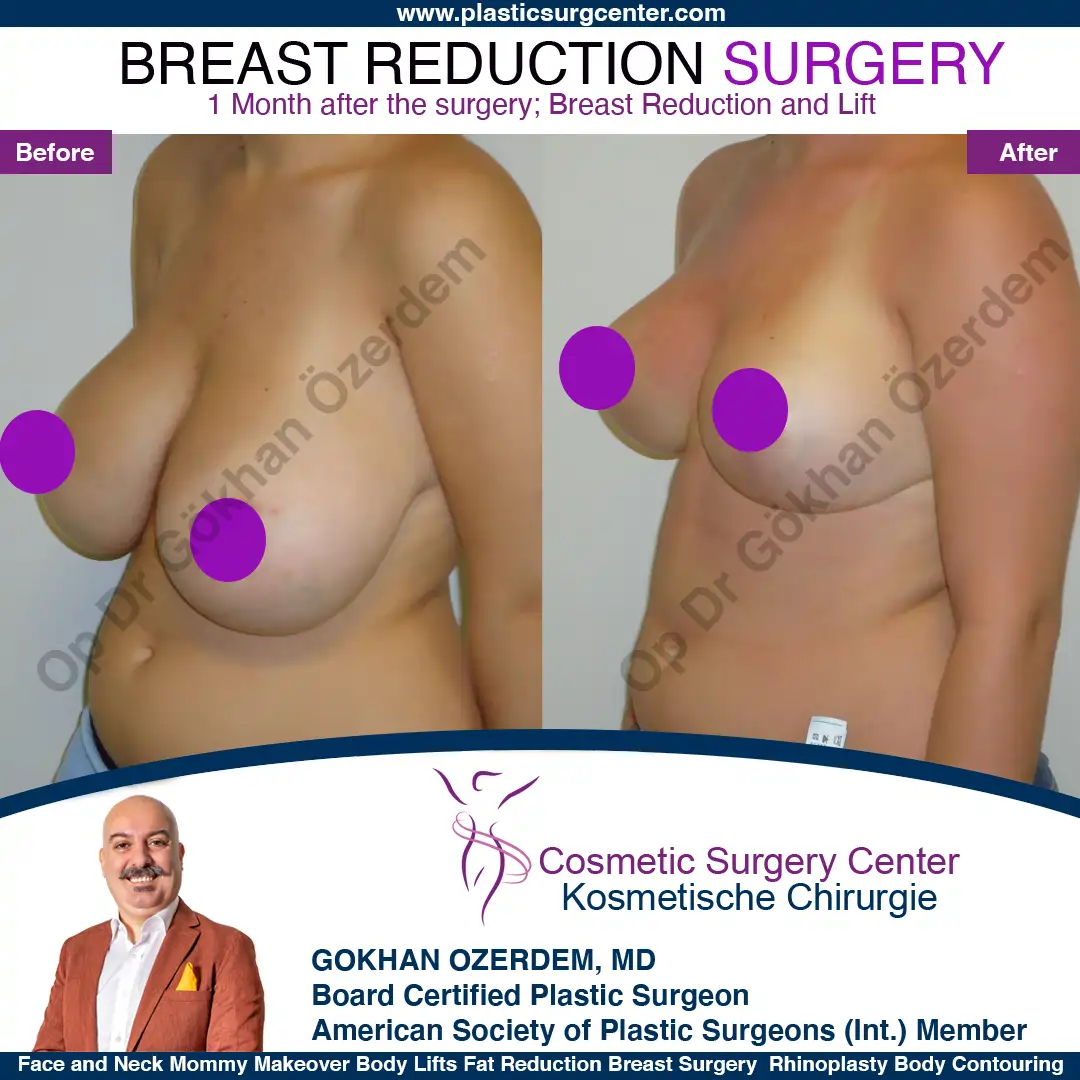
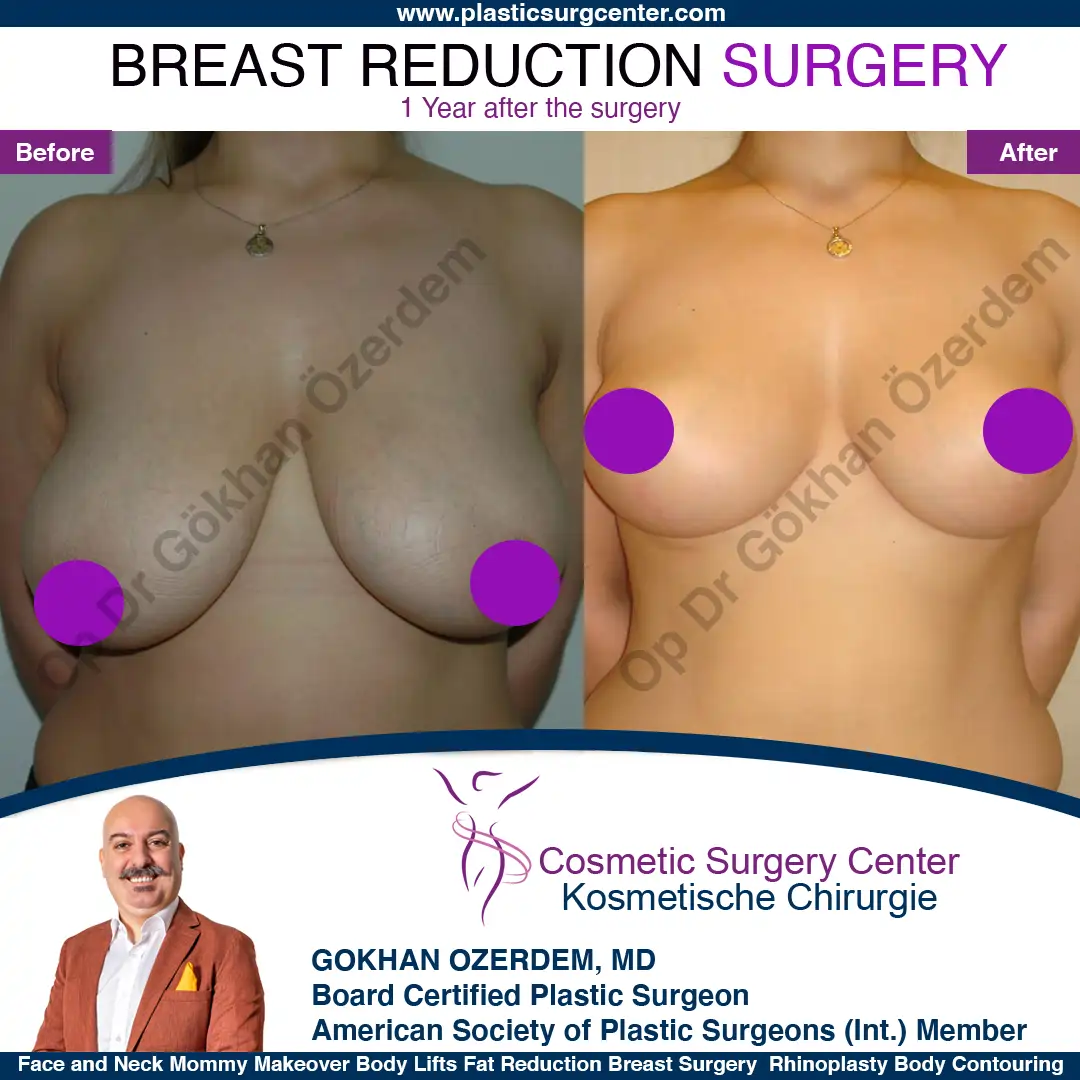
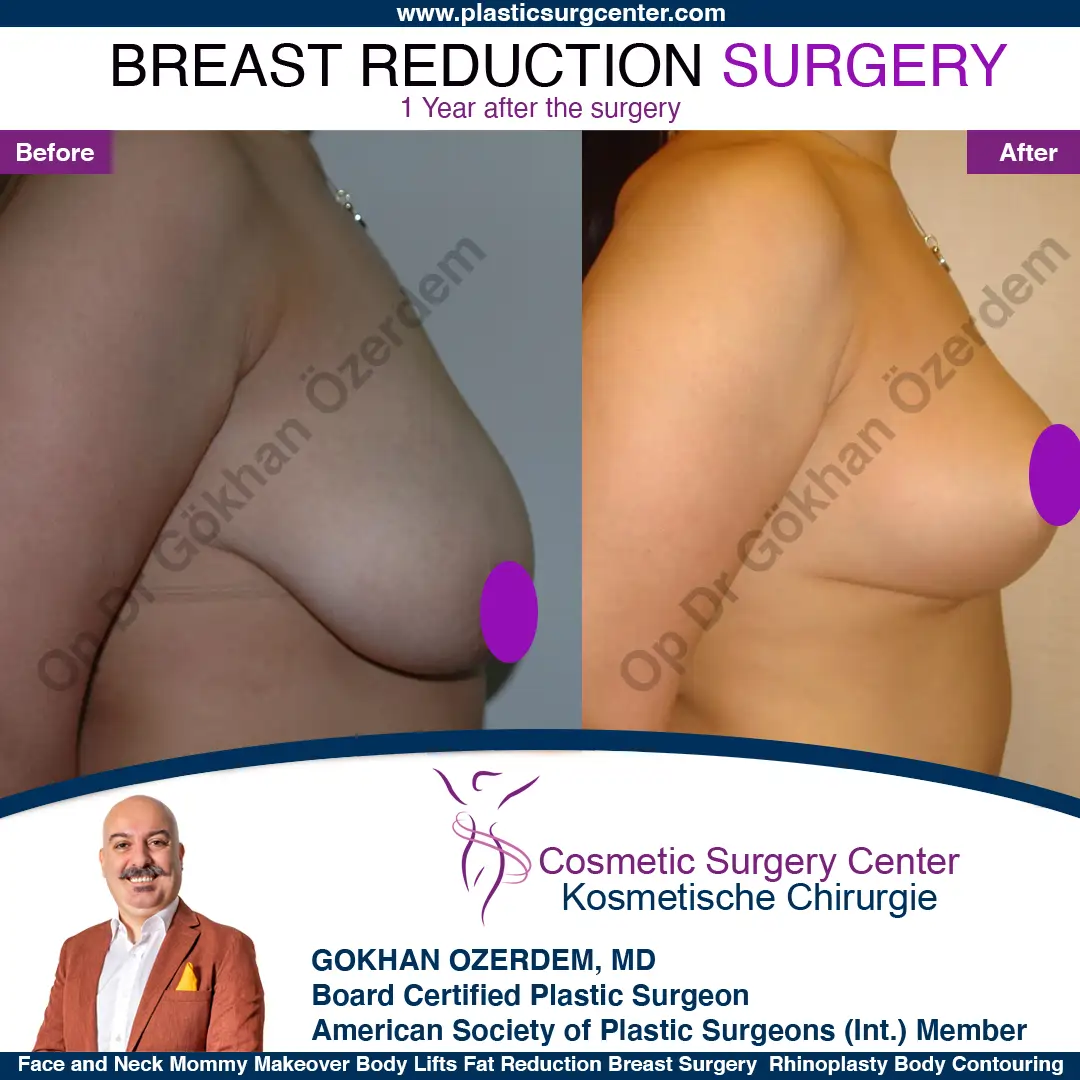
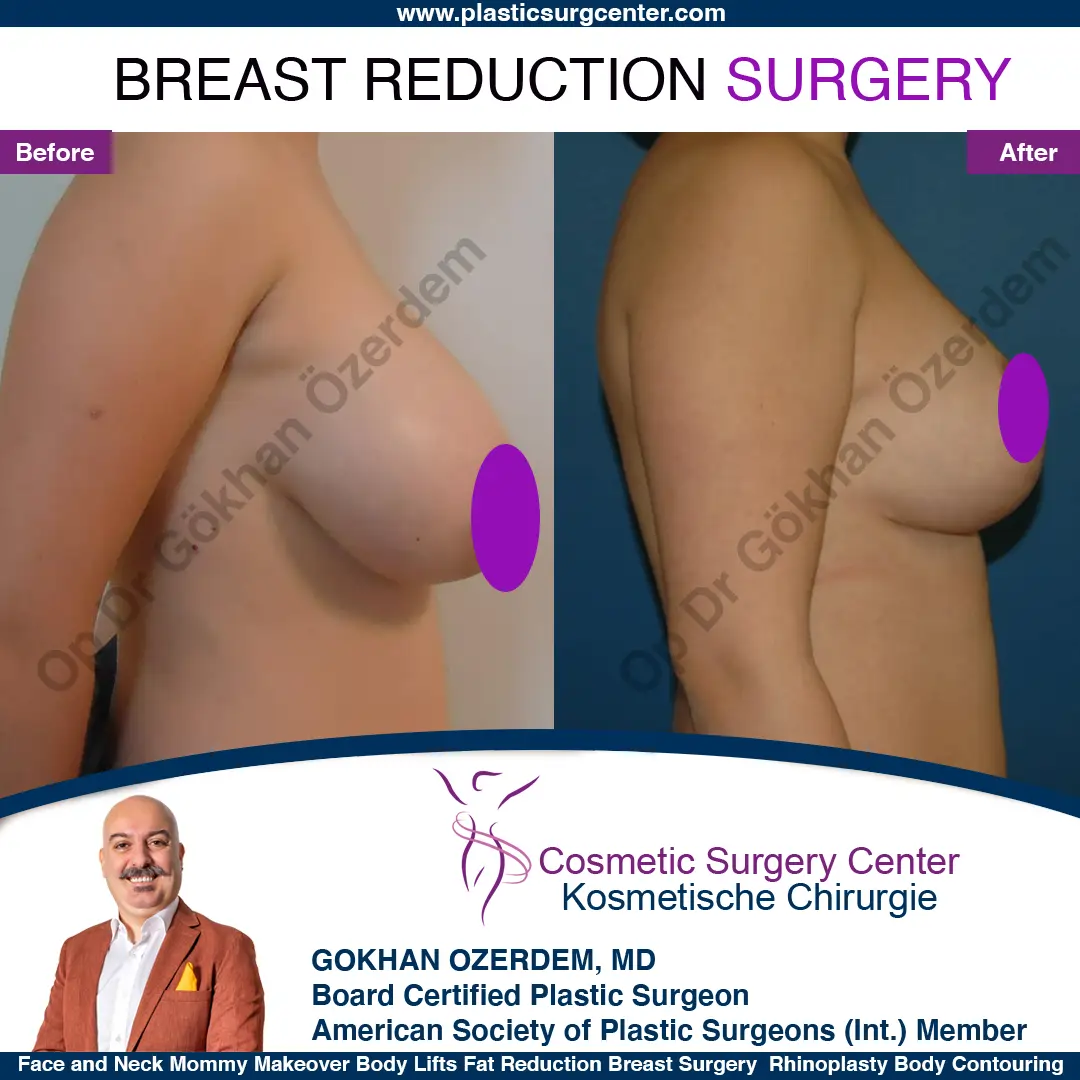
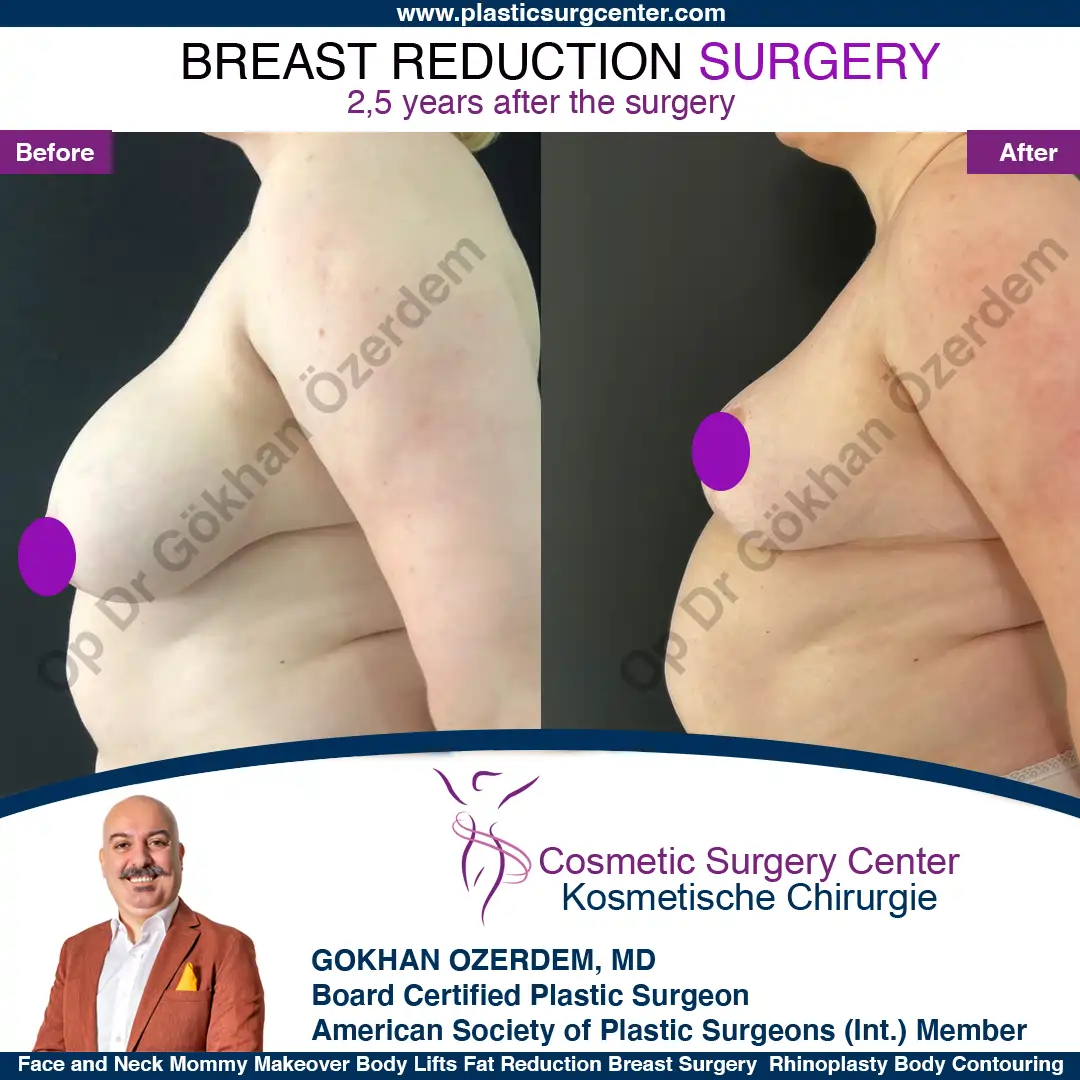
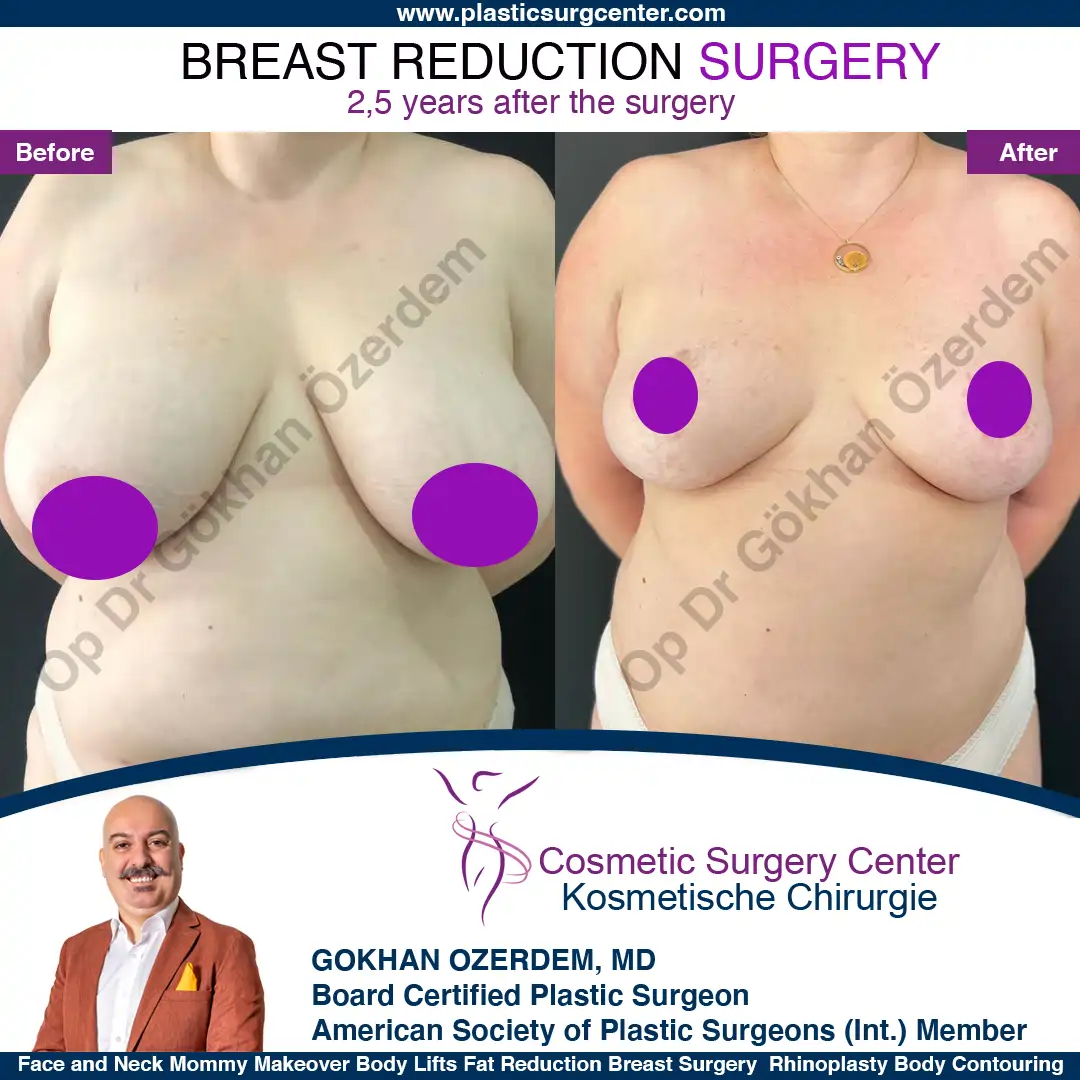
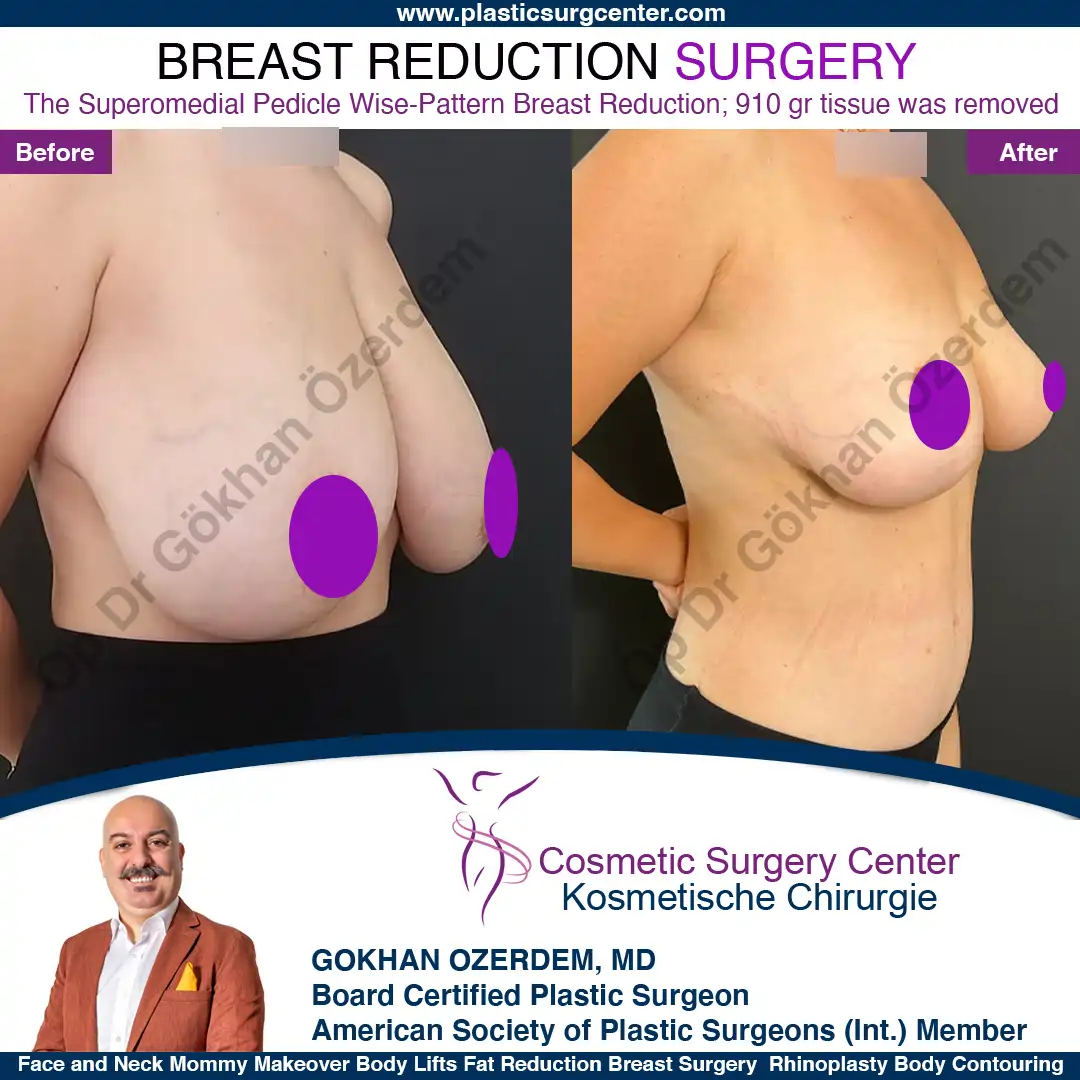
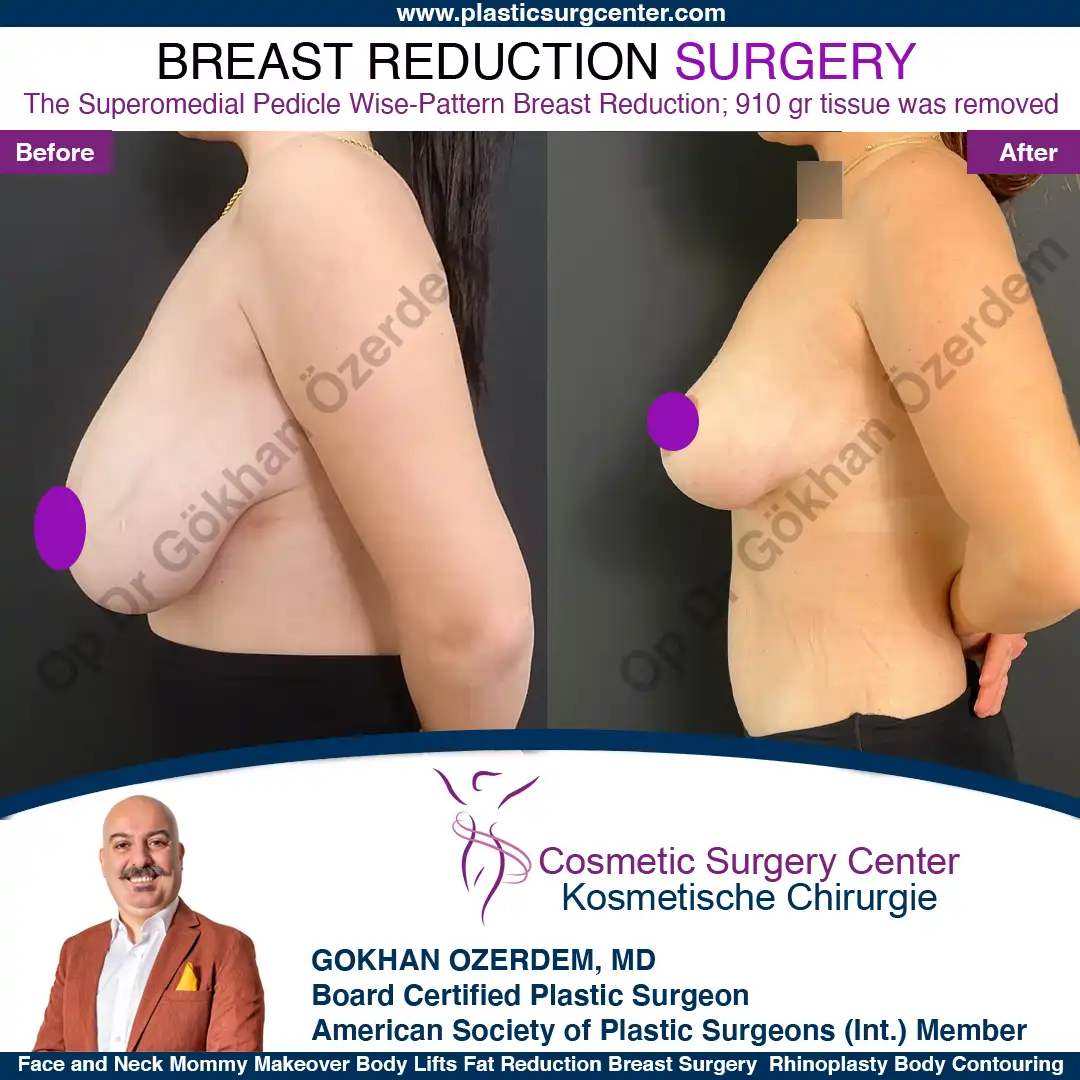
Breast Reduction Before and After
Reduction Mammoplasty Results
[BREAST REDUCTION BEFORE & AFTER GALLERY]
Before and after photographs can help demonstrate changes in:
- Breast volume
- Breast position
- Nipple position
- Breast shape
- Overall body proportion
However, patients should not select a desired result simply by choosing another woman’s photograph.
Breast width, starting volume, skin quality, degree of sagging and body proportions differ considerably.
Previous patient photographs should therefore be viewed as examples of individual surgical outcomes.
Where Is the Incision?
Inframammary Incision
For breast augmentation, I commonly use an inframammary incision.
This incision is positioned in or close to the natural fold beneath the breast.
I prefer this approach because it provides controlled access to the implant pocket and allows precise placement of the implant.
The scar is positioned where it can usually be concealed beneath the breast.
Initially, the scar may appear pink, firm or more visible.
It generally becomes softer and less conspicuous as it matures.
No surgical scar can be guaranteed to become completely invisible.
Breast Reduction Scars
Why Scars Are Necessary
Breast reduction requires removal of skin and breast tissue.
For this reason, scars are unavoidable.
The scar pattern depends on the amount of reduction, degree of sagging and surgical technique.
Common scar patterns may include:
- A scar around the areola
- A vertical scar from the areola towards the breast fold
- A scar within the inframammary fold
In larger reductions, an inverted-T or anchor-shaped scar pattern may be necessary.
I do not believe patients should be promised ‘scarless’ breast reduction when meaningful skin removal is required.
The objective is to position the scars appropriately and create a breast shape in which the benefits of surgery justify the scars.
How Do Breast Reduction Scars Change?
Scars evolve over time.
During early healing, they may appear:
- Pink or red
- Firm
- Raised
- More visible than expected
They generally soften and fade progressively as they mature.
Scar maturation can take many months and sometimes longer than a year.
The final appearance varies according to:
- Genetics
- Skin type
- Individual healing
- Smoking
- Tension on the wound
- Postoperative care
- Tendency towards hypertrophic or keloid scarring
No surgeon can guarantee an invisible scar.
Breast Reduction and Breast Asymmetry
Most women have some degree of natural breast asymmetry.
Differences may involve:
- Breast volume
- Breast width
- Nipple height
- Areola size
- Inframammary fold position
- Chest-wall shape
During breast reduction, I take these differences into consideration and aim to improve significant asymmetry where possible.
However, surgery cannot guarantee perfectly identical breasts.
Some underlying anatomical differences may remain even after a carefully performed operation.
Can Breast Reduction Improve Neck, Shoulder and Back Discomfort?
Many women with very large breasts report physical symptoms such as neck, shoulder and back discomfort.
Reducing breast weight can lessen this physical burden in appropriate patients.
However, pain can have many causes.
Spinal problems, posture, muscular conditions and other medical issues can also contribute to neck or back pain.
For this reason, breast reduction should not be presented as a guaranteed treatment for every type of back or neck pain.
When breast weight is an important contributing factor, many patients experience meaningful physical relief after surgery.
Bra-Strap Marks
Heavy breasts can place considerable pressure on bra straps.
Some patients develop deep grooves or persistent marks over the shoulders.
Reducing breast weight can reduce the load placed on the bra straps.
Existing skin changes may not disappear completely, but the pressure responsible for them can be significantly reduced.
Skin Irritation Beneath Large Breasts
The fold beneath a large breast can remain warm and moist, particularly in hot climates.
This can contribute to:
- Redness
- Irritation
- Chafing
- Recurrent rashes
- Difficulty maintaining dryness
Reducing breast size and improving the breast position can reduce the depth and weight of the breast fold.
However, any active skin infection or significant dermatological problem should be treated appropriately.
Breast Reduction and Exercise
Large breasts can make exercise uncomfortable.
Running and other high-impact activities may be particularly difficult despite supportive clothing.
Some women also avoid certain activities because of breast movement, weight or discomfort.
After recovery from breast reduction, many patients find physical activity easier.
However, exercise must be restricted during the postoperative healing period and resumed gradually.
Will I Lose Nipple Sensation?
Changes in nipple or breast sensation can occur after breast reduction.
Temporary numbness or altered sensation is relatively common during early healing.
For most patients, sensation improves as the tissues recover.
However, permanent reduction or alteration of nipple sensation is possible.
The risk depends partly on:
- Breast size
- Degree of reduction
- Nipple position
- Surgical technique
- Individual healing
Although permanent significant sensory change is uncommon in routine cases, it cannot be completely excluded.
Can I Breastfeed After Breast Reduction?
Many women can breastfeed after breast reduction, but future breastfeeding cannot be guaranteed.
The ability to breastfeed depends on:
- Surgical technique
- Amount of tissue removed
- Preservation of glandular connections
- Individual breast anatomy
- Future pregnancy-related factors
Women who have not completed their families should discuss future pregnancy and breastfeeding plans before surgery.
I believe this is particularly important for younger patients.
Breast Reduction Before or After Pregnancy?
Breast reduction can be performed before pregnancy, but pregnancy and breastfeeding may subsequently change breast size and shape.
The breasts may enlarge during pregnancy and lose volume or descend afterwards.
For women planning pregnancy in the near future, postponing surgery may sometimes be reasonable.
However, women experiencing significant physical or psychological problems because of very large breasts may decide not to wait for an uncertain future date.
The decision should therefore be individual.
What Happens If I Lose Weight After Breast Reduction?
Significant weight loss can reduce breast volume and may cause additional skin laxity or sagging.
For patients planning major weight loss, it may be preferable to approach a stable weight before surgery.
Smaller normal weight fluctuations are different from substantial weight reduction.
Stable body weight generally helps maintain the surgical result.
Breast Reduction After Major Weight Loss
Patients who have lost a large amount of weight may have a combination of:
- Reduced breast volume
- Significant loose skin
- Severe breast sagging
- Low nipple position
In these patients, the operation may function more as a breast reshaping or lifting procedure, with the amount of actual breast tissue reduction depending on the remaining volume.
Surgical planning is therefore different from breast reduction in a patient with very large, heavy glandular breasts.
Will I Need a Breast Implant After Breast Reduction?
Usually not.
The purpose of breast reduction is to reduce and reshape the patient’s own breast tissue.
However, breast shape and upper-pole fullness vary considerably between patients.
In selected situations, a patient may later consider additional procedures depending on her desired breast shape.
I do not routinely add an implant to a standard breast reduction.
The first priority is to create an appropriate result using the patient’s remaining breast tissue.
Anaesthesia and Hospital
I perform breast reduction under general anaesthesia in a fully equipped hospital in Antalya, Turkey.
Breast reduction is a significant surgical procedure.
Before surgery, appropriate medical assessment is completed.
The duration of surgery depends on:
- Breast size
- Degree of sagging
- Amount of reduction
- Asymmetry
- Surgical technique
Patient safety is more important than completing the operation within a predetermined time.
Recovery After Breast Reduction
Swelling, bruising, tightness and discomfort are expected during the early recovery period.
The breasts may initially appear relatively high, firm or swollen.
This is not the final result.
During recovery, patients should follow instructions regarding:
- Surgical bra
- Wound care
- Showering
- Sleeping position
- Arm movement
- Medication
- Driving
- Lifting
- Exercise
- Smoking
- Scar care
Recovery varies between patients.
The amount of surgery and individual healing both influence the timetable.
When Can I Return to Work?
Return to work depends on the type of work and individual recovery.
Patients with non-physical jobs may return earlier than those whose work involves:
- Heavy lifting
- Repetitive arm movement
- Physical exertion
Feeling well enough to work does not mean that the internal tissues have completely healed.
Activity should therefore increase gradually.
When Can I Exercise?
Walking is encouraged during recovery, but strenuous exercise should be avoided initially.
Heavy lifting, running and intensive upper-body exercise require a longer recovery period.
I provide an individual postoperative timetable according to healing.
Returning to strenuous activity too early can place unnecessary stress on the surgical wounds.
When Will My Breasts Reach Their Final Shape?
The breasts are swollen during early recovery.
They may initially appear:
- High
- Firm
- Uneven
- More projected than expected
As swelling decreases and the tissues relax, the breast shape gradually becomes more natural.
Changes continue for several months.
Scars mature even more slowly.
For this reason, neither breast shape nor scar quality should be judged too early.
How Long Do Breast Reduction Results Last?
Breast reduction can provide a long-lasting change in breast size and shape.
However, surgery cannot stop future changes caused by:
- Ageing
- Gravity
- Pregnancy
- Breastfeeding
- Weight gain
- Weight loss
- Changes in skin elasticity
Maintaining a relatively stable weight can help preserve the result.
The breasts will continue to age naturally after surgery.
Risks and Limitations of Breast Reduction
Breast reduction is a major surgical procedure and has potential risks.
These may include:
- Bleeding
- Infection
- Haematoma
- Seroma
- Delayed wound healing
- Wound separation
- Unfavourable or widened scars
- Hypertrophic or keloid scarring
- Breast asymmetry
- Changes in breast or nipple sensation
- Partial or complete loss of nipple–areola tissue in rare cases
- Fat necrosis
- Changes in breast shape
- Difficulty breastfeeding
- Need for revision surgery
- Anaesthetic complications
- Blood-clot-related complications
Risk varies according to the patient’s health, breast size, type of surgery and other factors.
Smoking is particularly important because nicotine can impair blood supply and wound healing.
Individual risks are discussed before surgery.
Breast Reduction in Turkey for International Patients
Travelling to Antalya for Breast Reduction Surgery
International patients considering breast reduction can begin with a preliminary assessment before travelling to Turkey.
My team may request:
- Medical history
- Current medication
- Previous breast surgery
- Pregnancy and breastfeeding history
- Relevant breast conditions
- Previous breast imaging where appropriate
- Smoking history
- Photographs for preliminary assessment
You should also explain the physical symptoms associated with your breast size and how much reduction you hope to achieve.
Photographs can provide useful preliminary information, but they do not replace physical examination.
The final surgical plan is confirmed after I examine you personally in Antalya.
Breast Imaging Before Surgery
Depending on the patient’s age, history and individual breast-health considerations, appropriate breast imaging may be recommended before surgery.
This may include mammography, ultrasound or another investigation when clinically indicated.
Breast reduction is aesthetic and reconstructive surgery, but routine breast-health assessment should not be ignored.
Any suspicious breast finding requires appropriate investigation before elective surgery proceeds.
How Long Should I Stay in Antalya After Breast Reduction?
Breast reduction is more extensive than many minor aesthetic procedures.
For international patients, I generally recommend planning approximately 7–10 days in Antalya, although some patients may require a different period depending on surgery and recovery.
This allows time for early postoperative monitoring and the necessary controls before travelling home.
I prefer patients to leave Antalya when their early recovery is satisfactory rather than simply choosing the earliest possible flight.
Why Choose Dr Gökhan Özerdem for Breast Reduction?
Breast reduction requires more than removing tissue.
The surgeon must decide:
- How much breast tissue should be removed
- How much should remain
- How the breast should be reshaped
- Where the nipple should be positioned
- How the nipple blood supply can be preserved
- Which scar pattern is appropriate
- How existing asymmetry should be managed
- What size is realistic for the patient’s anatomy
With more than 25 years of surgical experience, I plan breast reduction according to both physical symptoms and breast proportions.
I also explain the trade-off clearly:
A meaningful breast reduction requires scars.
For many women with large and heavy breasts, the reduction in weight and improvement in breast proportion make that trade-off worthwhile.
The goal is not simply to remove as much breast tissue as possible. It is to create a lighter breast with an appropriate shape while respecting tissue safety.
Frequently Asked Questions About Breast Reduction
No. Although breast shape and proportion improve, many patients also seek surgery because of physical problems associated with large, heavy breasts.
Usually, yes. Large breasts commonly have significant sagging, so the remaining breast tissue is reshaped and the nipple repositioned as part of the reduction.
This depends on your starting breast size, anatomy, nipple position, tissue quality and desired result. There are surgical limits to how much tissue can appropriately be removed.
No. Bra cup sizing is inconsistent between brands and countries. I can discuss the expected degree of reduction, but I do not guarantee a specific cup size.
In most breast reductions, the nipple–areola complex is repositioned to a more appropriate level while maintaining its connection to breast tissue and blood supply.
If the areolae are enlarged, their diameter can usually be reduced during breast reduction.
The scar pattern depends on the degree of reduction and sagging. It may include scars around the areola, vertically down the breast and within the breast fold.
Meaningful breast reduction requires incisions and therefore scars. Claims of completely scarless reduction should be approached cautiously.
When breast weight contributes significantly to physical discomfort, reducing that weight can provide meaningful relief. However, not every cause of neck or back pain is related to the breasts.
Temporary sensory changes can occur. Permanent changes are possible but significant permanent sensory loss is uncommon in routine cases. The risk varies according to the extent and technique of surgery.
Many women can breastfeed after breast reduction, but future breastfeeding cannot be guaranteed. Women planning future pregnancies should discuss this before surgery.
Not necessarily. If pregnancy is planned soon, postponing surgery may be reasonable because pregnancy can change the result. However, the decision depends on your circumstances and symptoms.
If you are planning major weight loss, reaching a more stable weight before surgery may provide a more predictable result. Significant weight loss after surgery can change breast volume and shape.
No surgeon can guarantee perfect symmetry. Natural differences exist before surgery and some asymmetry may remain afterwards.
Usually not. Standard breast reduction uses your own remaining breast tissue to create the new breast shape.
Patients generally experience tightness, tenderness and discomfort during early recovery. Appropriate postoperative pain medication is provided.
This depends on your recovery and the physical demands of your work. Non-physical work can generally be resumed sooner than jobs involving lifting or strenuous activity.
Walking begins early, while strenuous exercise and heavy lifting require a longer recovery period. I provide an individual timetable after surgery.
Results can be long-lasting, but the breasts continue to change with ageing, gravity, pregnancy and weight fluctuations.
Yes. Surgery can be performed during the summer, but swimming, strenuous activity and strong sun exposure to healing scars should be avoided during early recovery.
For many international breast reduction patients, I recommend approximately 7–10 days, although the final recommendation depends on surgery and early recovery.
Yes. Follow-up communication continues after you leave Turkey. Photographs may be requested, and local medical assessment may be advised if an in-person examination becomes necessary.
Considering Breast Reduction in Antalya, Turkey?
If large breasts are affecting your comfort, physical activity or body proportions, the most important question is not simply:
‘How many grams can be removed?’
The more useful questions are:
How much reduction is appropriate for your body? What breast shape can realistically be created? Where will the scars be? And how can the breast be made lighter while preserving appropriate tissue and nipple safety?
An initial assessment can help clarify these questions before you make your travel arrangements.
Dr Gökhan Özerdem
Specialist in Aesthetic, Plastic and Reconstructive Surgery
Antalya, Turkey
Contact Our International Patient Team
Request a Preliminary Breast Reduction Assessment
Face: – Rhinoplasty – Eyelid Surgery – Forehead and Brow Lift – Ear Surgery –
Breast: – Breast Augmentation – Breast Lift – Breast Reduction – Gynecomastia –
Body: – Tummy Tuck – Mini Tummy Tuck – Liposuction – Arm Lift – Thigh Lift – Body Contouring – Mommy Makeover –