

The eyes are often one of the first areas of the face to show visible signs of ageing.
Excess upper eyelid skin can make the eyes appear heavy or tired, while prominent fat pockets and loose skin around the lower eyelids may create a persistently fatigued appearance even when you feel well.
I am Dr Gökhan Özerdem, Specialist in Aesthetic, Plastic and Reconstructive Surgery in Antalya, Turkey. With more than 25 years of surgical experience, eyelid surgery is one of the facial rejuvenation procedures I perform regularly.
Upper eyelid surgery in particular can be a relatively straightforward procedure in appropriately selected patients. In many cases, it takes approximately 25–30 minutes, and the incision is positioned within the natural upper eyelid crease.
Despite being a relatively small operation, carefully performed eyelid surgery can make the entire face appear fresher and more alert.
The aim is not to change the shape or character of your eyes. It is to reduce the changes that make them look unnecessarily heavy or tired.
What Is Eyelid Surgery?
Eyelid surgery, medically known as blepharoplasty, is an operation that addresses excess skin and, where necessary, prominent or displaced fat around the upper or lower eyelids.
The procedure may involve:
- Upper eyelids
- Lower eyelids
- Both upper and lower eyelids
The anatomy and surgical requirements of these areas are different.
For this reason, I assess the upper and lower eyelids separately before deciding which procedure is appropriate.
Ageing can result in folds of excess skin in the upper eyelids and changes in the lower eyelids, while weakening of deeper tissues can allow orbital fat to become more prominent.
About Dr. Gökhan Özerdem
Specialist Plastic Surgeon in Antalya, Turkey
I am Dr Gökhan Özerdem, Specialist in Aesthetic, Plastic and Reconstructive Surgery, practising in Antalya, Turkey.
My professional background includes:
- More than 25 years of surgical experience
- Thousands of aesthetic and reconstructive surgical procedures
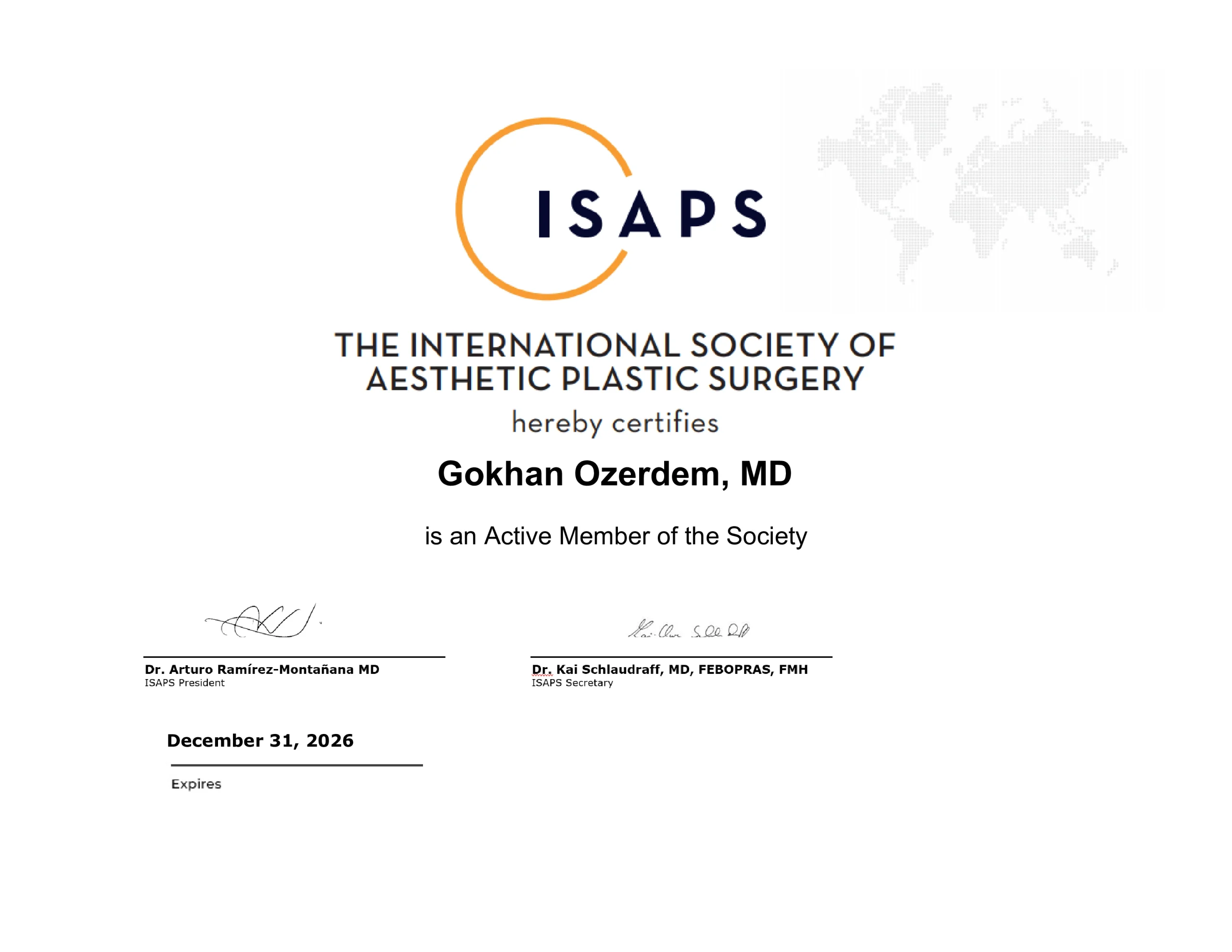
- Member of the International Society of Aesthetic Plastic Surgery (ISAPS)
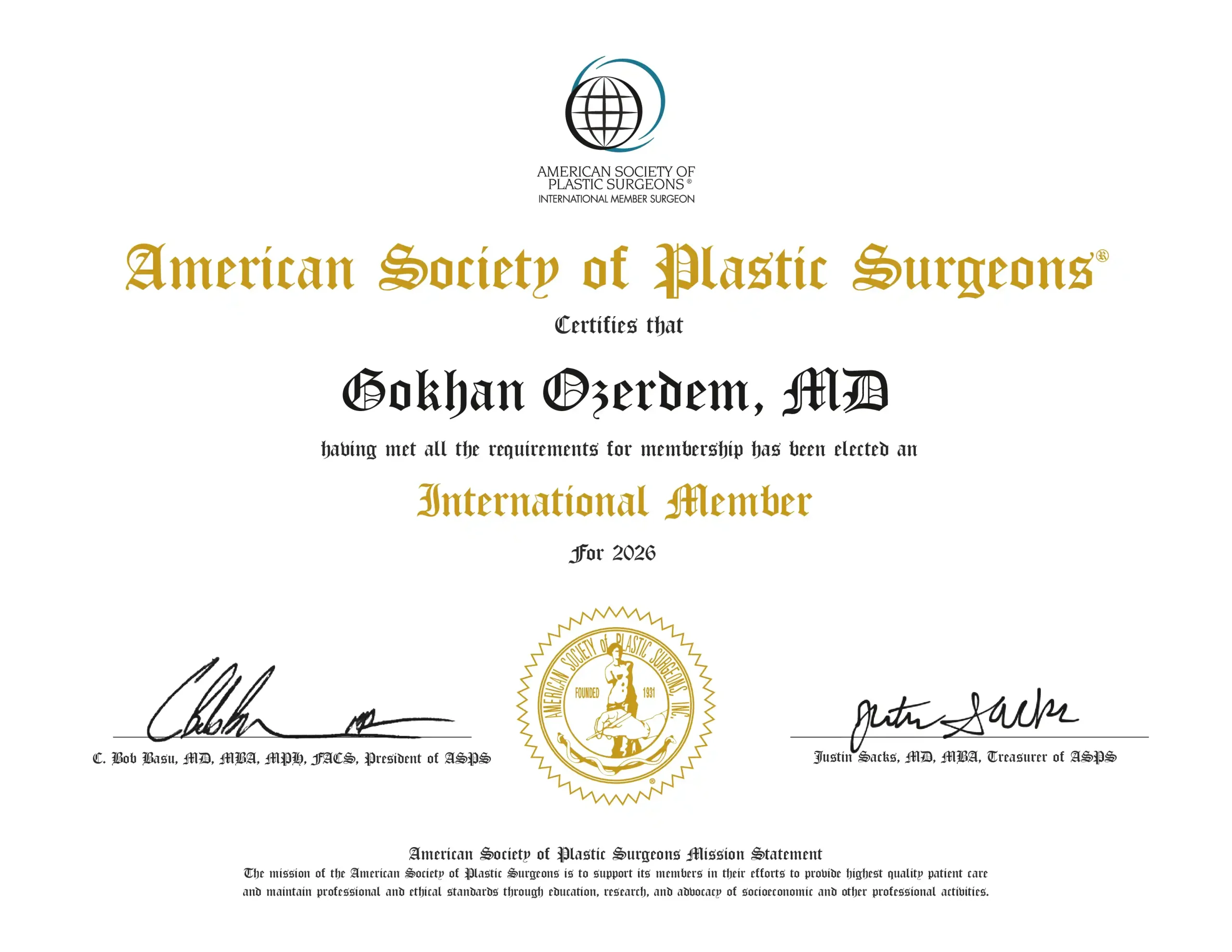
- Member of the American Society of Plastic Surgeons (ASPS)
- Member of the Turkish Society of Plastic, Reconstructive and Aesthetic Surgeons
- Member of the Turkish Society of Aesthetic Plastic Surgery
- Professional medical experience and licensing in Dubai
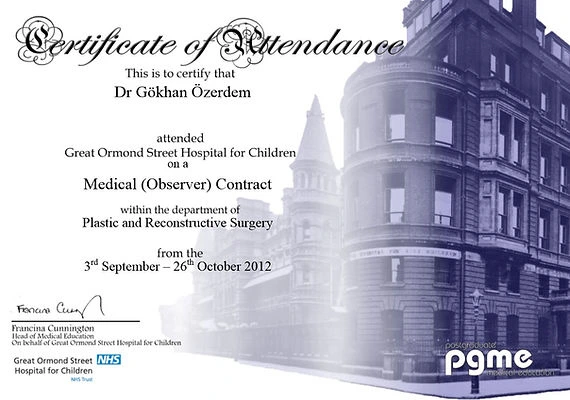
- Observer experience at Great Ormond Street Hospital for Children, London, UK
- Gamma Probe Course at Castle Hill Hospital, Hull, UK
- Oral and poster presentations at national and international scientific congresses
- Session chairmanship at the Turkish National Plastic Surgery Congress
- International scientific publications and academic work
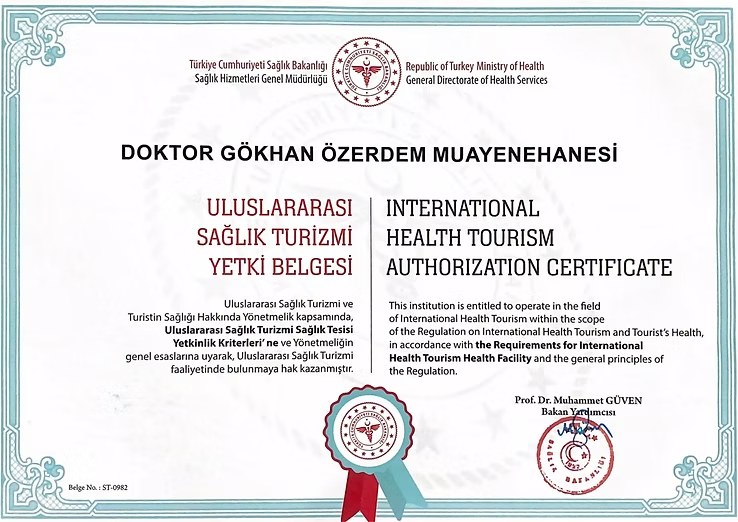
- Authorised to provide services to international patients under the relevant Turkish Ministry of Health International Health Tourism framework
Major surgical procedures are performed in fully equipped hospital facilities in Antalya with appropriate anaesthesia and medical support.
Upper Eyelid Surgery
Upper Blepharoplasty
Upper eyelid surgery is one of the procedures I frequently recommend when excess skin creates heaviness around the eyes.
With ageing, the upper eyelid skin can become loose and begin to fold over the natural eyelid crease.
Patients may describe their eyes as:
- Tired
- Heavy
- Hooded
- Older than they feel
- Less open than they used to be
In more advanced cases, excess upper eyelid skin may even interfere with the upper visual field. Upper blepharoplasty can address genuine excess eyelid skin, although brow position must also be considered because a low brow can contribute to apparent upper-eyelid hooding.
My Approach to Upper Eyelid Surgery
I believe upper blepharoplasty should be conservative and anatomically precise.
Removing too little skin may leave inadequate improvement. Removing too much can produce an unnatural appearance and may create functional problems.
The amount of skin removed must therefore be carefully determined.
Where necessary, I also assess prominent fat compartments and other anatomical factors contributing to upper-eyelid fullness.
My aim is to create a cleaner and more open upper eyelid while preserving the patient’s natural eye shape.
Upper eyelid surgery should refresh the eyes, not make them look surgically altered.
Where Is the Upper Eyelid Scar?
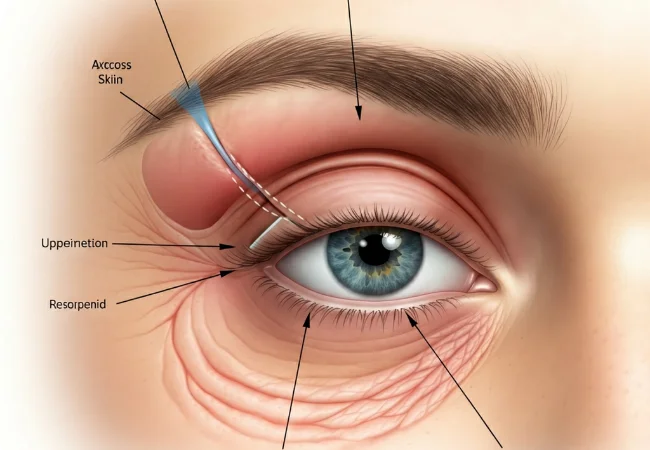
One of the advantages of upper blepharoplasty is the position of the incision.
I place the incision within the natural upper eyelid crease.
When the eyes are open, much of the incision is therefore naturally concealed within the fold of the eyelid.
The scar may initially appear pink or more noticeable, but it generally becomes finer and less conspicuous as healing progresses.
I commonly use absorbable sutures for my upper eyelid procedures, depending on the individual case.
No surgical scar can be guaranteed to become completely invisible, but the natural eyelid crease provides a favourable location in which to position the incision.
Your Eyelid Surgery Journey in Antalya
1. Before Travelling
You provide your medical history, relevant information and photographs where appropriate.
2. Consultation in Antalya
I examine your eyelids personally and discuss which areas can realistically be improved.
3. Surgical Planning
We discuss the proposed technique, incision sites, scars, anaesthesia, expected recovery, limitations and relevant risks.
4. Surgery
Your operation is performed in a fully equipped hospital in Antalya.
5. Early Recovery
My team and I monitor your early postoperative recovery while you remain in Turkey.
6. Returning Home
Once your recovery allows you to travel safely, you can return home.
Follow-up communication continues after your departure.
How Long Does Upper Eyelid Surgery Take?
In straightforward cases, my upper eyelid blepharoplasty procedure commonly takes approximately 25–30 minutes.
The exact duration depends on the patient’s anatomy and whether additional treatment is required.
Upper blepharoplasty may be performed as an isolated procedure or combined with another facial operation when appropriate.
A relatively short operating time does not mean that planning is unimportant.
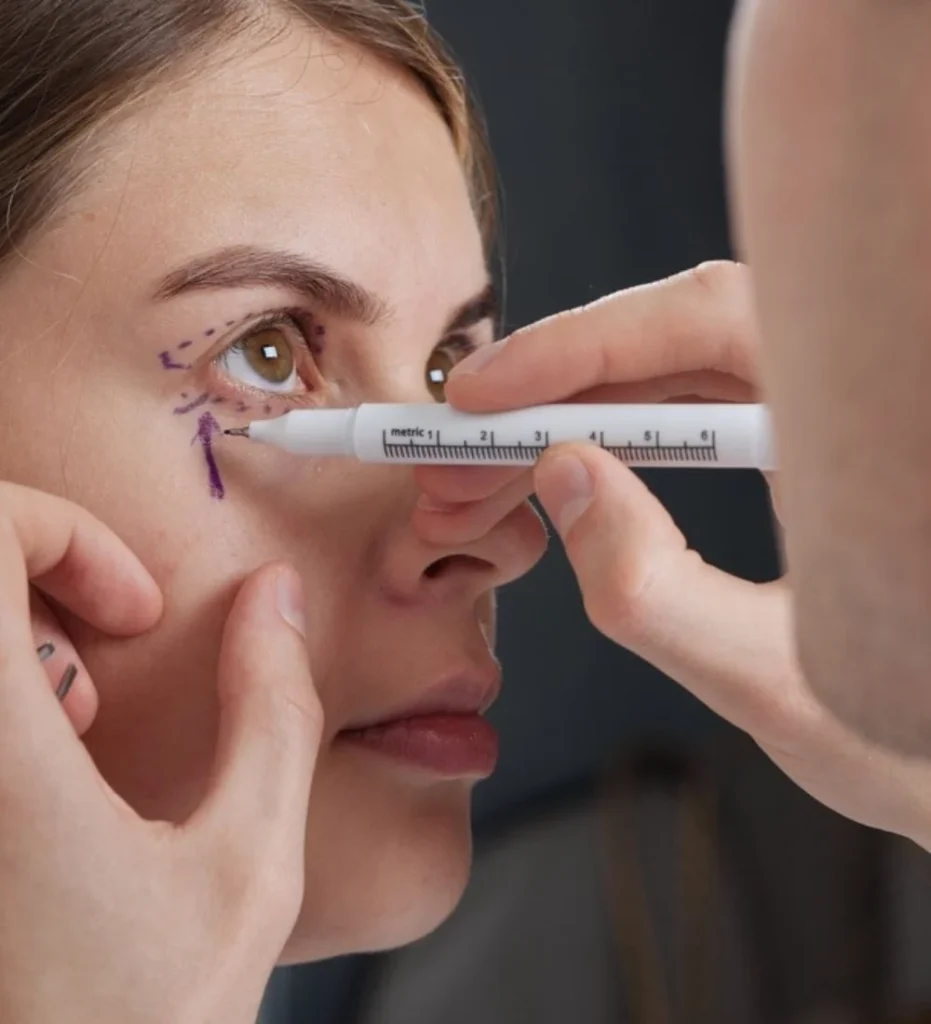
Precise marking before surgery is one of the most important stages of upper eyelid surgery.
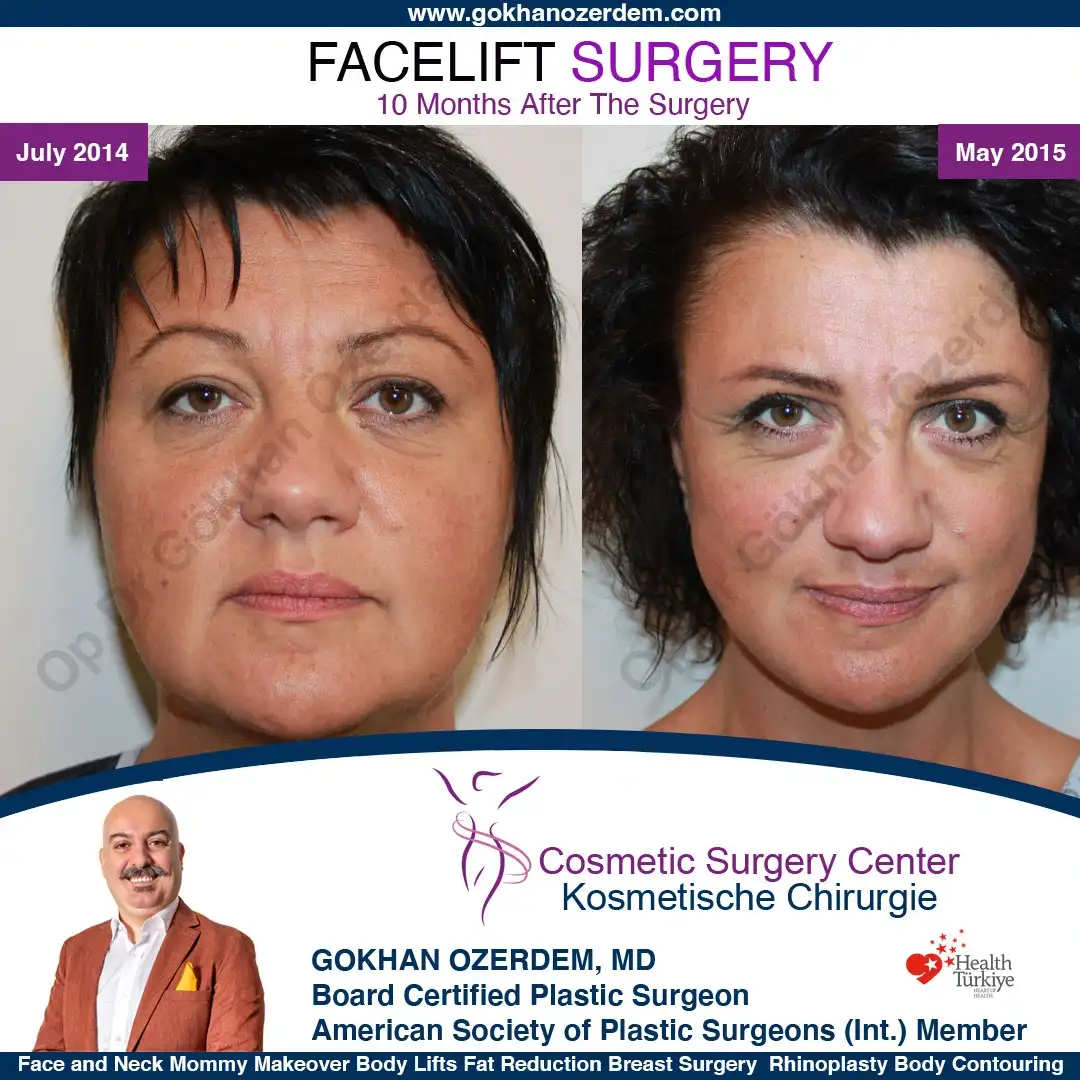
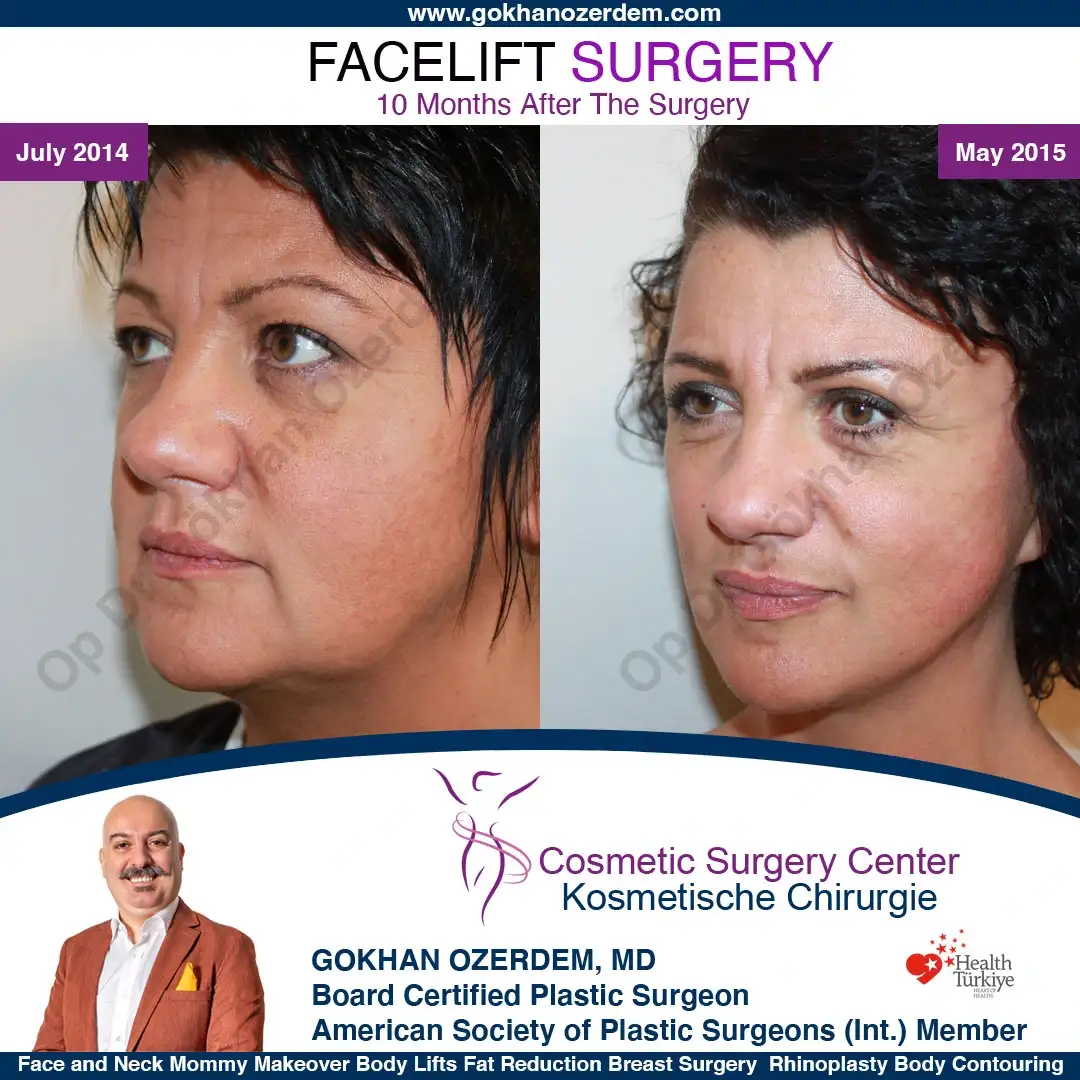
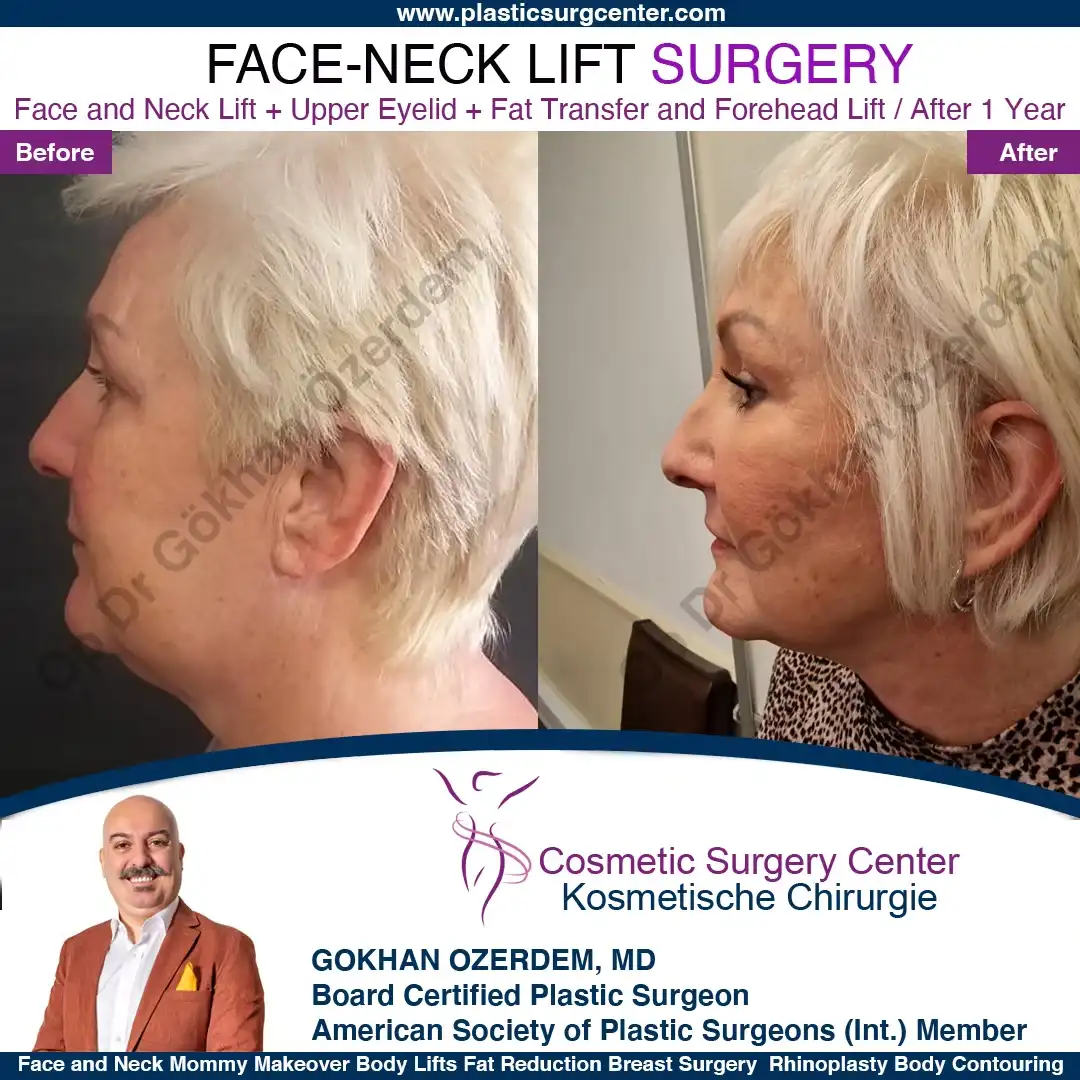
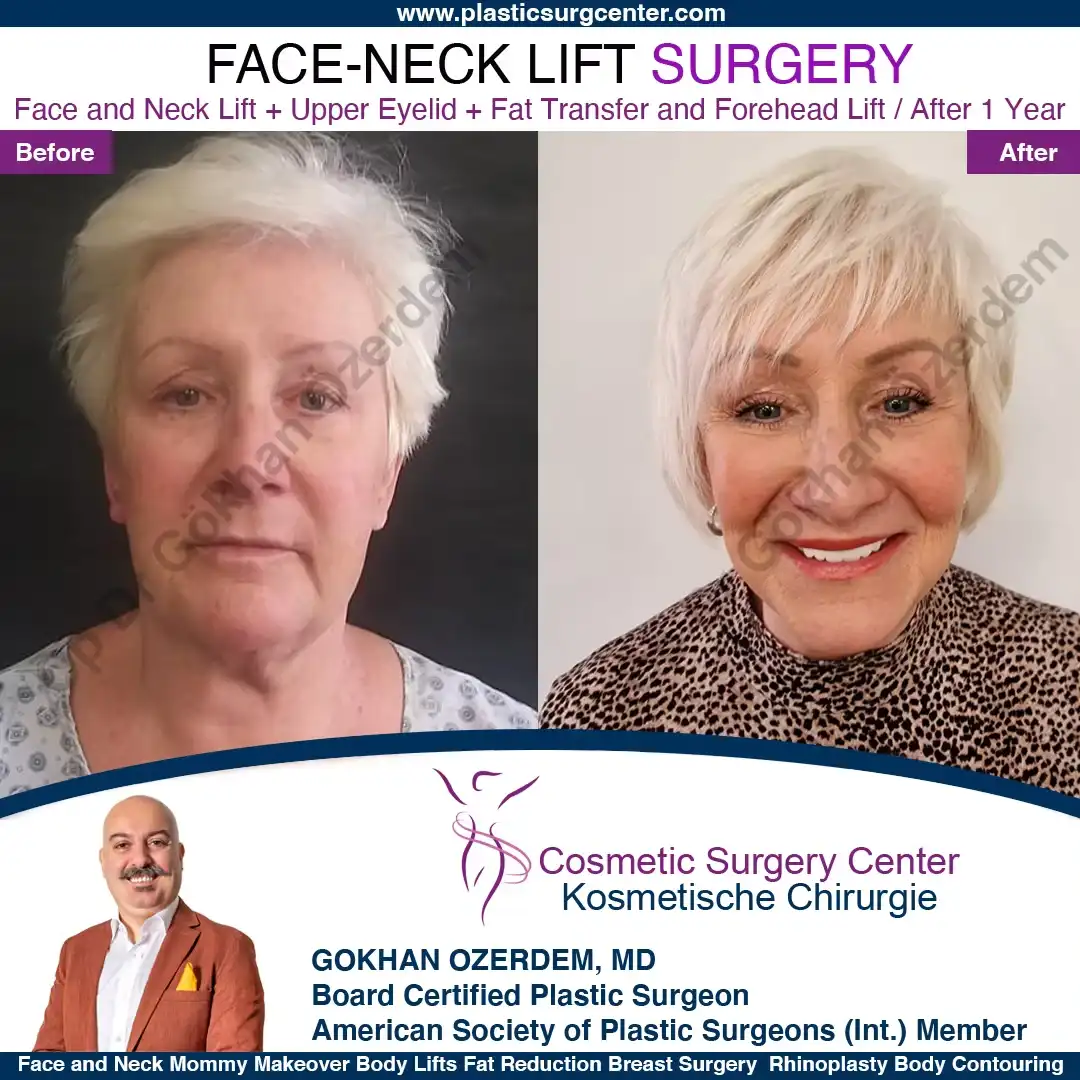
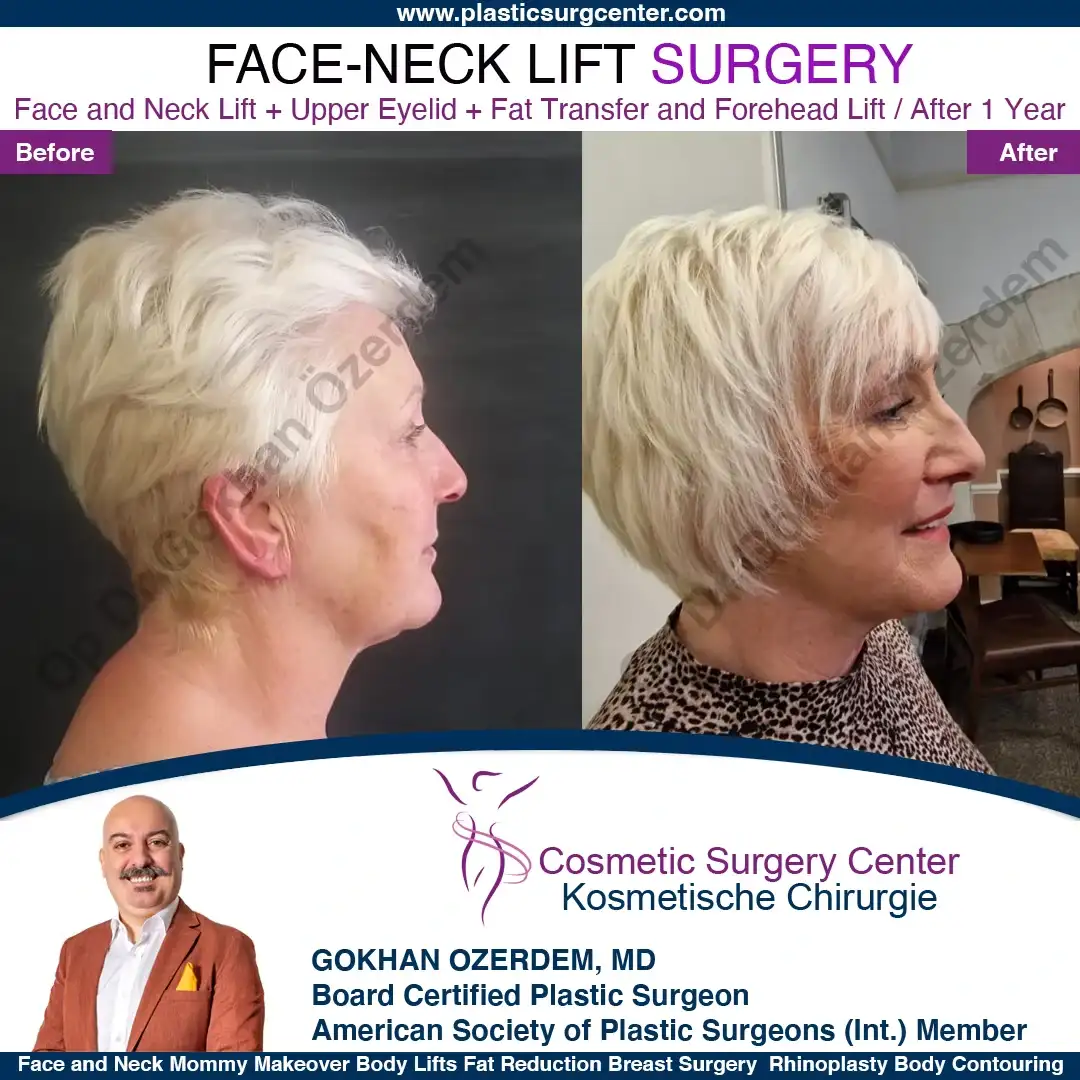
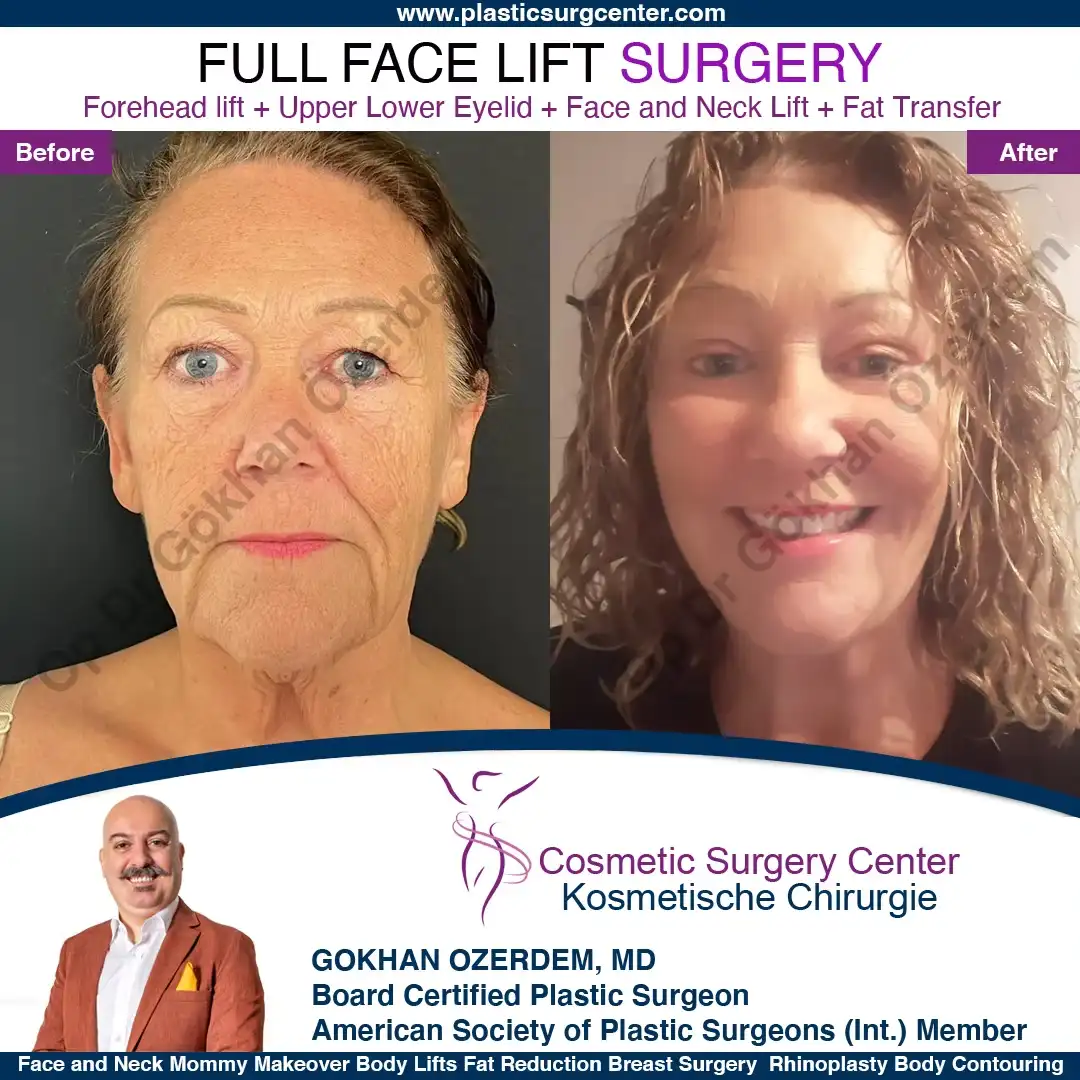
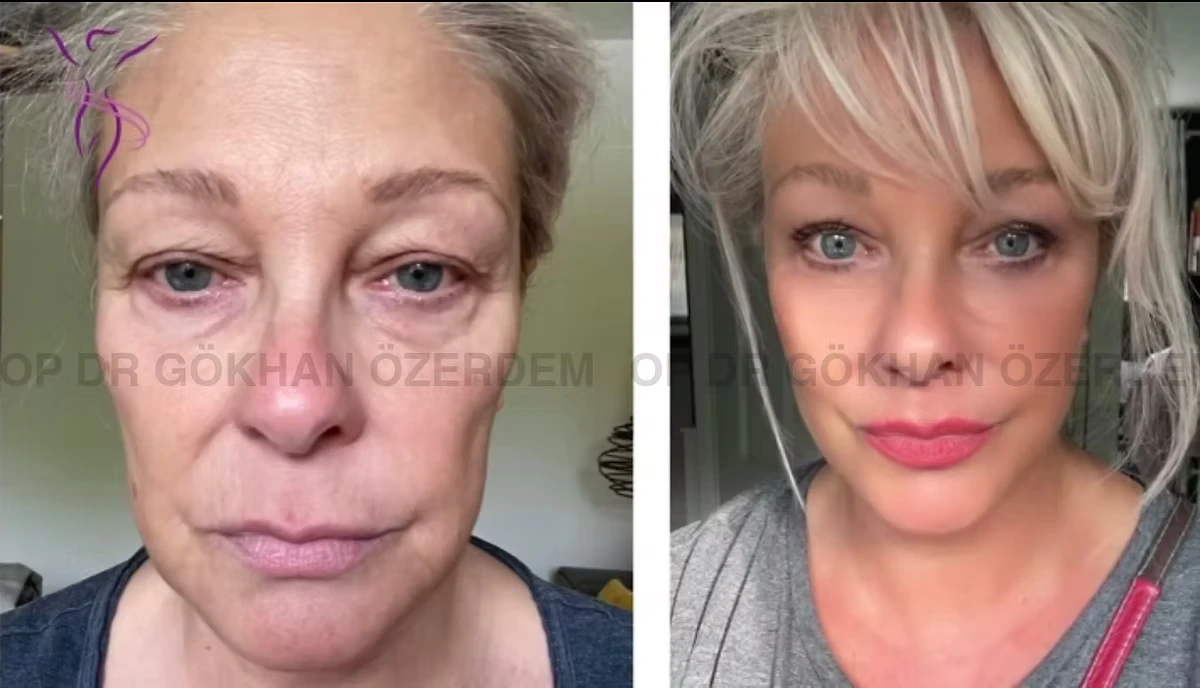
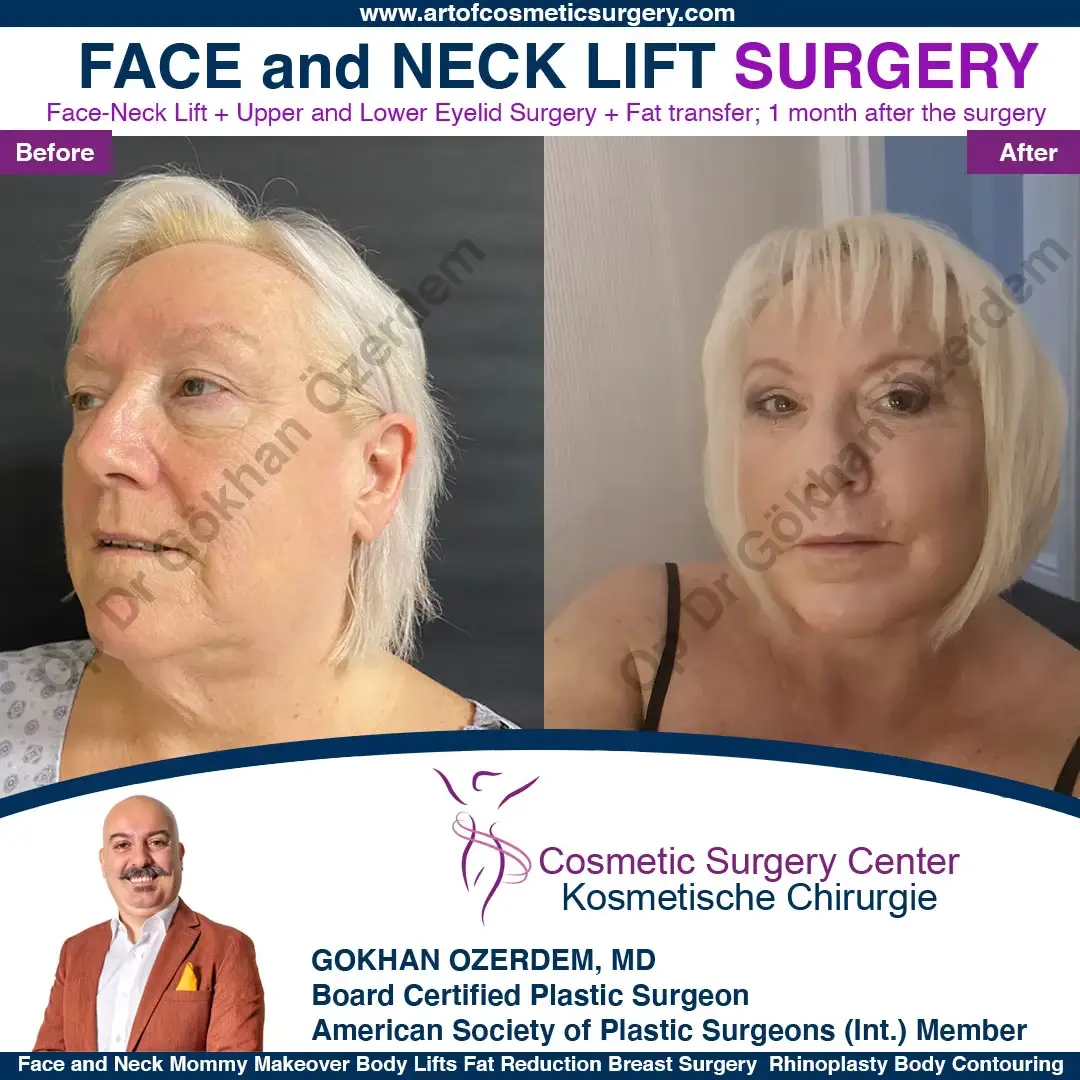
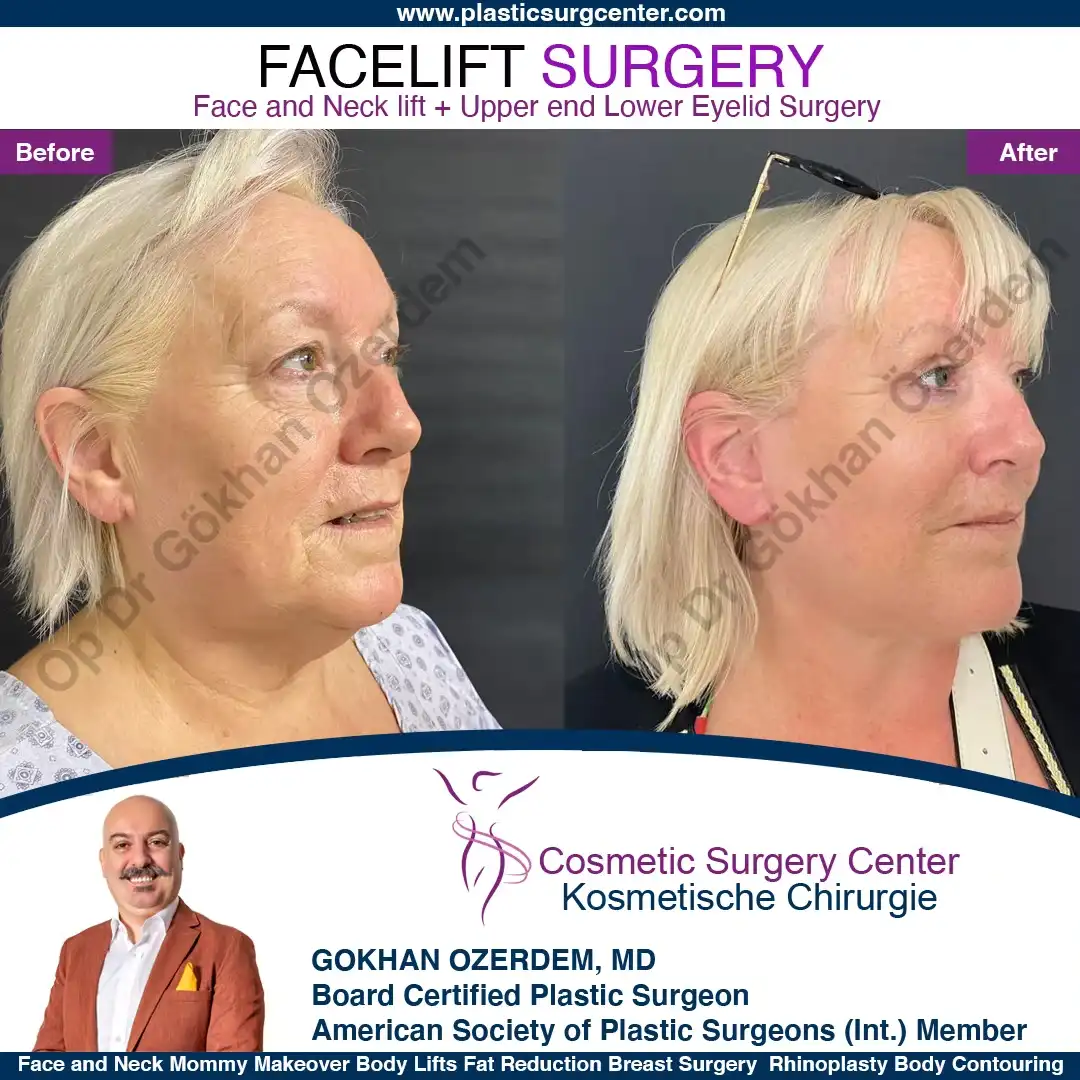
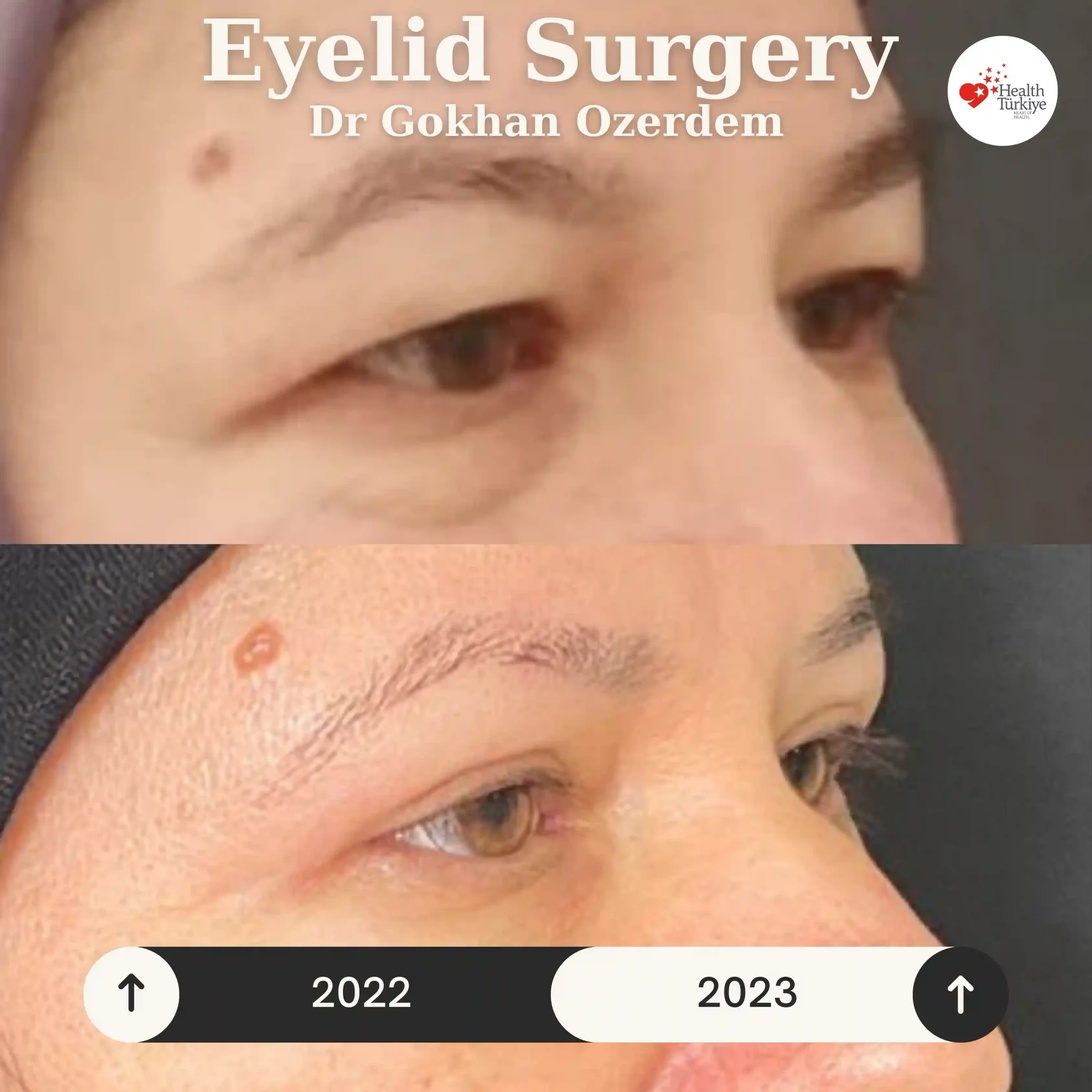
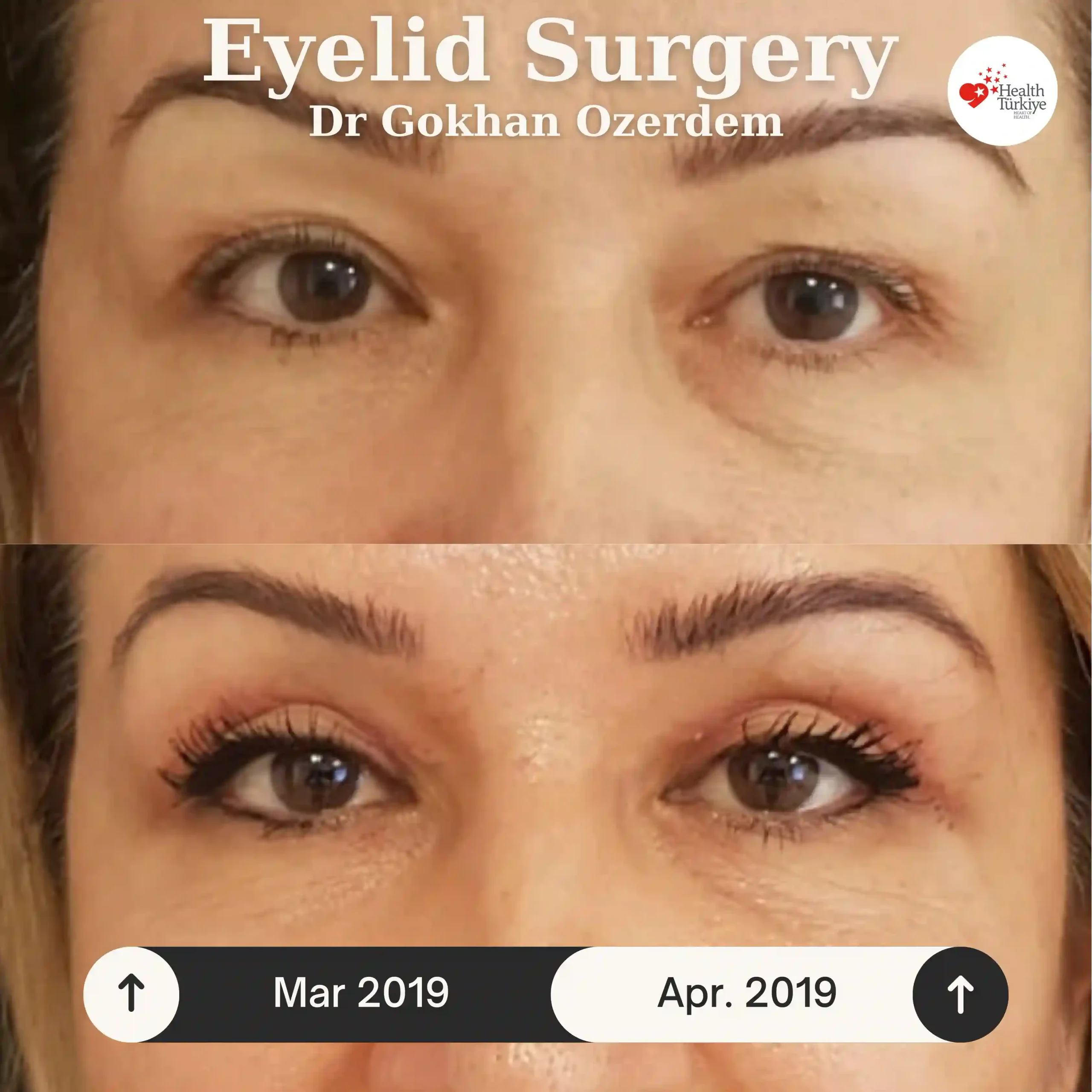
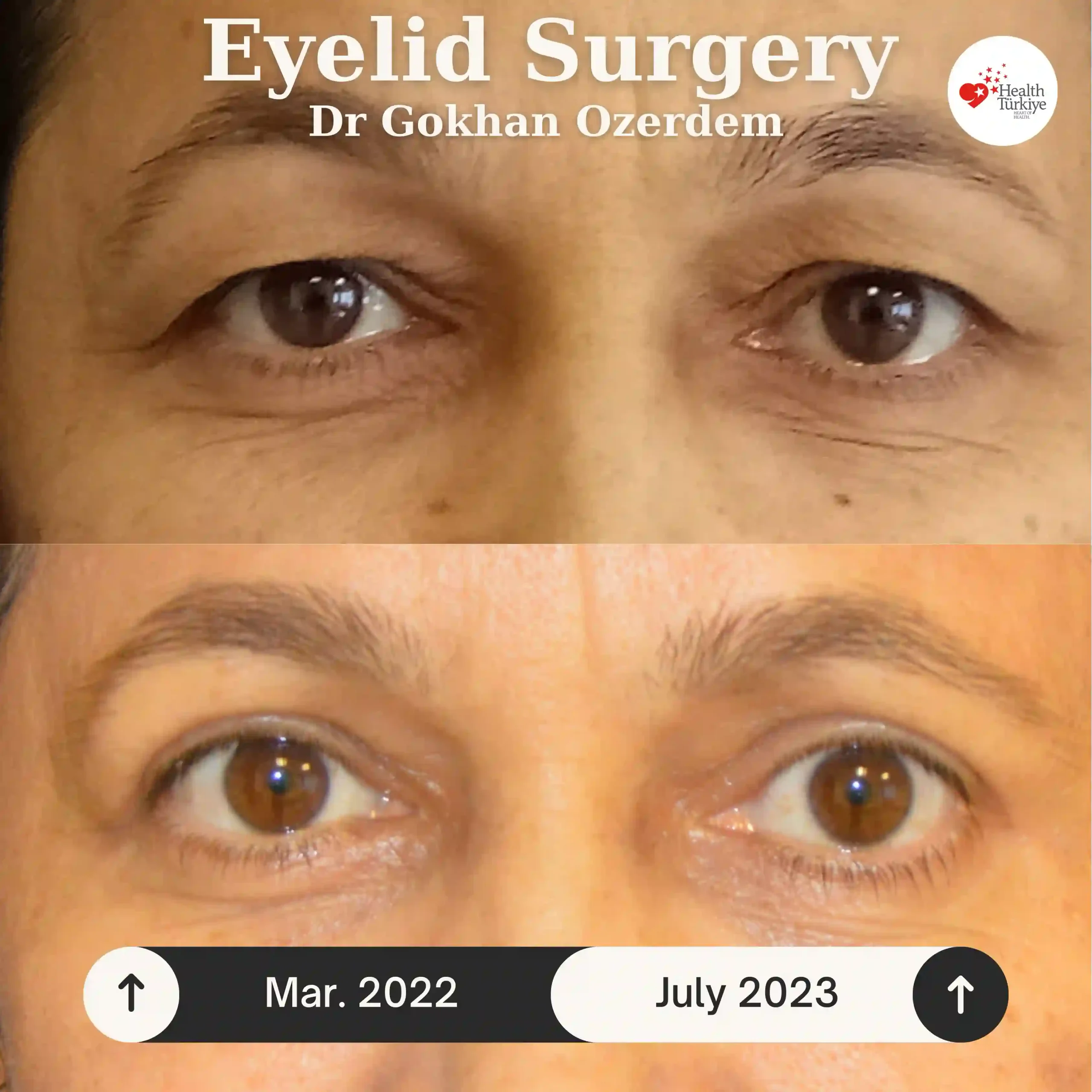
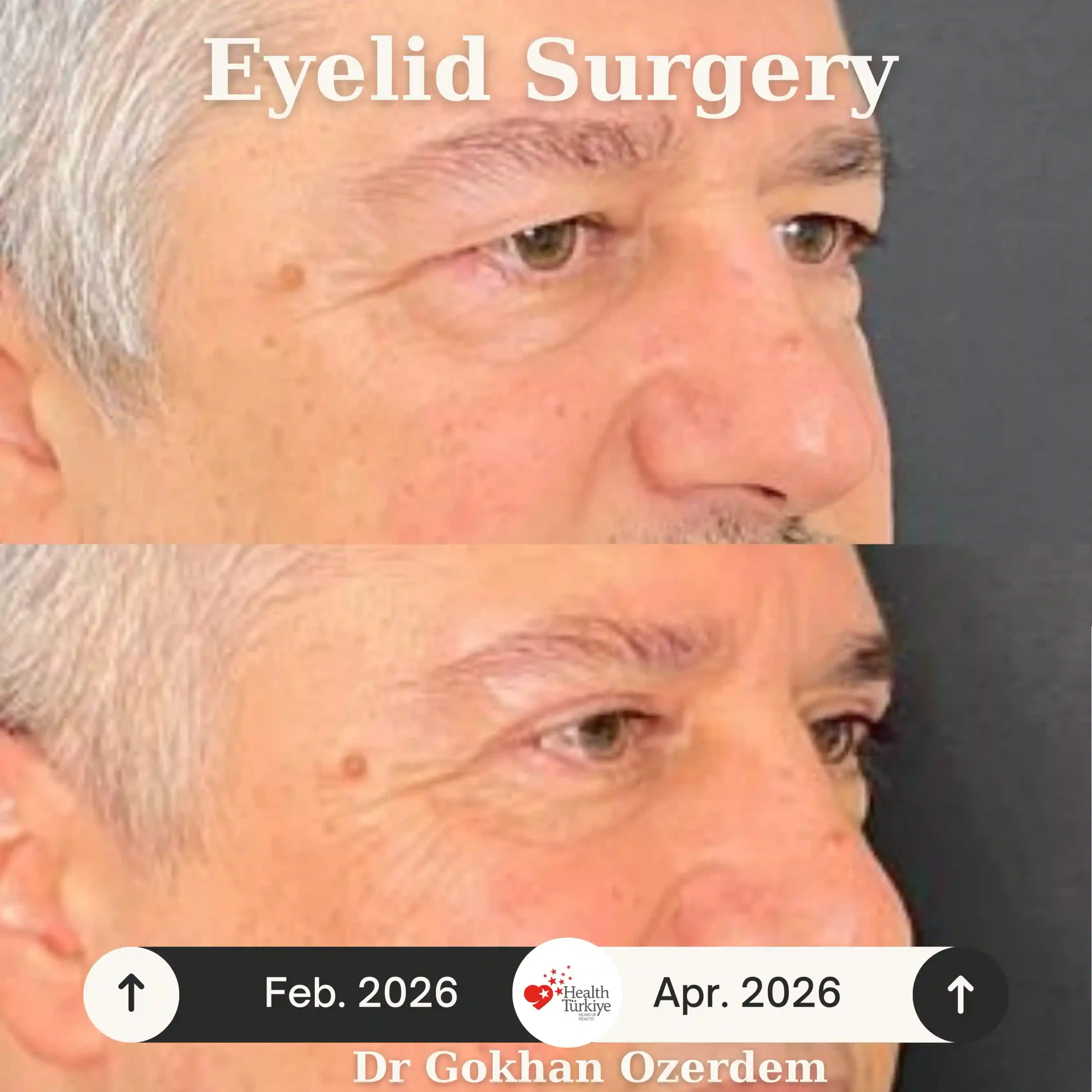
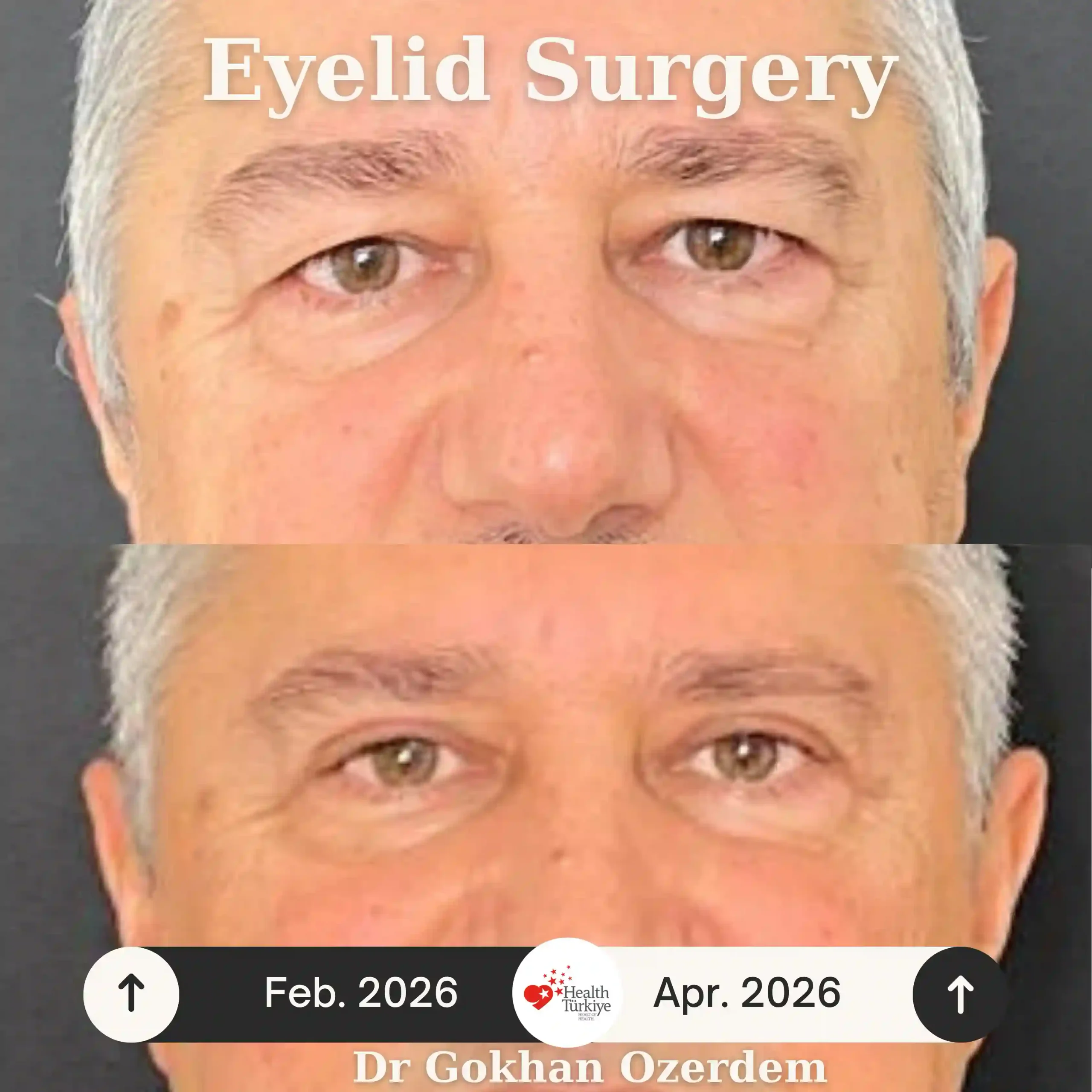
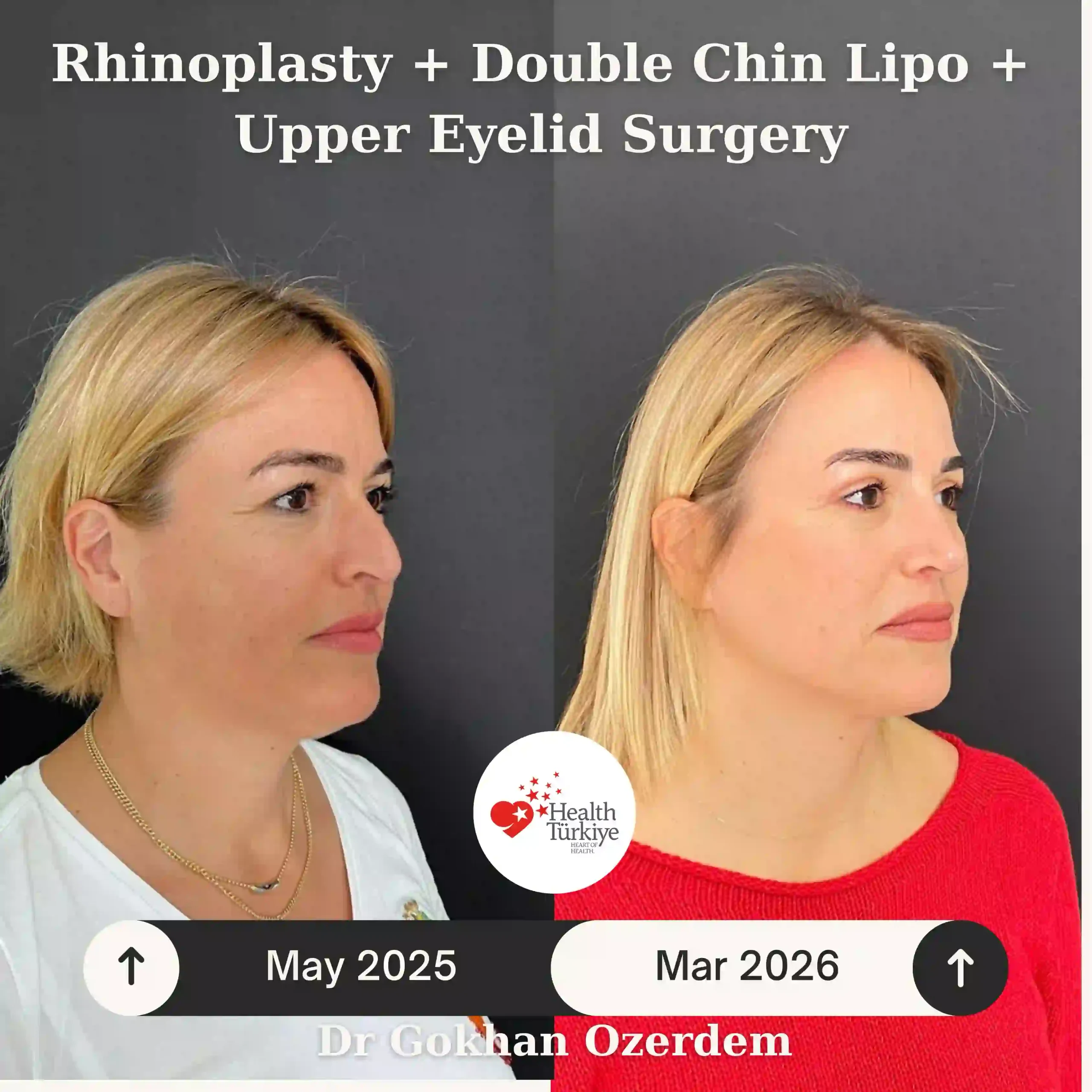
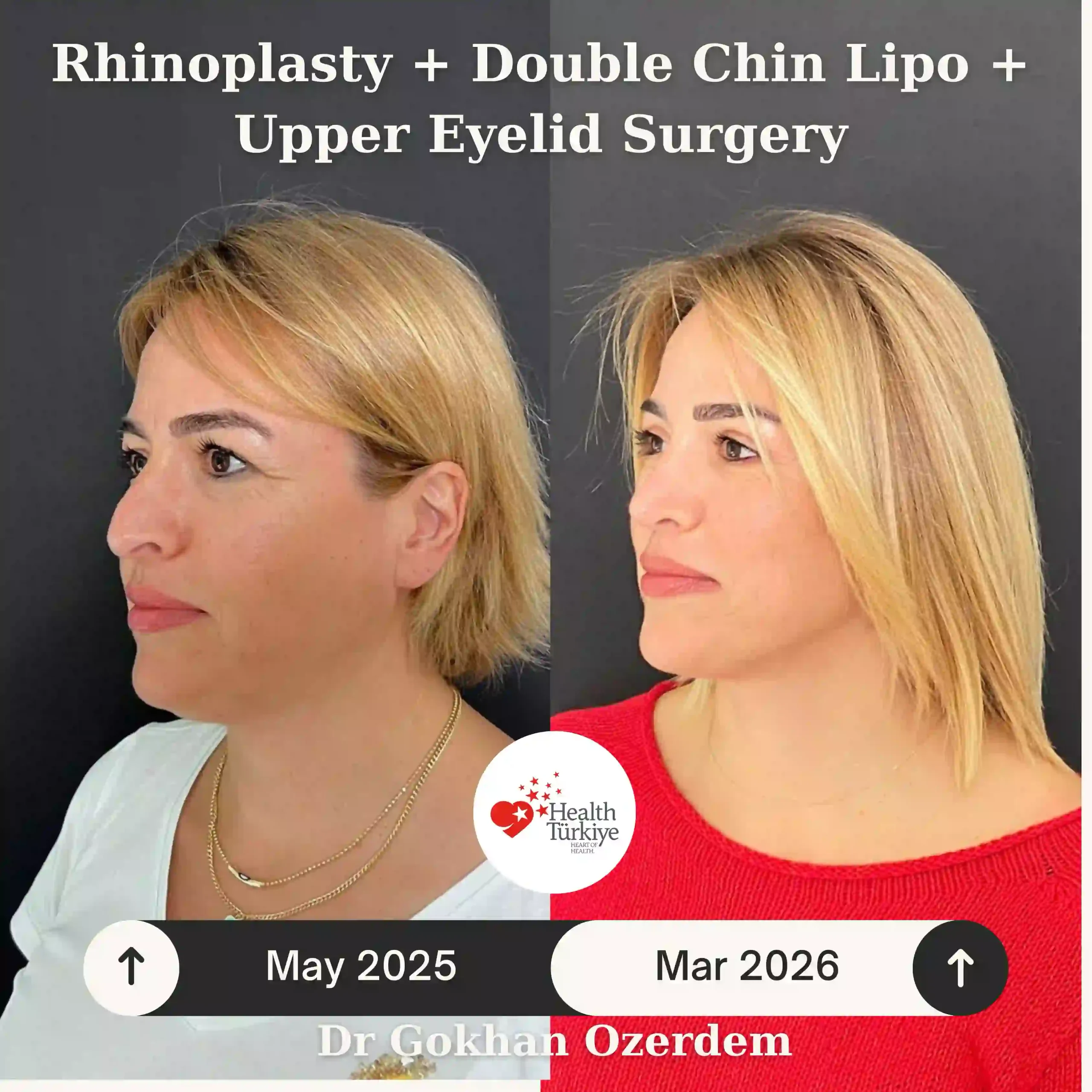
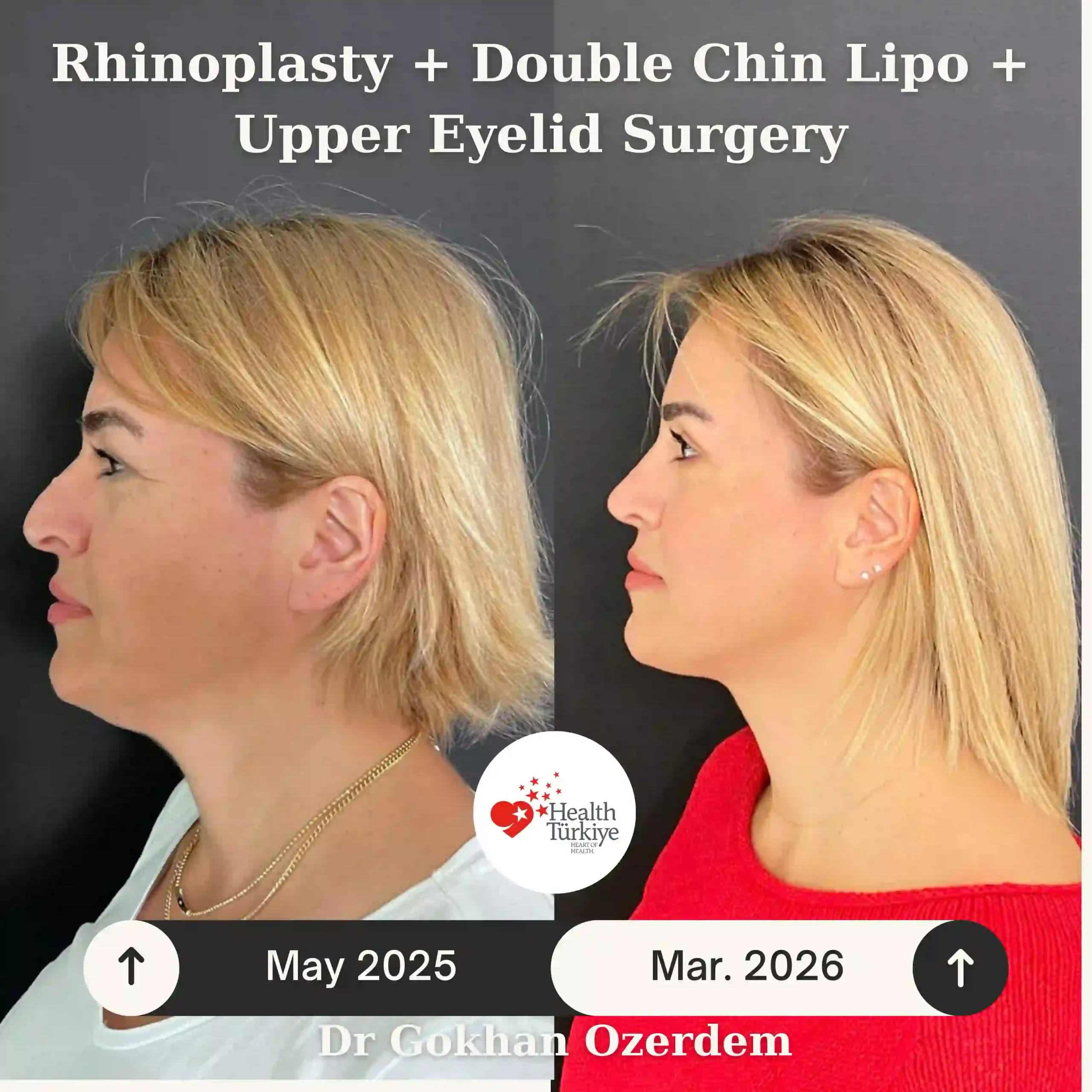
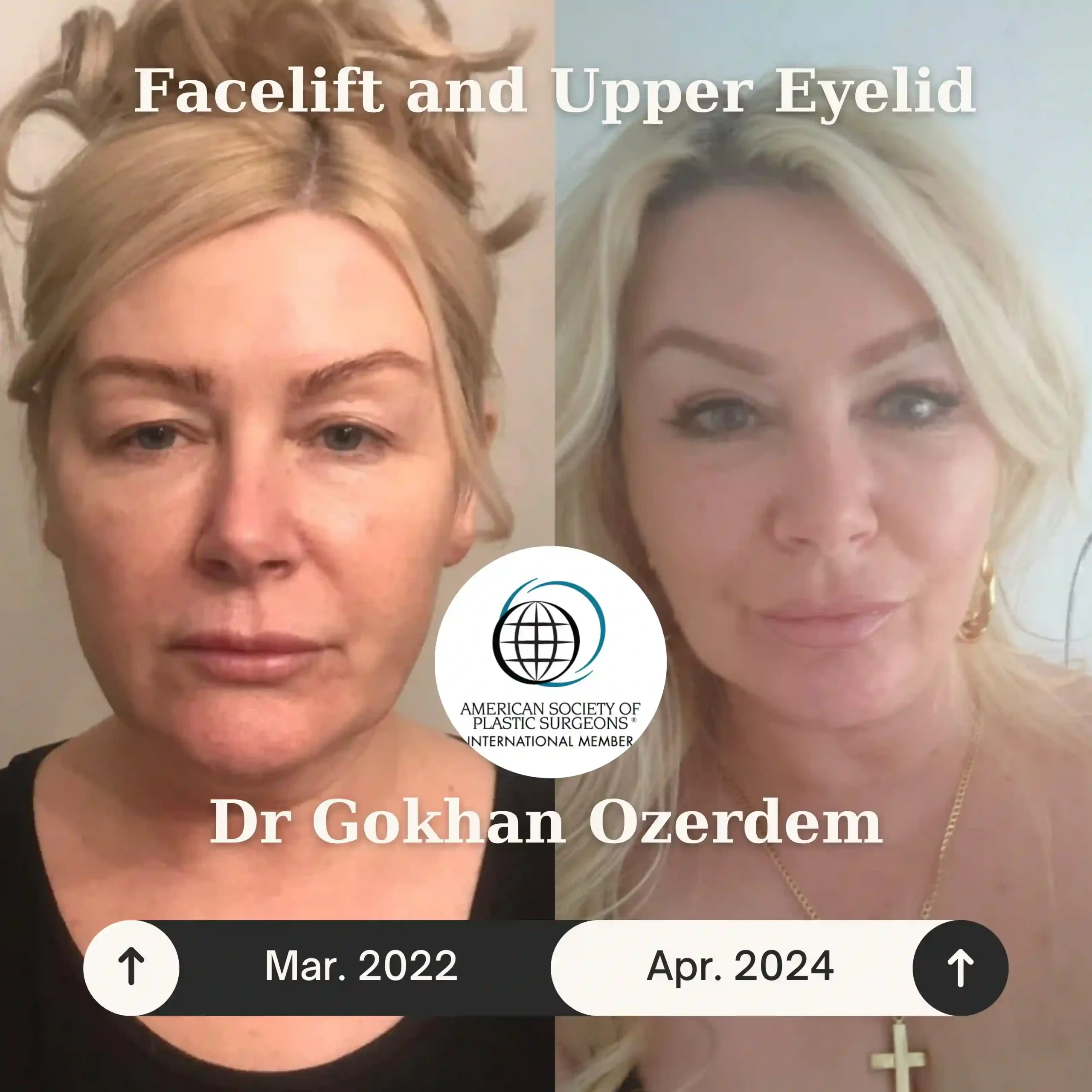
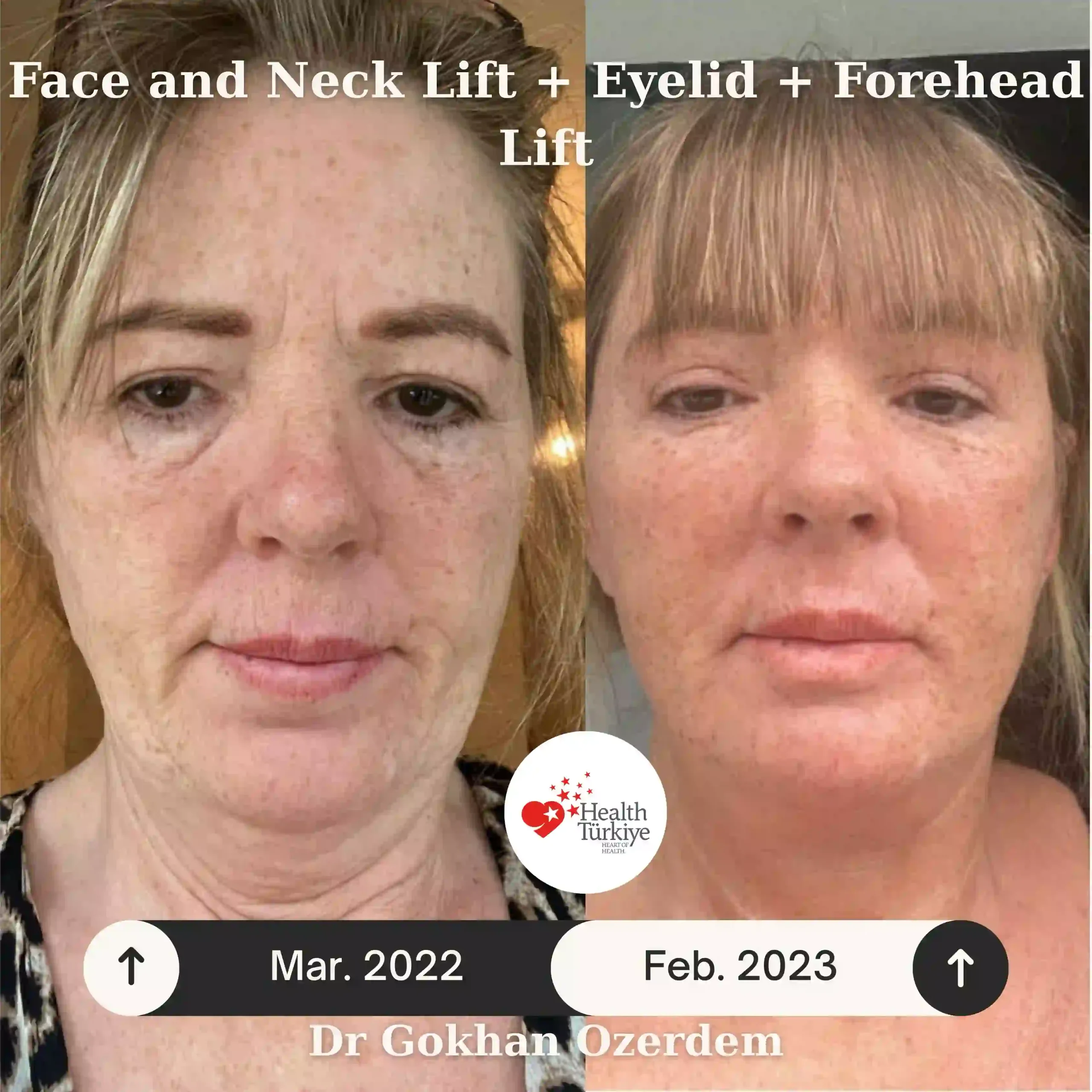
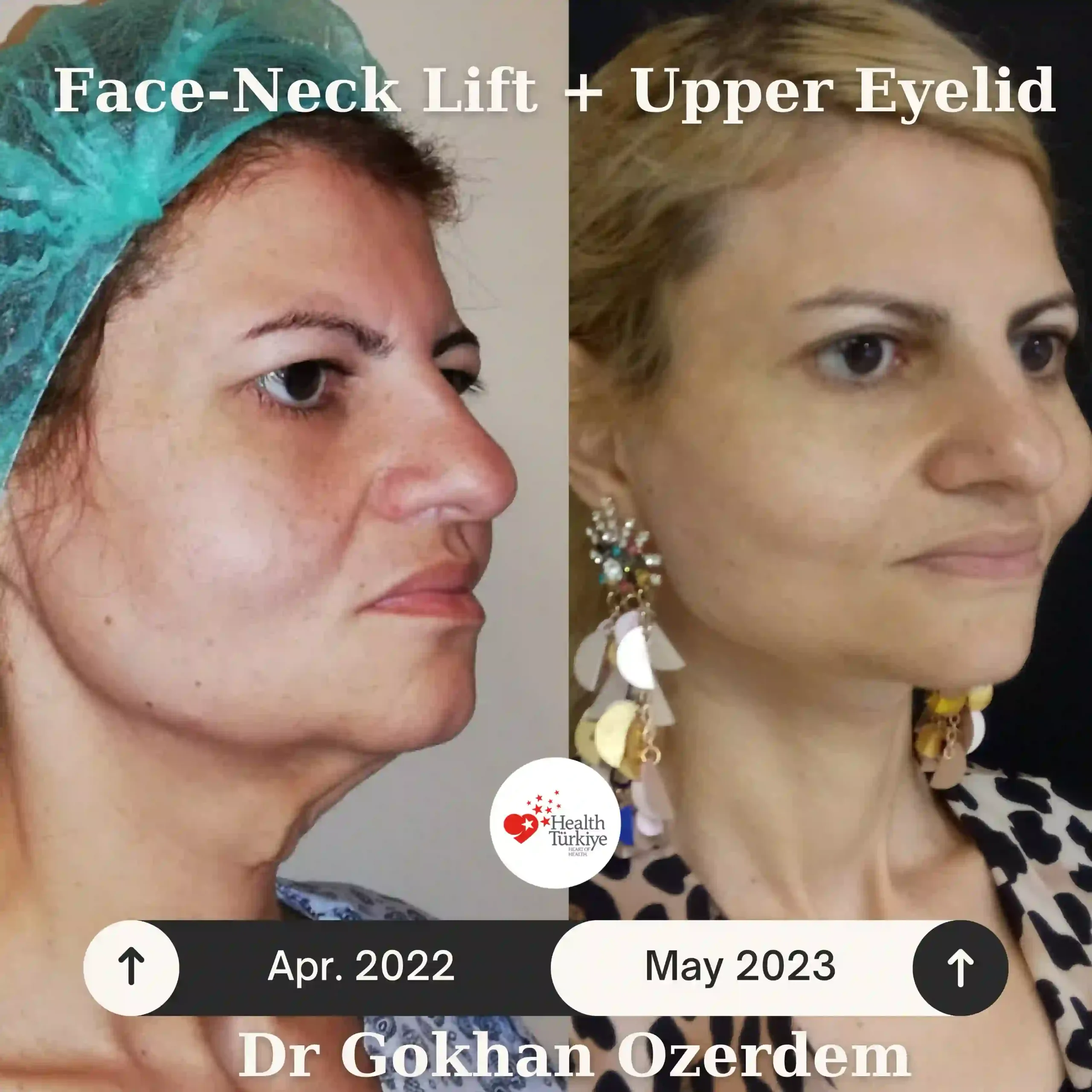
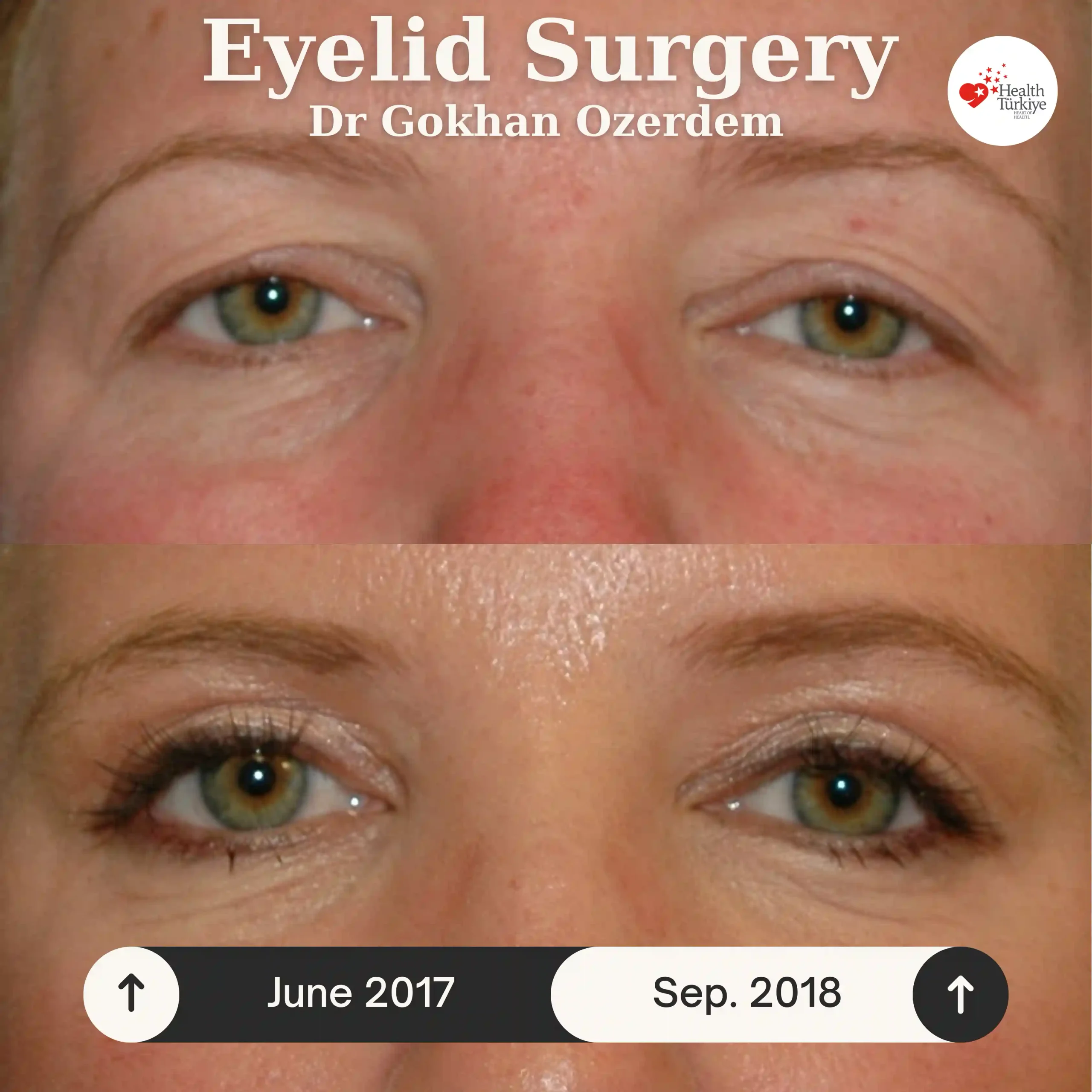
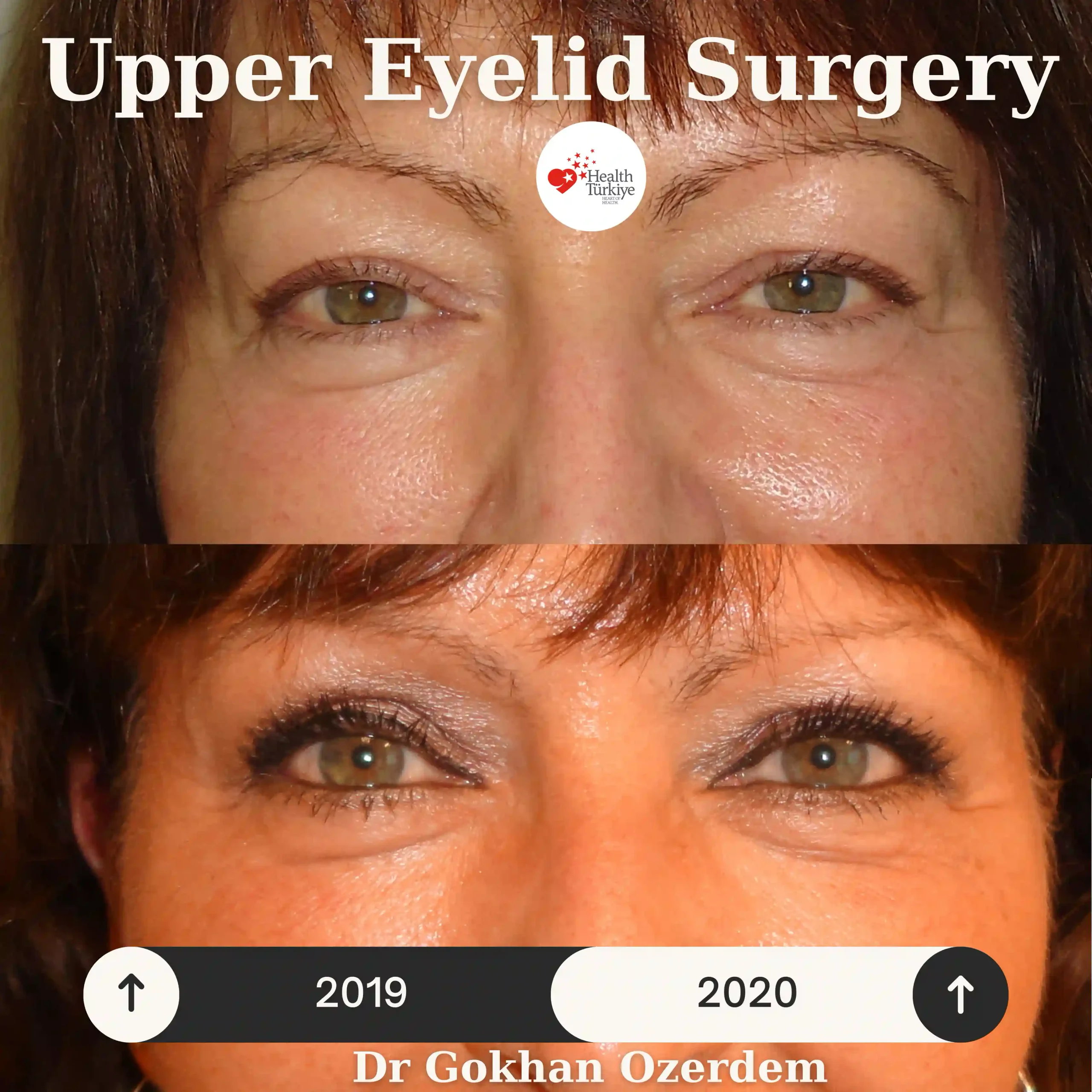
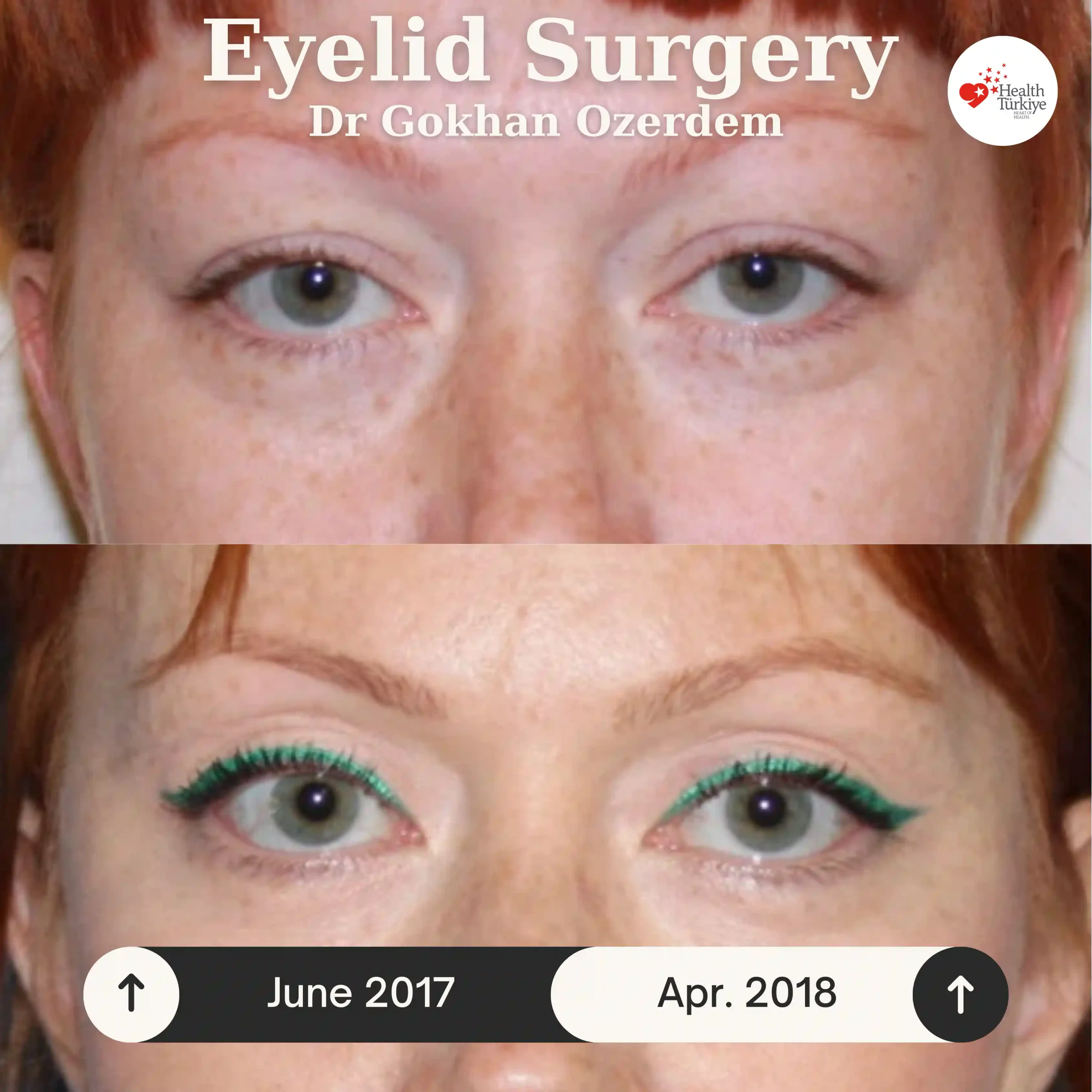
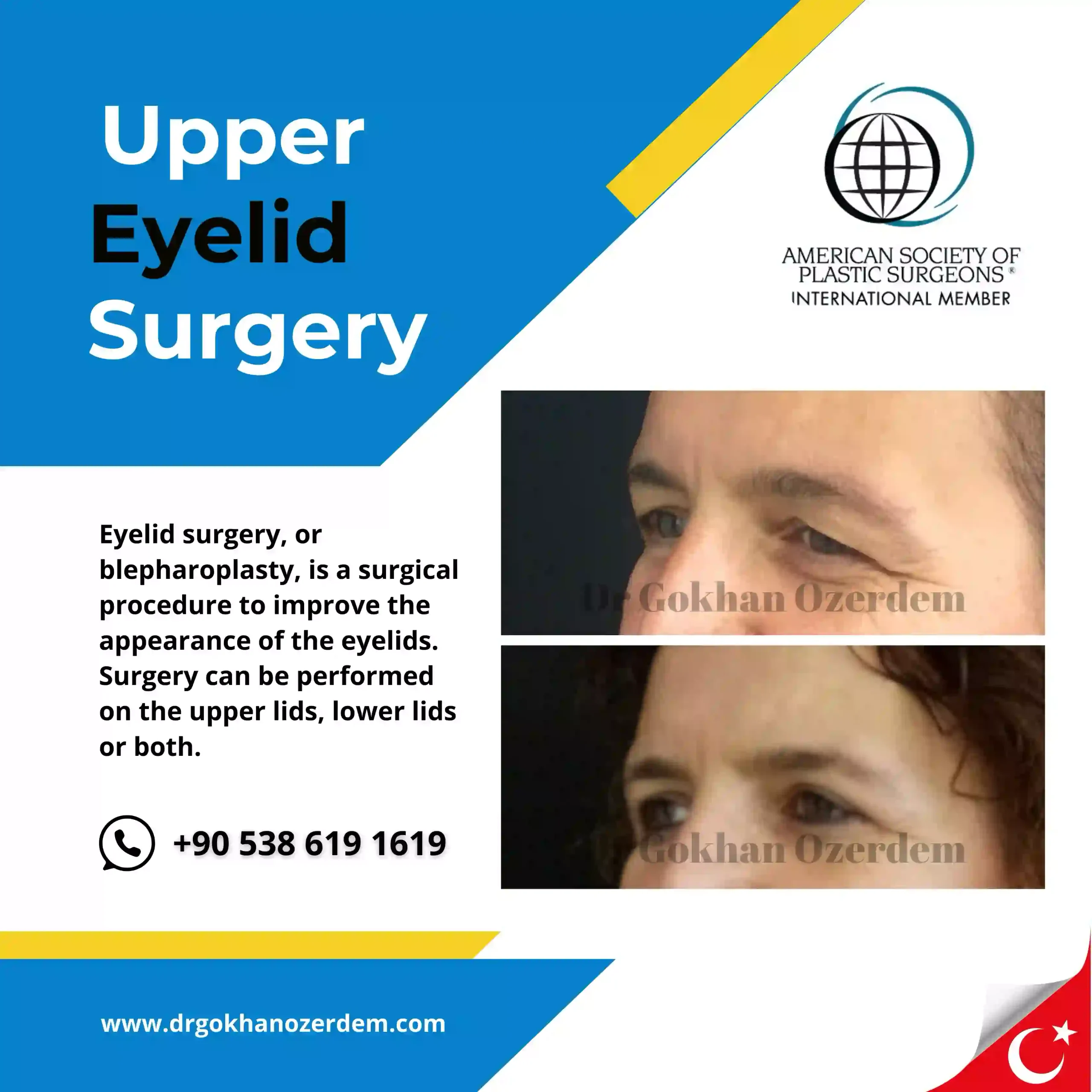
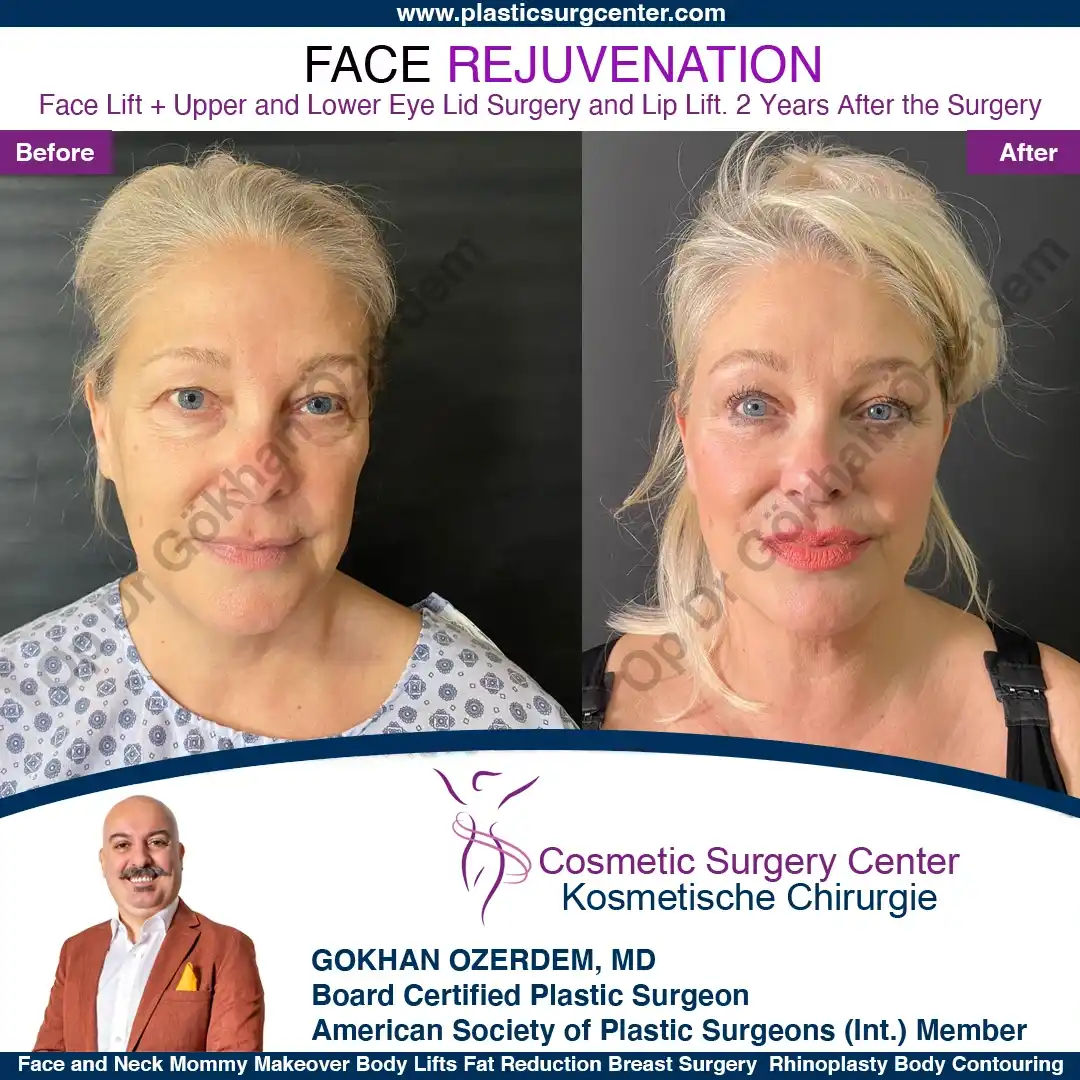
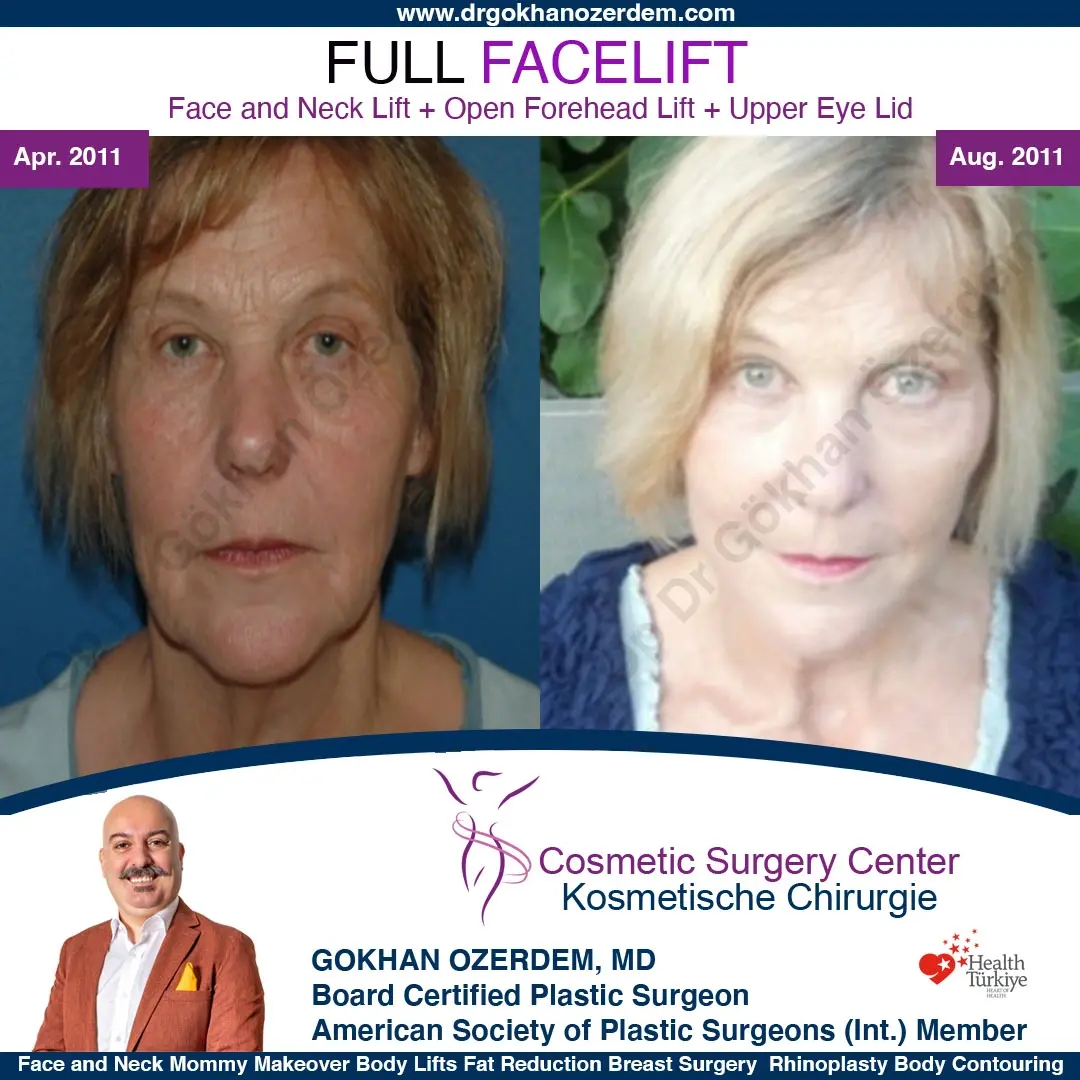
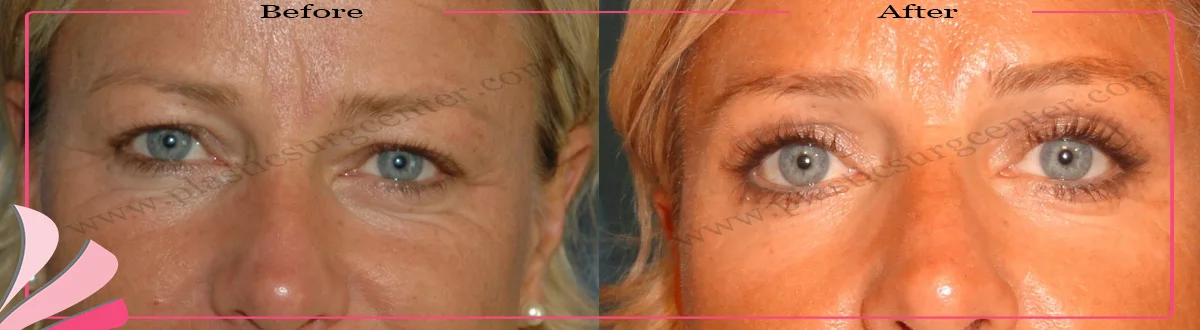
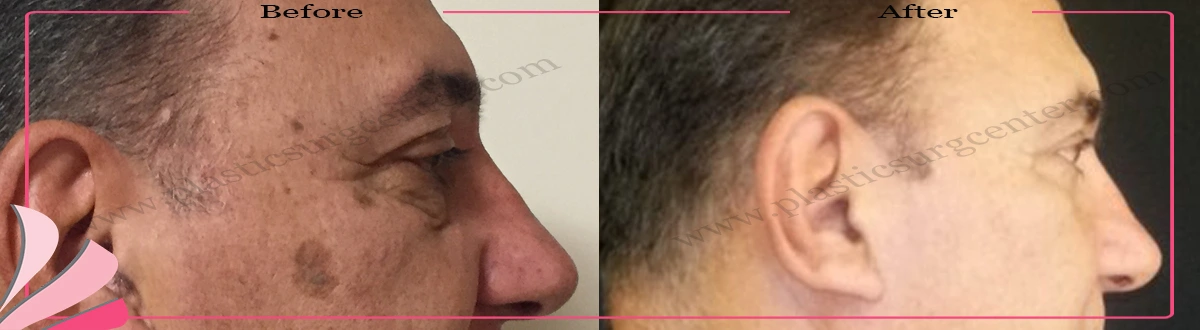
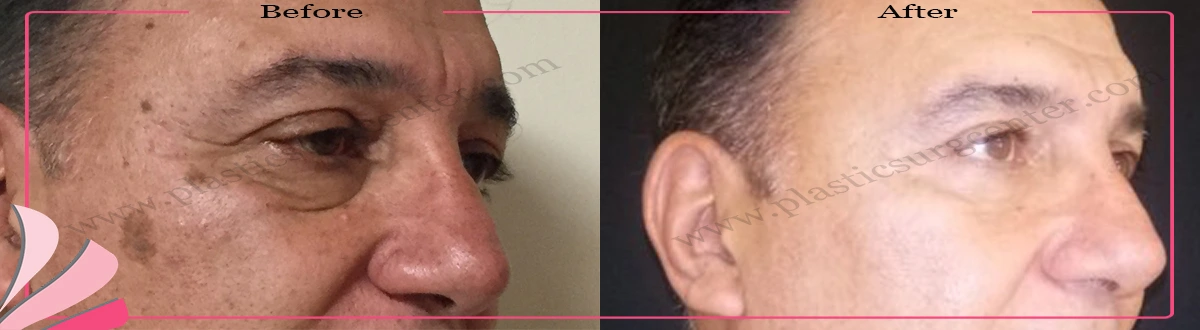
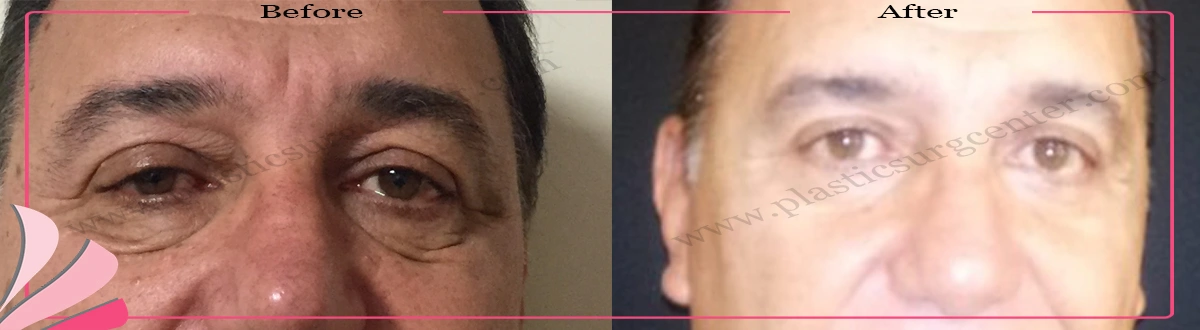
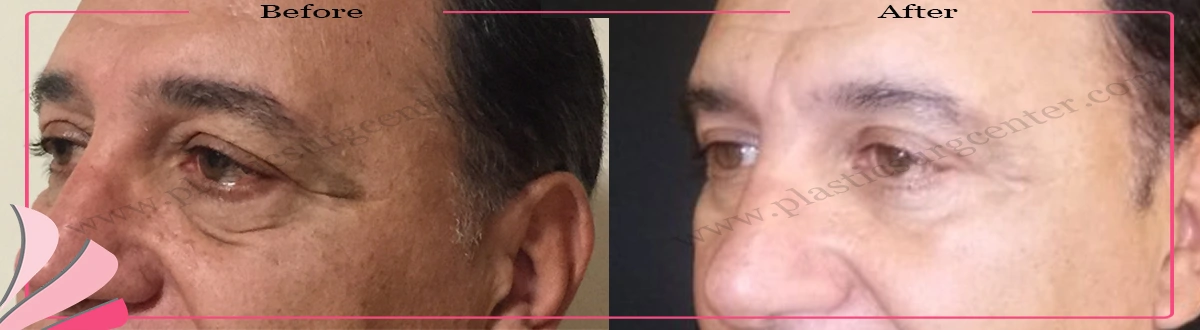
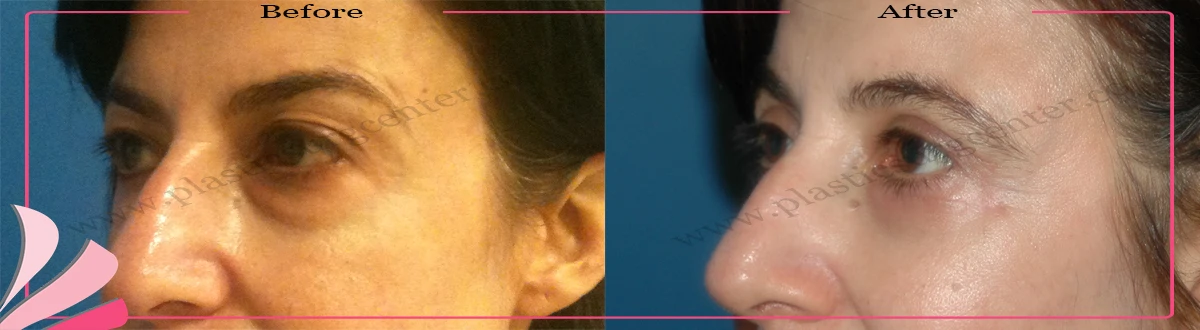
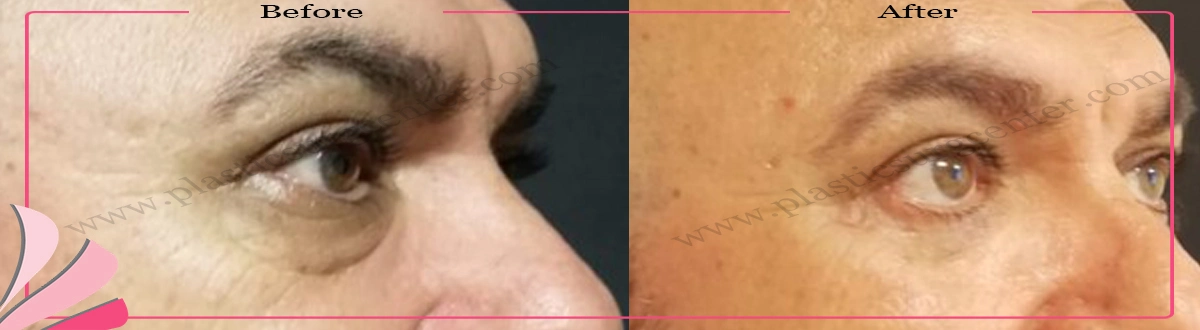
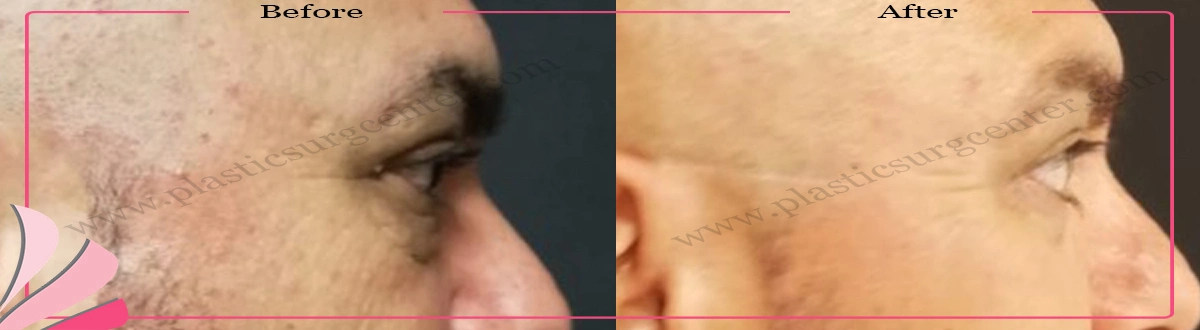
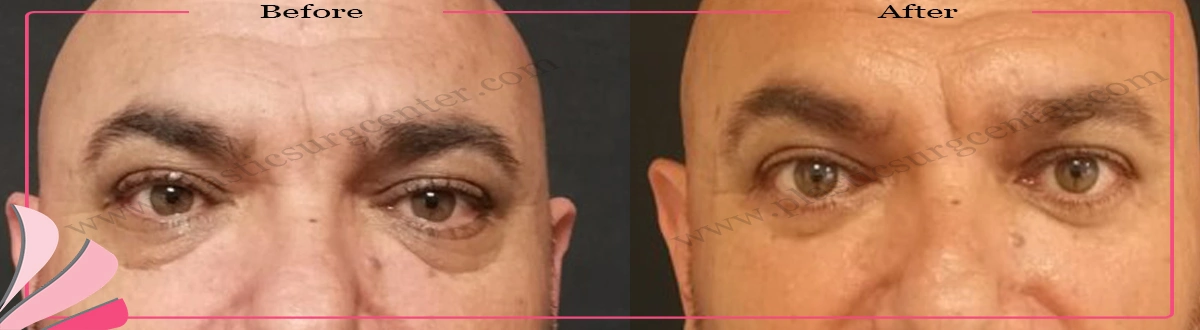
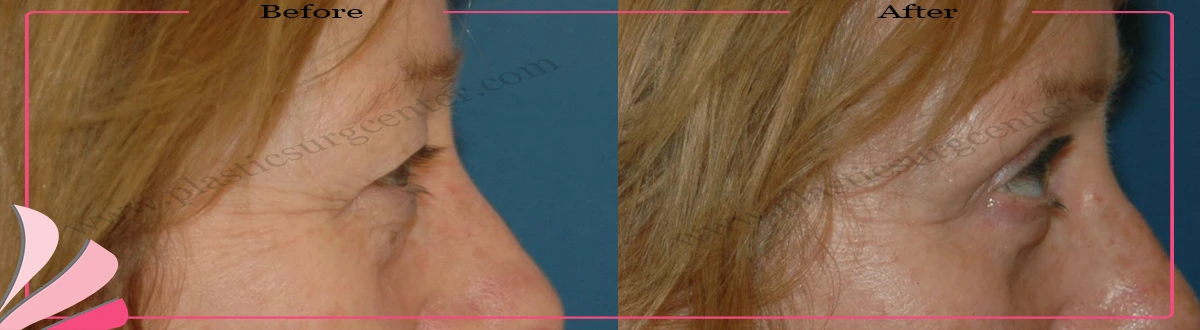
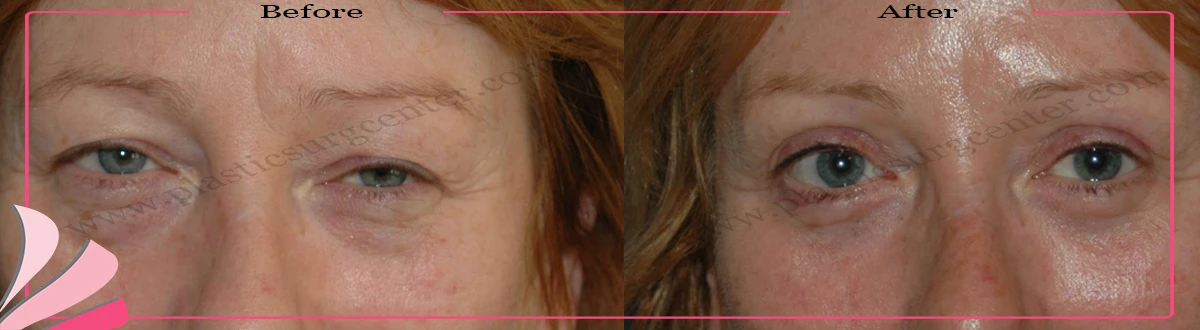
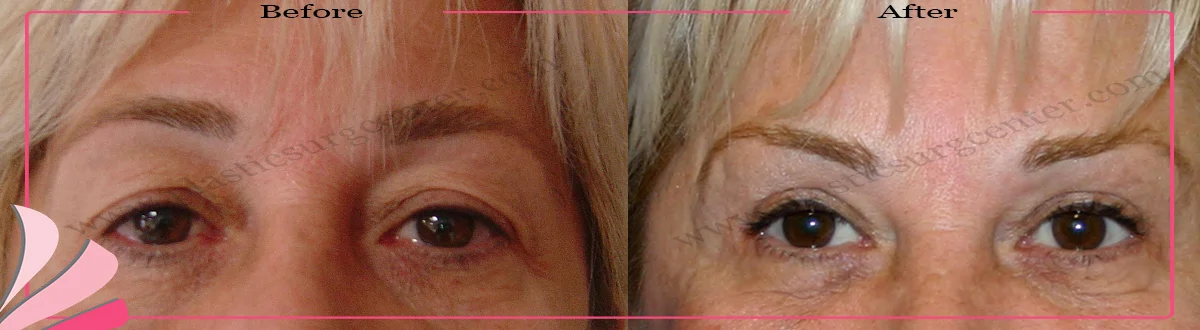
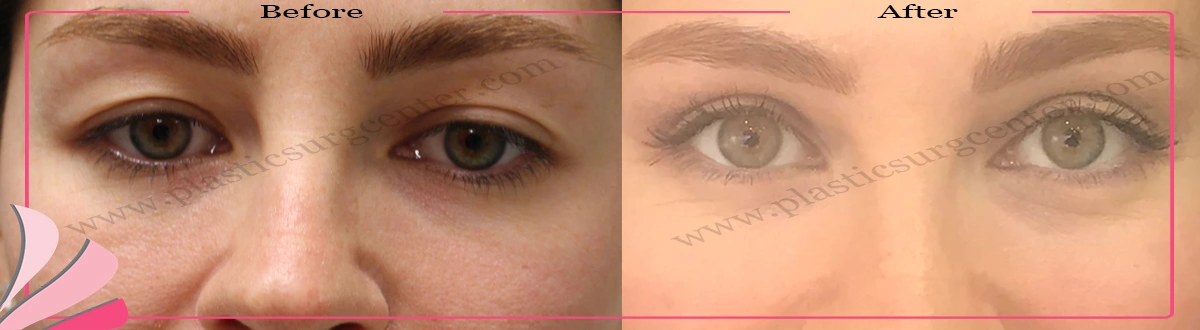
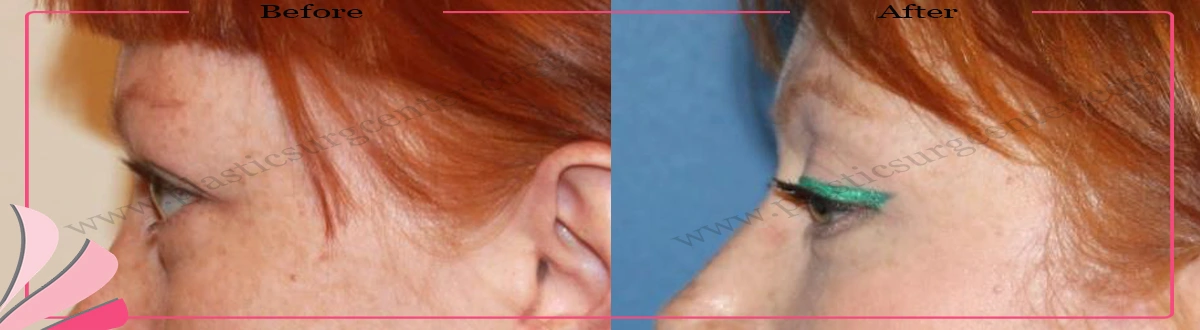
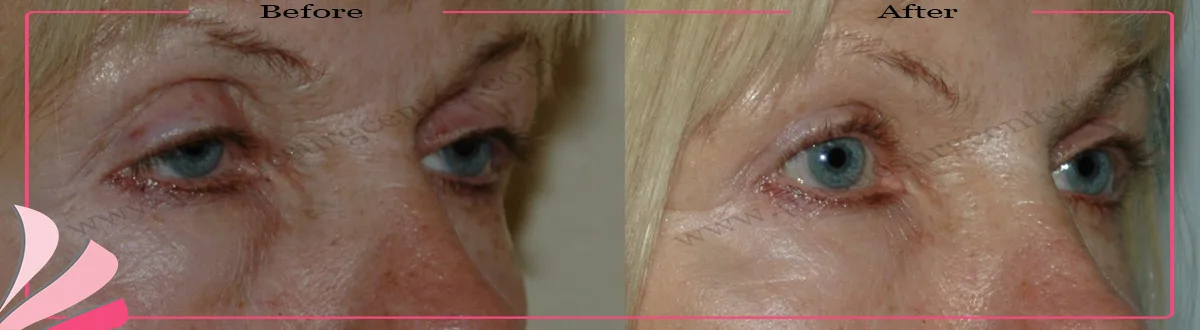
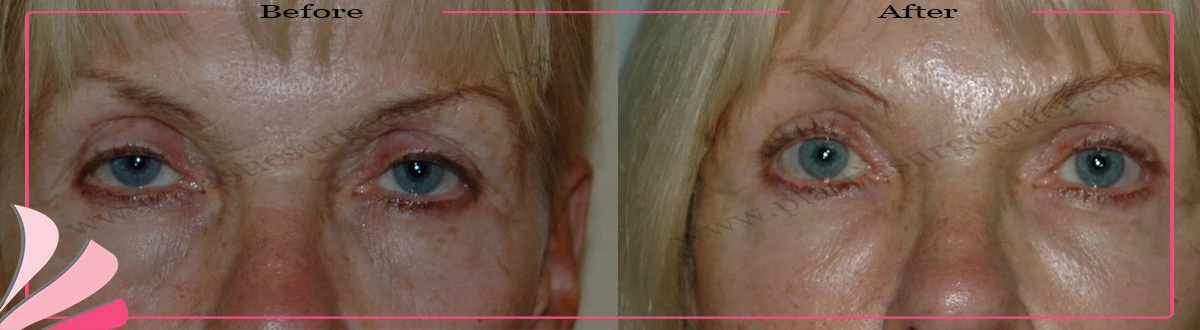
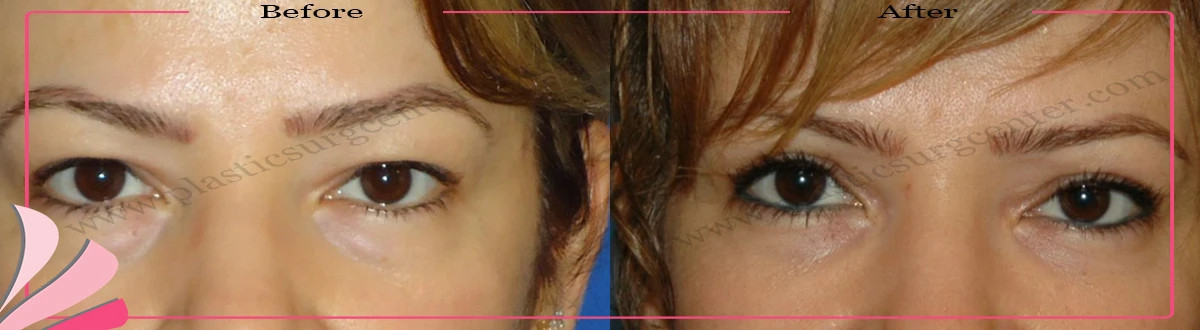
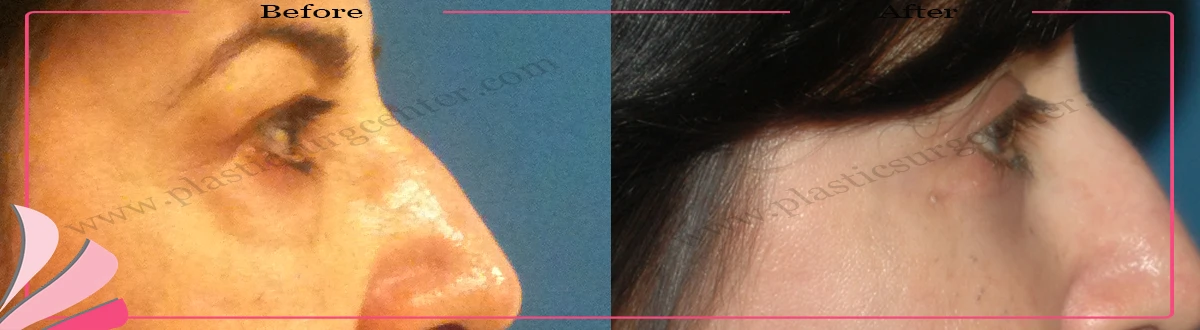
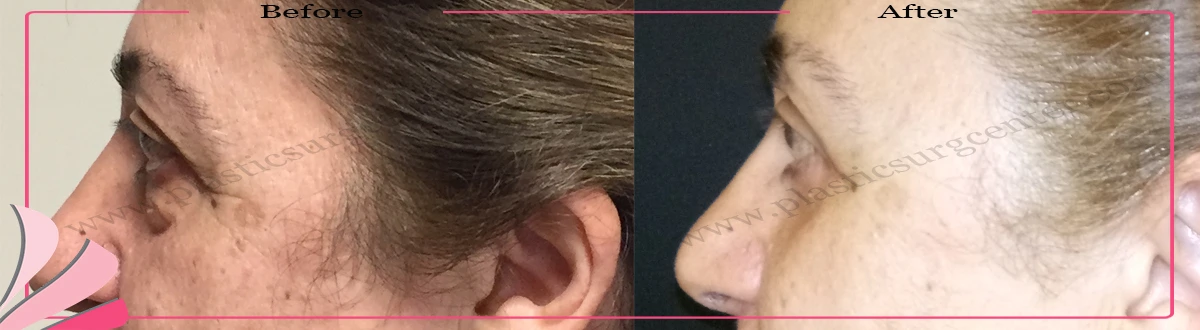
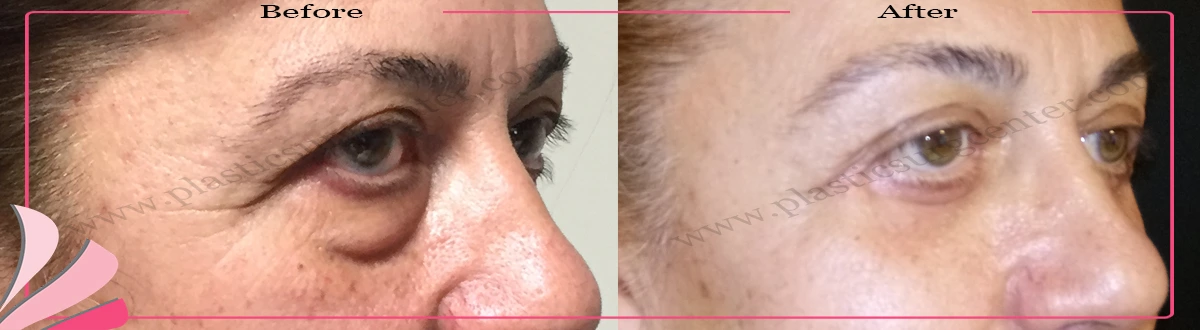
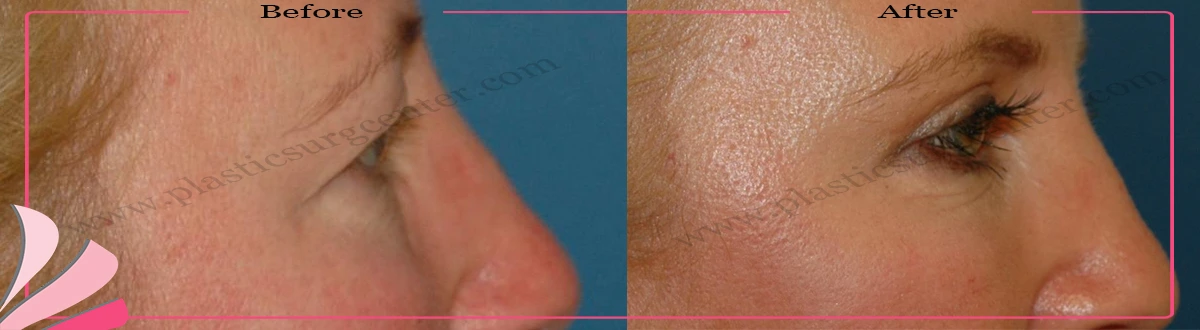
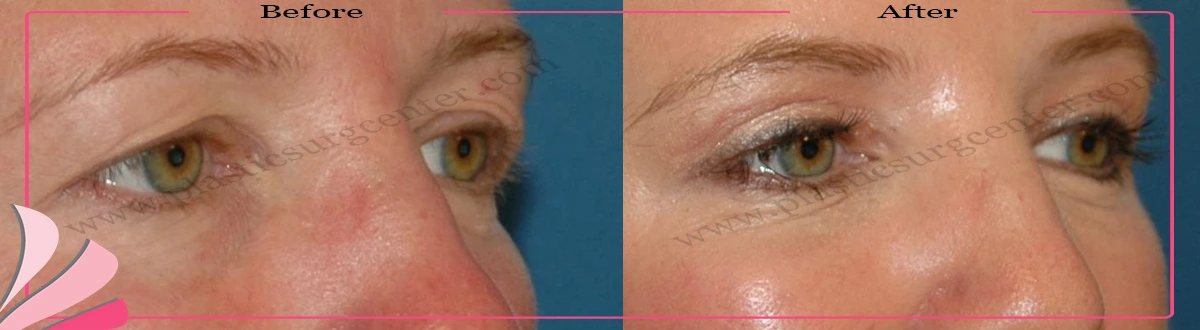
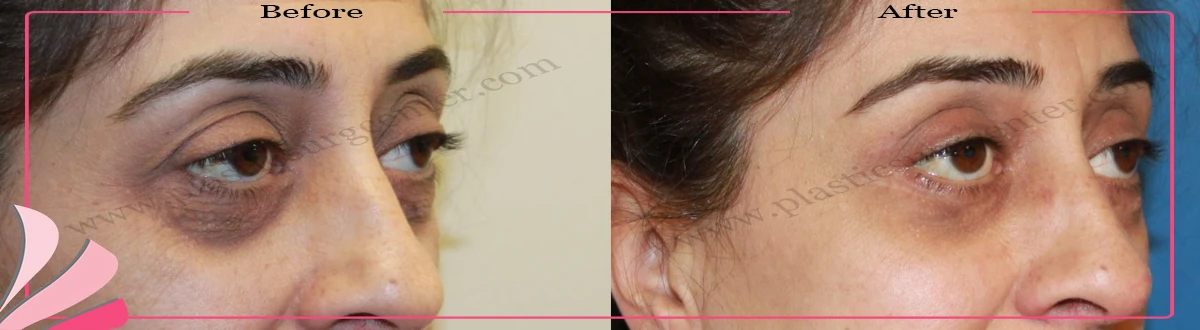
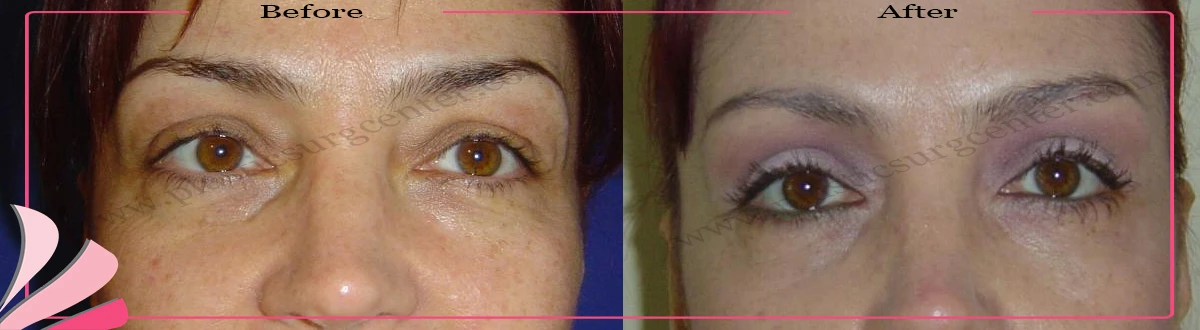
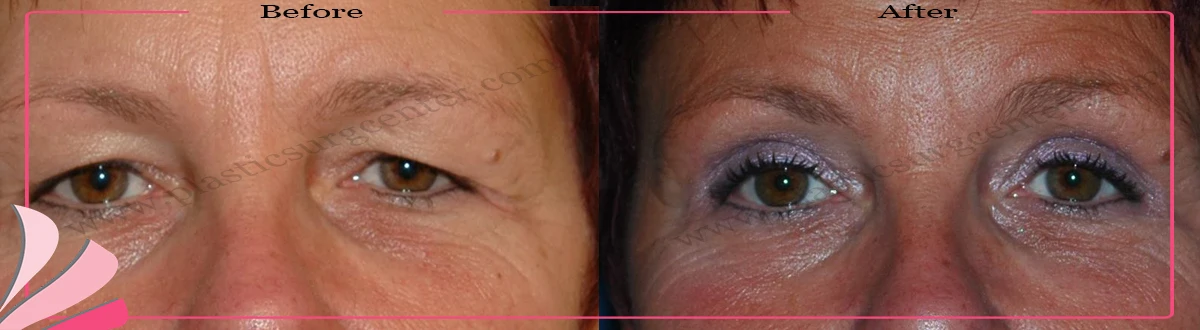
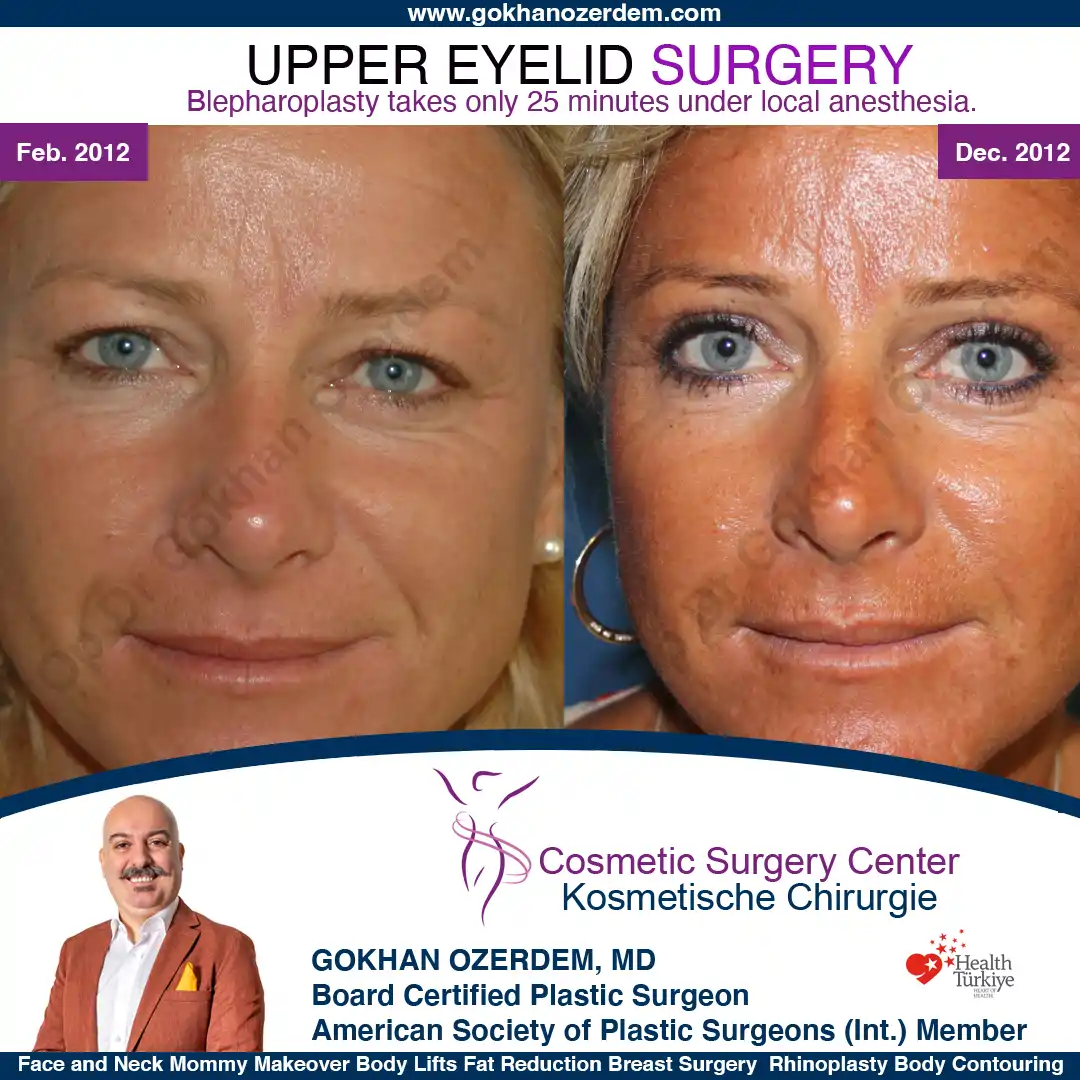
Eyelid Surgery Before and After
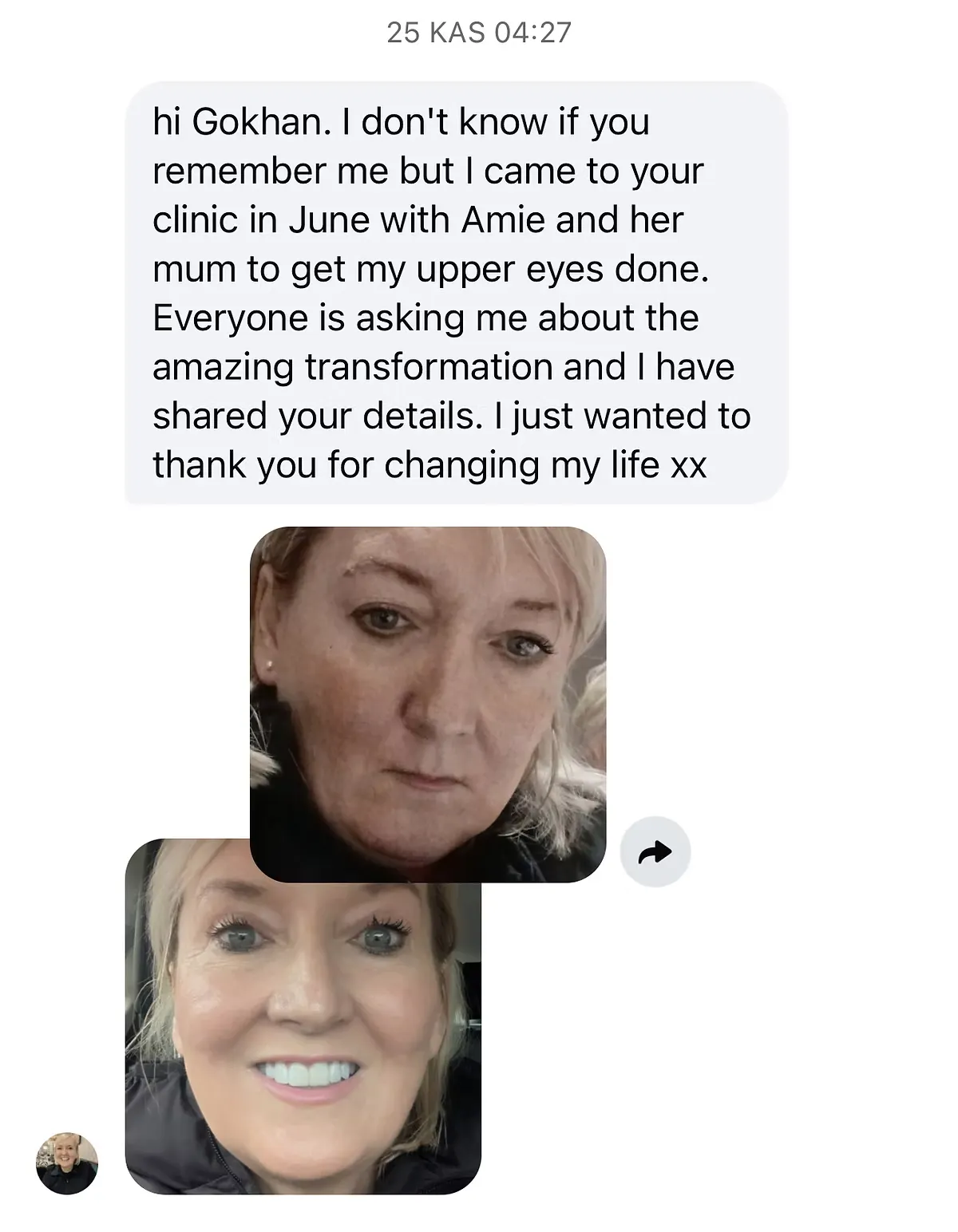
Before and after photographs can help demonstrate the type of improvement that may be achieved with upper or lower blepharoplasty.
However, eyelid anatomy differs considerably between patients.
Brow position, skin quality, fat distribution, eye shape and the underlying skeletal anatomy all influence the result.
Previous patient photographs should therefore be viewed as examples of individual outcomes rather than a guarantee of your own result.
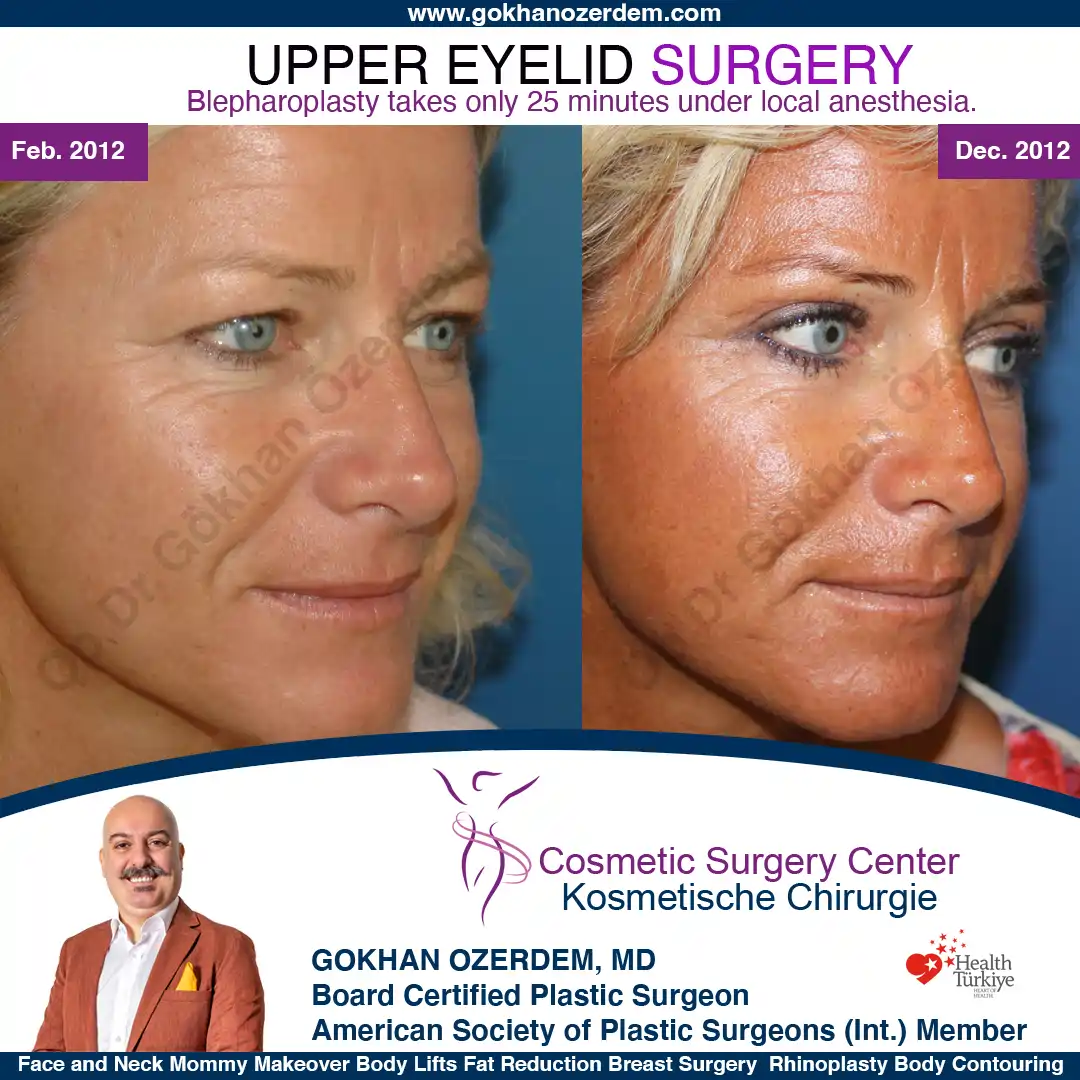
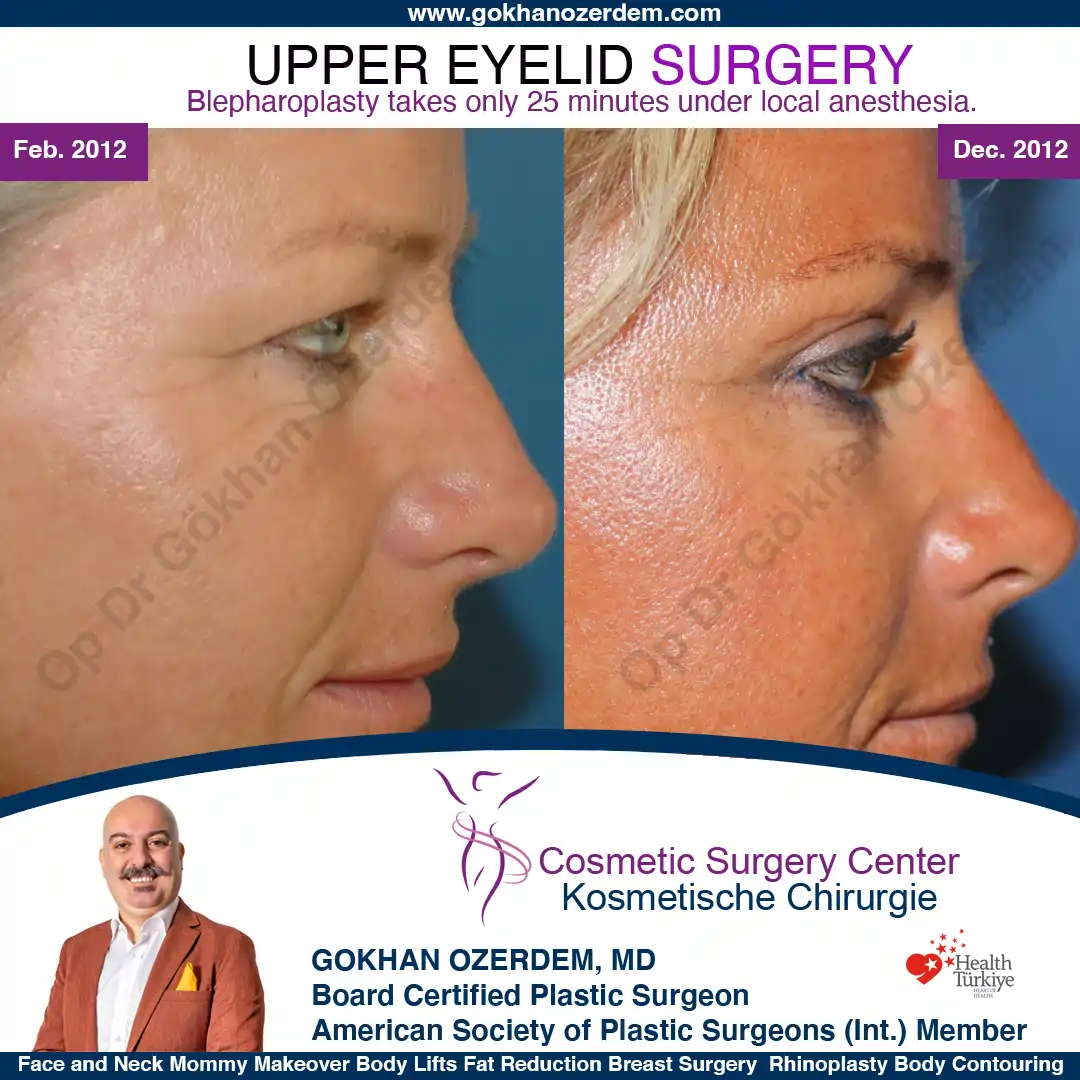
Lower Eyelid Surgery
Lower Blepharoplasty
Lower eyelid ageing is different from upper eyelid ageing.
Patients may develop:
- Prominent lower-eyelid fat pockets
- Under-eye bags
- Loose lower-eyelid skin
- Fine wrinkles
- Changes in the transition between the eyelid and cheek
- Lower-eyelid laxity
Lower blepharoplasty therefore requires a different surgical assessment.
Depending on the patient’s anatomy, surgery may involve treatment of excess skin, prominent fat compartments and the supporting structures of the lower eyelid.
In suitable patients, additional lateral support may be considered when lower-eyelid laxity is present.
Lower-eyelid surgery must be planned particularly carefully because eyelid position and support are important for both appearance and function.
Upper and Lower Blepharoplasty Together
Some patients have significant ageing changes affecting both the upper and lower eyelids.
In appropriate patients, upper and lower blepharoplasty can be performed during the same operation.
However, the decision should not simply be based on a desire to ‘do everything at once’.
Each eyelid should have a clear indication for surgery.
If only the upper eyelids require treatment, I see no reason to operate on the lower eyelids simply because the patient is already having surgery.
Eyelid Surgery and Facial Rejuvenation
One reason I consider upper eyelid surgery particularly valuable is that a relatively limited operation can sometimes produce a noticeable improvement in the overall appearance of the face.
Heavy upper eyelids can make a person appear tired even when they are not.
Reducing genuine excess skin can reveal more of the natural upper eyelid and create a fresher appearance around the eyes.
For suitable patients who are beginning to notice facial ageing but do not require more extensive facial surgery, upper blepharoplasty is often one of the first surgical rejuvenation procedures I consider.
Blepharoplasty or Non-Surgical Treatment?
Patients frequently ask whether devices, injections or other non-surgical treatments can produce the same effect as upper eyelid surgery.
The answer depends on the problem.
Non-surgical treatments may have a role in selected concerns, but they do not physically remove a significant fold of excess upper-eyelid skin.
When genuine skin excess is the principal problem, I find surgical upper blepharoplasty to be a more direct and predictable way of addressing it.
The appropriate treatment should be selected according to the anatomy rather than according to whether a treatment is described as ‘surgical’ or ‘non-surgical’.
Anaesthesia for Eyelid Surgery
Upper blepharoplasty can often be performed under local anaesthesia when it is carried out as an isolated procedure.
More extensive eyelid surgery or blepharoplasty combined with other facial procedures may require a different anaesthetic plan.
Blepharoplasty can be performed under local or general anaesthesia depending on the operation and patient circumstances.
When general anaesthesia is required, surgery is performed in an appropriately equipped hospital in Antalya.
The anaesthetic approach is discussed before surgery according to the planned procedure and the individual patient.
Recovery After Upper Eyelid Surgery
Upper eyelid surgery generally has a relatively manageable recovery period.
Swelling and bruising are normal during the early days.
Patients can usually continue many ordinary daily activities relatively quickly, although visible bruising or swelling may make some people prefer a short period away from work or social engagements.
During recovery, patients should follow instructions regarding:
- Wound care
- Eye care
- Physical activity
- Make-up
- Contact lenses where relevant
- Sun exposure
- Medication
- Smoking
The incision gradually settles within the natural eyelid crease.
Although early improvement becomes visible relatively quickly, the scar and surrounding tissues continue to mature over the following weeks and months.
Recovery After Lower Eyelid Surgery
Lower eyelid surgery can involve more swelling and bruising than a straightforward upper blepharoplasty.
Recovery varies according to the technique used and the extent of surgery.
Temporary swelling, bruising, tightness and changes in sensation can occur.
Some patients may experience temporary dryness or irritation of the eyes after blepharoplasty; patients with pre-existing dry-eye symptoms require particular consideration.
Patients should allow sufficient time for the tissues to settle rather than judging the result during the early postoperative period.
Risks and Limitations of Eyelid Surgery
Blepharoplasty is a commonly performed operation, but it remains surgery and therefore carries potential risks.
These can include, among others:
- Bleeding
- Infection
- Delayed wound healing
- Visible or asymmetrical scars
- Temporary dry or irritated eyes
- Asymmetry
- Changes in eyelid position
- Under-correction or over-correction
- Need for further treatment
- Anaesthetic risks where applicable
Specific risks vary according to whether upper or lower eyelid surgery is performed and according to the patient’s anatomy and medical history.
Eye conditions, thyroid disease, diabetes, medication and pre-existing dry-eye symptoms are among the factors that should be discussed before surgery.
A full discussion of the relevant risks forms part of the consultation and consent process.
Eyelid Surgery in Turkey for International Patients
Travelling to Antalya for Blepharoplasty
Blepharoplasty can be particularly suitable for international patients because isolated upper eyelid surgery is generally less extensive than many major aesthetic operations.
However, travelling for a relatively small operation still requires proper medical planning.
Before travelling to Antalya, my team may request:
- Medical history
- Current medication
- Previous eye or facial surgery
- Information about existing eye conditions
- Photographs for preliminary assessment
The definitive treatment plan is confirmed after I examine you personally in Antalya.
How Long Should I Stay in Antalya After Eyelid Surgery?
The recommended stay depends on whether you are having upper eyelid surgery alone, lower blepharoplasty or a combined procedure.
An isolated upper blepharoplasty may require a shorter stay than major facial surgery.
However, I prefer to determine the appropriate travel schedule individually rather than give every international patient the same number of days.
Your postoperative condition and the type of procedure should determine when you travel home.
Why Choose Dr Gökhan Özerdem for Eyelid Surgery?
Eyelid surgery may appear simple because the incisions are relatively small.
That does not make the anatomy simple.
The surgeon needs to distinguish between:
- True excess eyelid skin
- Brow descent
- Prominent fat
- Eyelid laxity
- Natural asymmetry
- Changes requiring surgery and those that do not
Particularly in upper blepharoplasty, I believe that conservative tissue removal and careful preoperative marking are more important than attempting to create a dramatic change.
With more than 25 years of surgical experience, my objective is to achieve a fresher appearance while preserving the natural shape and character of the eyes.
Small operation does not mean small attention to detail.
Frequently Asked Questions About Eyelid Surgery
Blepharoplasty is the medical term for eyelid surgery. It can involve the upper eyelids, lower eyelids or both, depending on the patient’s anatomy and concerns.
In straightforward cases, my upper blepharoplasty procedure commonly takes approximately 25–30 minutes. More complex surgery or combined procedures take longer.
The incision is positioned within the natural upper eyelid crease. This helps conceal the scar when the eye is open, and the scar usually becomes less noticeable as it matures.
I commonly use absorbable sutures for upper eyelid surgery where appropriate. The exact closure technique can vary according to the individual procedure.
Many ordinary activities can be resumed relatively quickly after uncomplicated upper blepharoplasty. However, swelling and bruising are expected, and strenuous exercise and other activities may need to be restricted temporarily.
It can create a fresher and less heavy appearance around the eyes when genuine excess upper-eyelid skin is present. The objective is improvement rather than changing your natural eye shape.
It may be either, or a combination of both. Brow position has a direct effect on the appearance of the upper eyelid. This is why I assess the brow and upper eyelid together before recommending surgery.
If brow descent is the main cause of upper-eye heaviness, brow surgery may be more appropriate. Some patients have both brow descent and genuine eyelid skin excess and may benefit from treating both.
Yes, when both areas have a genuine indication for surgery. I do not recommend operating on an unaffected eyelid simply for convenience.
Yes. Blepharoplasty is frequently considered alongside facelift or brow lift surgery when different areas of the face show significant ageing. Whether procedures should be combined depends on the individual patient and the overall surgical plan.
Not necessarily. Dark circles can have several causes, including pigmentation, skin quality, vascular visibility, shadowing and anatomy. Blepharoplasty is not a universal treatment for dark circles.
Prominent lower-eyelid fat can contribute to under-eye bags and may be addressed during lower blepharoplasty. The correct technique depends on skin, fat distribution and eyelid support.
Most patients experience relatively mild discomfort, swelling or tightness rather than severe pain, particularly after isolated upper blepharoplasty.
Make-up should not be applied directly to healing incisions until the wounds have healed sufficiently. I advise patients individually during postoperative follow-up.
Yes. Eyelid surgery can be performed during the summer, but healing scars should be protected from strong sunlight and postoperative instructions should be followed carefully.
Blepharoplasty can provide long-lasting improvement, but it cannot stop the ageing process. The eyelids, brows and surrounding facial tissues will continue to change over time.
Yes. Follow-up communication continues after you leave Turkey. Photographs or additional information may be requested during recovery, and local medical assessment may be advised if a physical examination becomes necessary.
Considering Eyelid Surgery in Antalya, Turkey?
If your eyes appear persistently tired or heavy, the first step is to determine why.
The problem may be excess upper-eyelid skin, prominent fat, lower-eyelid changes, brow descent or a combination of these factors.
The correct diagnosis determines the correct operation.
An initial assessment can help establish whether blepharoplasty may be appropriate before you make your travel arrangements.
Dr Gökhan Özerdem
Specialist in Aesthetic, Plastic and Reconstructive Surgery
Antalya, Turkey
Contact Our International Patient Team
Request a Preliminary Assessment
Face: – Rhinoplasty – Eyelid Surgery – Forehead and Brow Lift – Ear Surgery –
Breast: – Breast Augmentation – Breast Lift – Breast Reduction – Gynecomastia –
Body: – Tummy Tuck – Mini Tummy Tuck – Liposuction – Arm Lift – Thigh Lift – Body Contouring – Mommy Makeover –