


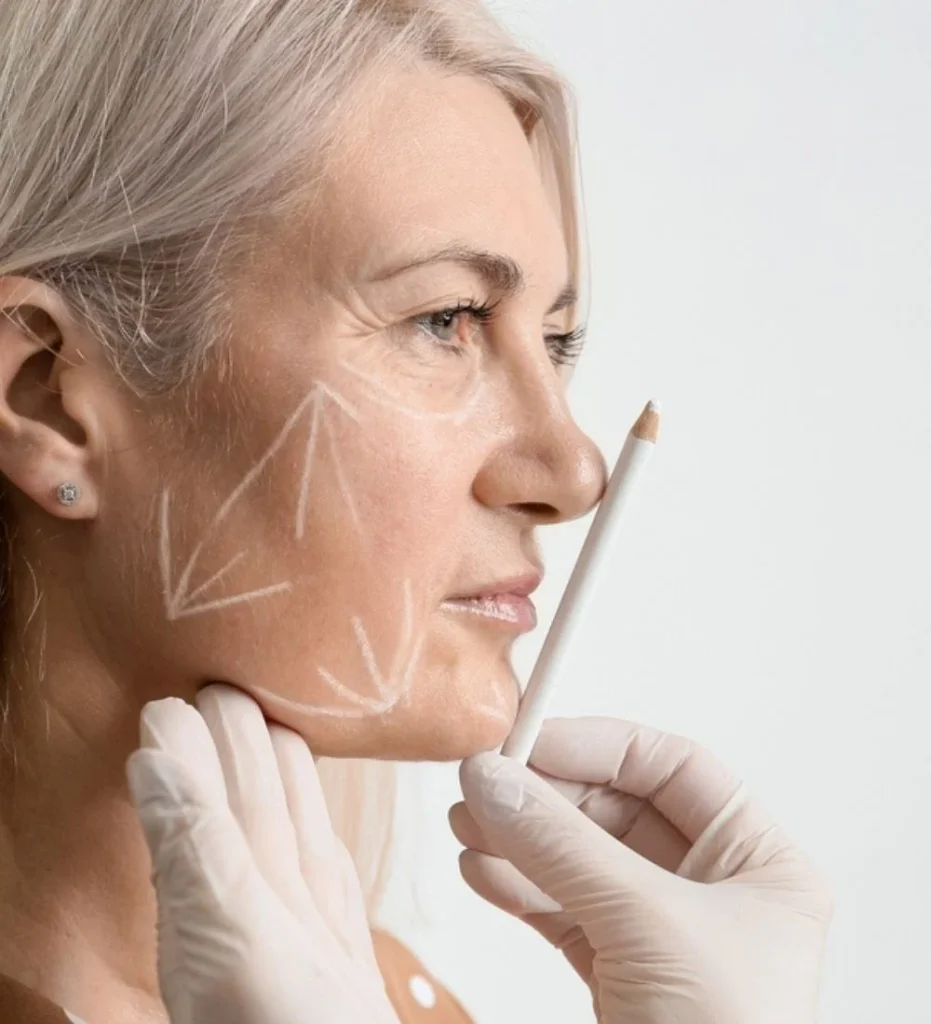
Signs of facial aging are not limited merely to skin laxity. Over time, the deeper tissues of the face sag; the area under the chin may become prominent, the jawline can lose its definition, and the neck skin may slacken.
For this reason, I do not view the modern facelift simply as a skin-tightening procedure.
I am Dr. Gökhan Özerdem, a specialist in aesthetic, plastic, and reconstructive surgery based in Antalya. With over 25 years of surgical experience, I perform face and neck lift surgeries for patients from both Turkey and abroad.
For suitable candidates, I frequently employ the “High SMAS” facelift technique, which allows for the repositioning of deep facial tissues rather than relying on excessive tension on the skin.
My goal is quite clear:
A younger, better-defined face that still looks like you.
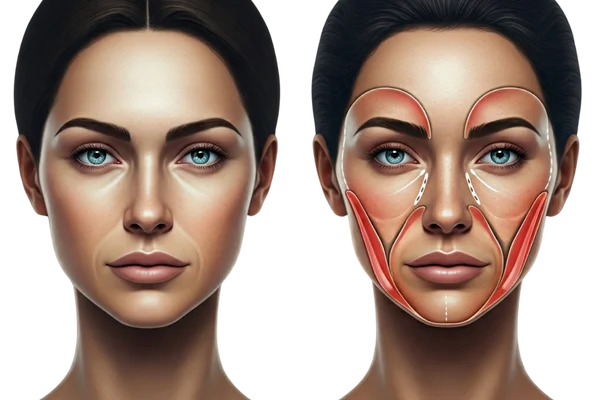
What is Facelift Surgery
A facelift, medically known as rhytidectomy, is a surgical procedure designed to improve visible signs of aging affecting the face.
Depending on the individual patient, facelift surgery may address:
Jowls
Loss of jawline definition
Descent of the facial tissues
Loose facial skin
Lower facial laxity
Changes in the cheek area
Deepening facial folds
However, facelift surgery is not simply about removing excess skin.
The deeper tissues of the face play an important role in facial aging. Evaluating these structures is, therefore, an essential part of my surgical planning.
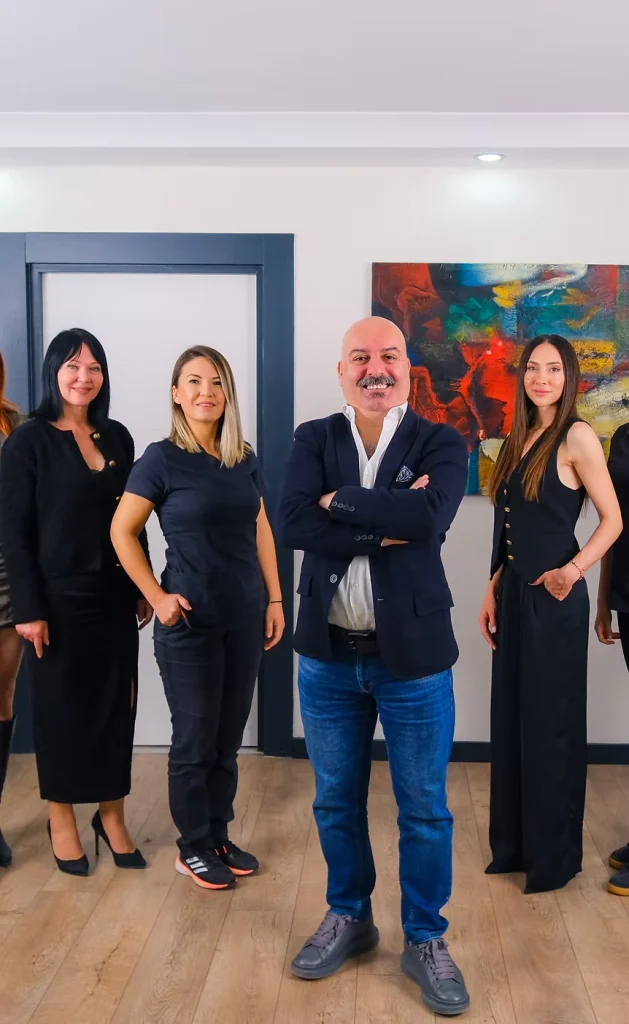
About Dr. Gökhan Özerdem
Specialist Plastic Surgeon in Antalya, Turkey
I am Dr Gökhan Özerdem, Specialist in Aesthetic, Plastic and Reconstructive Surgery, practising in Antalya, Turkey.
My professional background includes:
- More than 25 years of surgical experience
- Thousands of aesthetic and reconstructive surgical procedures
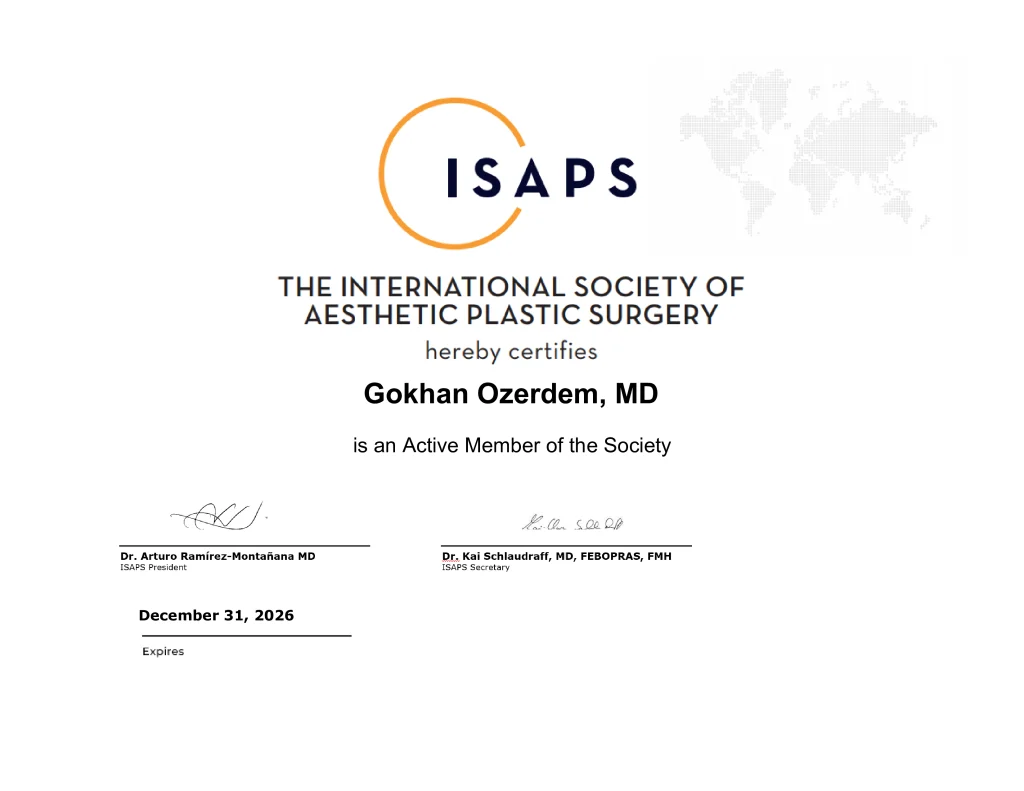
- Member of the International Society of Aesthetic Plastic Surgery (ISAPS)
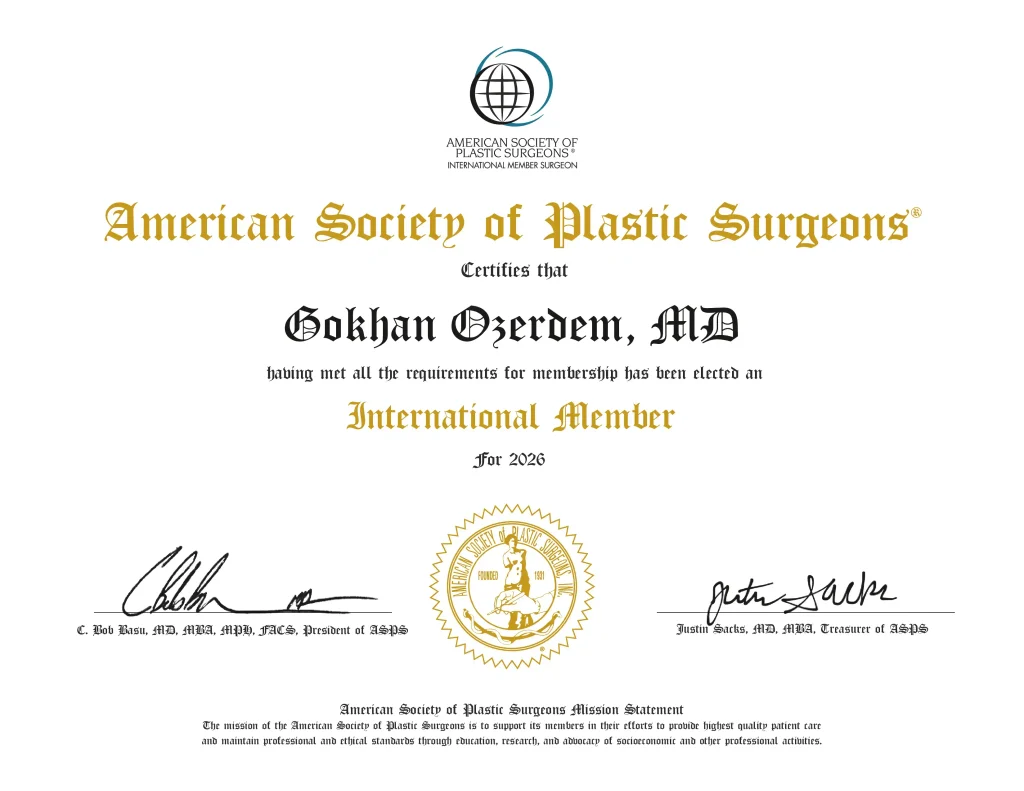
- Member of the American Society of Plastic Surgeons (ASPS)
- Member of the Turkish Society of Plastic, Reconstructive and Aesthetic Surgeons
- Member of the Turkish Society of Aesthetic Plastic Surgery
- Professional medical experience and licensing in Dubai
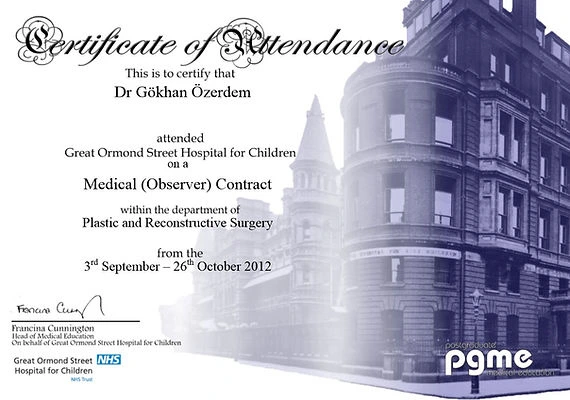
- Observer experience at Great Ormond Street Hospital for Children, London, UK
- Gamma Probe Course at Castle Hill Hospital, Hull, UK
- Oral and poster presentations at national and international scientific congresses
- Session chairmanship at the Turkish National Plastic Surgery Congress
- International scientific publications and academic work
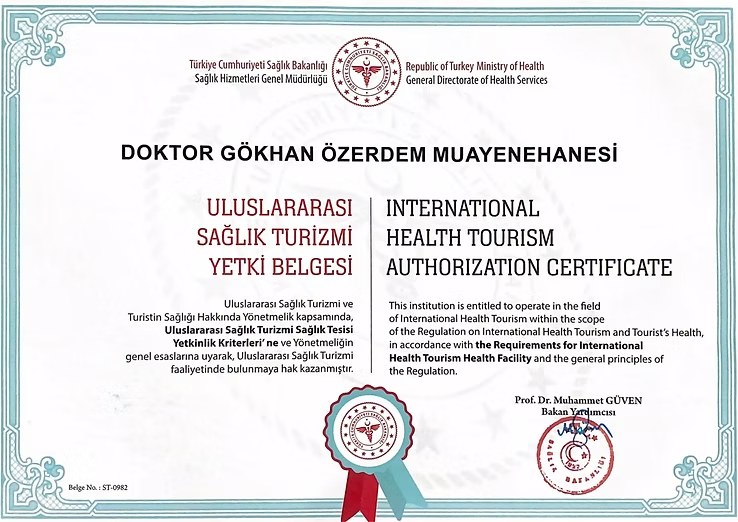
- Authorised to provide services to international patients under the relevant Turkish Ministry of Health International Health Tourism framework
Major surgical procedures are performed in fully equipped hospital facilities in Antalya with appropriate anaesthesia and medical support.
My Approach to Facelift Surgery
High SMAS Facelift
The SMAS — Superficial Musculoaponeurotic System — is an important supporting layer beneath the skin of the face.
As the face ages, changes occur not only in the skin but also in these deeper tissues. Simply pulling the skin cannot adequately address every component of facial ageing.
In appropriate patients, I frequently use a High SMAS facelift.
This technique allows me to work with and reposition the deeper supporting tissues of the face in a controlled manner.
The skin can then be redraped without relying on excessive skin tension to create the result.
This approach can be particularly useful when addressing:
- Jowls
- Lower facial laxity
- Loss of jawline definition
- Descent of the cheek tissues
The exact surgical technique must, however, be adapted to the individual patient’s anatomy.
There is no single facelift operation that is right for every face.
Facelift and Neck Lift
Why I Frequently Treat the Face and Neck Together
The face and neck do not age independently.
A patient may achieve significant improvement in the lower face but still appear aged if loose neck skin, platysmal bands or poor neck definition remain untreated.
For this reason, I frequently assess the face and neck together when planning facelift surgery.
Depending on your anatomy, surgery may address:
- Jowls
- Jawline definition
- Lower facial laxity
- Loose neck skin
- Platysma muscle changes
- Fullness beneath the chin
In selected patients, I may also perform limited submental liposuction when localised fat contributes to poor neck and jawline definition.
Not every patient requires liposuction.
Not every patient requires the same type of neck surgery.
The operation should be planned according to the patient’s anatomy rather than a standard package.
Your Facelift Journey in Antalya
1. Before Travelling
You provide your medical history, relevant information and photographs where appropriate.
2. Consultation in Antalya
I examine your face and neck personally and discuss which areas can realistically be improved.
3. Surgical Planning
We discuss the proposed technique, incision sites, scars, anaesthesia, expected recovery, limitations and relevant risks.
4. Surgery
Your operation is performed in a fully equipped hospital in Antalya.
5. Early Recovery
My team and I monitor your early postoperative recovery while you remain in Turkey.
6. Returning Home
Once your recovery allows you to travel safely, you can return home.
Follow-up communication continues after your departure.
Who Is Suitable for Facelift Surgery?
There is no single ‘correct age’ for a facelift.
Some people develop significant facial and neck laxity earlier than others, while some maintain good facial definition for much longer.
Genetics, skin quality, sun exposure, smoking, weight changes and individual facial anatomy all influence the aging process.
You may be suitable for facelift surgery if you have:
- Noticeable jowls
- Loss of a defined jawline
- Loose facial skin
- Descent of facial tissues
- Neck laxity
- Platysmal bands
- Age-related changes that cannot realistically be corrected with non-surgical treatments
- Good general health
- Realistic expectations
I therefore base the decision primarily on your anatomy and degree of facial aging rather than your chronological age.
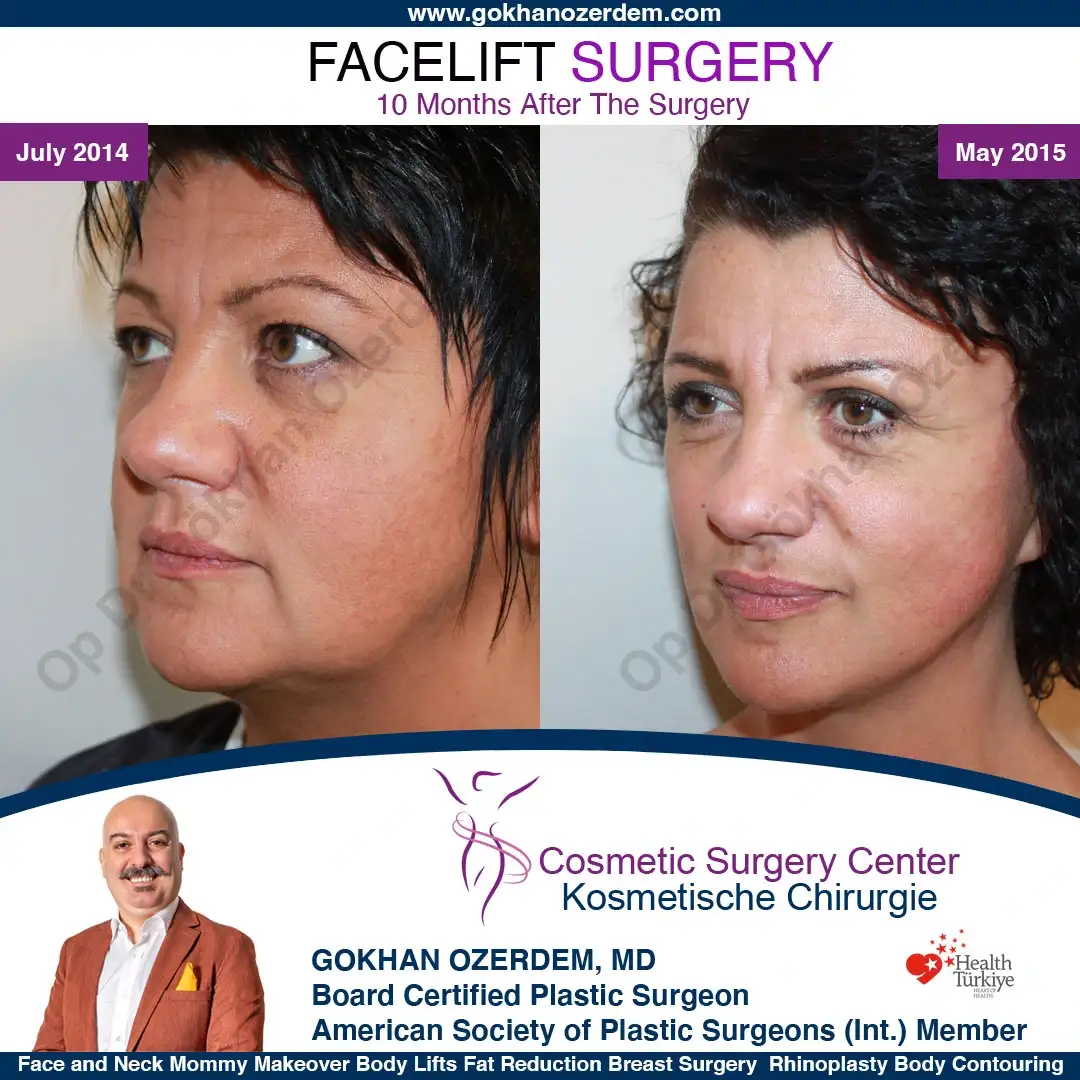
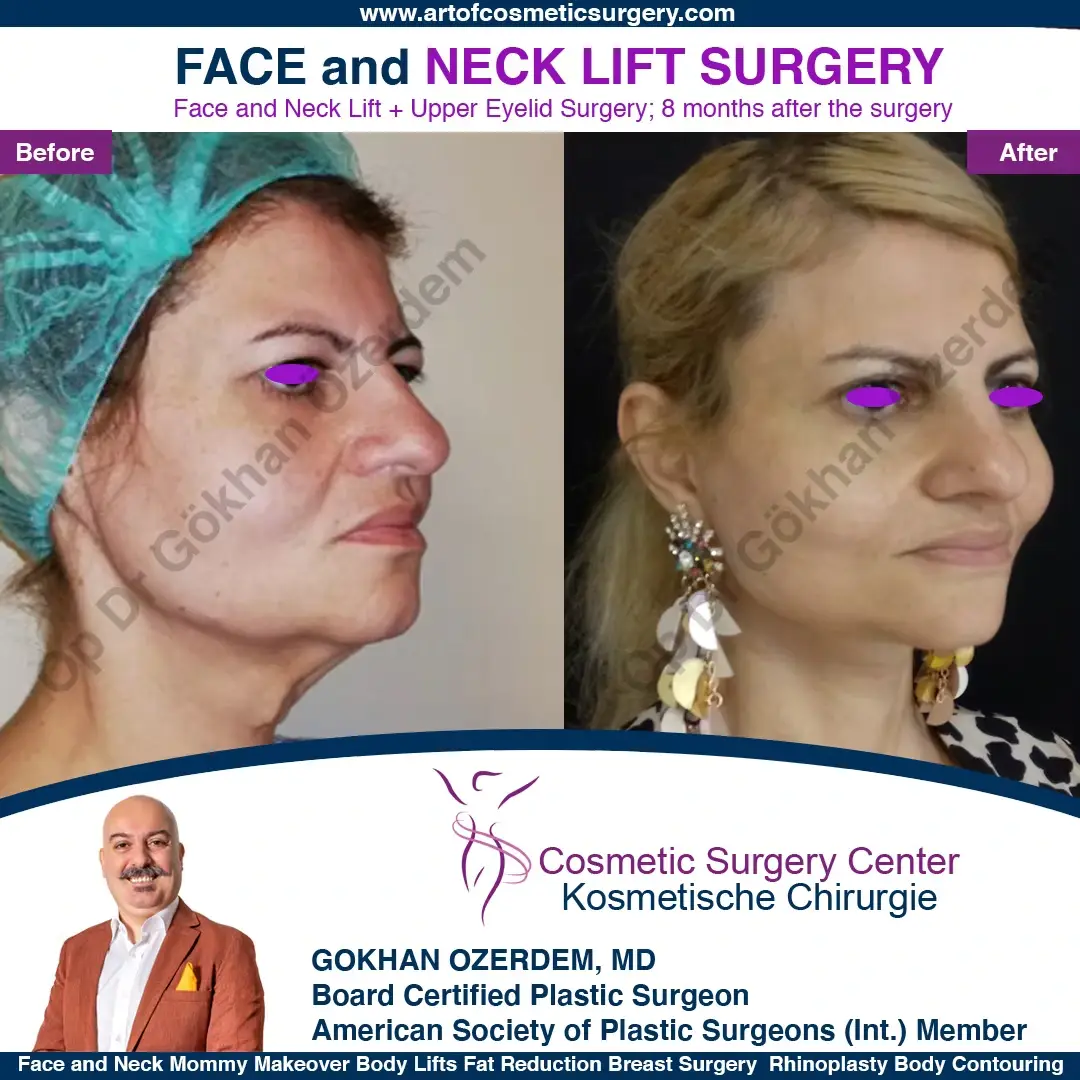
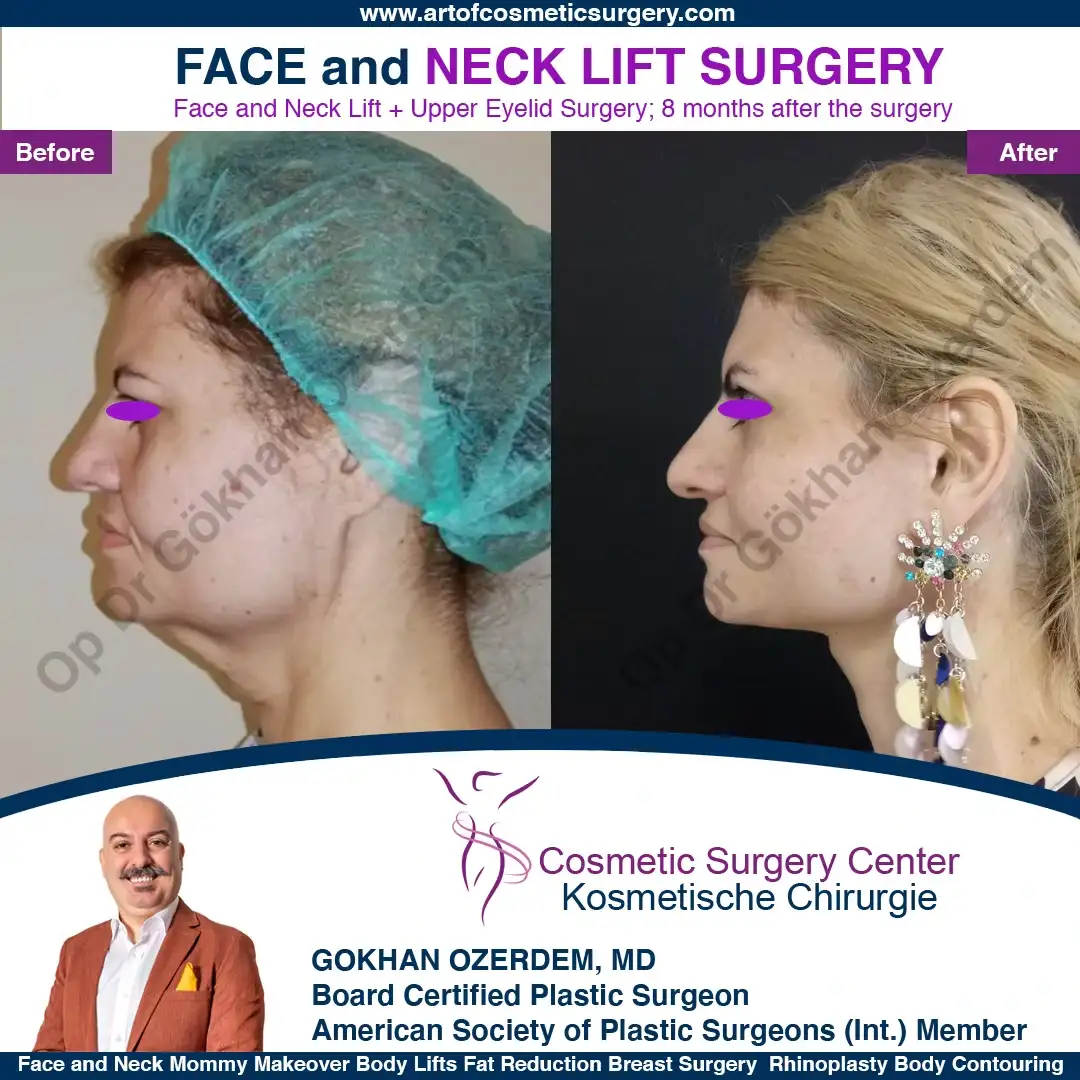
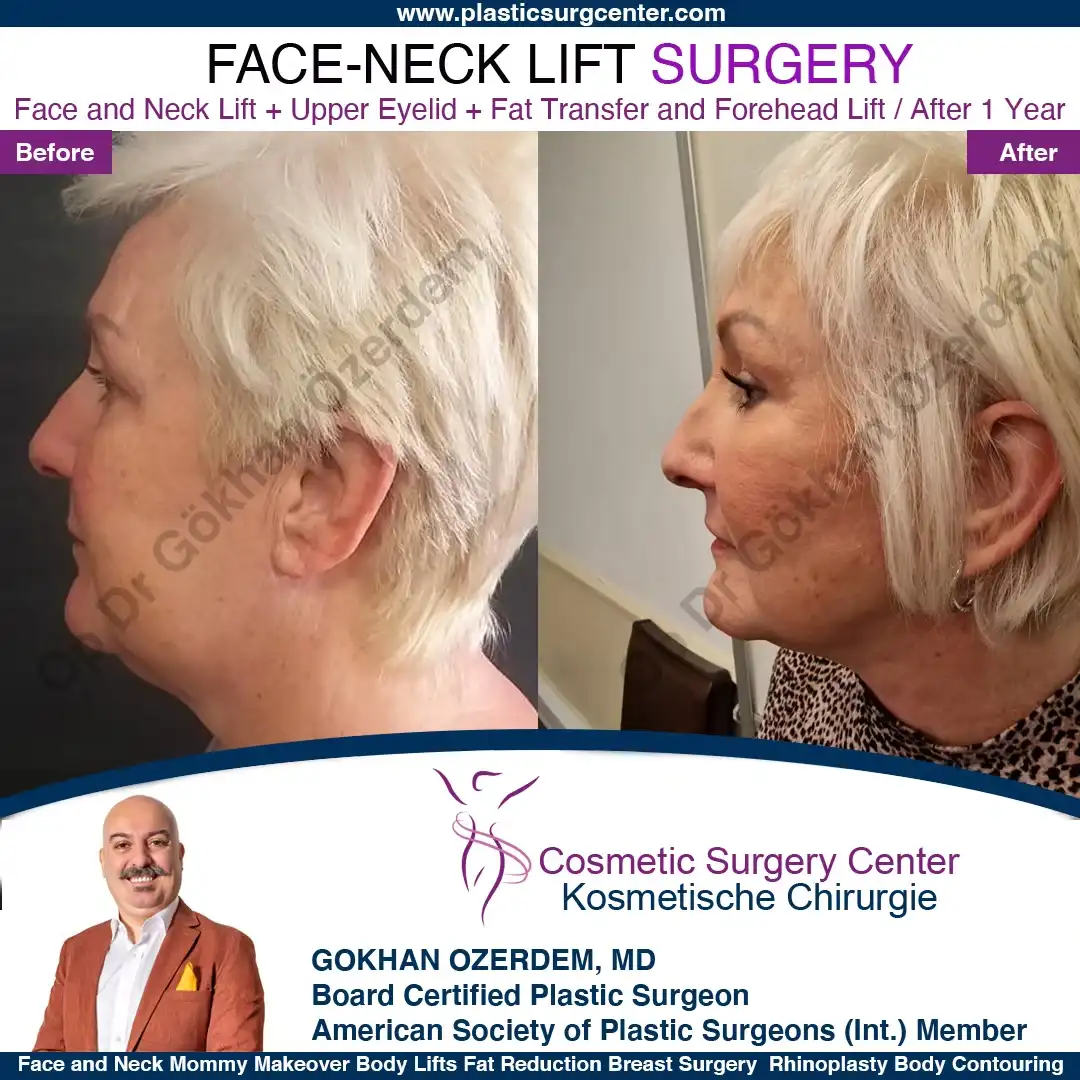
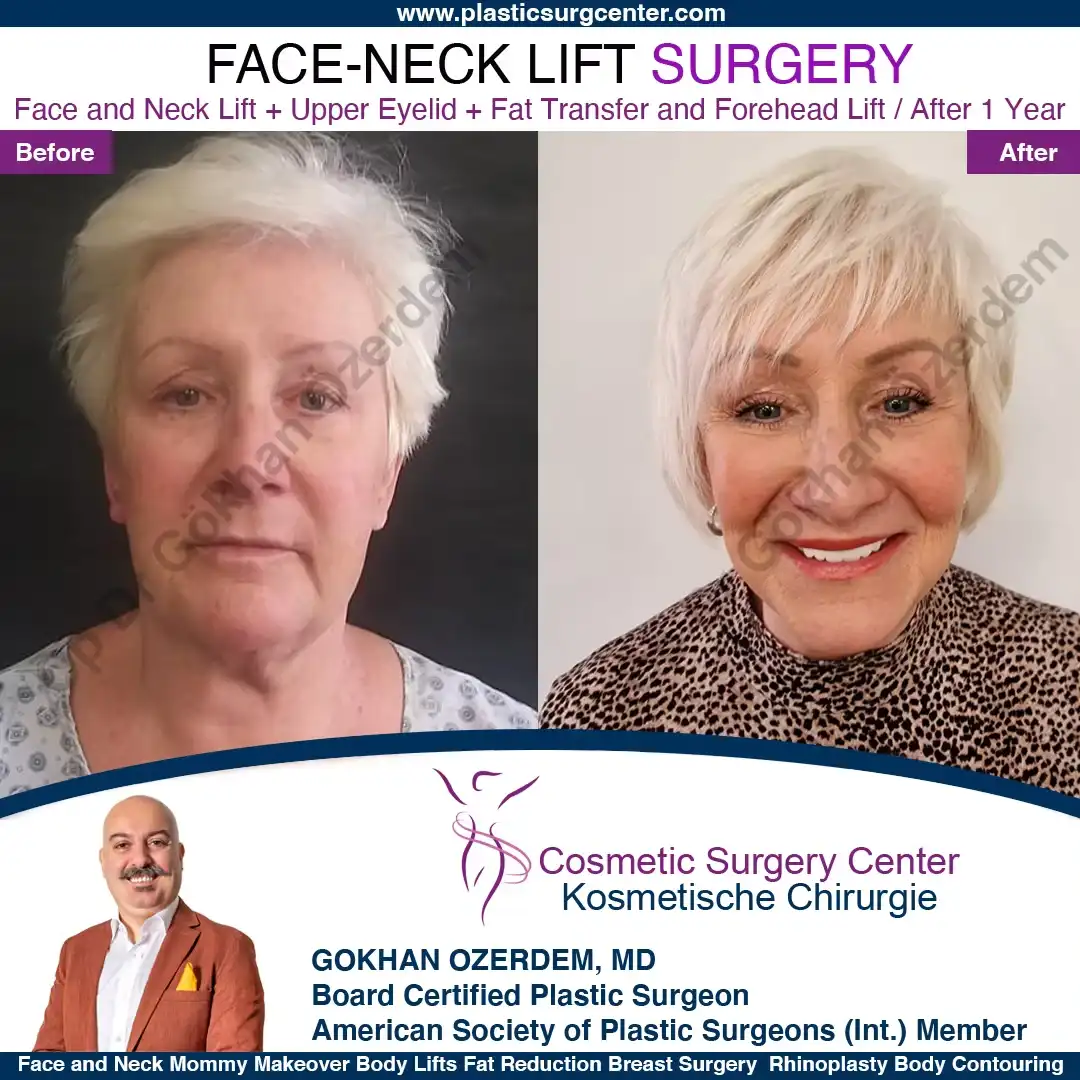
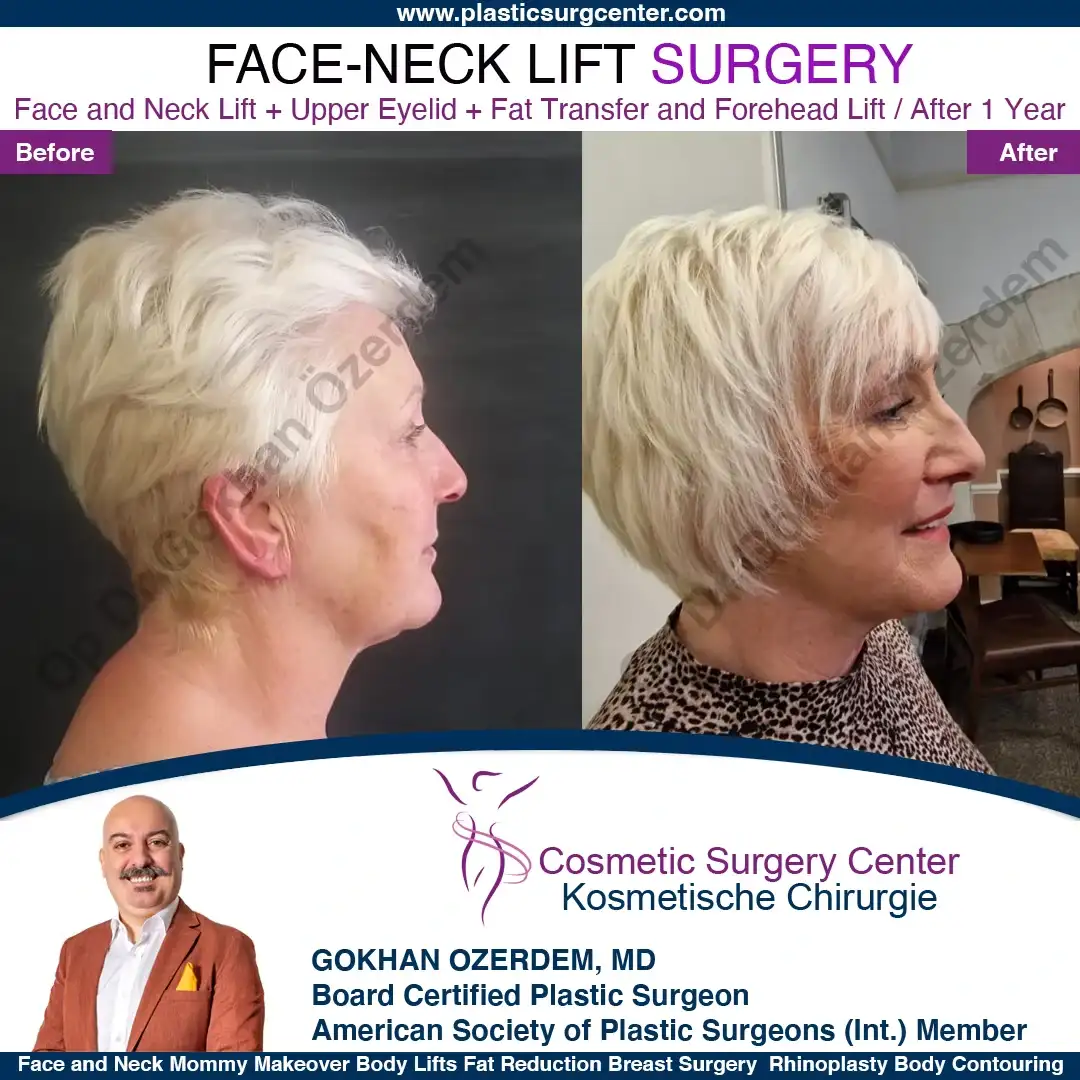
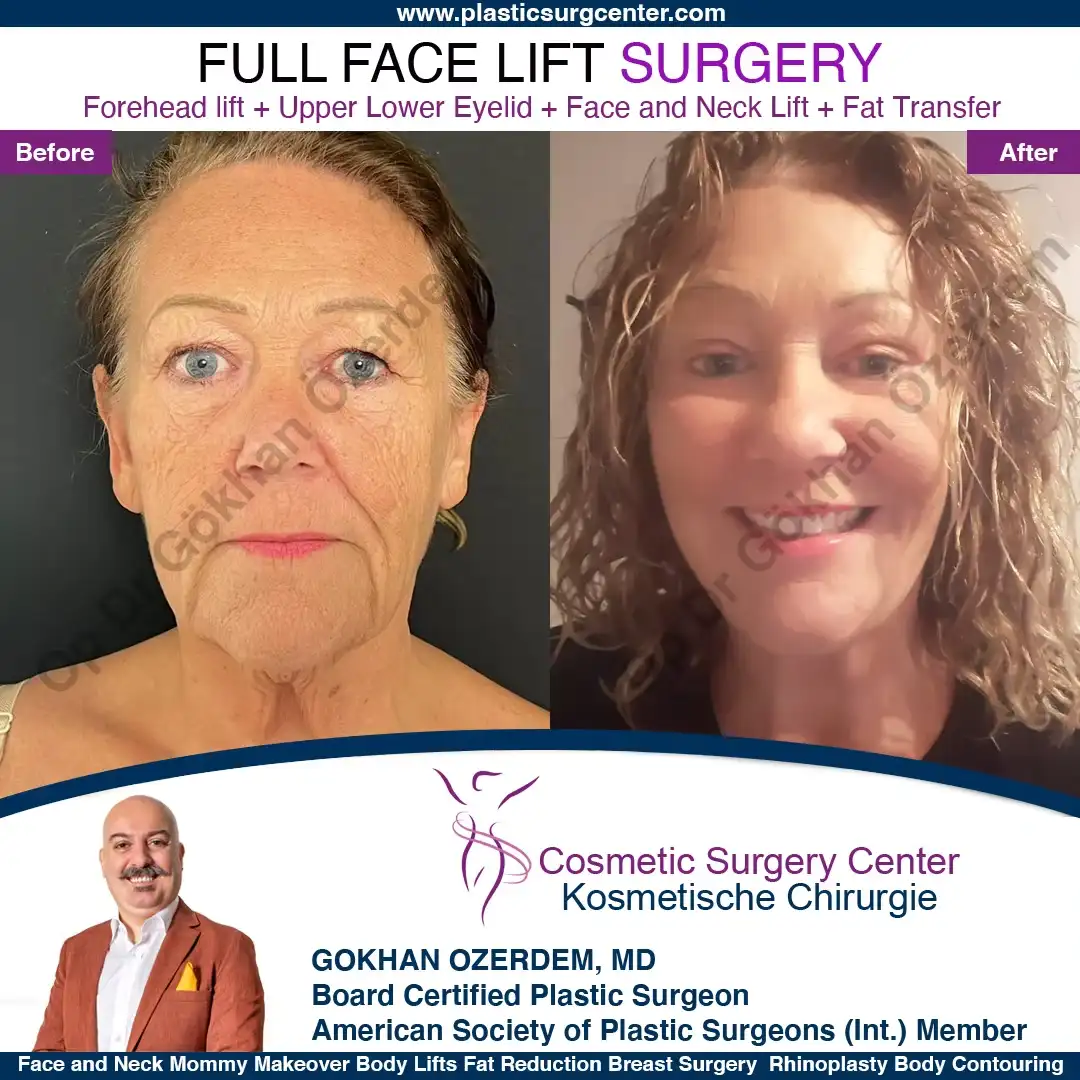
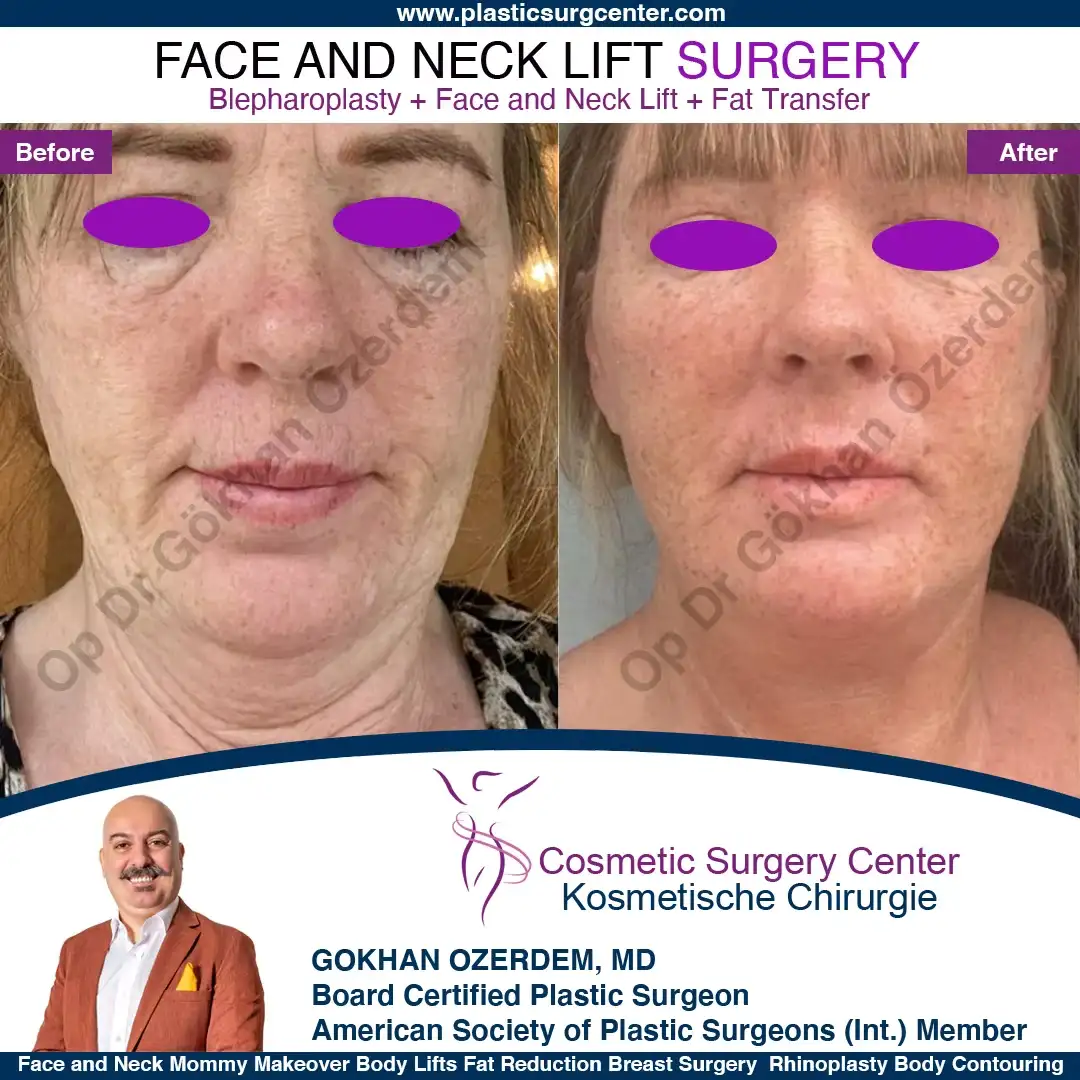
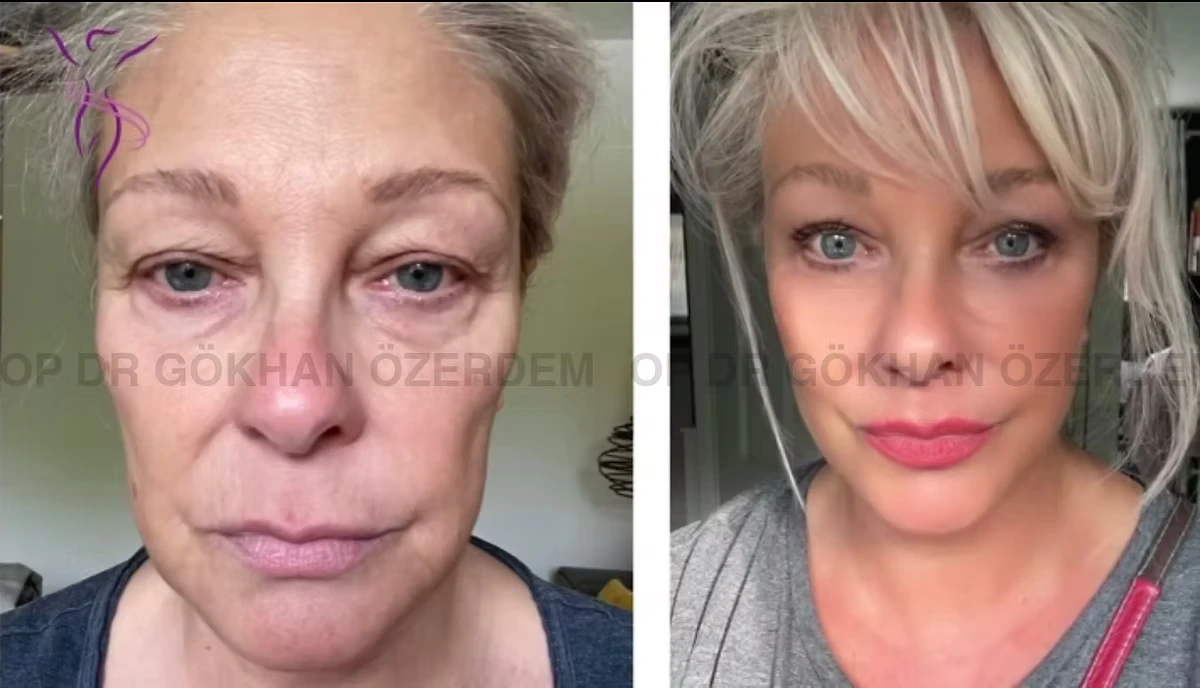
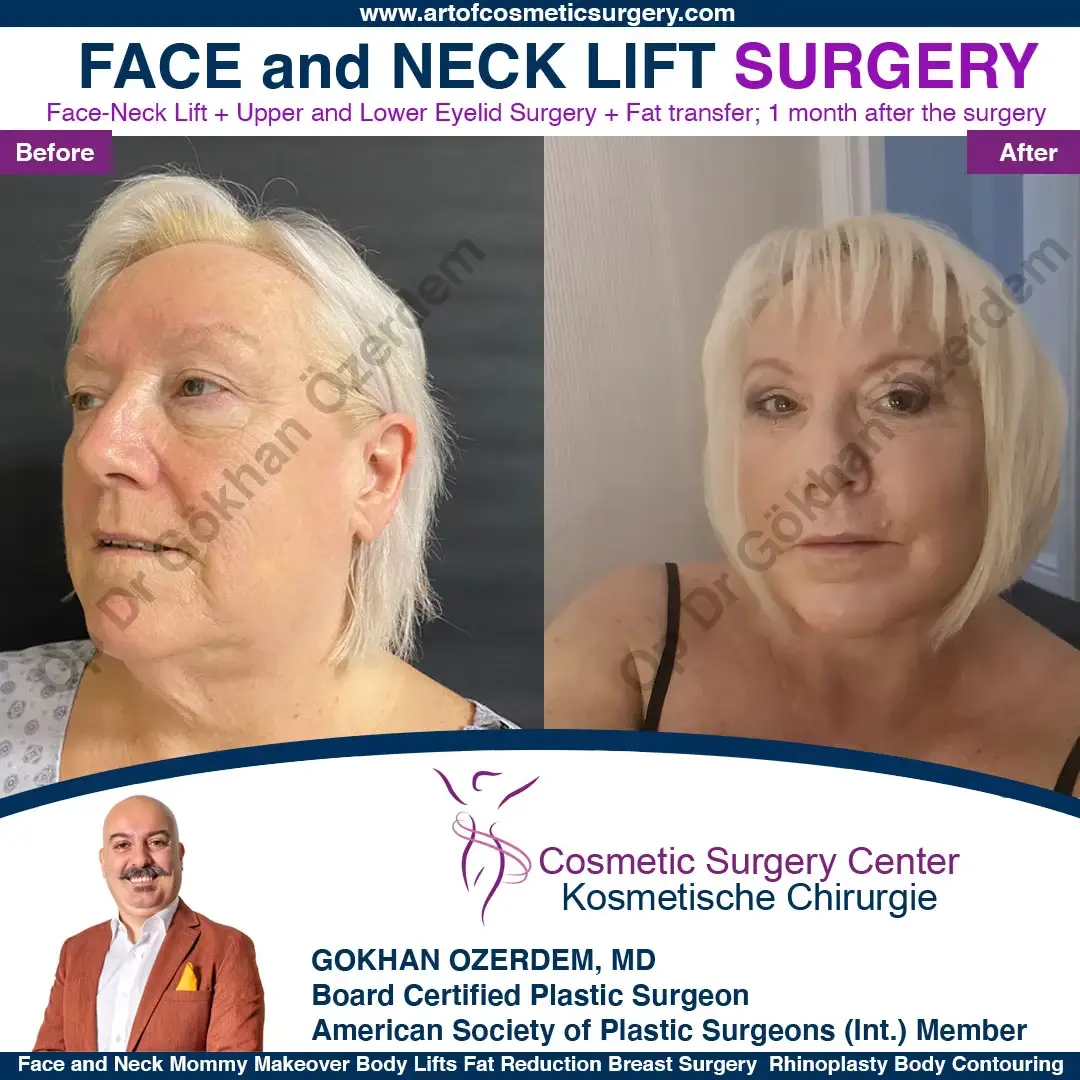
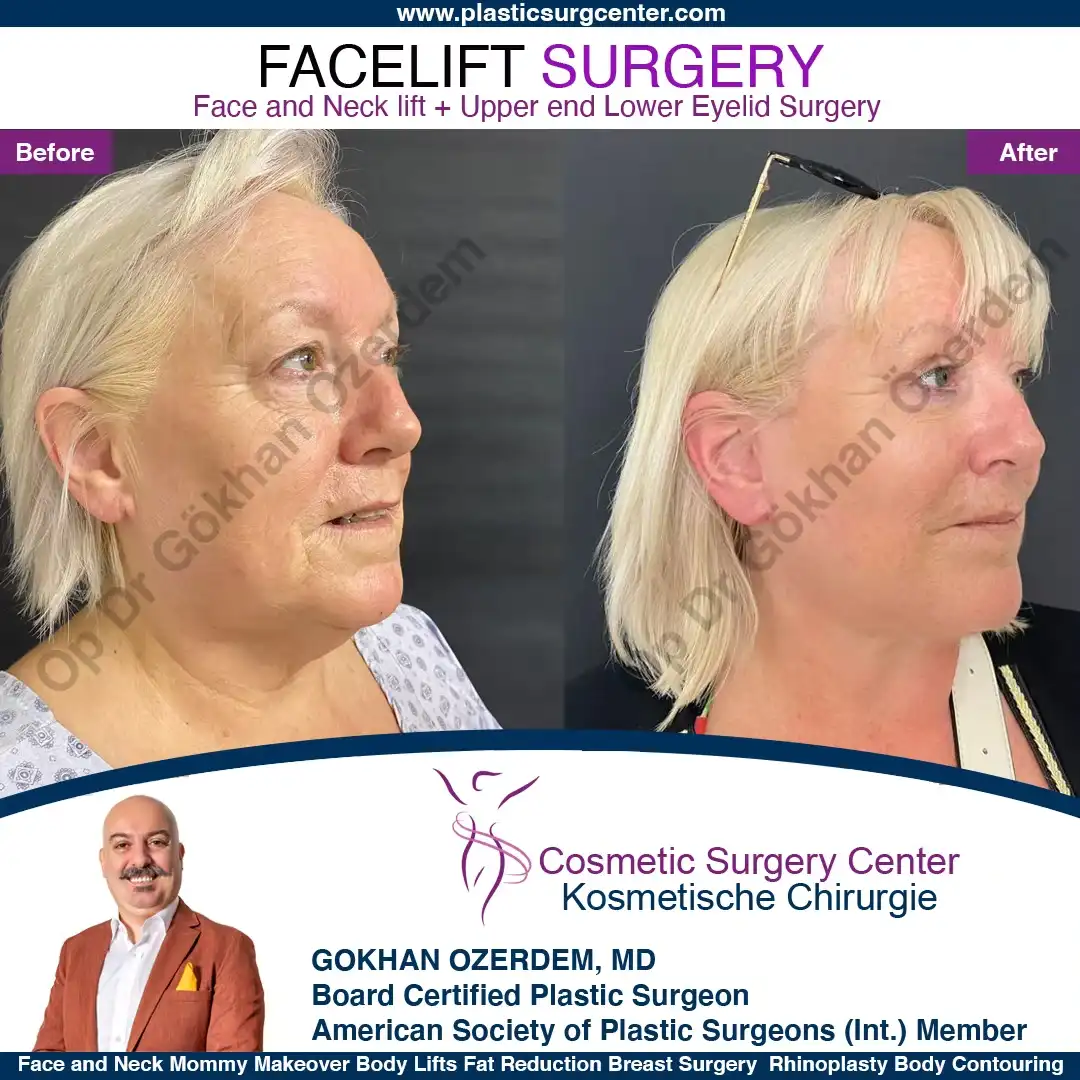
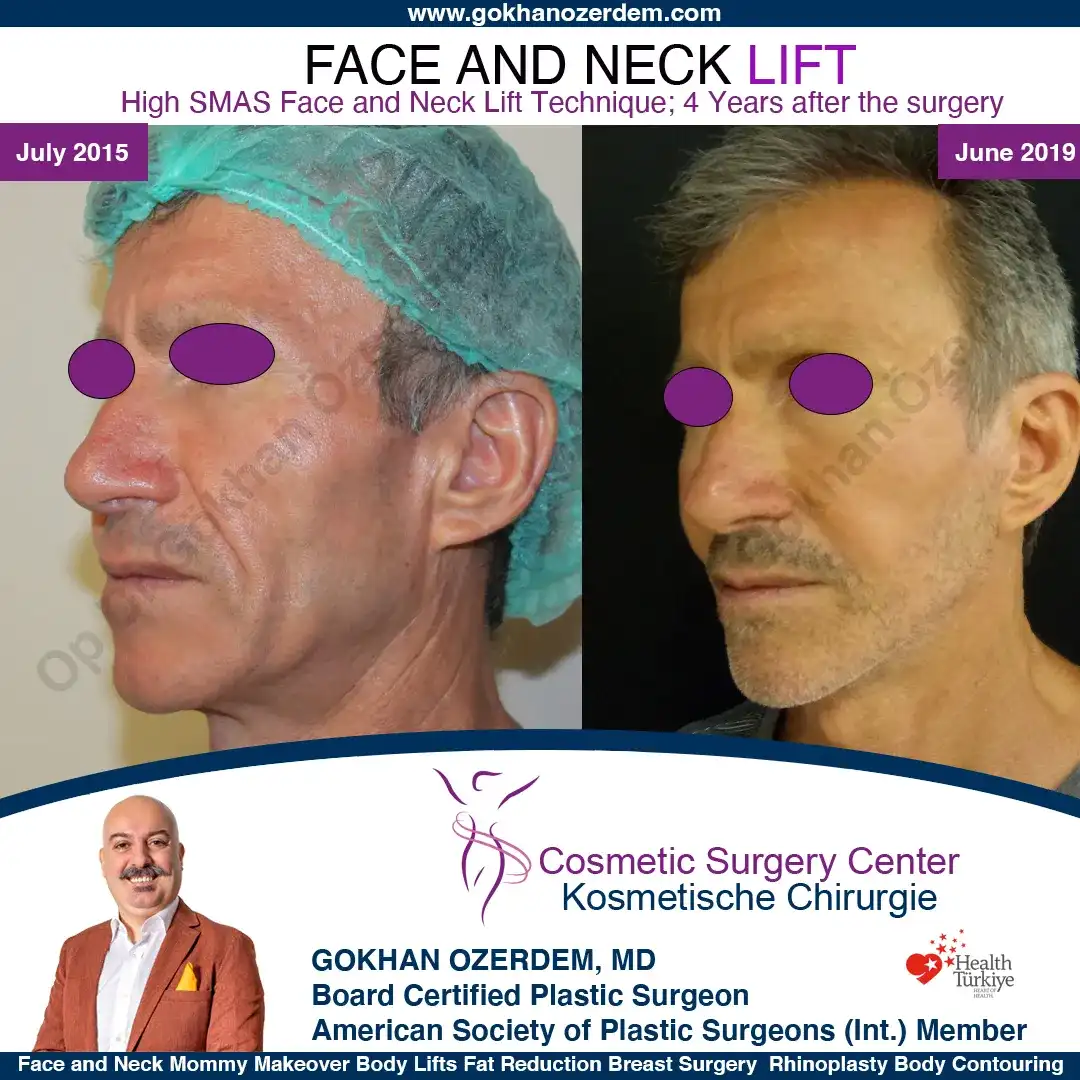
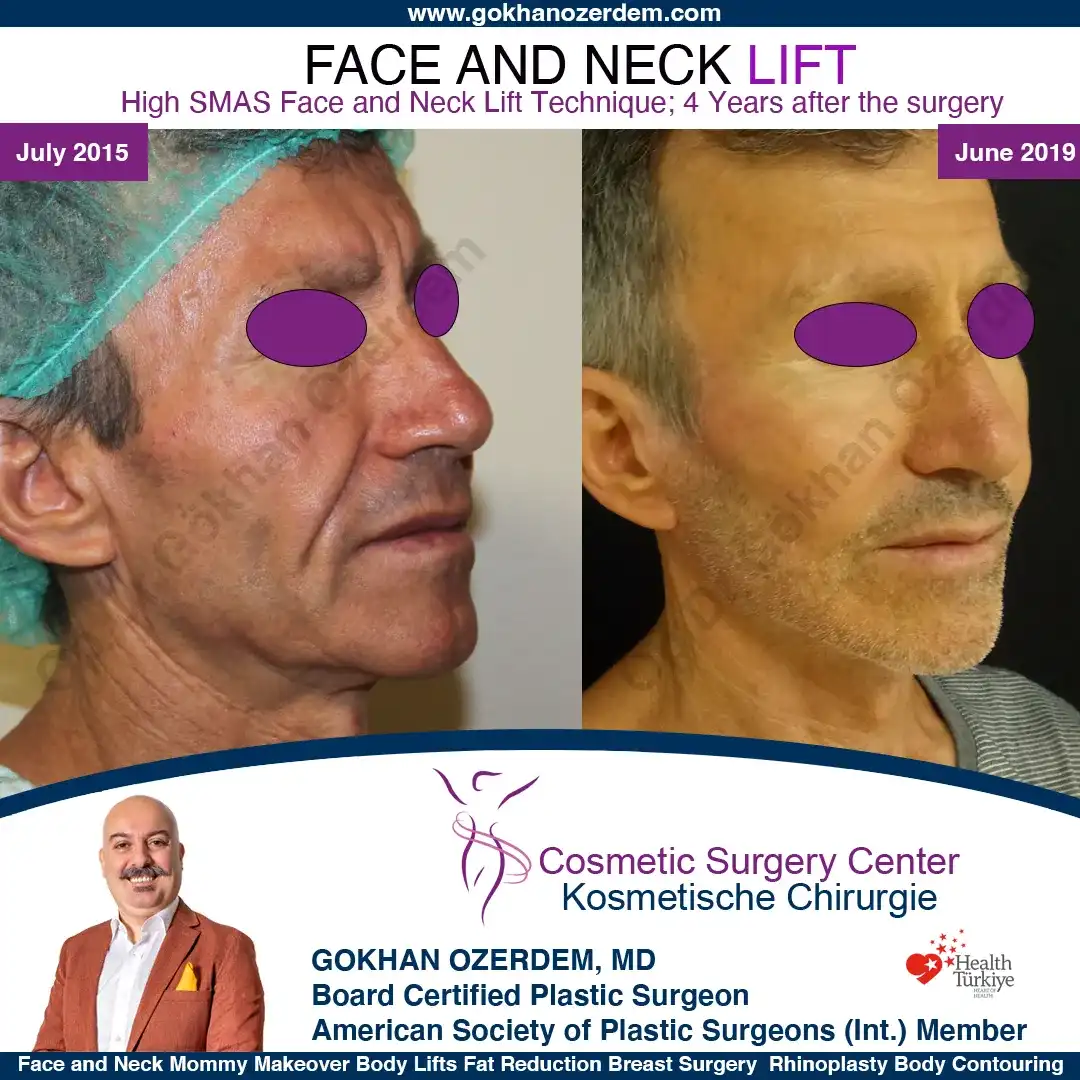
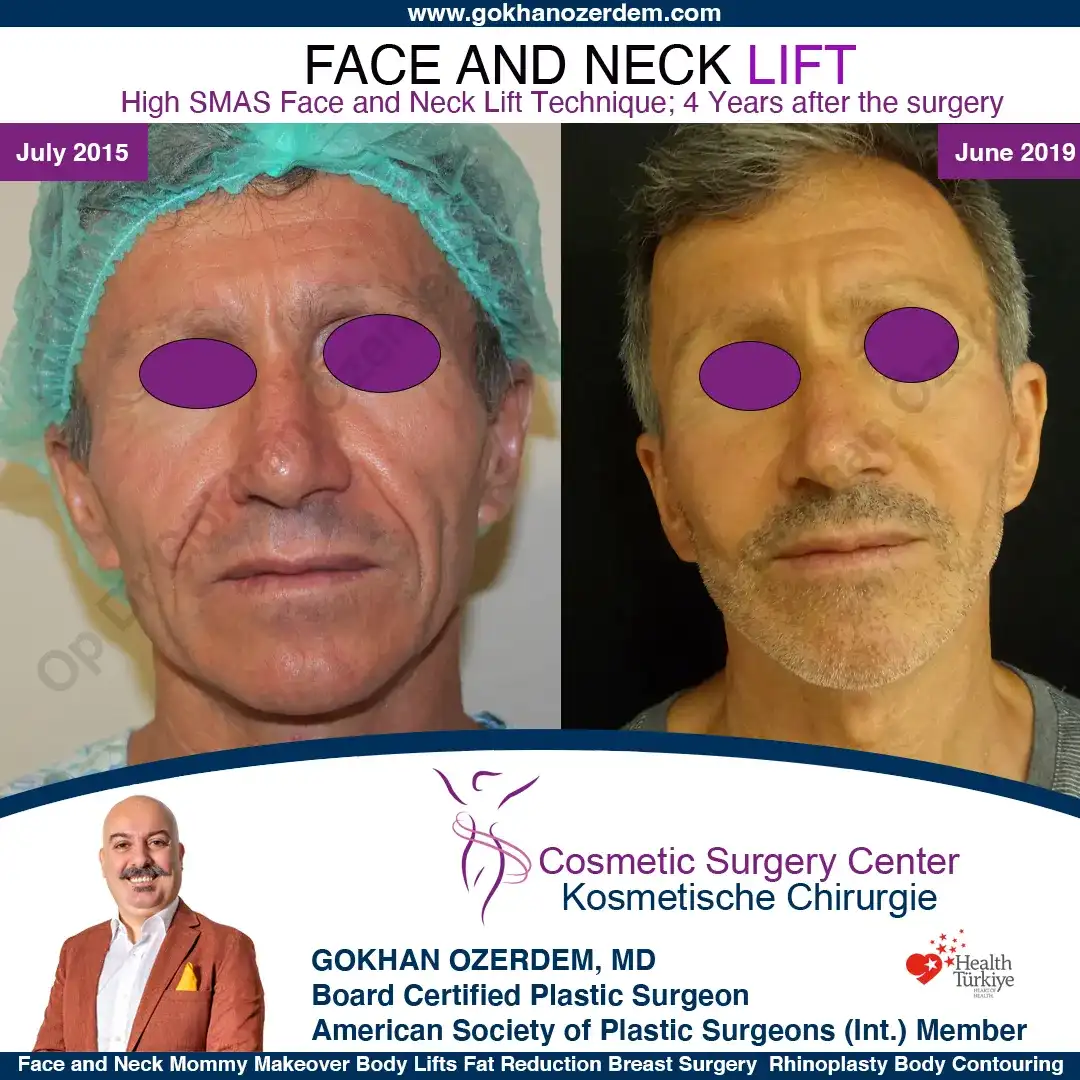
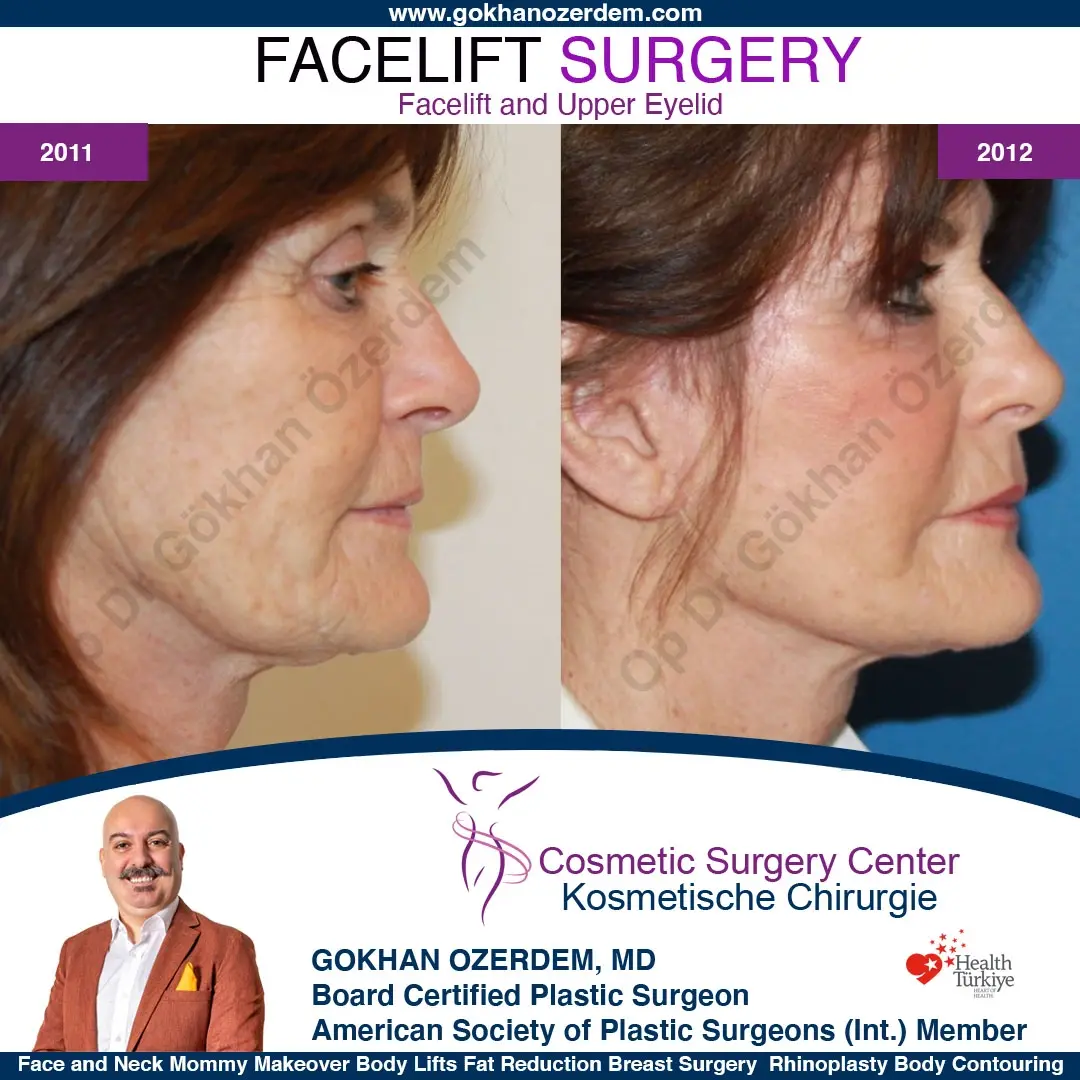
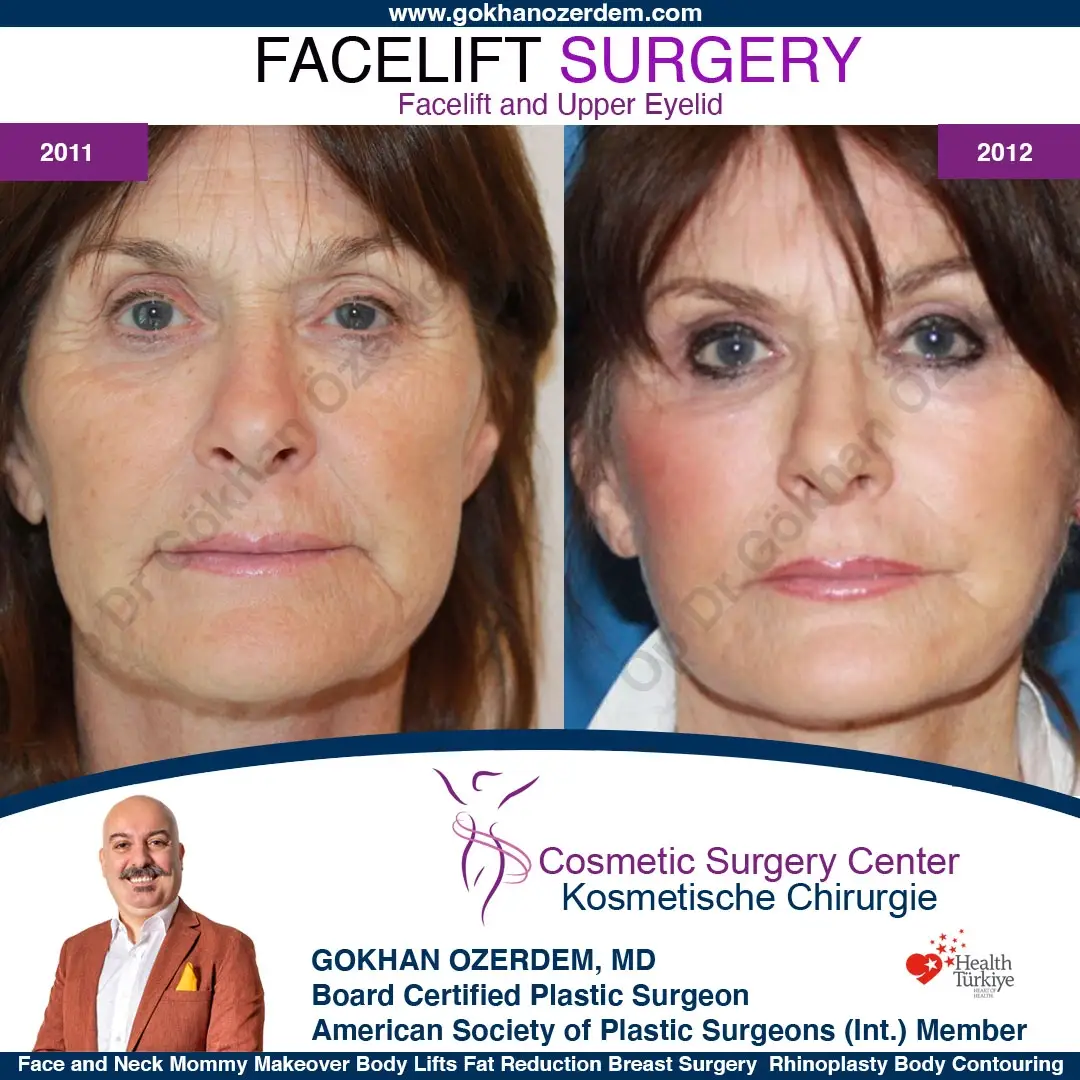
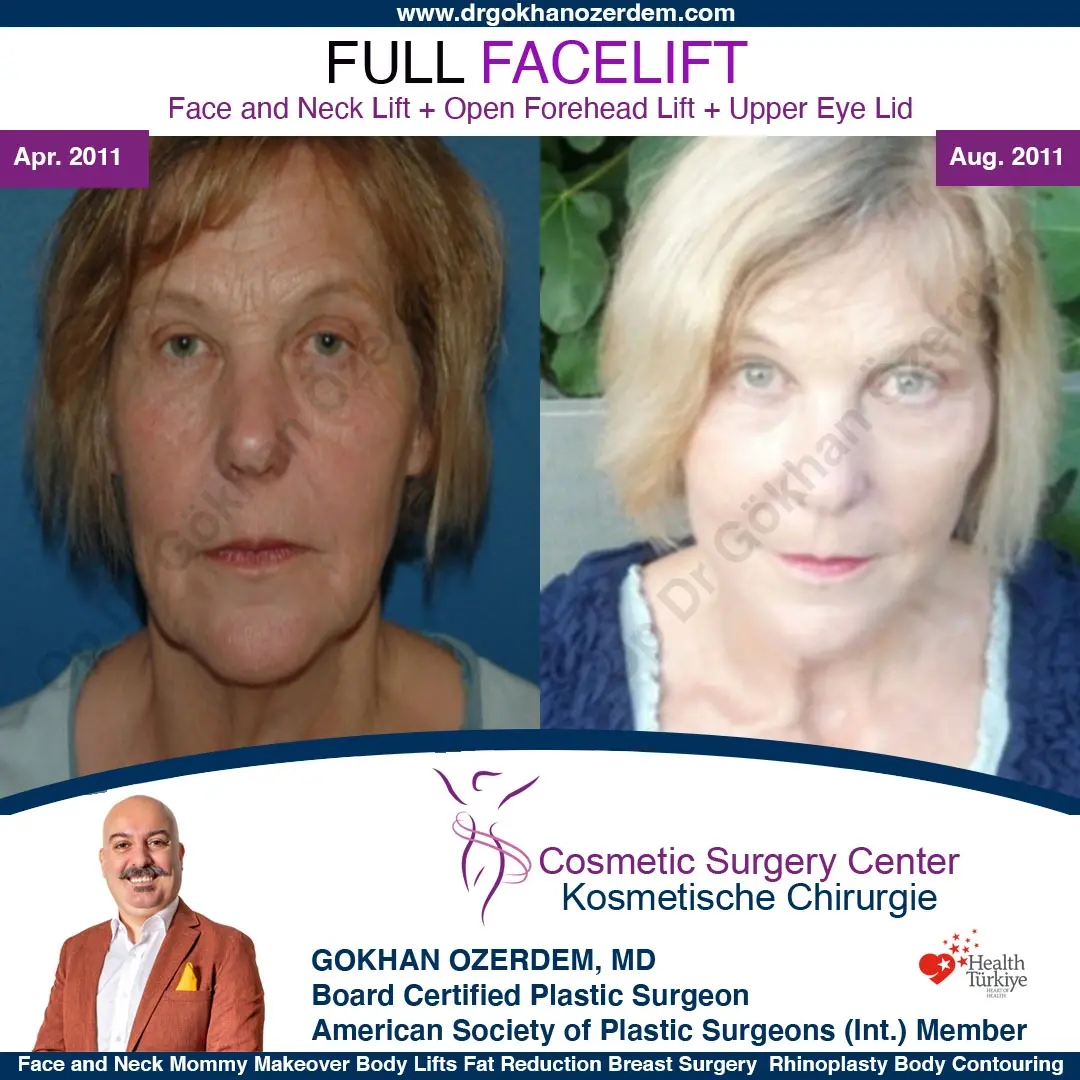
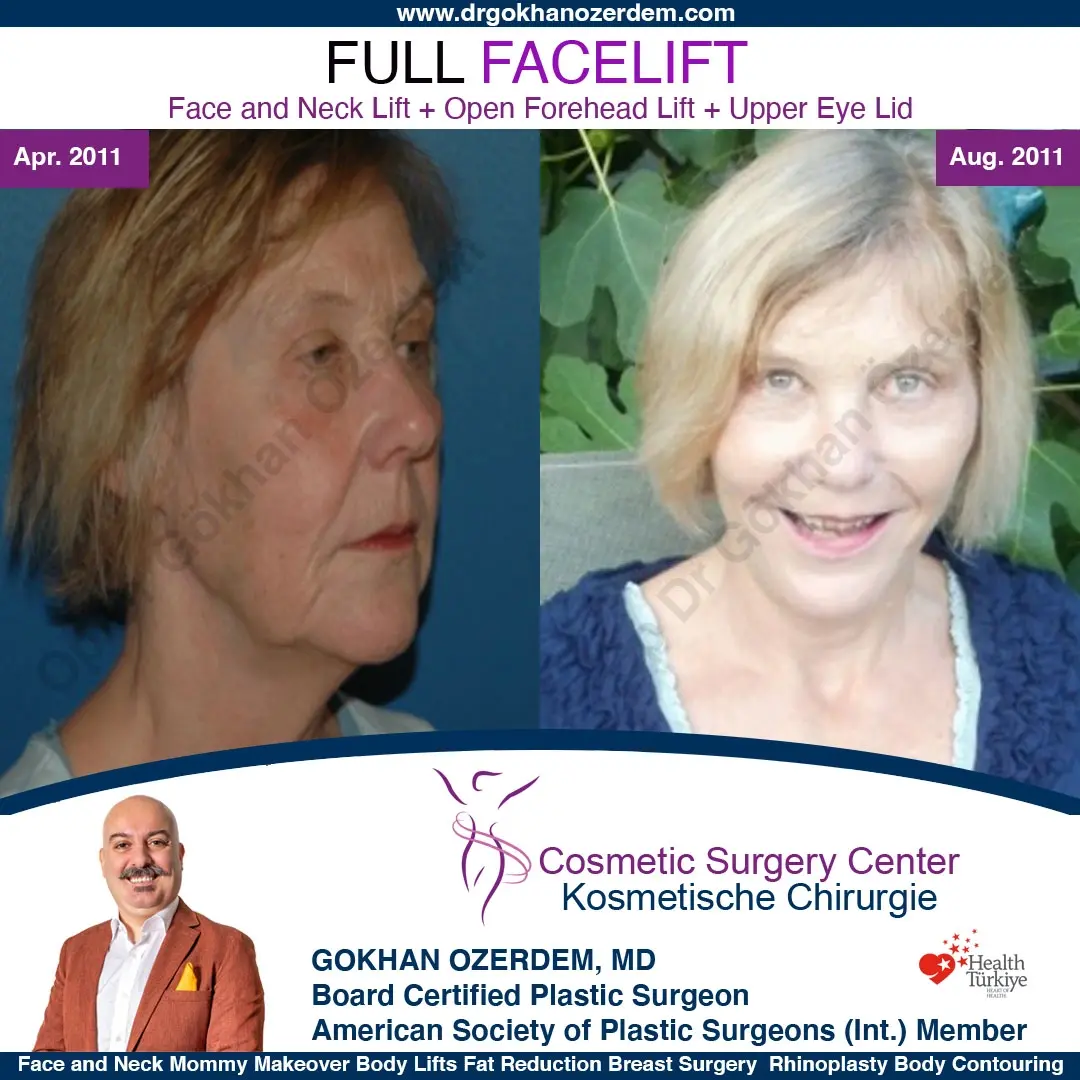
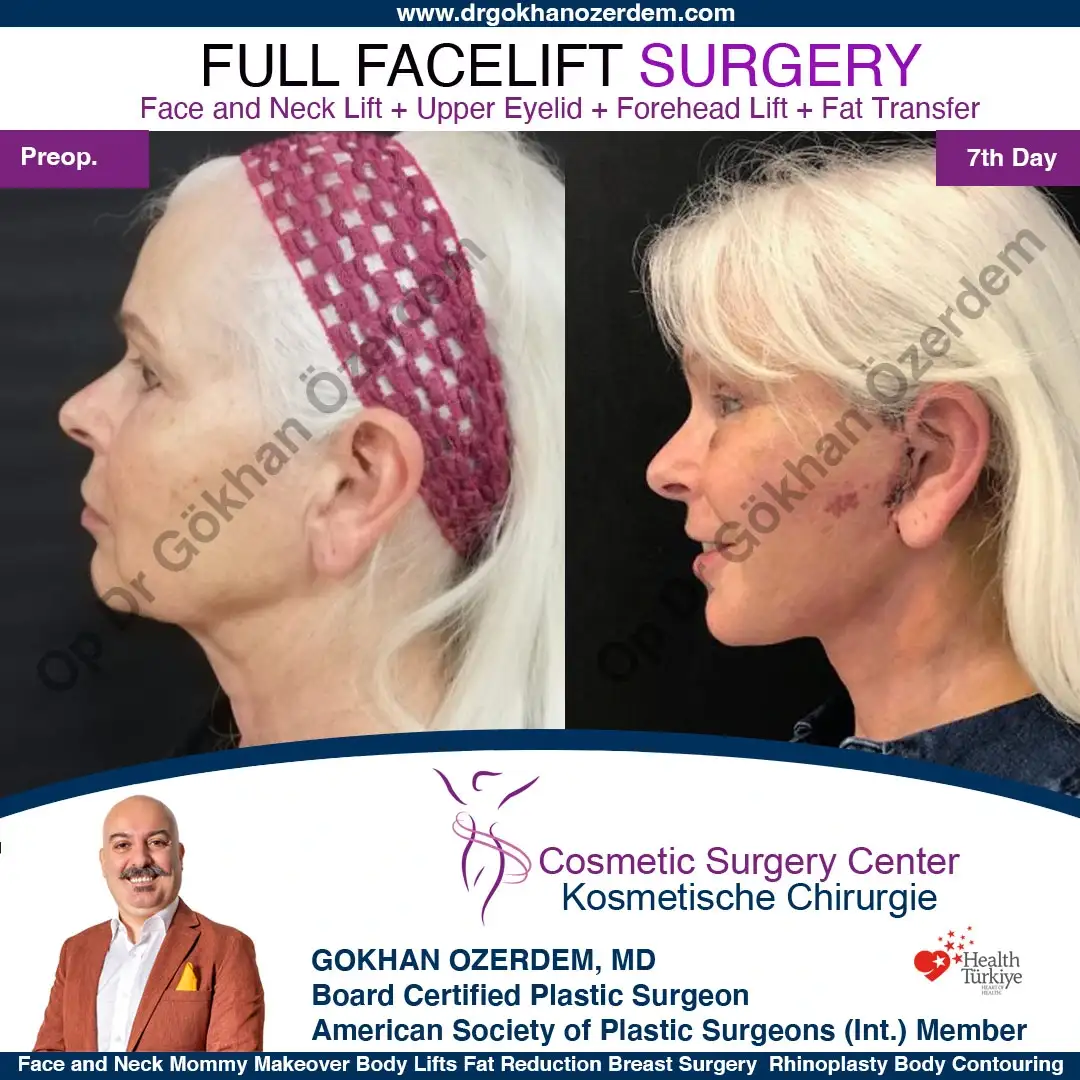
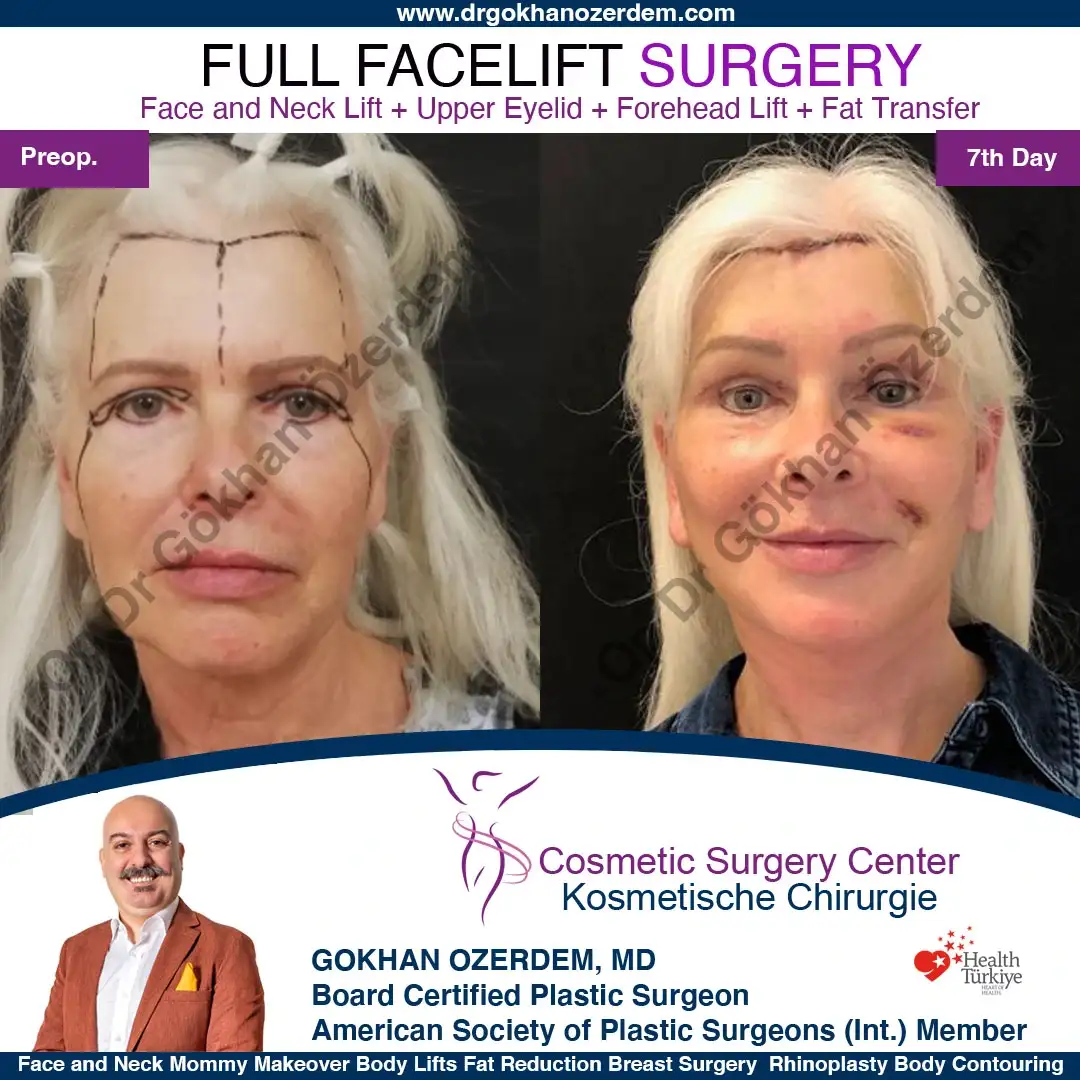
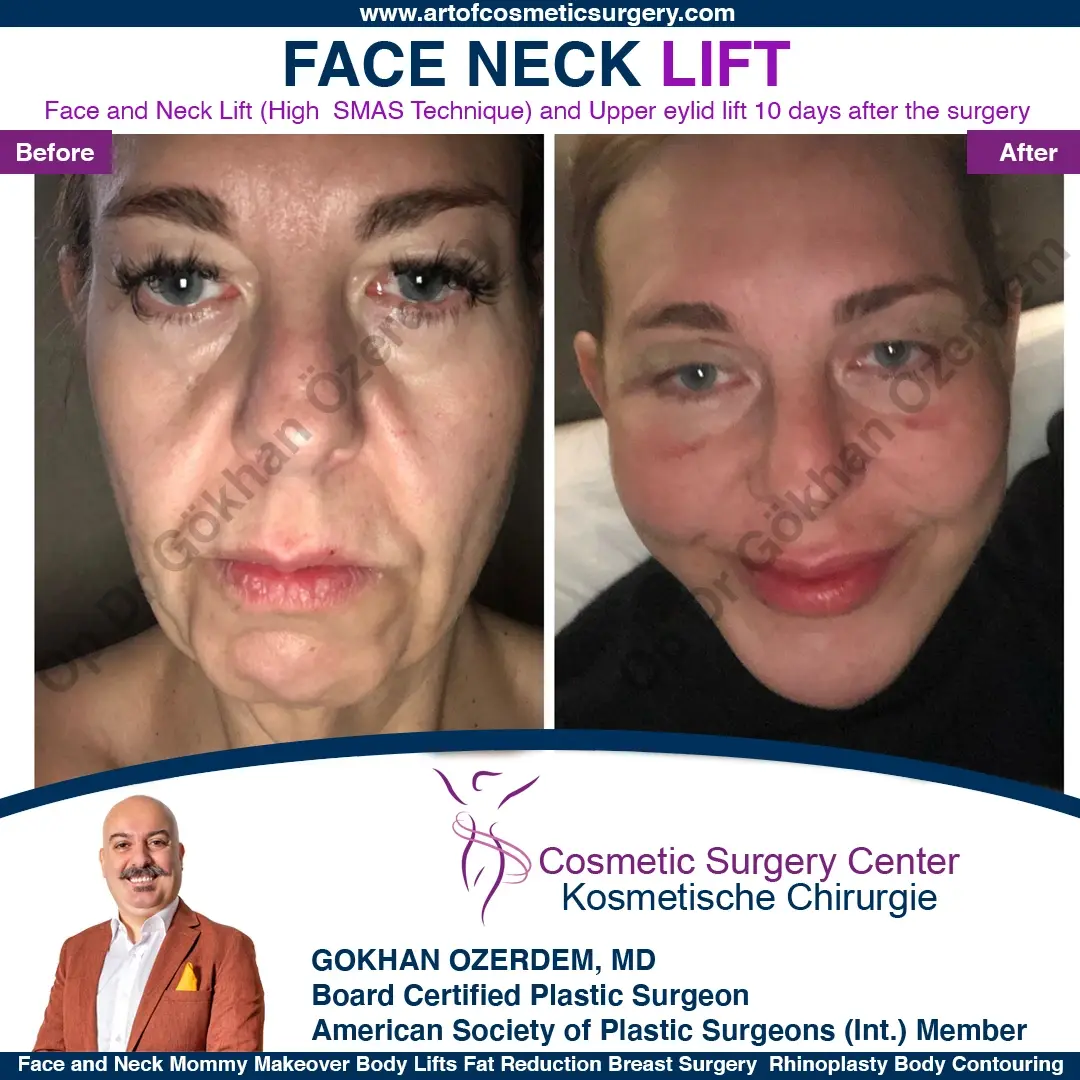
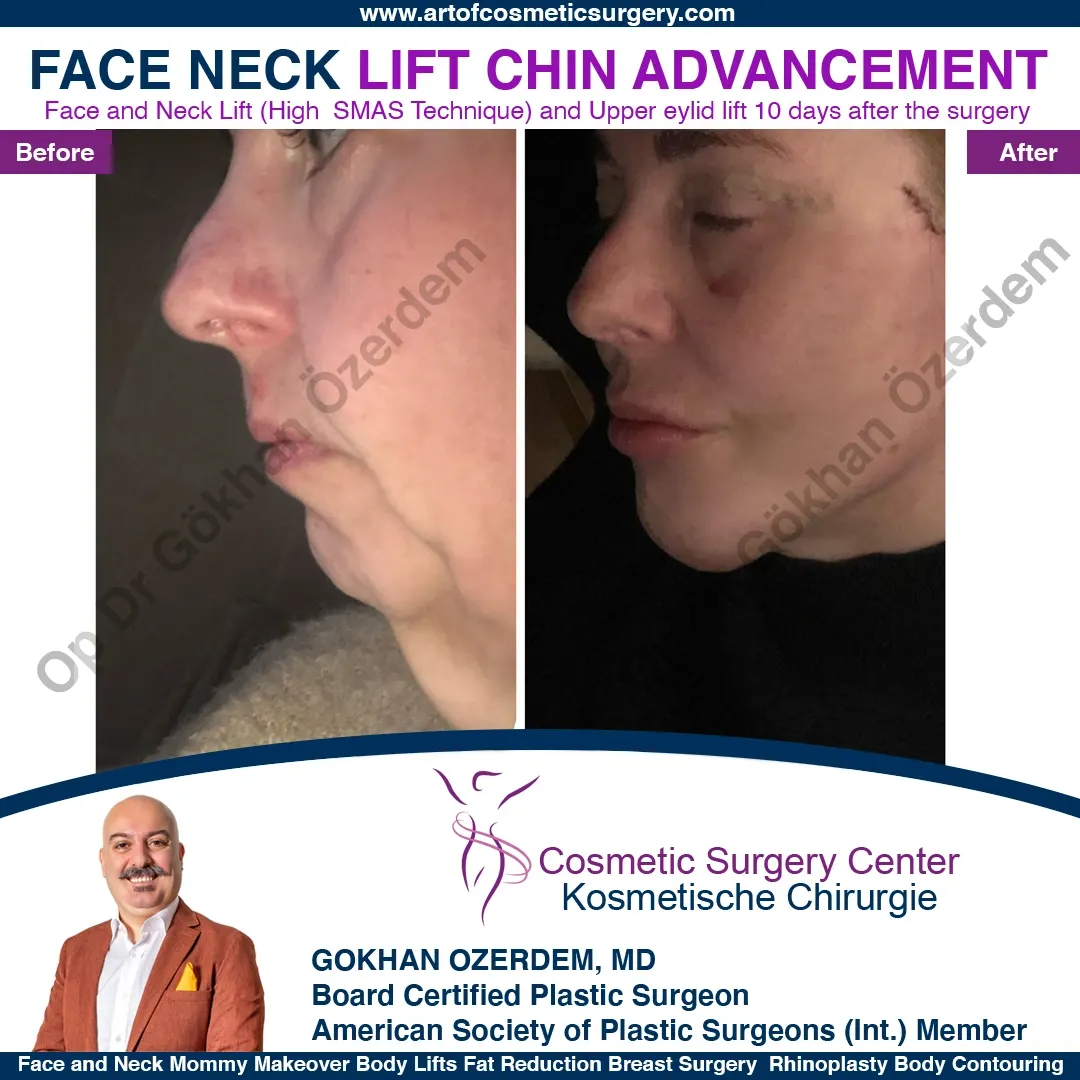
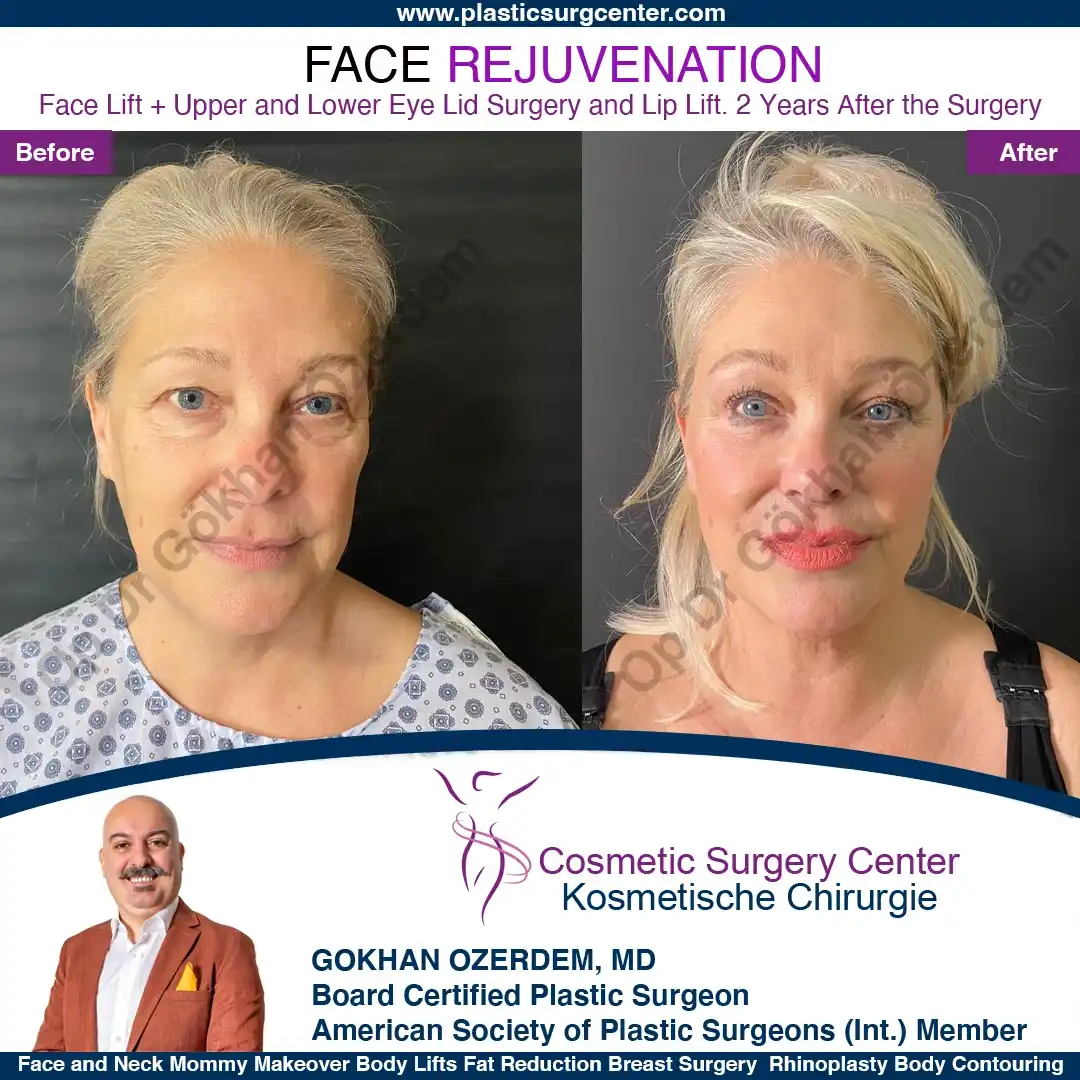
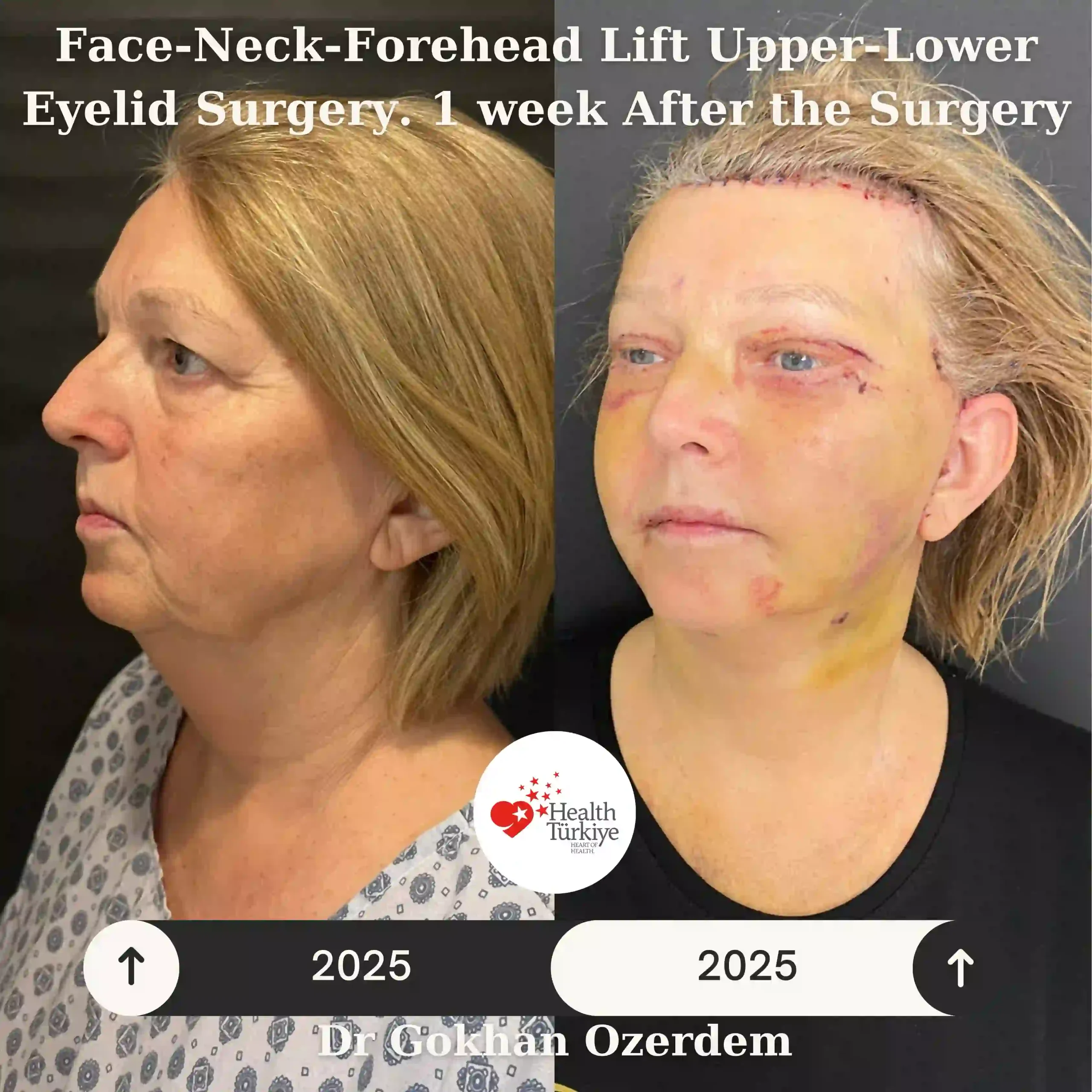
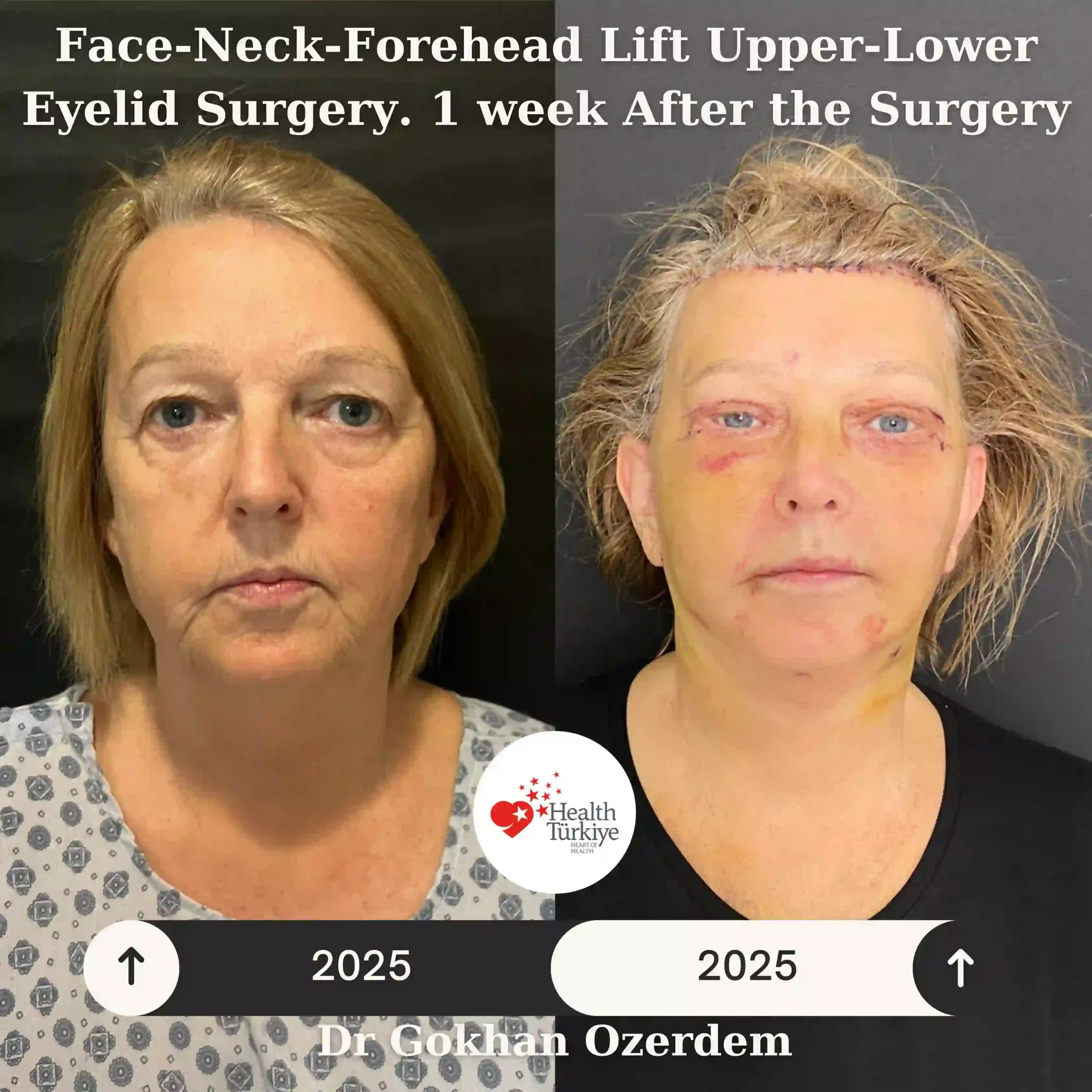
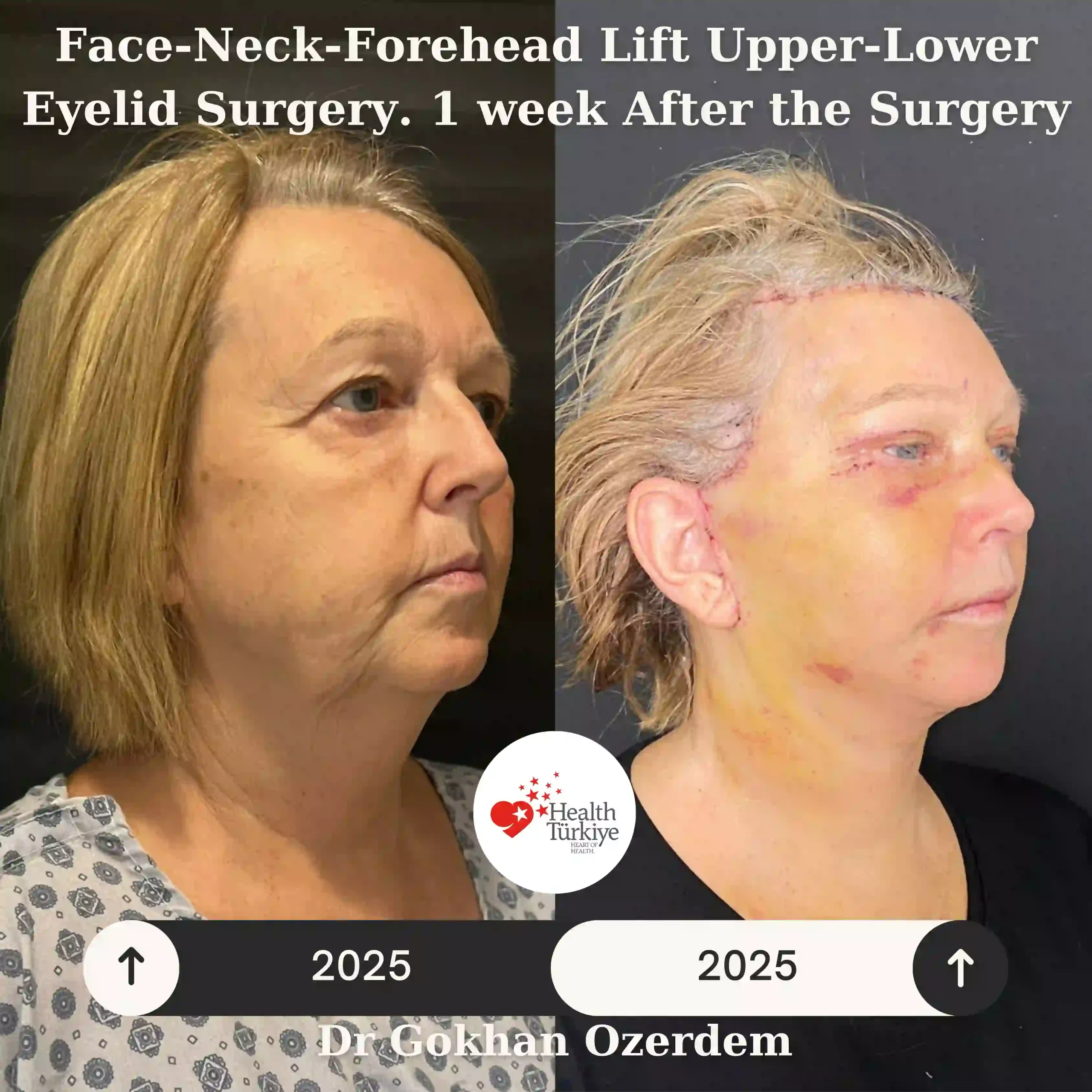
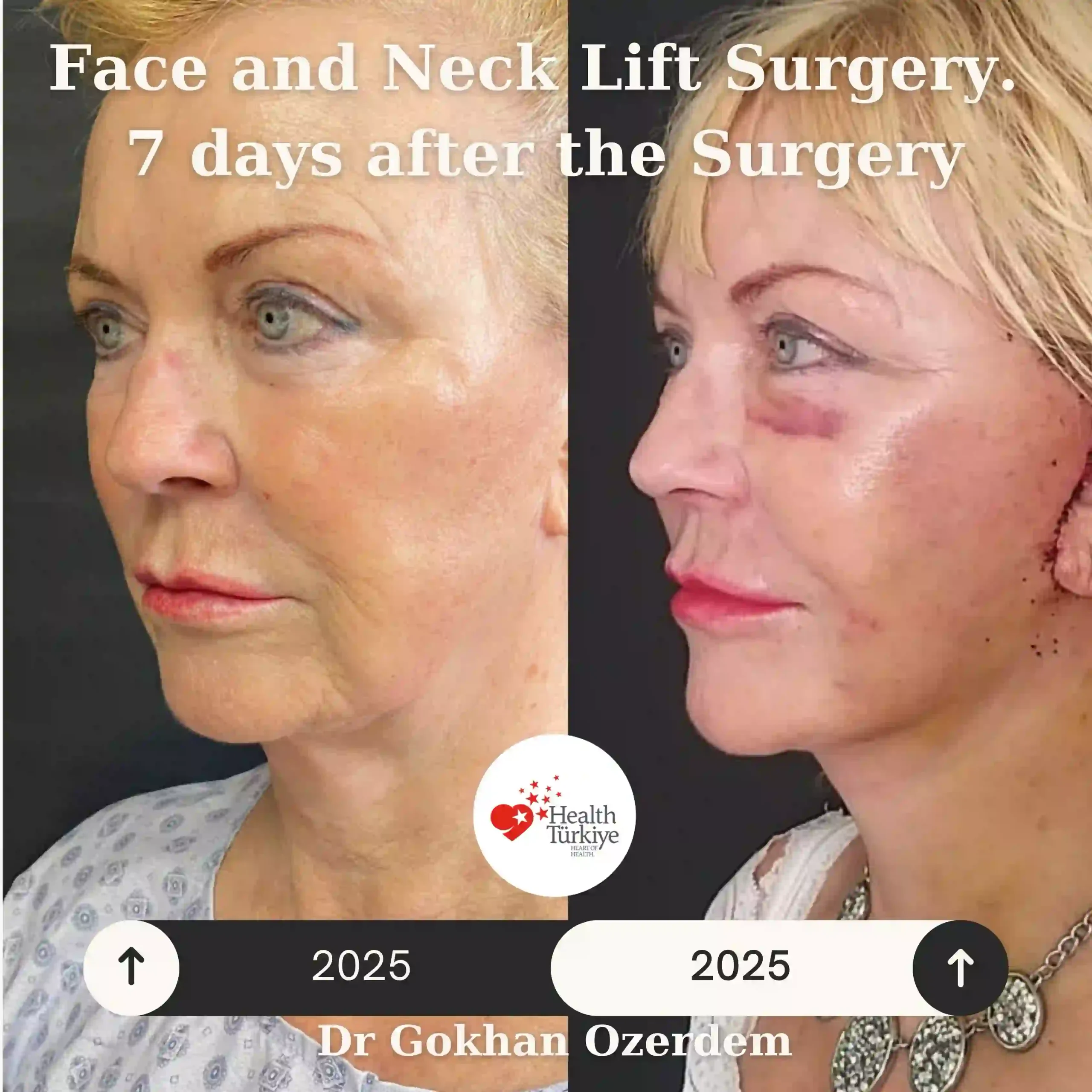
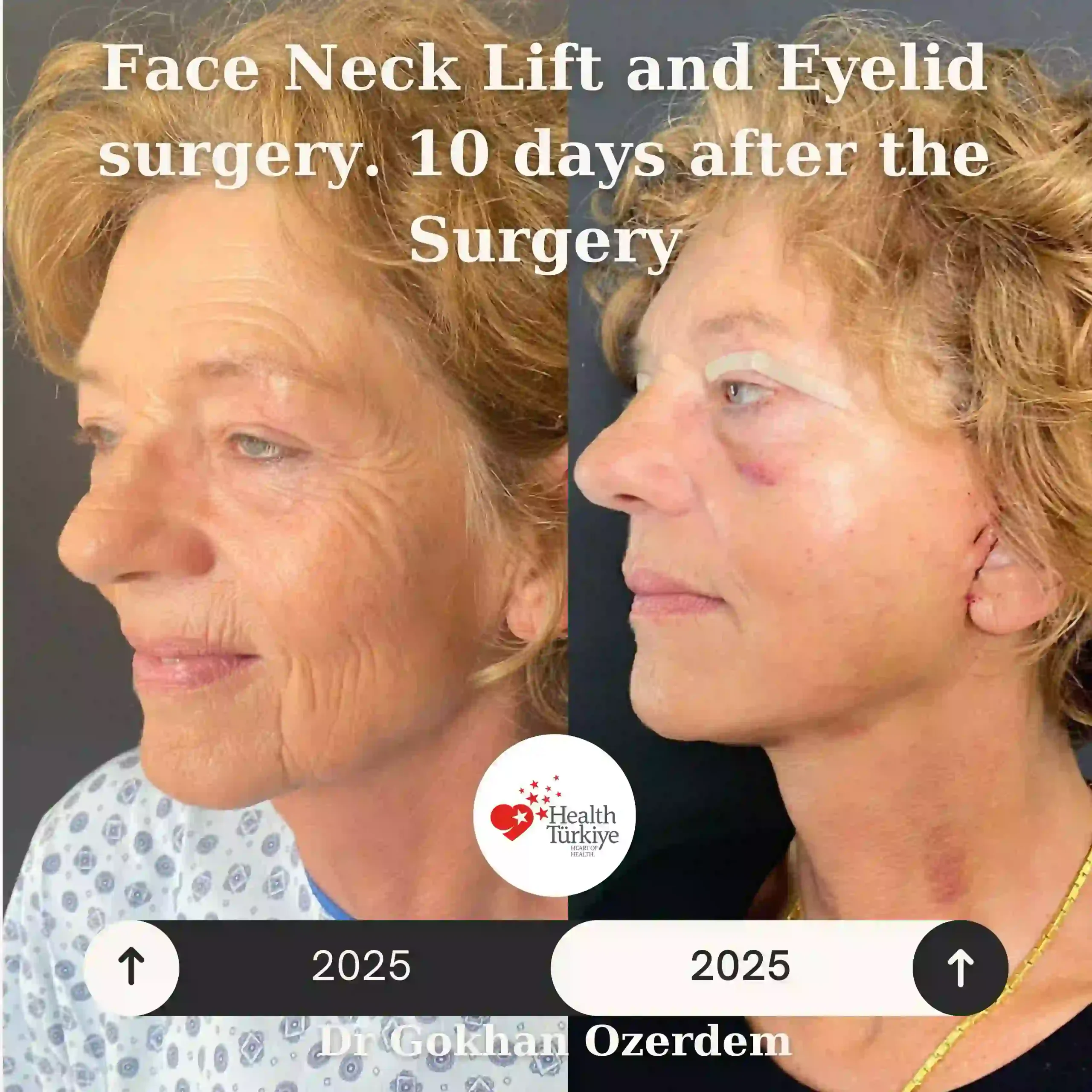
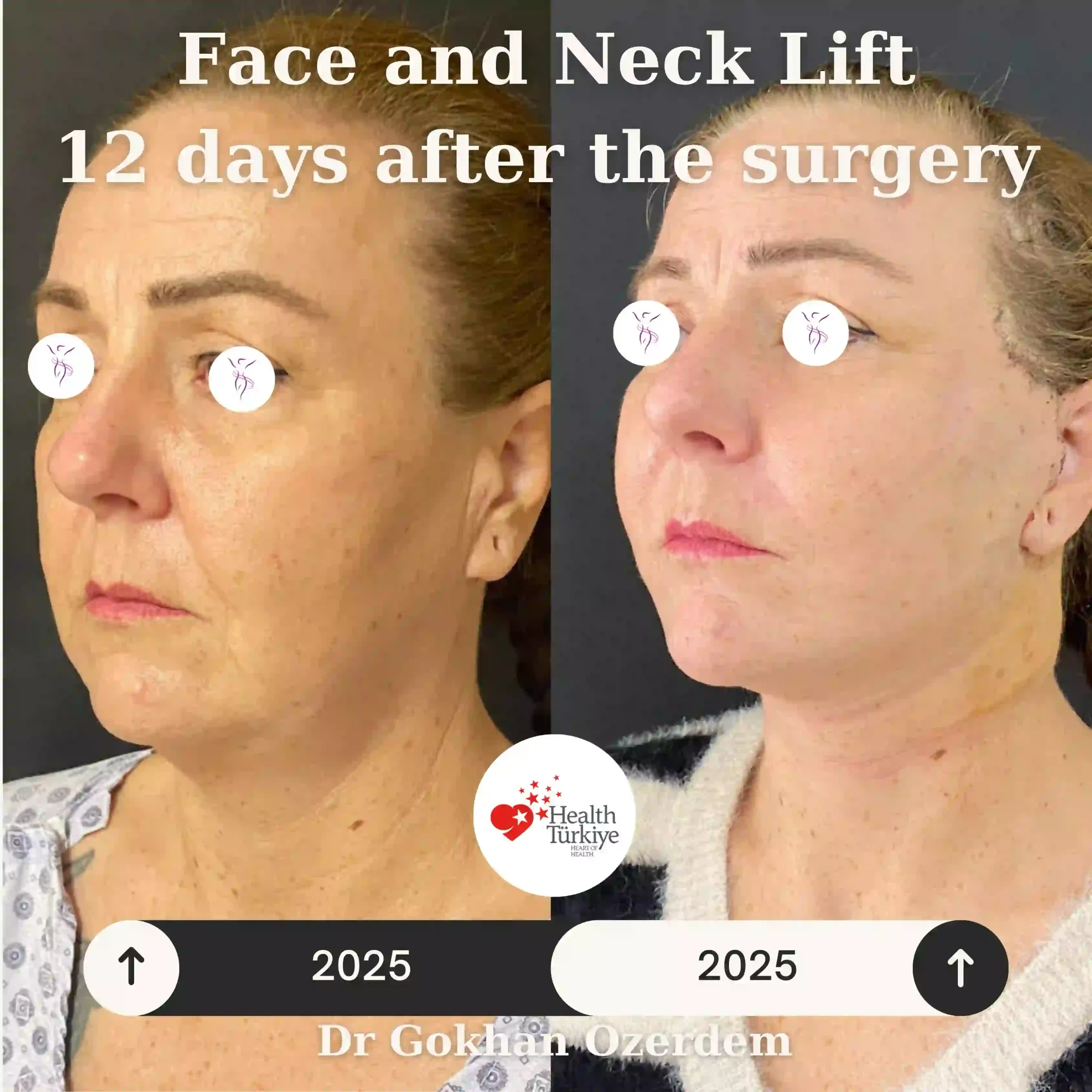
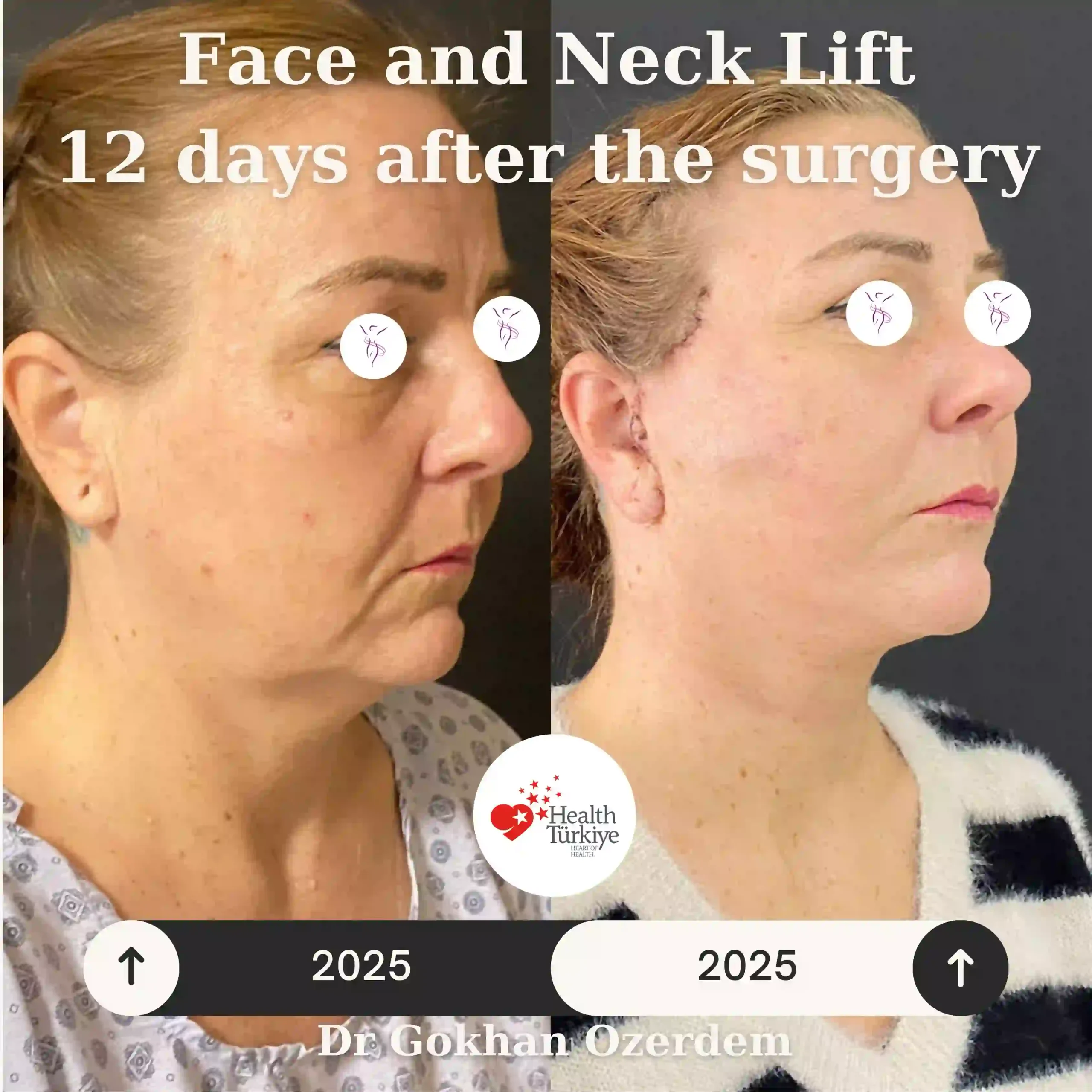
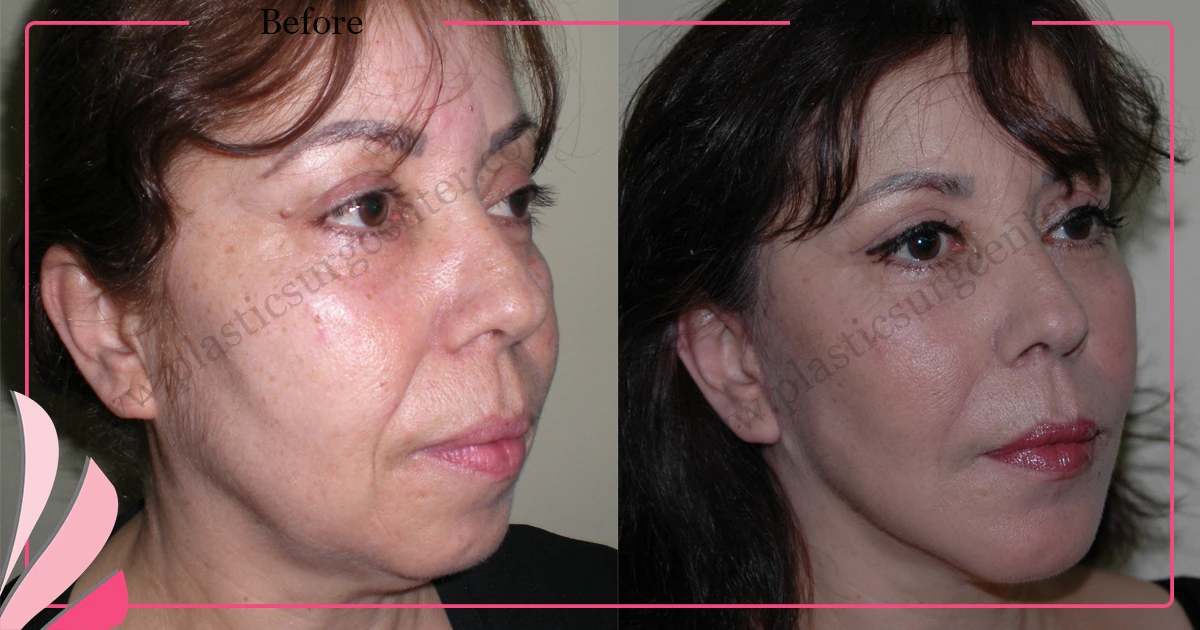
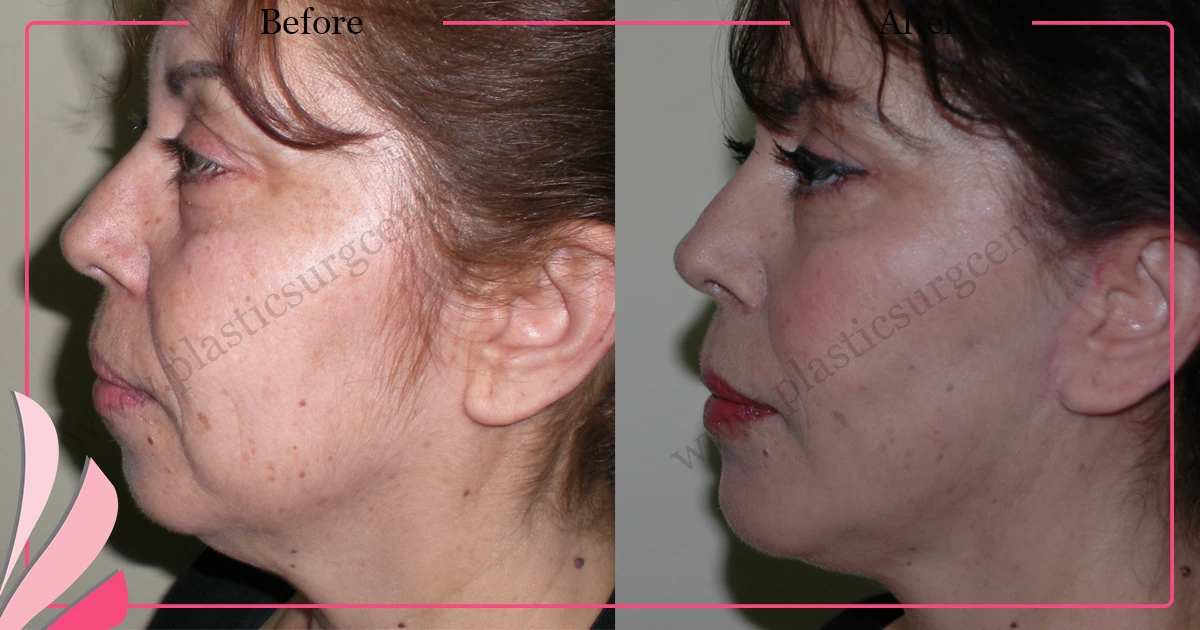
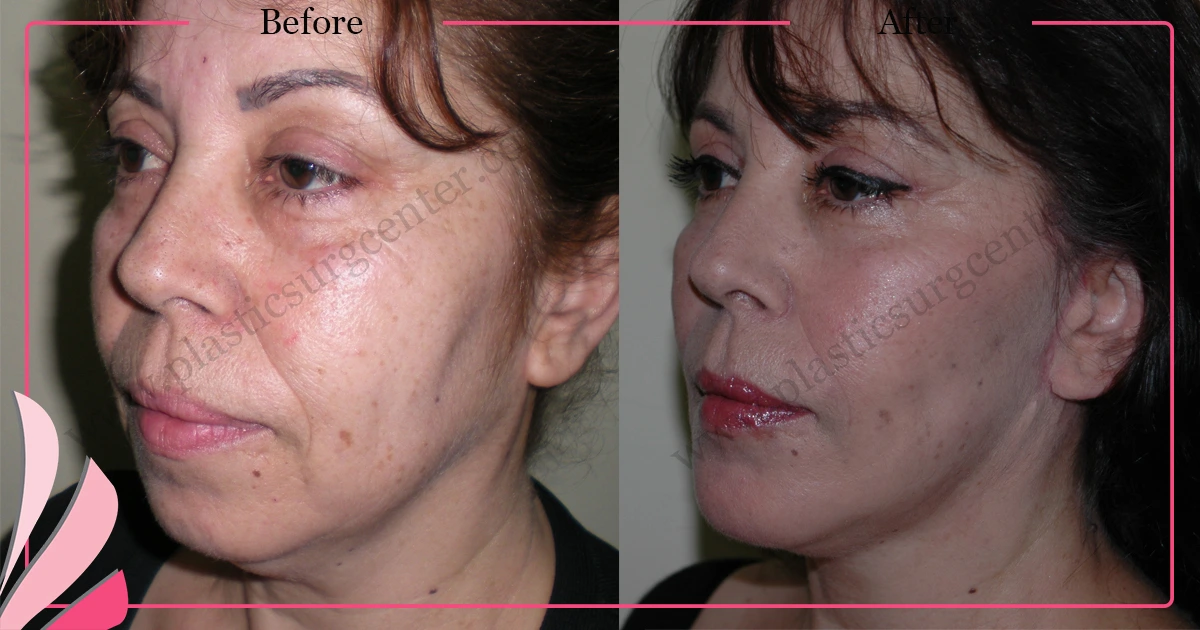
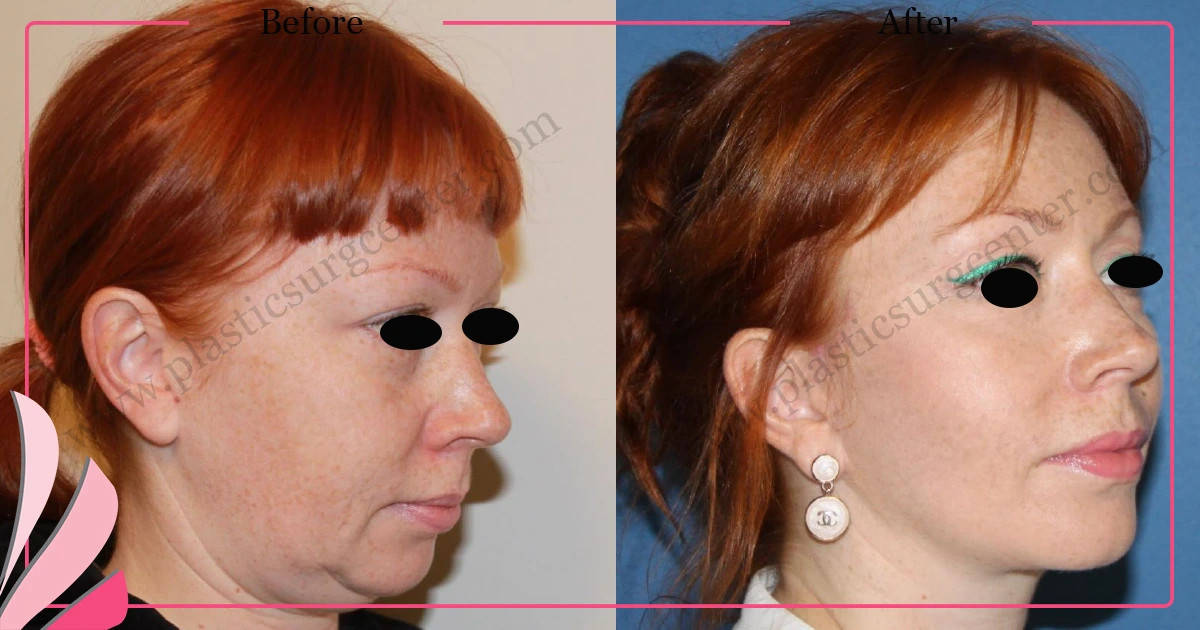
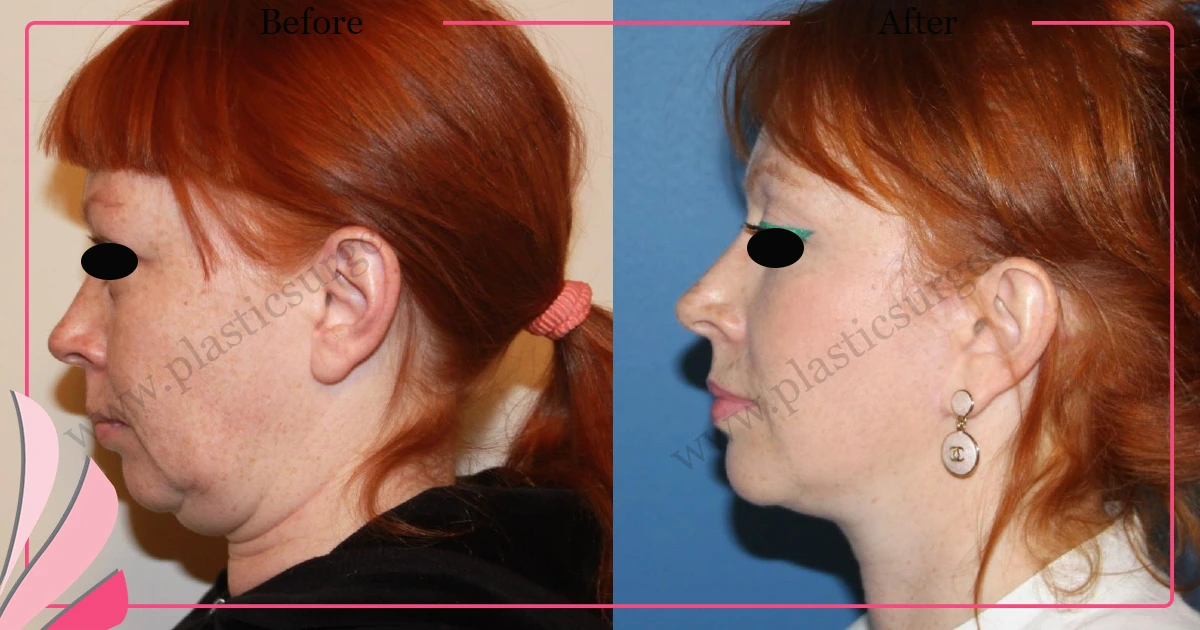
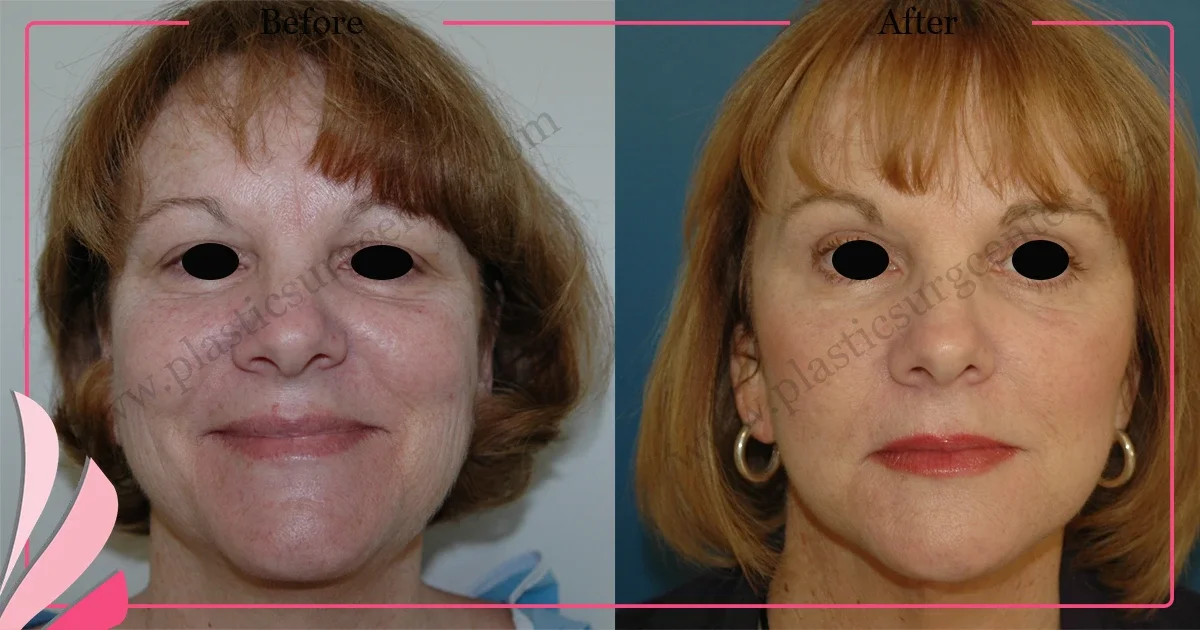
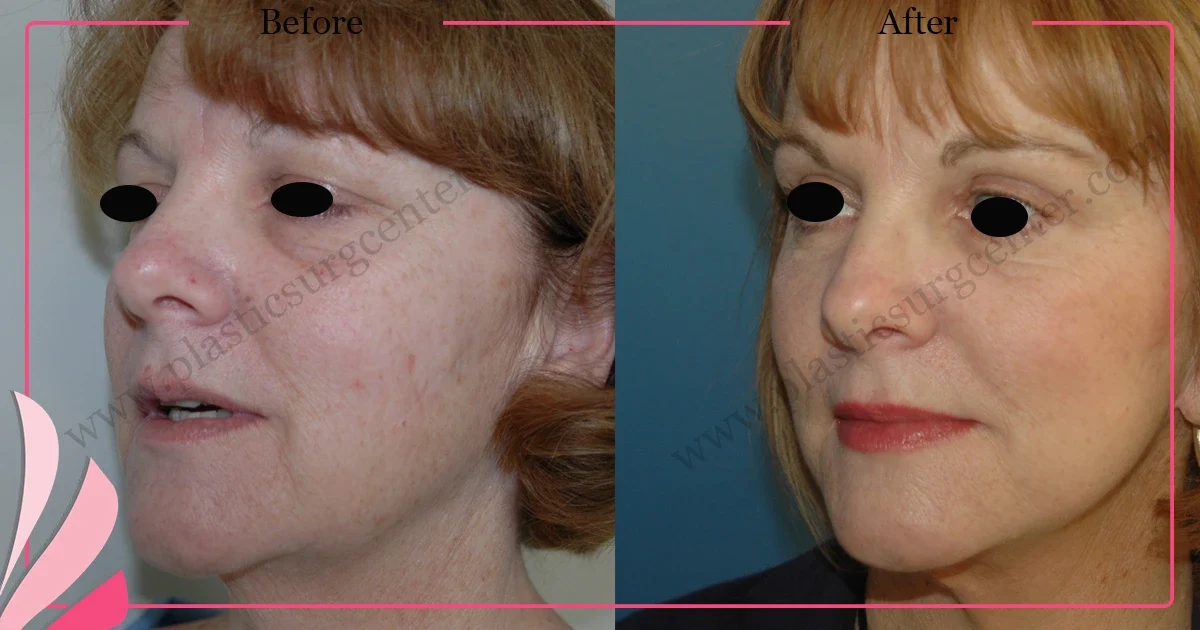
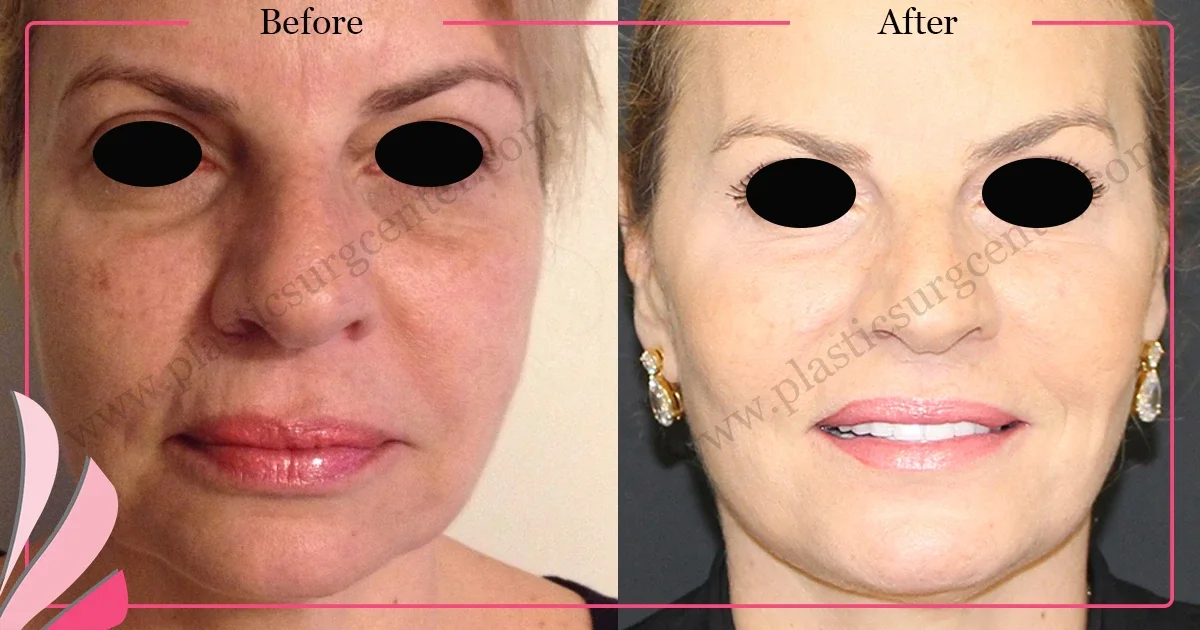
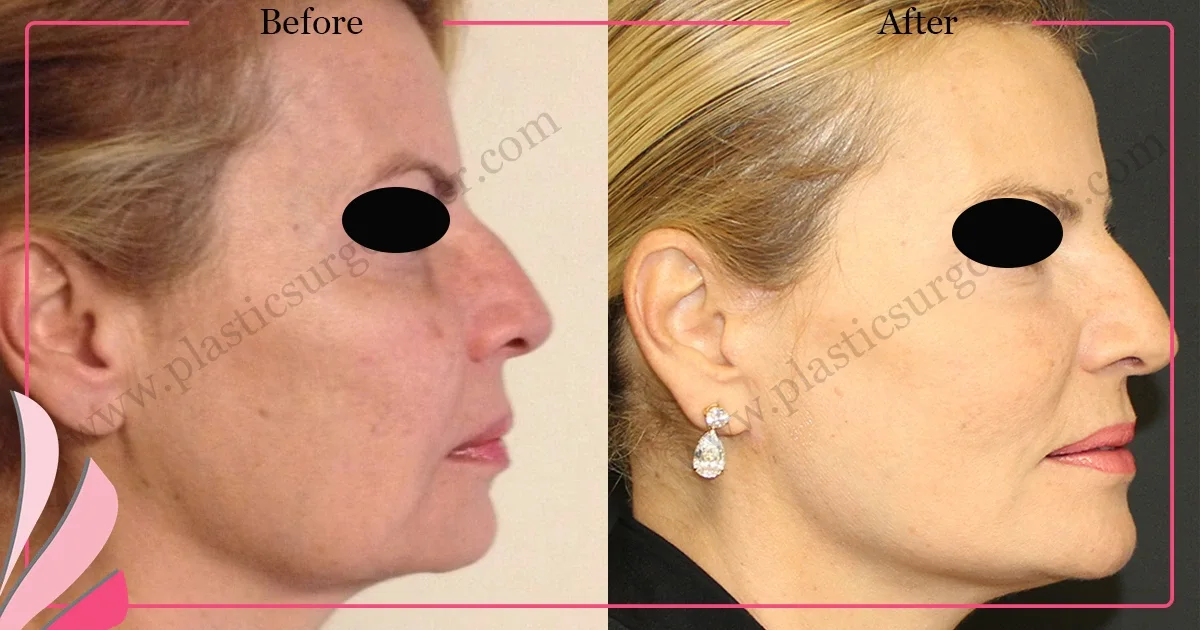
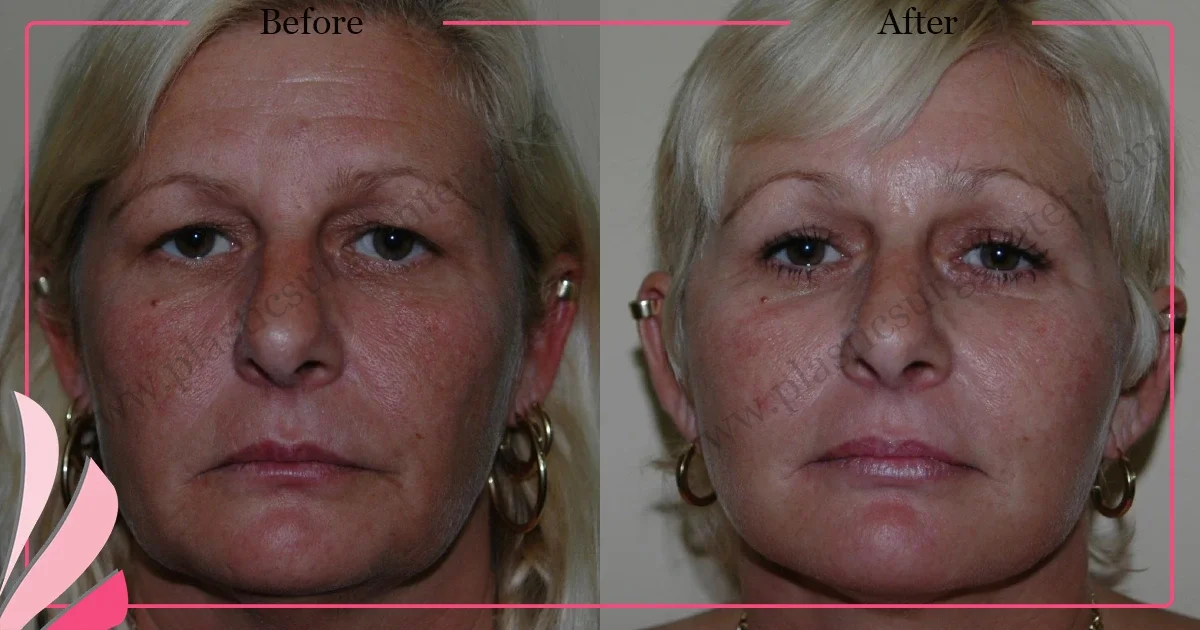
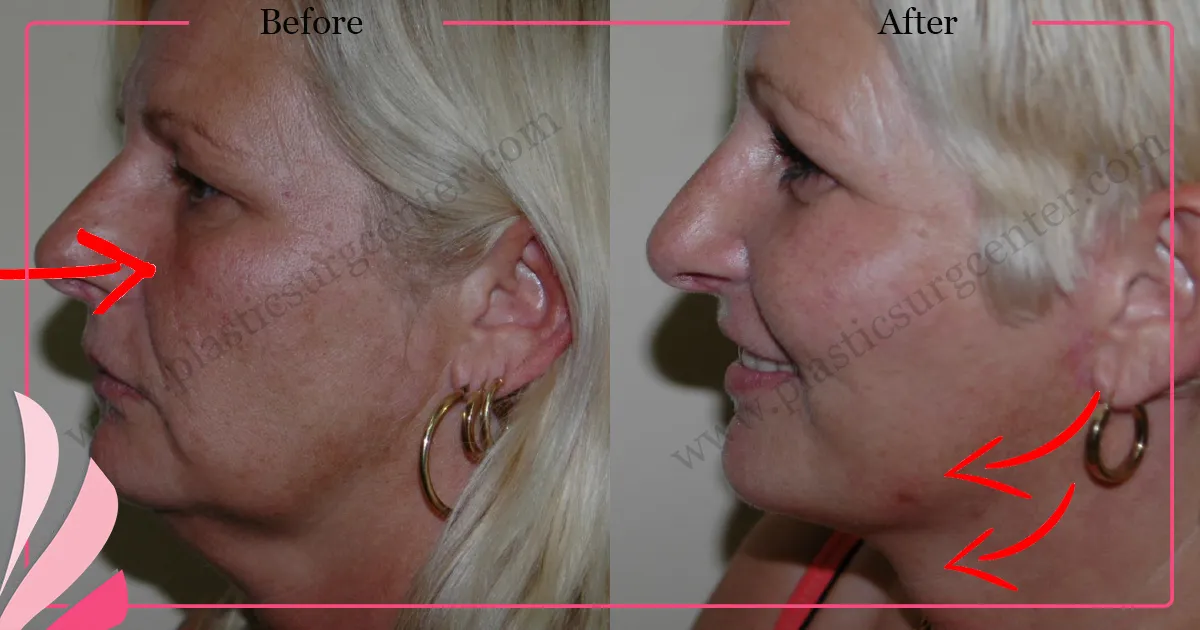
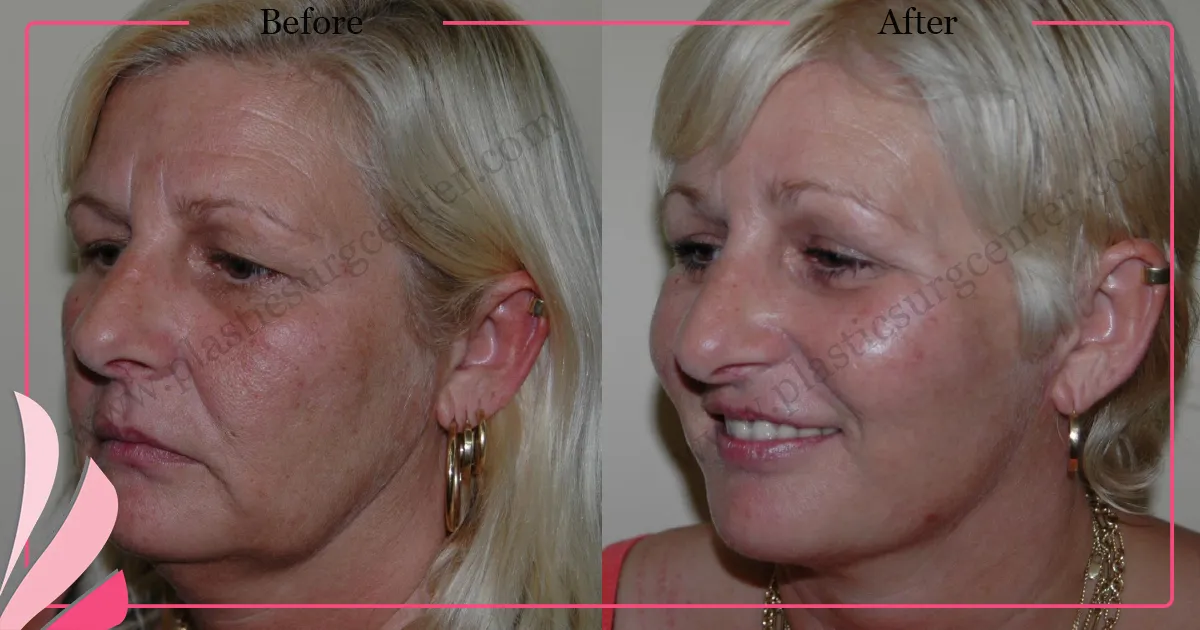
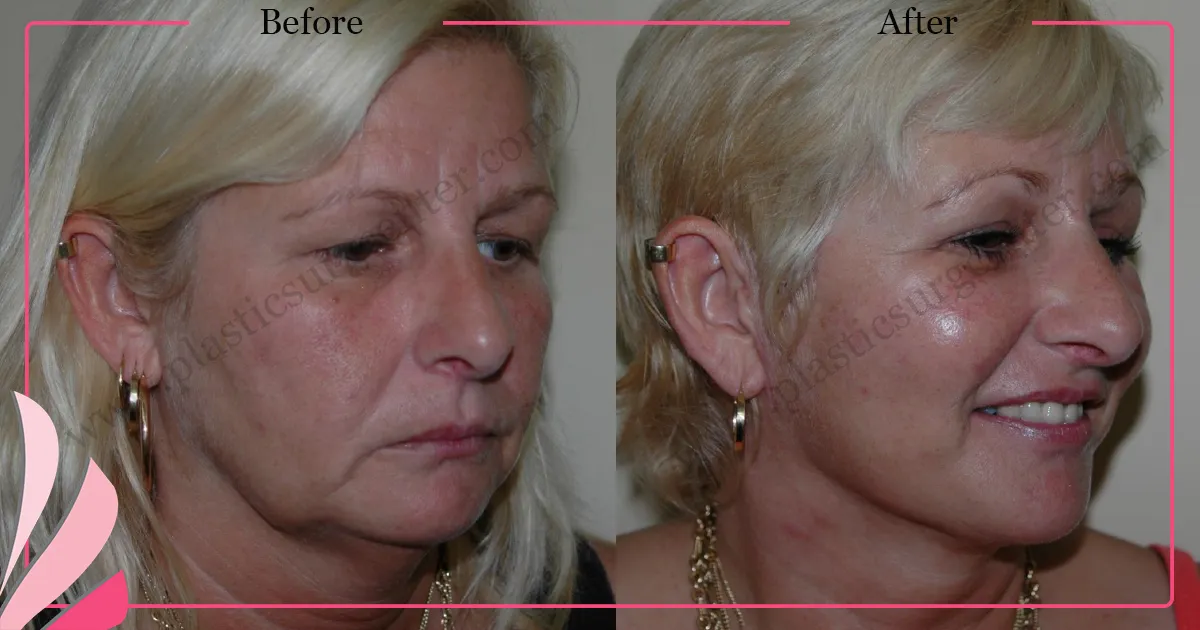
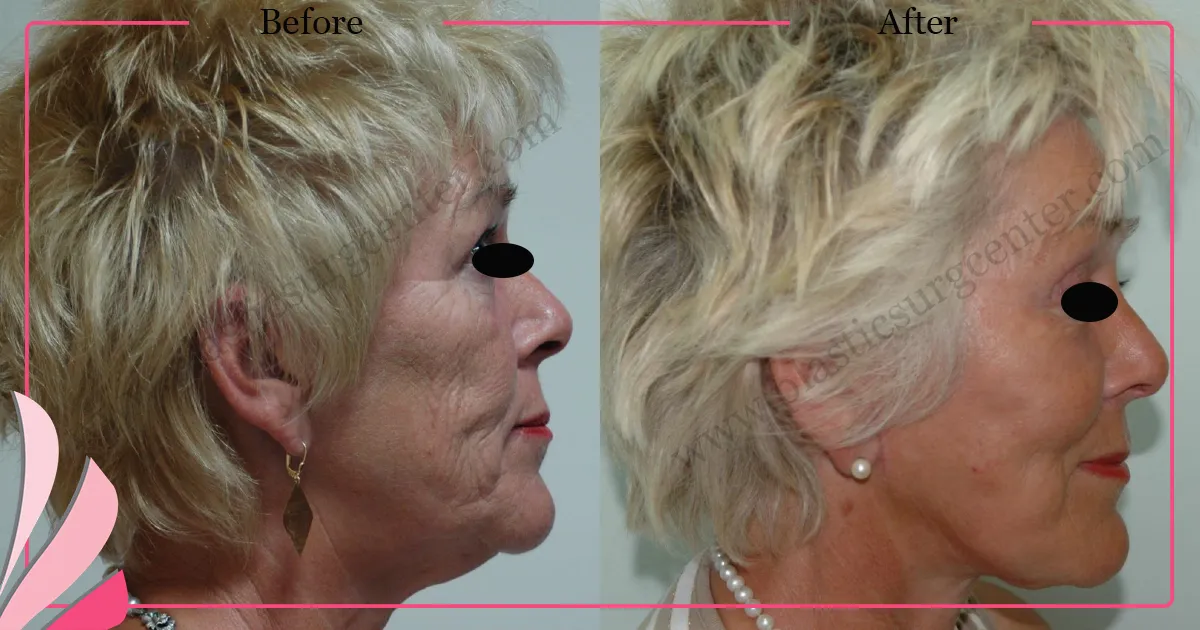
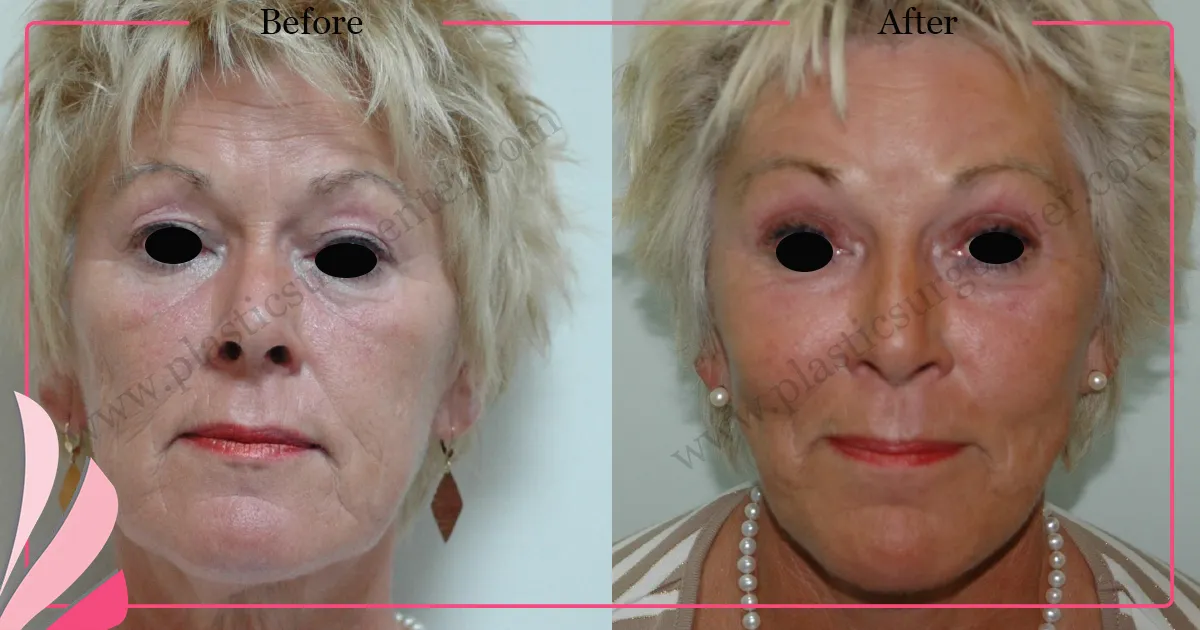
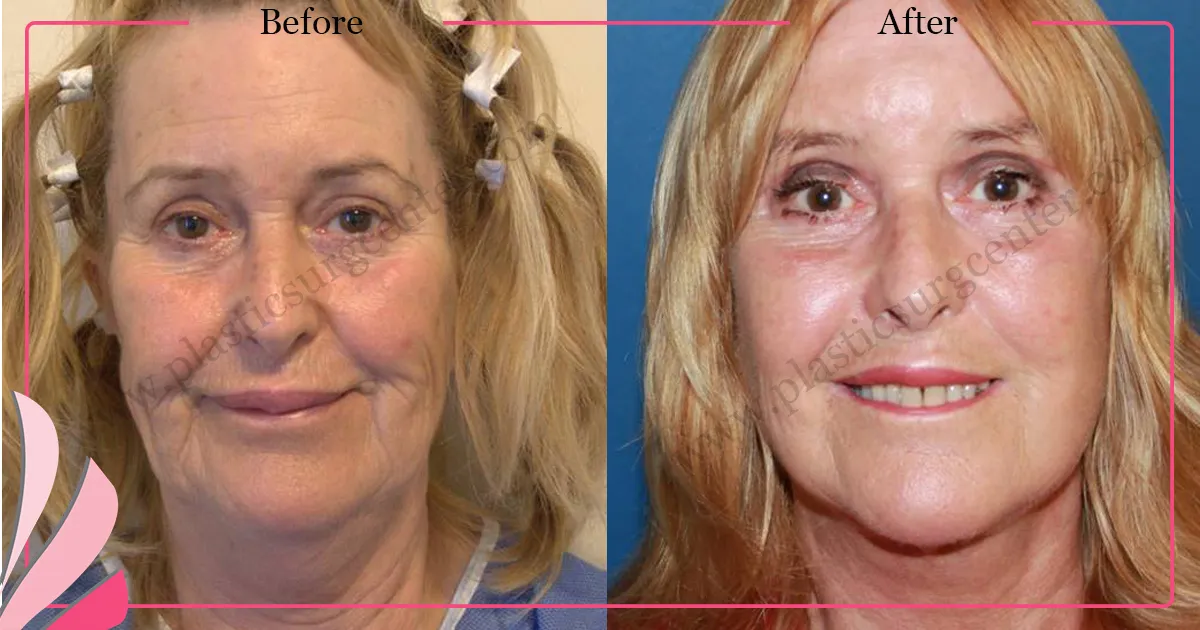
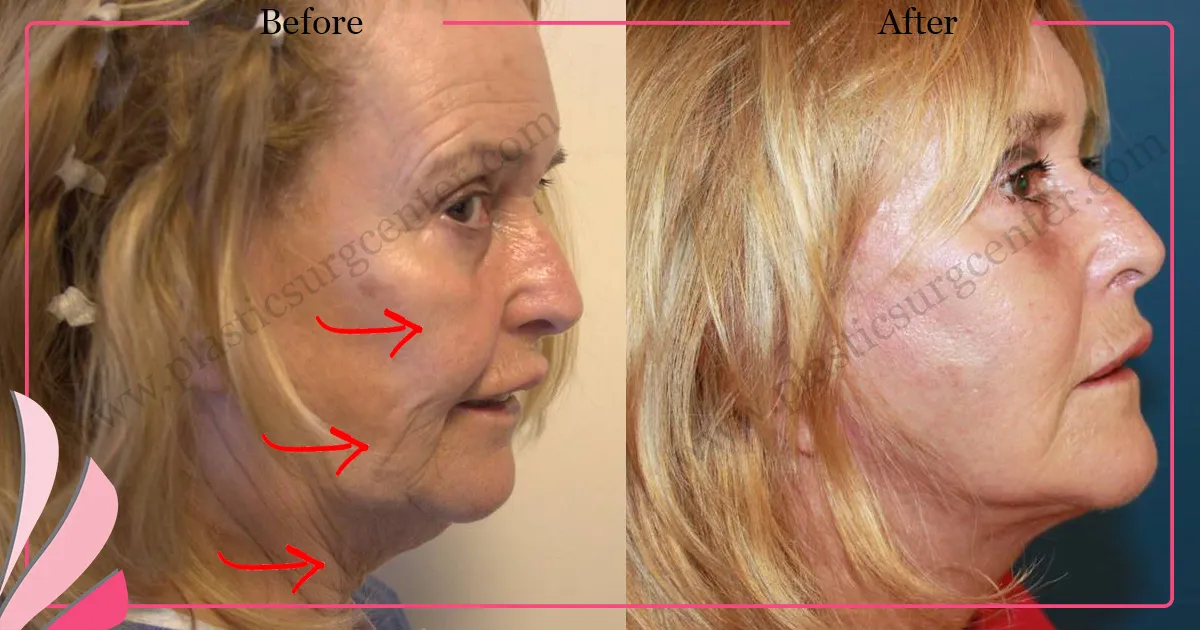
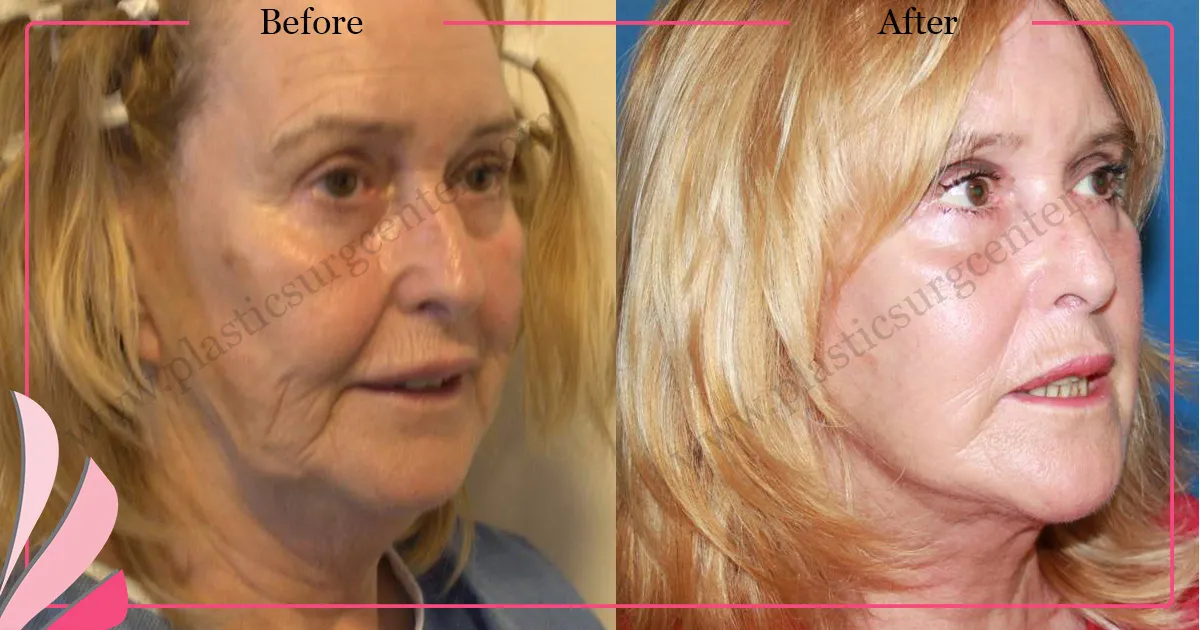
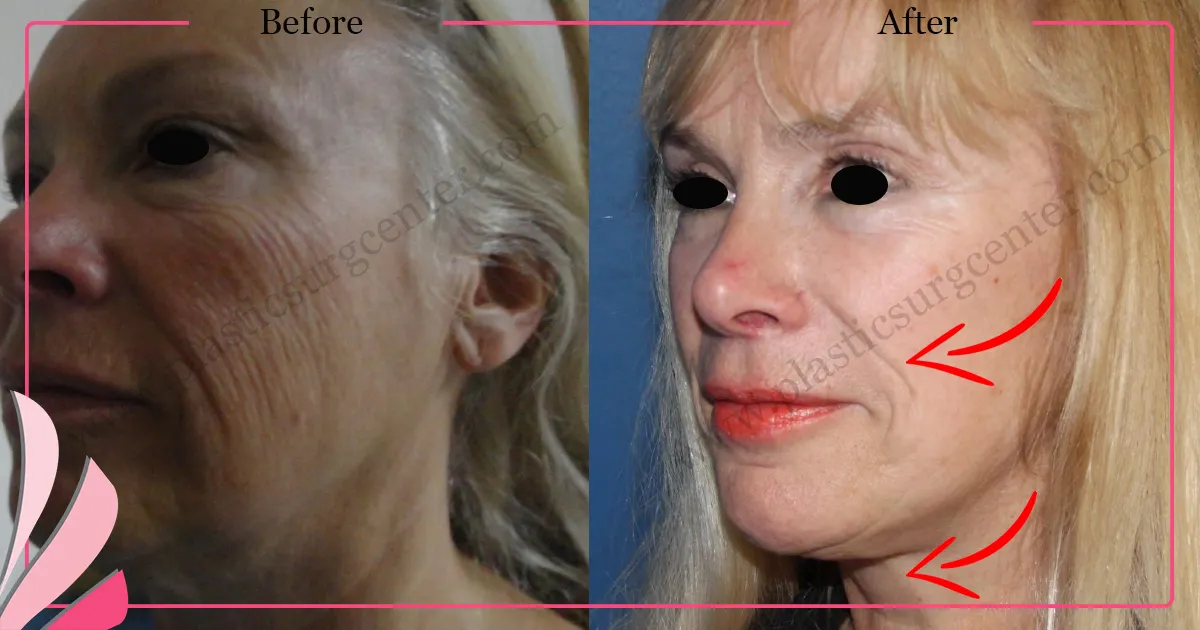
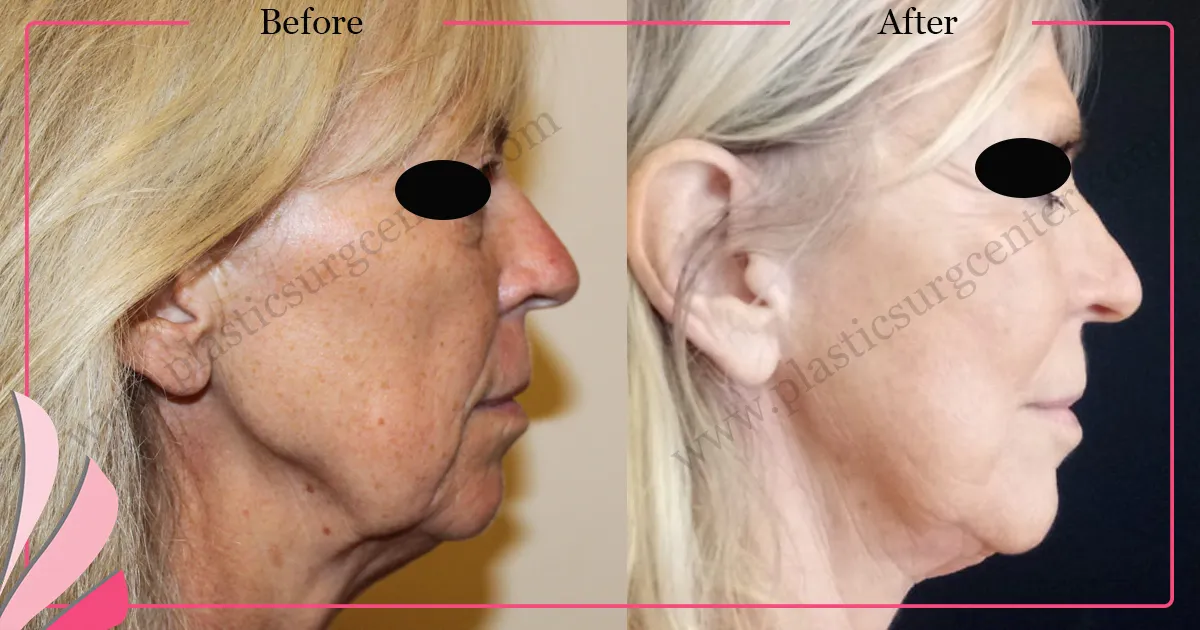
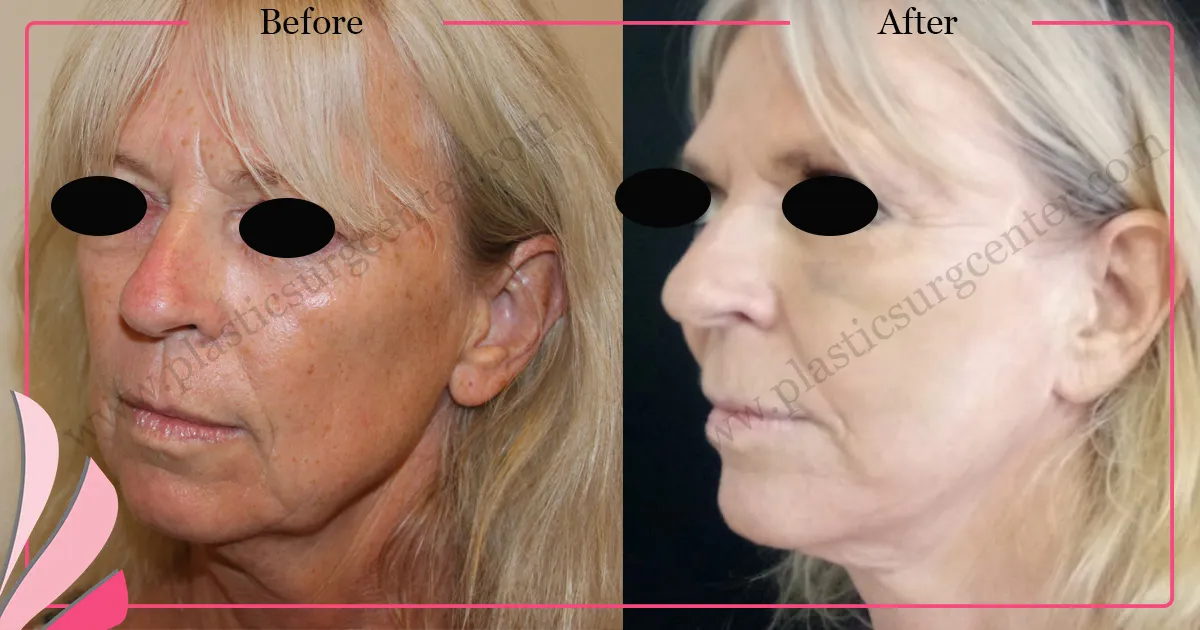
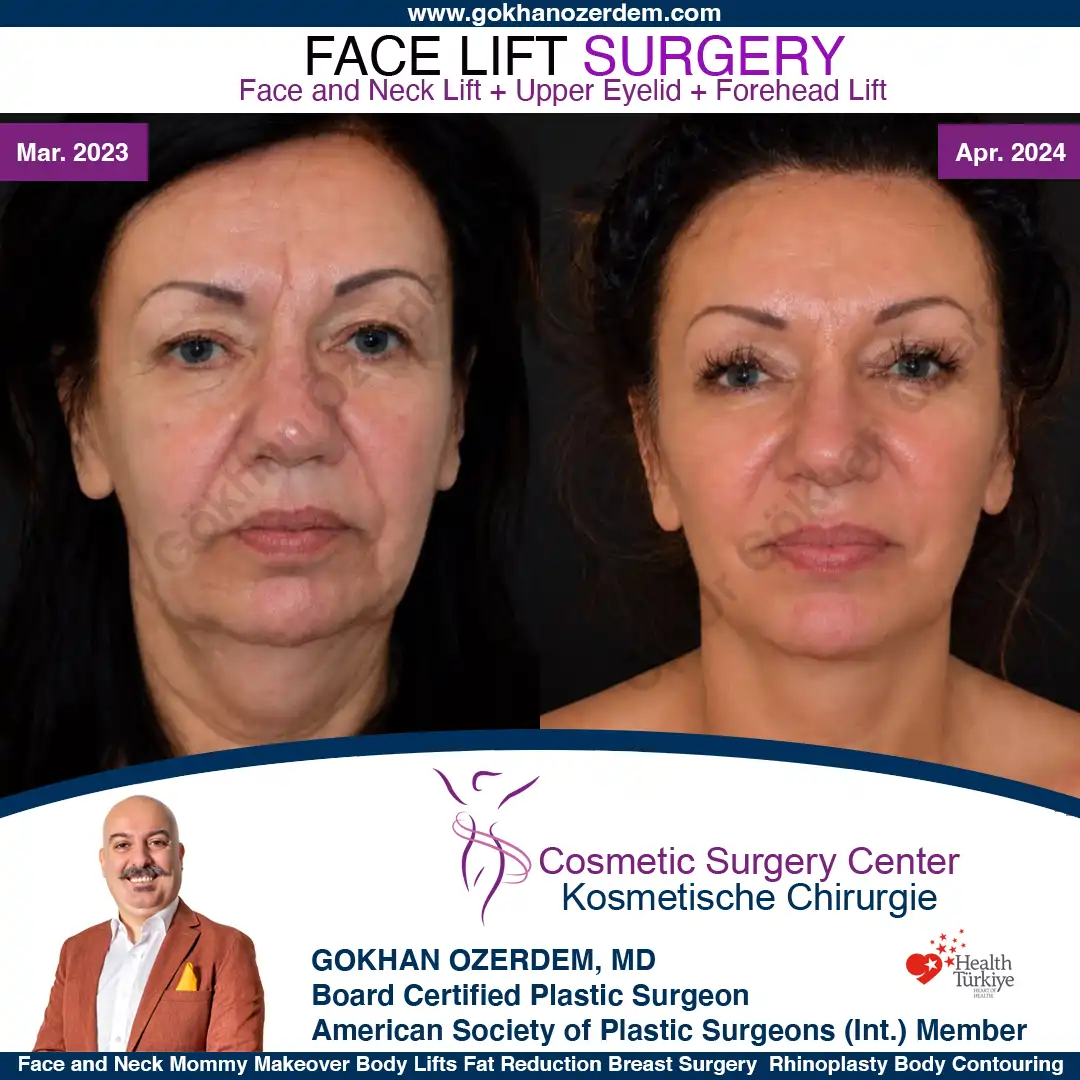
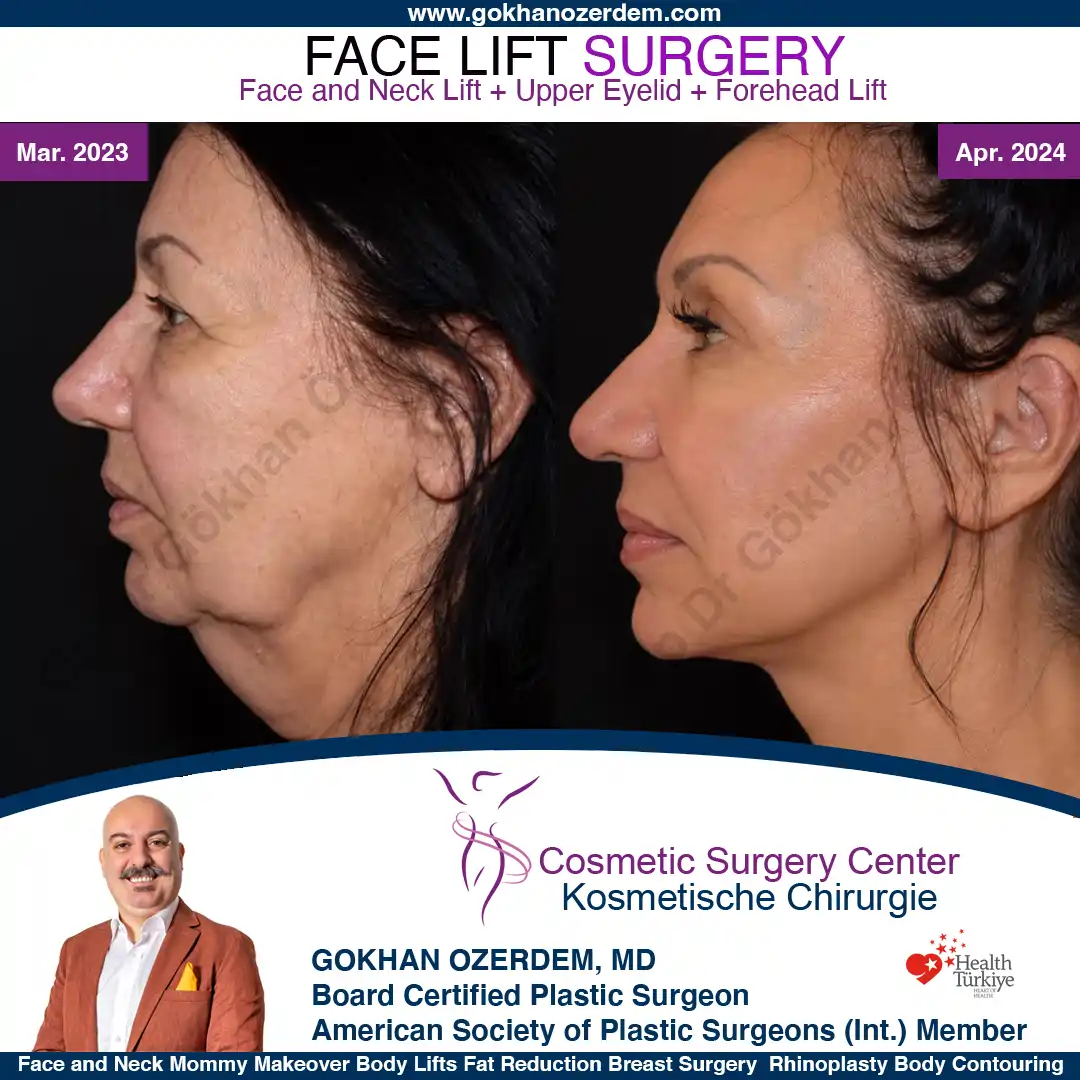
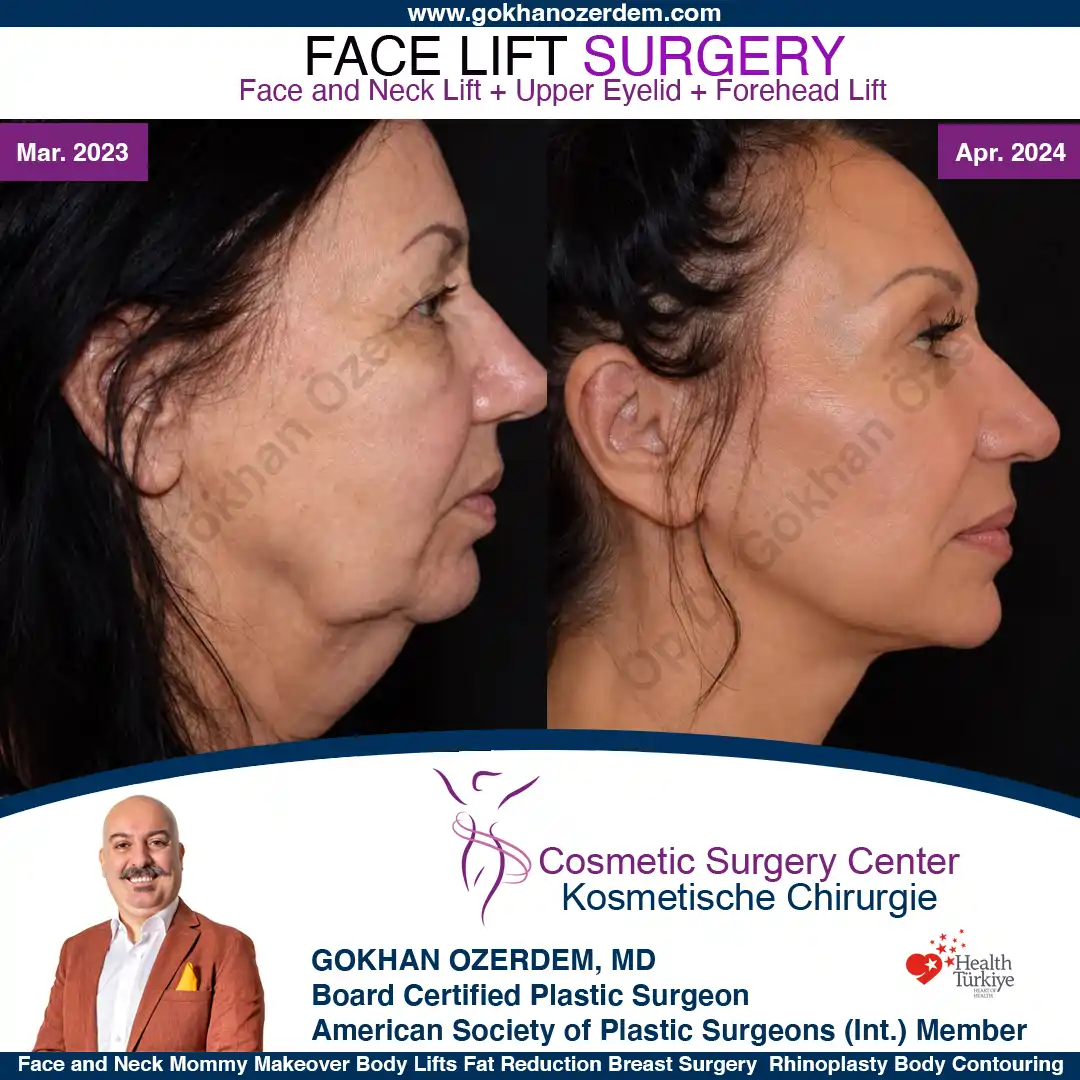
Facelift Before and After
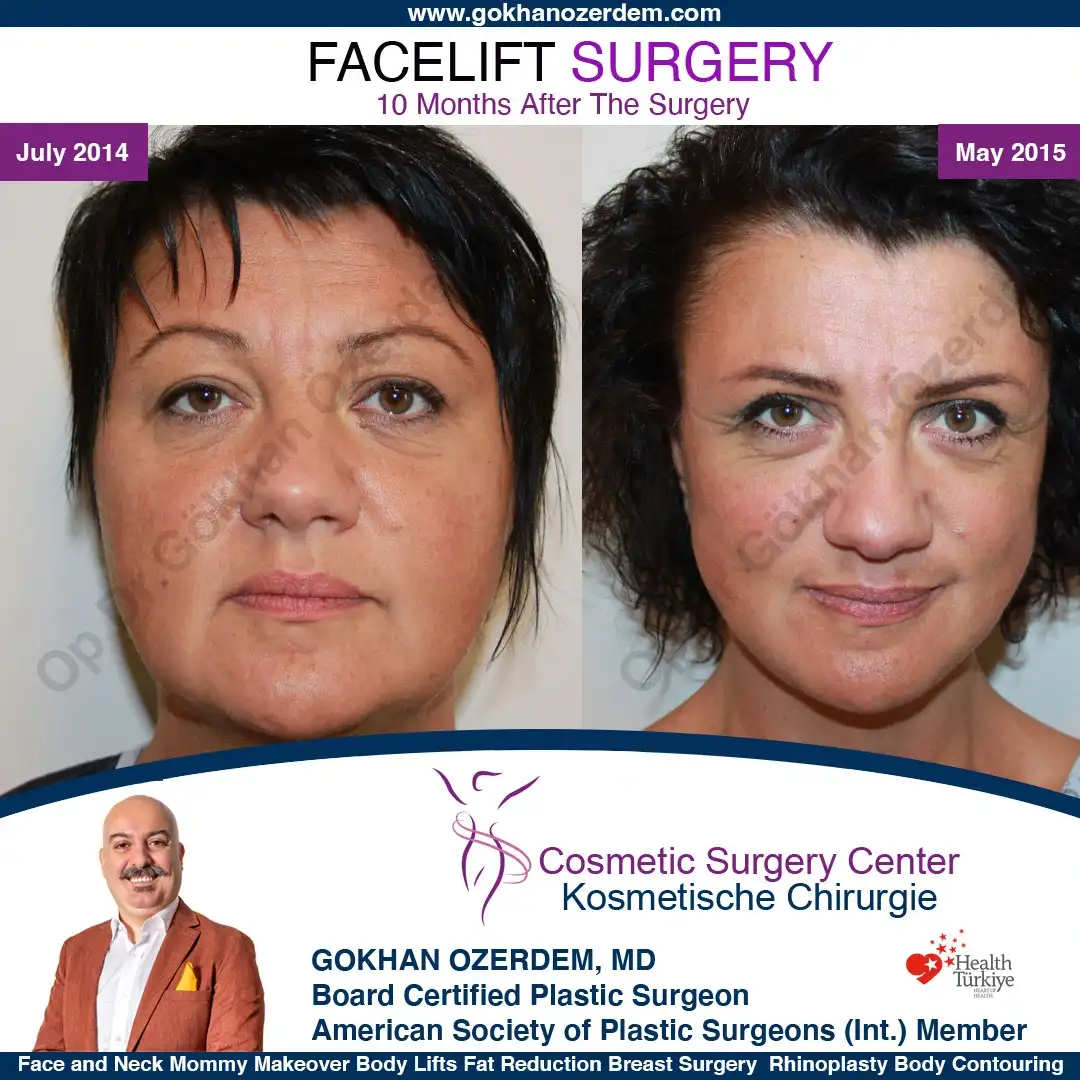
Before and after photographs can help patients understand the type of changes that may be achieved with facelift and neck lift surgery.
However, every patient’s facial anatomy, skin quality and aging pattern are different.
The result achieved in one patient cannot predict or guarantee the result of another.
Before and after photographs should therefore be viewed as examples of individual surgical outcomes rather than a promise of a particular result.
What Can a Facelift Improve?
A carefully planned facelift can improve facial contours and restore definition to areas affected by aging.
Jawline
Jowls and tissue descent can obscure a previously well-defined jawline. Repositioning the deeper tissues can help restore clearer definition.
Lower Face
Aging tissues can be repositioned to create a smoother and more balanced lower facial contour.
Cheeks
Selected deeper facelift techniques can help improve the position of descended facial tissues.
Neck
When combined with neck lift surgery, loose skin and deeper structural changes affecting the neck can also be addressed.
The objective is meaningful improvement rather than the complete elimination of every sign of ageing.
What a Facelift Cannot Do
Facelift surgery can produce significant changes, but it does not correct every facial concern.
A facelift does not completely eliminate:
- Fine surface wrinkles
- Sun damage
- Areas of pigmentation
- Every line around the mouth
- Excess upper eyelid skin
- Lower eyelid bags
- A low brow position
When other areas also show significant aging, procedures such as blepharoplasty or brow lift surgery may sometimes be considered.
However, I do not believe in adding procedures simply because they can technically be performed.
Every additional operation should have a clear indication and a meaningful expected benefit.
Natural-Looking Facelift Results
Will I Look Pulled or Artificial?
This is one of the most common concerns among patients considering facelift surgery.
An unnatural appearance may result when excessive tension is placed on the skin or when surgery fails to respect the patient’s original facial characteristics.
My approach is based on repositioning the deeper tissues where appropriate, followed by careful redraping of the skin.
I do not want to create a different face.
I want to improve the changes caused by ageing while preserving the characteristics that make the face recognizably yours.
A successful facelift should draw attention to how well you look — not to the fact that you have had surgery.
Where Are Facelift Scars Located?
Every surgical facelift requires incisions and therefore leaves scars.
I plan the incisions around natural anatomical boundaries near the ears and hairline. Their exact position and length depend on the extent of surgery required.
During the early healing period, scars may appear pink, firm or more noticeable.
They generally become softer and less conspicuous as they mature.
Scar maturation takes time and can continue for many months.
No responsible surgeon can promise an invisible scar. Careful incision placement, meticulous closure and appropriate postoperative scar care can, however, help scars become less noticeable over time.
Facelift Surgery for Men
Facelift surgery can also be performed in men, but male facial anatomy requires particular consideration.
Important factors include:
- Beard-bearing skin
- Hairline
- Sideburn position
- Skin thickness
- Facial proportions
- Jawline characteristics
These differences can influence both incision placement and surgical planning.
The objective remains natural facial rejuvenation while preserving masculine facial characteristics.
Anaesthesia and Hospital Stay
My major facelift and neck lift procedures are generally performed under general anaesthesia in a fully equipped hospital in Antalya, Turkey.
The duration of surgery depends on the extent of the facelift and neck lift and whether any additional procedures are required.
Patient safety determines how much surgery I am prepared to combine during a single anesthetic.
The fact that several procedures can technically be performed together does not necessarily mean that they should be.
Recovery After Facelift Surgery
Swelling, bruising and a feeling of tightness are expected during the early recovery period.
These gradually improve.
Many patients begin to feel comfortable returning to normal social activities during the first few weeks, although recovery varies from one patient to another.
During the early postoperative period, it is important to follow instructions regarding:
- Sleeping position
- Wound care
- Physical activity
- Showering and hair care
- Medication
- Smoking
- Sun exposure
- Scar protection
Although an improvement may be visible relatively early, the facial tissues continue to settle over the following months.
A more mature facial contour can generally be assessed at around 3–6 months, while scars may continue to improve for considerably longer.
How Long Do Facelift Results Last?
A facelift cannot stop the ageing process.
The face will continue to age after surgery because the skin, soft tissues and underlying structures continue to change with time.
However, facelift surgery repositions tissues from their preoperative position.
The longevity of the improvement varies according to factors such as:
- Genetics
- Age
- Skin quality
- Sun exposure
- Smoking
- Weight fluctuations
- Lifestyle
- Individual ageing pattern
For this reason, I prefer not to promise that a facelift will last an exact number of years.
Facelift in Turkey for International Patients
Travelling to Antalya for Face and Neck Lift Surgery
Patients traveling from abroad require additional planning because they cannot simply return home immediately after surgery.
Before you travel to Turkey, my team will request relevant information about your medical history, previous procedures, current medications, and general health. Photographs may also be requested for an initial assessment.
This preliminary evaluation can help determine whether facelift surgery appears appropriate and which areas may need to be addressed.
However, photographs and an online consultation cannot replace a physical examination.
Your final surgical plan is confirmed after I examine you personally in Antalya.
How Long Should I Stay in Antalya After a Facelift?
International patients should not arrange their return flights according to the shortest possible stay.
For many facelift and neck lift patients, I recommend allowing approximately 7–10 days in Antalya, although the appropriate duration depends on the extent of surgery and individual recovery.
During this period, I can monitor your early healing and carry out the necessary postoperative checks.
Your recovery should determine when you travel home.
Can I Have a Facelift During the Summer in Antalya?
Yes.
Facelift surgery can be performed during the summer. The season itself does not prevent surgery.
However, Antalya has strong sunshine during the summer months, and healing scars must be carefully protected from direct sun exposure.
Swimming, prolonged sun exposure and strenuous holiday activities should also be avoided until they are medically appropriate.
If you travel to Antalya for facelift surgery during the summer, you should regard the trip primarily as a period for surgery and recovery rather than a beach holiday.
Why Choose Dr Gökhan Özerdem for Facelift Surgery?
Facelift surgery is one of the areas of aesthetic surgery in which surgical judgement is particularly important.
The surgeon must decide not only how to perform the operation, but also:
- Which tissues require correction
- How much repositioning is appropriate
- Whether the neck should be treated at the same time
- Whether submental liposuction would be beneficial
- Whether an additional facial procedure offers meaningful benefit
- How much surgery can safely be performed
- When surgery should not be recommended
After more than 25 years of surgical practice, my approach remains based on individual anatomy rather than performing the same operation on every patient.
For suitable patients, I frequently use a High SMAS approach and combine facelift and neck lift surgery when the anatomy requires it.
The operation should fit the patient. The patient should never be made to fit a standard operation.
How Much Does A Facelift in Turkey Cost In 2026?
One of the most attractive aspects of choosing Turkey for facelift surgery is the cost. The cost of a facelift in Turkey is significantly lower compared to many Western countries, making Turkey an attractive option for medical tourists. On average, the cost of a full facelift in Turkey varies depending on the clinic and the experience of the surgeon. Factors affecting the price of a facelift in Turkey include the complexity of the procedure and additional services offered.
Despite the affordability, Turkey’s clinics maintain high standards of care, employing the best facelift surgeons with extensive experience in cosmetic procedures. This balance of quality and cost makes Turkey a top destination for those seeking facial rejuvenation.
Frequently Asked Questions About Facelift Surgery
The SMAS is an important supporting layer beneath the facial skin. A High SMAS facelift allows the surgeon to work with and reposition deeper facial tissues rather than relying primarily on skin tightening. I use this approach in suitable patients according to their individual facial anatomy.
A facelift primarily addresses age-related changes affecting the face, including jowls, tissue descent and loss of jawline definition. A neck lift addresses loose skin and deeper structural changes affecting the neck. Because these regions are anatomically connected, I frequently treat them together when appropriate.
No. The operation depends on the patient’s anatomy. However, when significant aging affects both the face and neck, treating them together can provide a more balanced result.
Yes, in selected patients. If localized fat beneath the chin contributes to poor neck or jawline definition, submental liposuction may be beneficial. It is not required in every facelift patient.
There is no universal best age. Facial anatomy, tissue descent, skin quality and neck laxity are more important than chronological age.
Yes, when appropriate. Blepharoplasty can address ageing around the eyes that facelift surgery does not correct. Whether the procedures should be combined depends on the patient’s anatomy, general health and the overall extent of surgery.
That is my objective. I aim to improve age-related changes while preserving the patient’s individual facial characteristics. Repositioning deeper tissues and avoiding excessive tension on the skin are important parts of this approach.
Yes. Every surgical facelift requires incisions and therefore leaves scars. I position these around natural anatomical boundaries wherever possible. They normally become less conspicuous as they mature.
Patients commonly experience swelling, tightness and varying degrees of discomfort. Appropriate postoperative medication is prescribed to help manage this during recovery.
Recovery varies between individuals. Swelling and bruising are most noticeable during the early postoperative period, and many patients become increasingly comfortable returning to social activities over the following weeks.
The result develops gradually. Although considerable improvement becomes visible as the initial swelling subsides, the facial tissues continue to settle. A more mature contour can usually be assessed at around 3–6 months, with further scar maturation continuing beyond this period.
Yes. Facelift surgery can be performed during the summer, but healing incisions require careful protection from the sun and postoperative restrictions must be followed.
Hair colouring should be postponed until the incisions have healed sufficiently. The appropriate timing depends on the position of the incisions and your individual healing, so I prefer to assess this during postoperative follow-up rather than give every patient the same date.
For many international facelift patients, I recommend approximately 7–10 days in Antalya. The exact period depends on the extent of surgery and your individual recovery.
Yes. Follow-up communication continues after you leave Turkey. Photographs or other information may be requested at different stages of recovery, and an in-person medical assessment in your home country may be advised if necessary.
Considering a Facelift in Antalya, Turkey?
If you are considering travelling to Turkey for facelift surgery, the first step is to determine which anatomical changes actually require treatment.
You may benefit from a facelift alone, a combined face and neck lift, or a different approach.
An initial assessment can help clarify what may be appropriate before you make your travel arrangements.
Dr Gökhan Özerdem
Specialist in Aesthetic, Plastic and Reconstructive Surgery
Antalya, Turkey
Contact Our International Patient Team
Request a Preliminary Assessment
Face: – Rhinoplasty – Eyelid Surgery – Forehead and Brow Lift – Ear Surgery –
Breast: – Breast Augmentation – Breast Lift – Breast Reduction – Gynecomastia –
Body: – Tummy Tuck – Mini Tummy Tuck – Liposuction – Arm Lift – Thigh Lift – Body Contouring – Mommy Makeover –